


Quick Answer
When a cheque bounces in the UAE, obtain the bank’s dated statement showing the presentation date and the exact reason for nonpayment. Keep the original cheque because a copy may not support the same procedure.
If some funds are available, ask about partial payment under Article 648 of Federal Decree-Law No. 50 of 2022. Record the amount paid and calculate the remaining balance.
A cheque marked for no or insufficient funds may be enforced under Article 667. The holder can request compulsory execution without first obtaining an ordinary civil judgment on the same instrument.
The next step may be a written demand, settlement, execution, or a claim on the underlying debt. A criminal route applies only when the facts meet a specific cheque offense.
The bank has returned the cheque, but the holder still needs payment. The drawer may promise to fund the account, dispute the debt, offer a replacement cheque, or stop responding.
The wrong first step can weaken the file. A missing original, unclear return reason, or expired deadline may affect the route available later.
Build a complete cheque file before choosing a procedure. Start with the bank’s dated return statement and the original cheque.
Then confirm the unpaid amount, the parties, and the reason for dishonor. Use those facts to select a demand, settlement, execution request, or underlying debt claim.
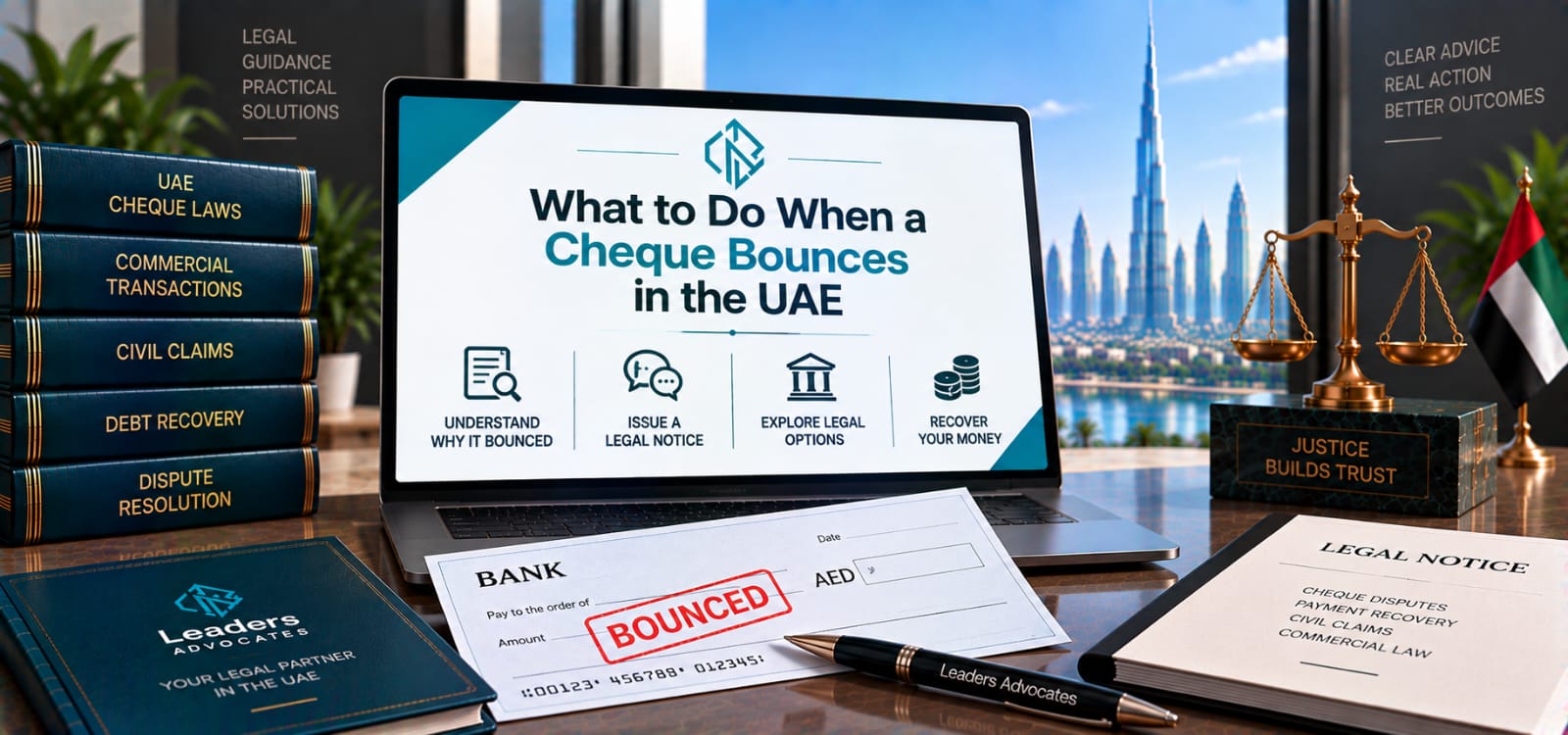
What to Do When a Cheque Bounces in UAE
Do not treat the bank notification as enough. Ask the bank for the formal record required to prove presentment and dishonor.
Preserve the cheque and all supporting records. The bank reason should guide the next legal step, not anger or assumptions about the drawer.
Act promptly. The Commercial Transactions Law contains specific periods for presentment and recourse, and different claims may follow different limitation rules.
Step One: Get the Bank Statement
Article 663 allows dishonor to be proved by a dated statement from the drawee bank. It should state the presentation day and be written on the cheque as required.
Ask the bank to identify the exact reason. No funds, insufficient funds, a closed account, signature issues, and technical defects can require different analysis.
Keep any SMS, email, or banking-app notification as supporting evidence. It should not replace the formal bank statement.
Step Two: Keep the Original Cheque
The original cheque is central to a direct execution request. Store it securely and avoid marking, stapling, or damaging it.
Make clear scans of the front, back, and bank endorsement. Give copies to advisers while retaining the original for the appropriate filing stage.
If the cheque is lost or destroyed, special procedures may apply. Do not assume a photocopy has the same legal effect.
Just Had a Cheque Bounce?
Send us your bank return statement on WhatsApp now and we’ll tell you the fastest route to recovery, free of charge.
Step Three: Check the Presentation Date
Article 649 gives six months to present a cheque payable in the UAE. The period begins on the issue date written on the cheque.
Record the first presentation and every later attempt. A promise to pay later does not automatically change the statutory timetable.
Article 651 permits the bank to pay after the presentation period. However, late payment capability does not answer every recourse or limitation question.
Step Four: Ask About Partial Payment
If the account holds part of the amount, Article 648 requires the bank to make partial payment unless the holder refuses it. The bank should mark each payment on the original cheque.
The bank also provides a certificate and returns the original cheque. The holder can pursue the remaining amount using the marked instrument.
Record the exact balance after each payment. Never claim an amount that has already been received.
Step Five: Identify the Legal Debtor
Check the name on the account and the drawer’s identity. For a company cheque, confirm the legal entity and the signatory.
The company, shareholder, manager, and signatory are not automatically the same debtor. Personal liability needs its own legal basis.
Review endorsements or assignments if the current holder is not the original payee. The claimant must show the right to enforce the instrument.
Step Six: Preserve the Underlying Transaction
Keep the contract, invoice, purchase order, delivery note, loan record, and settlement communications. These documents explain why the cheque was issued.
They may matter if the drawer disputes the amount or starts a substantive challenge. They also help if the return reason does not support direct execution.
Prepare a simple chronology. Match each invoice, payment, cheque, promise, and return event to a date.
Not Sure Who the Legal Debtor Is?
Message us on WhatsApp with the cheque and company details — we’ll confirm who is actually liable before you take the next step.
Step Seven: Consider a Written Demand
A formal demand can give the drawer a final opportunity to pay. It should identify the cheque, amount, bank return, and deadline.
Use a payment method that creates a record. If installments are accepted, state the dates, amounts, default consequences, and treatment of the cheque.
Do not accept a vague promise in place of the original instrument. Any replacement arrangement should say whether the earlier debt is discharged, secured, or preserved.
Step Eight: Assess Direct Execution
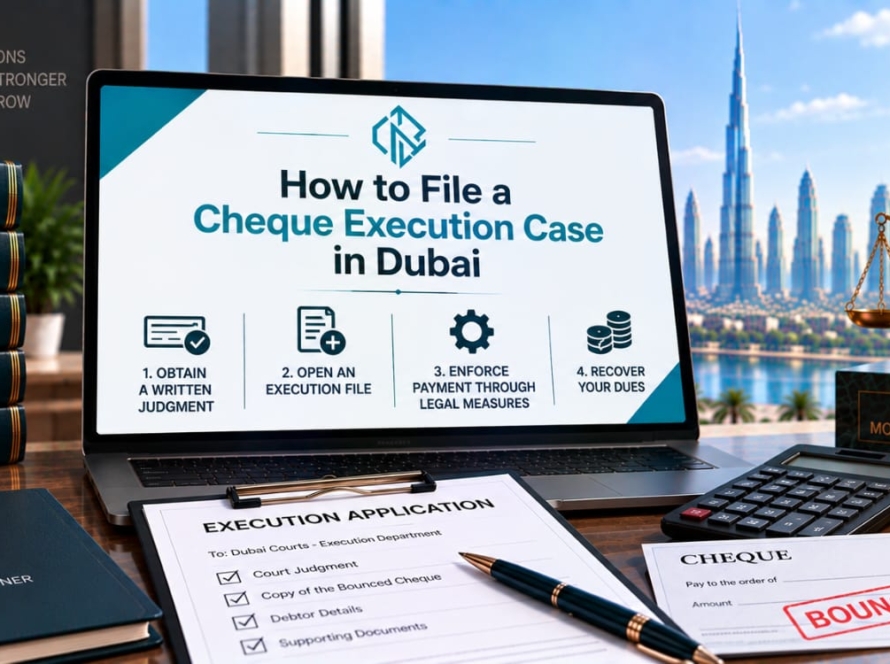
Article 667 treats a cheque marked by the bank for no or insufficient funds as an executive instrument. The holder may seek compulsory execution for the full or remaining amount.
The Civil Procedure Law governs the filing and any objection. The court checks the documents, amount, parties, and procedural requirements.
Direct execution avoids an ordinary lawsuit to establish the instrument first. It does not guarantee recovery if the debtor has no reachable assets.
The Closed Account Position
The Federal and Local Judicial Principles Unification Authority has treated a cheque returned because of a closed account as an execution writ. The decision aligned that return reason with Article 667 for enforcement.
Closing or emptying an account in the circumstances described by Article 675 may also create criminal exposure. Evidence of the timing and intent remains important.
Handle execution and criminal questions as separate tracks. The existence of one does not remove the need to prove the other.
When an Ordinary Claim May Be Needed
Not every bank return reason falls within Article 667. A technical defect, disputed signature, alteration, or another problem may prevent simple direct execution.
The holder may need to rely on the contract, invoice, loan, or other evidence of debt. The proper forum also depends on jurisdiction and any arbitration clause.
Do not file in the wrong forum merely because the cheque was deposited in Dubai. Review the parties and dispute documents first.
Enforcement Measures Are Court Controlled
After a valid filing, the court may use measures allowed by the Civil Procedure Law. These can include attachment of bank accounts, receivables, or other assets when the conditions are met.
A travel restriction may be requested in an appropriate case. It is not automatic merely because a cheque bounced.
The creditor must keep the execution file active and respond to court directions. Finding assets often determines whether the judgment produces payment.
Ready to Start Execution or Attachment Proceedings?
WhatsApp us your case documents now and we’ll map out the fastest court-controlled route to get you paid.
When a Criminal Report May Be Relevant
The law no longer treats every insufficient-funds cheque as the same automatic criminal case. Civil and execution recovery now address many ordinary nonpayment situations.
Articles 674 to 676 define conduct that can still be criminal. The provisions cover specified bad-faith transfers, account manipulation, payment obstruction, and forged cheques.
Describe only facts that can be supported. A business disagreement should not be labeled fraud or a cheque crime without the required evidence.
What If the Drawer Offers a New Cheque
Check whether the new cheque replaces the old one or simply adds security. Put the agreement in writing.
Record the outstanding balance, payment dates, and what happens after another default. Do not return the first cheque until the legal effect is understood.
If part of the amount is paid, issue an accurate receipt. Make sure the remaining claim matches the true balance.
What If the Cheque Comes From a Company
Obtain the company’s current license details and registered name. Check whether it is active, in liquidation, or subject to insolvency proceedings.
The recovery route may change if formal liquidation has begun. A claim may need to be filed within that process rather than pursued in the ordinary way.
Keep evidence linking the cheque to the company obligation. Do not assume the signatory is personally responsible for the corporate debt.
Documents for the First Legal Review
- The original cheque and clear scans.
- The bank’s dated return statement.
- Proof of any partial payment.
- The contract or loan document.
- Invoices, orders, and delivery records.
- Settlement offers and payment promises.
- Identity and company documents.
- A chronology of presentation and communications.
Organize the file before sending it. A clear file helps counsel identify the fastest available route and the missing evidence.
Related Success Story
The Leaders Advocates collection includes a Debt Recovery Case in Dubai involving successful loan recovery. The Leaders Advocates Success Stories page provides the published case summary.
The result in another matter cannot promise recovery here. The cheque wording, bank reason, assets, and defenses will control the current case.
Common Mistakes to Avoid
- Throwing away the bank return slip.
- Sending the original cheque by ordinary mail.
- Waiting on repeated oral promises.
- Ignoring a partial payment.
- Filing without checking the return reason.
- Naming the wrong company or individual.
- Assuming every bounced cheque is criminal.
- Treating a filing as a guarantee of payment.
Final Takeaway
The first task after a cheque bounces is to secure the evidence. Get the bank statement, keep the original, and record all relevant dates.
Next, identify the debtor and the precise return reason. That information determines whether direct execution, settlement, or an underlying debt claim is appropriate.
Move quickly, but do not skip the legal review. A well-organized cheque file is more valuable than repeated informal pressure.
Relevant Legal Services
- Debt Recovery Lawyers in Dubai – for demands, bounced cheque collection, settlements, and enforcement.
- Litigation Lawyer in Dubai – for court filings, execution disputes, and debtor challenges.
- Civil Lawyers in Dubai – for claims based on the transaction behind the cheque.
Follow Leaders Advocates on LinkedIn or Leaders Advocates on Facebook for more UAE legal updates.
Frequently Asked Questions
Got a Bounced Cheque You Need to Recover Now?
Don’t wait on empty promises. Message Leaders Advocates on WhatsApp now and start your recovery the right way.