



Quick Answer
Before taking legal action, confirm the debtor’s exact legal identity, the contract, delivery or performance, invoice due date, accepted amount, payments, credits, and any dispute.
Send a formal written demand to the correct entity. State the principal, invoice numbers, due dates, supporting documents, payment deadline, and the next procedural step.
The route may be a payment order, civil or commercial claim, arbitration, or another agreed forum. Eligibility depends on the documents, contract, and current procedural requirements.
Winning is only part of recovery. Check assets, bank relationships, receivables, business status, insolvency risk, and enforcement cost before choosing how far to proceed.
An unpaid invoice may look simple, but the legal file can be incomplete. The invoice might name a trade name rather than the contracting company, lack acceptance, or omit the purchase order and delivery record.
The debtor may also dispute quality, quantity, authority, delay, setoff, or completion. Filing before those issues are organized can increase cost and weaken settlement leverage.
Build the debt file first. Identify the legal debtor, contractual basis, performance evidence, amount, due date, prior payments, credits, and communications.
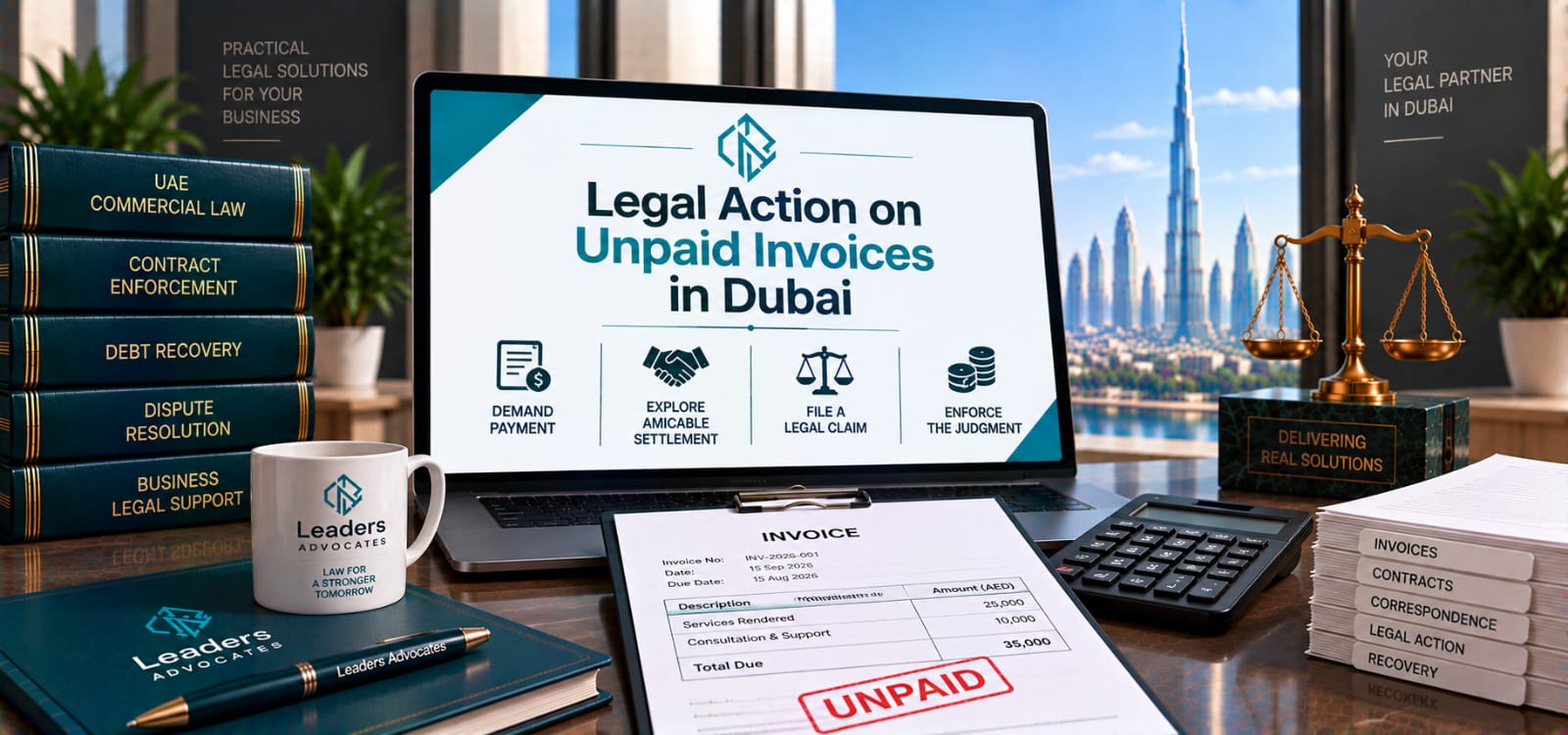
Then send a focused demand and select the forum. Compare settlement, payment order, ordinary litigation, arbitration, and enforcement against the debtor’s realistic asset position.
Legal Action on Unpaid Invoices in Dubai
Legal action is not one form. The correct route depends on the evidence, agreement, amount, jurisdiction clause, and whether the debt is clearly established or genuinely disputed.
Identify the Correct Debtor
Check the trade license, contract, purchase order, email signature, invoice addressee, and payment history. A brand or group name may not be the legal person that owes the money.
Do not assume that a shareholder, director, manager, or sister company is personally liable for a company’s invoice. A separate legal basis is required.
Record the debtor’s current license status, registered address, known office, and contact person. This information also affects notice and service.
Confirm the Contractual Basis
Locate the signed agreement, accepted quotation, purchase order, work order, terms and conditions, variation, or email acceptance. The contract should explain price, scope, timing, payment, and dispute resolution.
An invoice usually records a payment request. It may not prove by itself that goods were delivered or services accepted.
Where no formal contract exists, collect the communications showing offer, acceptance, performance, and the amount agreed. Avoid filling gaps with assumptions.
Prove Delivery or Performance
For goods, keep delivery notes, shipping records, warehouse receipts, inspection reports, and signed acknowledgments. Match each document to the correct invoice.
For services, retain timesheets, reports, approvals, milestones, meeting minutes, access logs, and completion emails. Show what was done and when.
If the customer used the goods or work, preserve that evidence lawfully. Performance proof can answer a later claim that nothing was received.
Not Sure Your File Is Strong Enough to Recover the Debt?
Send us your invoices and contract on WhatsApp — we’ll tell you what’s missing before you file.
Reconcile the Amount
Prepare a ledger showing every invoice, due date, payment, credit note, return, discount, retention, tax amount, and balance. The demand and claim should use the same figures.
Separate principal from interest, penalties, legal costs, and other charges. Each additional amount needs a contractual or legal basis.
If the parties reconciled the account or the debtor acknowledged a balance, preserve the signed or written record. Verify who had authority to make the acknowledgment.
Review Payment Terms
Check when payment became due. The date may depend on delivery, acceptance, certification, a milestone, or receipt of a compliant invoice.
Identify notice requirements, cure periods, retention provisions, dispute windows, and conditions precedent. A missed contractual step can create a procedural objection.
Do not assume that a stamp saying due immediately overrides agreed payment terms. Read the full transaction record.
Examine the Dispute Clause
The contract may select Dubai Courts, DIFC Courts, arbitration, or another forum. It may also require negotiation, mediation, or notice before filing.
An arbitration clause can affect whether an ordinary court claim is the correct route. The exact parties, scope, seat, institution, and language matter.
Check whether several purchase orders use different terms. A course of dealing does not always resolve inconsistent dispute clauses.
Send a Formal Demand
Address the demand to the legal debtor and any contractual notice address. Use the delivery method required by the agreement where available.
State the contract, invoices, performance, principal due, credits, and payment deadline. Attach a concise account statement and identify the bank details through a secure method.
Explain the next step if payment is not made. Keep proof of service and every response.
What the Demand Should Avoid
Do not claim an amount that ignores credits or partial payments. An inflated demand can distract from an otherwise clear debt.
Do not threaten criminal action merely to pressure payment. A commercial debt is not automatically a criminal matter.
Avoid broad accusations about fraud or insolvency without evidence. Use precise, professional language that can later be shown to the court or tribunal.
Ready to Send a Formal Demand That Gets Results?
Most debtors pay once a proper legal demand arrives. Message us on WhatsApp and we’ll draft yours today.
Negotiate a Documented Settlement
A settlement may reduce cost and accelerate payment. It should identify the admitted balance, payment dates, method, default consequences, costs, and governing forum.
If installments are accepted, decide whether the original debt is suspended, replaced, or preserved. Record the treatment of security and existing claims.
Do not release the debtor before receiving the consideration required by the settlement. Define when the release becomes effective.
Payment Order Route
A payment order may offer a more direct route when the current statutory requirements are met and the debt is established by suitable written evidence.
Eligibility is technical. The amount, maturity, proof, prior demand, jurisdiction, and nature of any dispute should be reviewed before filing.
If the debt does not qualify, an ordinary claim may be required. Do not force a genuinely disputed account into the wrong procedure.
Civil or Commercial Claim
An ordinary claim can address disputed performance, variations, quality, authority, setoff, and competing evidence. The pleading should explain the transaction clearly.
Prepare the contract, invoices, proof of performance, ledger, demand, response, and company information. Certified Arabic translation may be required for court use.
The defendant can file a response or counterclaim. Identify likely defenses before filing and preserve the evidence needed to answer them.
Arbitration
Where a valid arbitration agreement covers the dispute, the creditor may need to commence arbitration instead of an ordinary court claim.
Review the notice, appointment, institution, seat, language, and filing fee. Small invoice claims can become expensive if the clause is poorly matched to the transaction.
An award may still require recognition and enforcement. Consider the debtor’s assets when selecting procedural steps.
Urgent and Interim Measures
A creditor may ask whether assets can be frozen or attached before judgment. Such relief is not automatic and requires the competent authority, legal conditions, and supporting evidence.
Urgency, risk, proportionality, security, and the connection to the claim can matter. Avoid making a restraint application as a negotiating threat.
Counsel should explain the evidence and potential liability before seeking an interim order.
Worried the Debtor Is Moving Assets?
Don’t wait. Message us on WhatsApp now to find out if an urgent freeze or attachment order can protect your money.
Evidence From Emails and Messages
Preserve the complete conversation, not selected screenshots. An email accepting the balance may be important, but its author and authority must be established.
Keep original attachments and headers. Do not edit or recreate documents after the dispute begins.
Use lawful evidence collection. Accessing another person’s email, device, or account without authority can create a separate problem.
Company and Signatory Issues
Confirm whether the debtor is a sole establishment, limited liability company, branch, partnership, or another form. The legal identity affects the claim.
Check who signed and in what capacity. Authority disputes can arise when an employee approved work or acknowledged a balance.
Corporate separation should be respected unless evidence supports another basis for liability. Name each proposed defendant for a reason.
If a Cheque Supports the Invoice
A cheque may provide an additional enforcement route depending on the bank return and legal requirements. Keep the original cheque and formal return statement.
Reconcile the cheque amount with the invoice balance and any payment. Do not claim the same sum twice.
Criminal liability is not automatic for an ordinary insufficient-funds return. Specific conduct and legal elements must be assessed separately.
Insolvency and Financial Distress
Repeated defaults, closed premises, expired licenses, creditor pressure, and unpaid employees may indicate broader distress. Confirm the debtor’s status before spending heavily on litigation.
An insolvency process can affect individual enforcement and the way claims are filed. Obtain current advice if proceedings are known or suspected.
Settlement security and timing become especially important when several creditors are competing for limited assets.
Judgment Is Not the Final Step
After judgment or an award, the creditor may need enforcement. The available measures depend on the order, debtor, assets, and court process.
Prepare asset information before filing where possible. Bank accounts, receivables, vehicles, real estate, shares, and other interests may require different requests.
Enforcement cost and time should be part of the original decision. A paper win is not the same as collected funds.
Documents to Prepare
- Trade license and legal debtor details.
- Contract, quotation, and purchase orders.
- Invoices and account statement.
- Delivery or performance evidence.
- Acceptance, certification, and variation records.
- Payment, credit, and retention records.
- Demand notice and proof of service.
- Messages acknowledging or disputing the balance.
- Security instruments and original cheques.
Create an index and a short chronology. Counsel can then identify gaps before a filing deadline.
Common Mistakes to Avoid
- Suing the brand instead of the legal debtor.
- Relying on the invoice without performance proof.
- Ignoring the dispute or arbitration clause.
- Claiming interest or penalties without a basis.
- Sending the demand to the wrong address.
- Accepting a vague installment promise.
- Filing without considering enforcement and insolvency risk.
Correct the file before litigation where possible. A disciplined demand often improves both settlement and pleading quality.
Related Success Story
Leaders Advocates publishes a Dubai debt recovery matter involving successful loan recovery. Review the available case summary on the Leaders Advocates Success Stories page.
Every claim depends on its own contract, evidence, debtor, assets, and procedure. A previous recovery does not guarantee a result on an unpaid invoice.
Final Takeaway
Successful invoice recovery begins before court. The legal identity, contractual basis, performance proof, balance, demand, forum, and assets should align.
Choose the procedure that fits the documents. Keep the claim concise, preserve settlement options, and plan enforcement from the start.
Relevant Legal Services
- Debt Recovery Lawyers in Dubai — for demands, settlement, payment claims, and enforcement planning.
- Litigation Lawyer in Dubai — for disputed civil or commercial claims and court procedure.
- Civil Lawyers in Dubai — for contract, evidence, liability, and monetary claim analysis.
Follow Leaders Advocates on LinkedIn or Leaders Advocates on Facebook for more UAE legal updates.
Frequently Asked Questions
Owed Money and Ready to Take Action?
Message Leaders Advocates on WhatsApp now — get a named lawyer on your unpaid invoice today.