



Quick Answer
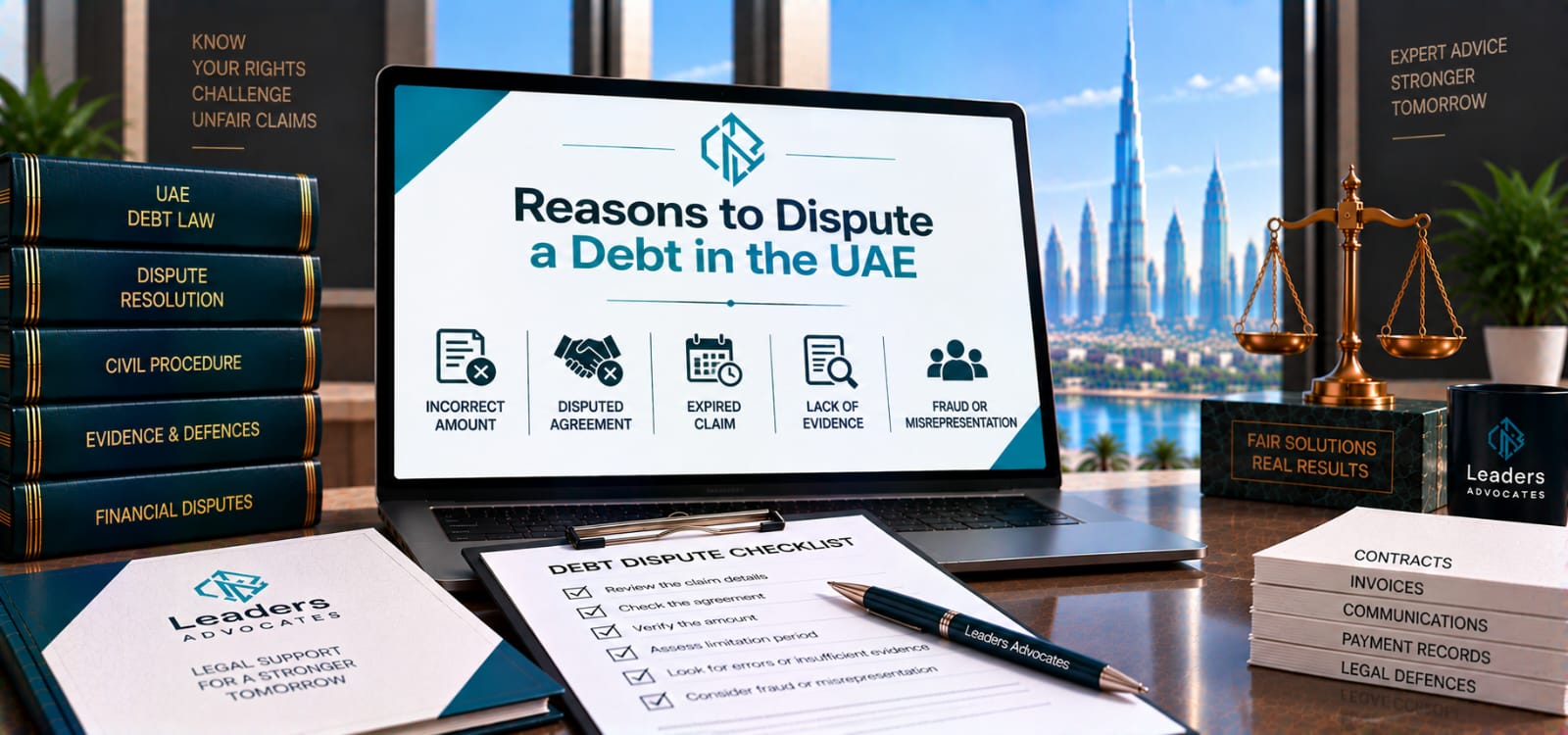
Common reasons to dispute a debt include full or partial payment, an incorrect balance, unauthorized fees, no contractual liability, identity misuse, and a limitation defense. A security cheque may also be disputed when the obligation it secured was performed or never became due.
Raise the dispute early and in writing. Identify the amount accepted, the amount rejected, each legal or factual ground, and the supporting documents.
The correct step depends on the stage. It may be a response to a demand, a challenge to a payment order, an execution objection, a court defense, or a complaint to a licensed bank and then Sanadak when eligible.
A demand letter can look final even when the amount is wrong. The recipient may feel pressured to pay first and ask questions later.
That approach can weaken a valid defense. A payment, acknowledgment, or missed deadline may change the legal position.
Separate the undisputed facts from the disputed ones. Ask for the contract and statement, reconcile the figures, and state each objection with evidence.
Then respond through the procedure that matches the stage. A demand letter, payment order, execution file, and ordinary lawsuit require different steps.
Reasons to Dispute a Debt
The strongest dispute grounds are specific. The debtor should not simply write that the claim is unfair or unaffordable.
The response should identify what happened, what amount is contested, and which document proves the point. Several grounds may apply at the same time.
The Debt Was Fully or Partly Paid
Payment is a direct defense. Use bank transfers, receipts, settlement letters, returned cheques, and written acknowledgments from the creditor.
Match each payment to the relevant invoice, installment, or account. A creditor may have applied funds to a different balance or omitted a credit.
Cash payments need special care. A signed receipt or message confirming receipt may be essential.
The Claimed Amount Is Wrong
The existence of a debt does not prove the amount demanded. Interest, late fees, collection charges, and other additions need a contractual or legal basis.
Ask for a complete statement of account. Check the opening balance, every debit, every credit, and the method used to calculate interest.
Common errors include duplicate invoices, missing payments, charges for undelivered work, and fees that do not match the agreed terms.
You Are Not the Liable Party
Liability normally comes from a contract, guarantee, or another legal basis. Being related to the borrower does not automatically create liability.
A spouse is not liable merely because of marriage. A shareholder or manager is not automatically liable for a company’s debt.
Personal liability may arise from a valid guarantee, a personal undertaking, or specific misconduct. Review the signed documents before accepting the claim.
The Signature or Agreement Is Not Genuine
If you did not sign the agreement, say so immediately and preserve comparison material. Do not alter the disputed document or write on the original.
An authenticity dispute may require technical examination. Gather identification records, specimen signatures, device records, and lawful communications.
If the account resulted from identity theft, report it promptly to the institution and police. Keep every report number and response.
The Goods or Services Were Not Delivered
An invoice alone may not prove performance. Review the contract, purchase order, delivery note, acceptance record, and project correspondence.
State whether nothing was delivered, only part was delivered, or the work was defective. Link the disputed amount to the missing performance.
Do not hide evidence of partial acceptance. A focused dispute is more credible than a blanket denial contradicted by the record.
Received a Demand Letter You Think Is Wrong?
Send us the demand and the numbers on WhatsApp — we’ll tell you within minutes whether you have a real dispute.
The Claim May Be Time-Barred
Limitation is not identical for every debt. The period depends on the transaction, parties, and legal basis.
Claims between merchants arising from commercial obligations are generally not heard after five years from the due date when the debtor denies the claim. Federal Decree-Law No. 50 of 2022 governs commercial transactions.
Civil claims may follow the Civil Transactions Law. Federal Decree-Law No. 25 of 2025 took effect on June 1, 2026, while transitional rules may preserve the earlier law for older obligations.
An acknowledgment or payment can affect a limitation analysis. Obtain advice before responding to an old claim.
The Debt Was Settled or Released
A settlement may replace the earlier balance. Produce the signed agreement, proof of settlement payments, and the final release or clearance.
Check whether the settlement was conditional. A missed installment may reactivate the original amount if the agreement contains an acceleration clause.
Do not assume that a transfer alone proves full and final settlement. The written terms control what the payment achieved.
Interest or Fees Lack a Proper Basis
Identify the exact clause relied on for each charge. A rate added after the transaction may be disputed.
Check whether the calculation matches the principal, period, and payment dates. A spreadsheet with a clear reconciliation can be more useful than a general objection.
For a regulated financial product, compare the statement with the product terms and the institution’s formal disclosures.
A Security Cheque Is Being Misused
A security cheque dispute often turns on the obligation it secured. Identify that obligation and show whether it was performed, canceled, or never triggered.
Keep the agreement, payment history, and messages explaining why the cheque was delivered. The cheque should not be analyzed in isolation.
Do not use a stop-payment instruction as a routine response. Article 675 addresses specific prohibited cheque conduct.
Raise the Dispute in Writing
Reply to a demand with a structured letter. Identify the claimant, account, amount demanded, amount accepted, amount disputed, and each reason.
Attach copies of the strongest supporting records. Keep originals secure and avoid sending irrelevant personal or commercial information.
Request a corrected statement and written confirmation that the dispute has been recorded. Set a reasonable response date.
Not Sure How to Reply to a Bounced Cheque Claim?
Message us on WhatsApp now with the cheque and the underlying agreement — we’ll map out your defense fast.
If a Payment Order Was Issued
The Civil Procedure Law provides a payment order process for qualifying documented and due debts. The debtor can challenge the order through the applicable procedure.
Read the notice and deadline immediately. Prepare the contract, payment evidence, and every defense that affects liability or amount.
Do not rely on informal talks while the challenge period runs. Negotiation and procedural protection should be managed together.
If Cheque or Judgment Execution Has Started
An execution objection should address the instrument being enforced. Grounds may include payment, the wrong balance, forgery, or another defect supported by evidence.
Some disputes about the underlying relationship may need a separate claim. The correct route depends on the facts and the execution record.
Ignoring execution can allow further measures. Respond through the court process, not only through messages to the claimant.
Execution Already Started Against You?
Don’t wait for further measures. WhatsApp us the execution notice now and we’ll respond through the proper court process.
Bank and Finance Company Disputes
Submit a complaint to the institution first. Include the account, disputed entries, requested correction, and supporting records.
An eligible unresolved complaint may be escalated to Sanadak. It can review the institution’s handling, but it does not remove a valid debt.
If the disputed account appears on a credit report, use the Al Etihad Credit Bureau dispute process and provide the corrected evidence.
Build an Evidence Index
Create a chronology from contract formation to the demand. Number the documents and connect each ground to the relevant exhibit.
Include the agreement, statements, invoices, proof of performance, payments, settlement communications, security records, and court notices.
Preserve electronic evidence in context. A single cropped message may hide the date, sender, or surrounding discussion.
Separate a Legal Dispute From Inability to Pay
An inability to pay is not the same as a defense to the debt. A debtor may accept the balance but need more time or a structured settlement.
State that position honestly. Mixing hardship with a denial can make negotiation harder and may undermine a later request for payment terms.
If both issues exist, separate them. Dispute the unsupported amount and make a realistic proposal for the accepted balance.
Protect Every Procedural Deadline
A detailed response to the creditor does not replace a court filing. Note the date of service, the type of notice, and the last day for action.
Keep negotiation open where useful, but prepare the required objection, challenge, defense, or appeal at the same time.
Use a written calendar. Assign responsibility for each submission and keep proof that it was filed or delivered.
Related Success Story
Leaders Advocates lists a debt recovery case involving successful loan recovery in Dubai. The Leaders Advocates Success Stories page contains the available summary.
Every debt dispute turns on its own documents. The published outcome is not a guarantee, but it shows the importance of a complete evidence trail.
Common Mistakes
- Ignoring a demand or court notice.
- Denying the full debt when only part is wrong.
- Making a payment without reserving the dispute.
- Signing an acknowledgment without review.
- Missing a challenge or appeal deadline.
- Using an unsupported stop-payment instruction.
- Raising limitation without checking the dates and legal basis.
- Sending original evidence to the opposing party.
Final Takeaway
The main reasons to dispute a debt are payment, calculation error, lack of liability, non-performance, limitation, fraud, settlement, and misuse of security.
The ground alone is not enough. Raise it at the right stage, state the disputed amount clearly, and support it with organized evidence.
Relevant Legal Services
- Civil Lawyers in Dubai – for liability, payment, limitation, settlement, and evidence disputes.
- Litigation Lawyer in Dubai – for payment order challenges, court defenses, execution objections, and appeals.
- Debt Recovery Lawyers in Dubai – for demand analysis, account reconciliation, negotiation, and recovery strategy.
Follow Leaders Advocates on LinkedIn or Leaders Advocates on Facebook for more UAE legal updates.
Frequently Asked Questions
Ready to Dispute Your Debt the Right Way?
Don’t pay first and ask questions later. WhatsApp us your documents now and get a clear, fast read on your strongest grounds.