


Debt pressure can make every call feel urgent. A borrower may want relief but may not know what figure is affordable or what the creditor will accept.
The wrong promise can make matters worse. A plan that fails after one month may trigger legal action, cheque issues, extra costs, or a demand for the full balance.
Build the proposal from verified numbers. Contact the creditor before positions harden, explain the problem briefly, and offer terms you can actually perform.
Use a written agreement to close every open issue. The document should explain the debt, payment method, security, release, and consequences of default.
Quick Answer
You can often settle a debt in the UAE without litigation by contacting the creditor early. Propose a lump-sum payment, an affordable installment plan, or a restructuring supported by accurate financial information.
If direct talks stall, mediation or Dubai’s conciliation process may help. A consumer dispute with a licensed bank or finance company can also follow the institution’s complaint process and, when eligible, Sanadak.
Put every agreed term in writing. The document should identify the balance, payment dates, default consequences, security cheques, pending cases, and the final release. An unrecorded promise can create a second dispute instead of ending the first one.
How Can I Settle My Debt Without Going to Court
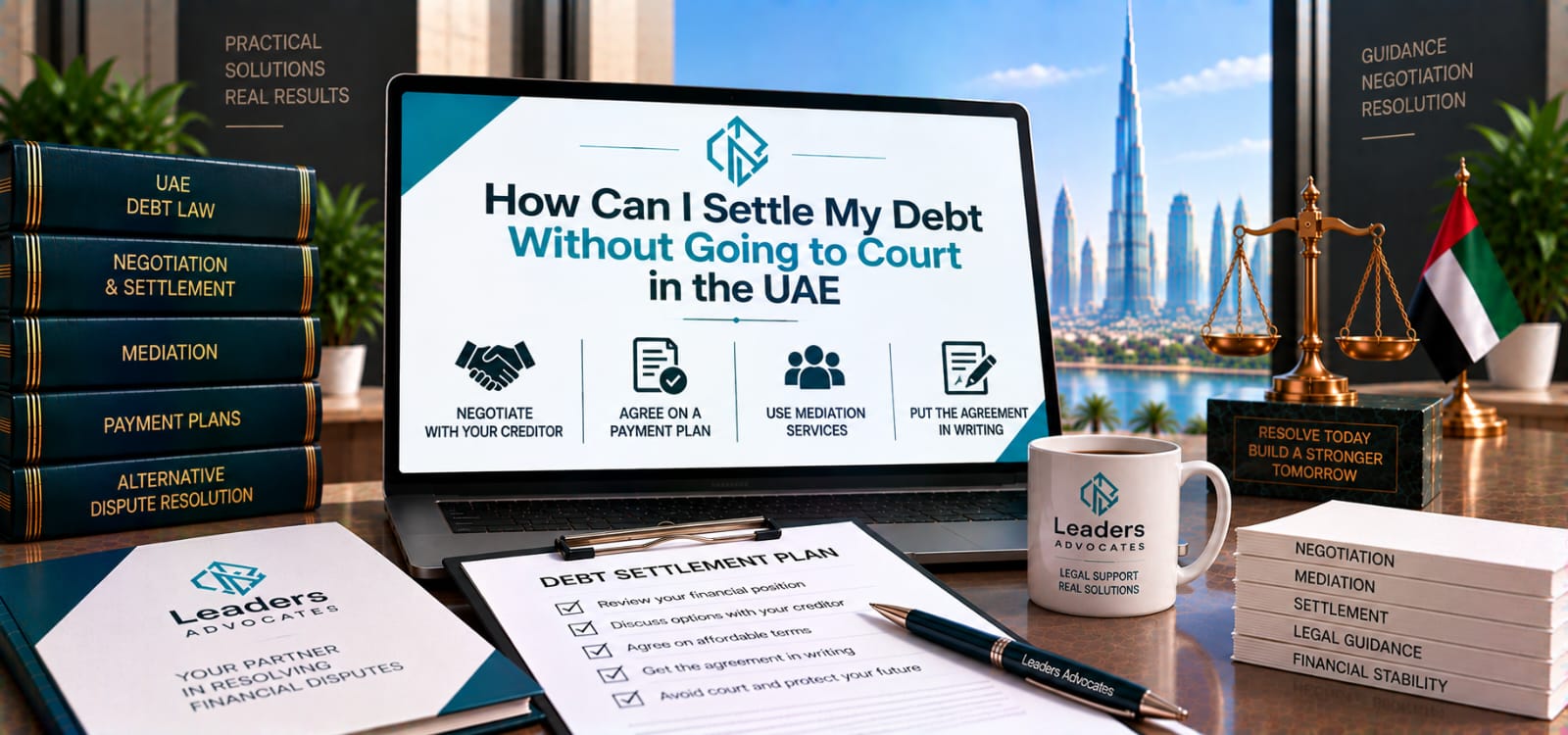
The practical route has five parts. Confirm the balance, assess affordability, make a documented offer, negotiate the details, and sign the result.
The creditor does not have to accept a discount or extension. A proposal becomes more credible when it is early, specific, and supported by evidence.
Confirm the Debt and the Current Balance
Ask for a current statement before discussing a settlement figure. Check the principal, interest, fees, credits, and every payment already made.
Compare the statement with the contract and your bank records. If part of the debt is disputed, identify that part in writing instead of treating the entire balance as accepted.
List any security linked to the debt. This may include a cheque, guarantee, pledged asset, or existing judgment.
Prepare an Honest Financial Picture
Create a monthly budget that a creditor can understand. Include reliable income, essential living costs, other debts, and any short-term change affecting payment.
Keep the presentation focused. The aim is to show what you can pay and why the proposed schedule is more realistic than immediate enforcement.
Prepare these records:
- A list of creditors, balances, and due dates.
- Recent salary or business income evidence.
- Essential housing, school, transport, and medical costs.
- Assets that could fund a lump-sum offer.
- Existing court, execution, or bank complaint documents.
Not Sure What You Can Realistically Offer?
Send your numbers on WhatsApp and get a quick read on what a workable settlement could look like.
Choose the Right Settlement Structure
An installment plan works when income is regular but the full debt cannot be paid at once. The monthly amount should leave enough for basic expenses.
A discounted lump sum may appeal to a creditor that values speed and certainty. Do not promise funds until their source and payment date are clear.
Rescheduling or restructuring may suit bank debt. It can extend the term or adjust the monthly payment, but the revised total cost must be checked.
A temporary reduction may fit a short interruption. State when normal payments can restart and what evidence supports that date.
Make a Credible Written Offer
State the account or contract, the amount you understand to be outstanding, and the reason for the request. Keep the explanation factual and short.
Set out the proposed amount, first payment date, later payment dates, and payment method. If the offer is a full and final settlement, say so expressly.
Ask the creditor to confirm how the account will be treated after completion. Also request the return or cancellation of any unused security.
Negotiate Without Creating New Risk
Do not sign a new acknowledgment before reading its effect. It may confirm a disputed amount, add security, change the forum, or affect a limitation argument.
Do not issue a new cheque that may not clear. A settlement should reduce risk, not create another instrument that can be enforced.
Keep all communications professional. Aggressive messages and unsupported threats rarely improve the commercial discussion.
About to Sign a Settlement or Acknowledgment?
Don’t sign anything until it’s reviewed. Send us the document on WhatsApp and we’ll flag any hidden risk before you commit.
Use Mediation When Direct Talks Stall
Federal Law No. 6 of 2021 provides a mediation framework for civil and commercial disputes. Mediation can help the parties test payment options with a neutral process.
Mediation is not the same as an informal phone call. The final settlement should be recorded in the form required for the route used.
The parties should still check authority. The person signing for a company must be able to bind it.
Dubai Conciliation Can Create an Enforceable Result
Dubai’s Centre for Amicable Settlement of Disputes handles matters within its jurisdiction. Dubai Law No. 18 of 2021 was amended by Dubai Law No. 9 of 2025.
The current framework can give a properly concluded settlement enforceable status. That feature may protect both sides if a later payment is missed.
Whether the Centre is mandatory depends on the claim and the current jurisdiction rules. Check the route before filing a case.
If the Creditor Is a Bank or Finance Company
Start with the institution’s collections or complaints team. Send the proposal through a traceable channel and keep the complaint reference.
If an eligible complaint remains unresolved, Sanadak may review the conduct of a licensed financial institution. Sanadak does not erase a valid debt.
Separate a service complaint from a payment request. One may concern unfair handling, while the other asks for new financial terms.
Struggling With Bank Collections?
Message us now on WhatsApp — we’ll help you build a proposal the bank can actually accept.
Draft the Settlement Carefully
The written settlement should identify the parties, contract, original debt, agreed balance, and payment schedule. Avoid unexplained figures.
It should also state:
- Whether the settlement resolves the full debt or only part of it.
- What happens after a late or missed payment.
- Whether any acceleration clause applies.
- How cheques, guarantees, or other security will be handled.
- When a complaint, claim, or execution file will be withdrawn.
- When the creditor must issue a clearance or release letter.
- Which law and dispute forum govern the settlement.
Be Precise About Security Cheques
List each cheque by bank, number, date, and amount. State whether it will be returned, canceled, replaced, or held until final payment.
Do not rely on a verbal assurance that the cheque will not be presented. The settlement should control its use in clear terms.
Stopping payment is not a general solution to a commercial dispute. Article 675 of the Commercial Transactions Law addresses specific prohibited cheque conduct.
Check the Effect of an Existing Case
A private settlement does not automatically close a filed claim or execution matter. The agreement should allocate responsibility for every required withdrawal or court step.
Confirm the timing. A debtor may need protection before making a large first payment, while the creditor may need security before closing a file.
If a travel restriction or attachment exists, ask what formal application is needed. Do not assume it disappears after a private transfer.
When the Debt Is Beyond a Private Settlement
Federal Decree-Law No. 19 of 2019 provides an insolvency framework for individuals who are not traders. It includes a court-supervised route for financial obligations.
That route is not an out-of-court settlement. It may become relevant when the total debt cannot be managed through realistic negotiation.
Companies and traders may fall under Federal Decree-Law No. 51 of 2023 on Financial Restructuring and Bankruptcy. The correct regime depends on the debtor’s status.
Debt Bigger Than a Private Settlement Can Handle?
Let’s talk on WhatsApp about whether negotiation, mediation, or a formal insolvency route fits your situation.
Build a Settlement File
Keep one folder with the contract, statements, payment records, budget, correspondence, offers, and signed agreement. Add proof of every settlement payment.
Request a dated receipt after each transfer. At completion, obtain the promised clearance, release, and returned security.
Keep the file even after settlement. It may be needed if the account is reported incorrectly or a cheque is later presented.
Related Success Story
Leaders Advocates publishes a debt recovery matter involving successful loan recovery in Dubai. See the Leaders Advocates Success Stories page for the available summary.
That matter involved its own documents and parties. It does not guarantee another result, but it shows why a clear debt file and recovery strategy matter.
Common Mistakes
- Waiting until litigation or execution has started.
- Offering a payment amount without checking affordability.
- Accepting a verbal discount without written confirmation.
- Signing a broad acknowledgment without review.
- Forgetting to address security cheques and guarantees.
- Paying the final amount without obtaining a release.
- Assuming a private settlement automatically closes a case.
- Using an unverified third party to negotiate with the creditor.
Final Takeaway
The best answer to How can I settle my debt without going to court? is to act early and work from accurate numbers. A specific offer gives the creditor something concrete to assess.
The settlement should end the entire dispute, not only change the next payment date. Record the balance, schedule, security, withdrawals, and final release in writing.
Relevant Legal Services
- Debt Recovery Lawyers in Dubai – for settlement analysis, repayment proposals, demands, and enforcement strategy.
- Civil Lawyers in Dubai – for liability disputes, settlement terms, and civil procedure advice.
- Litigation Lawyer in Dubai – for filed claims, execution matters, enforceable settlements, and court applications.
Follow Leaders Advocates on LinkedIn or Leaders Advocates on Facebook for more UAE legal updates.
Frequently Asked Questions
Ready to Settle Your Debt Without Going to Court?
Message Leaders Advocates on WhatsApp now and get a clear, realistic plan for your specific debt today.