

A creditor has invoices, a loan, a returned cheque, or a judgment, but payment still has not arrived. That raises one question: what does a debt recovery lawyer do in Dubai?
Clients often expect a lawyer to send an aggressive letter and file immediately. In practice, choosing the correct route is more important than filing first.
A case against the wrong entity, in the wrong forum, or without the required demand can lose months. A judgment also has limited value unless assets can be found.
Quick Answer
To answer what does a debt recovery lawyer do in Dubai, the lawyer first tests whether the debt is provable, due, and collectable. Counsel verifies the debtor, contract, forum, limitation risk, security, and available assets. The next route may be settlement, cheque execution under Article 667 of Federal Decree-Law No. 50 of 2022, a payment order under Articles 143 to 150 of Federal Decree-Law No. 42 of 2022, arbitration, or an ordinary claim. The lawyer prepares the demand, Arabic documents, filing, hearings, expert stage, and execution requests. Counsel may seek lawful attachments or a travel ban where Article 324 applies. No lawyer can guarantee recovery. The result depends on the evidence, defenses, procedure, debtor location, and assets.
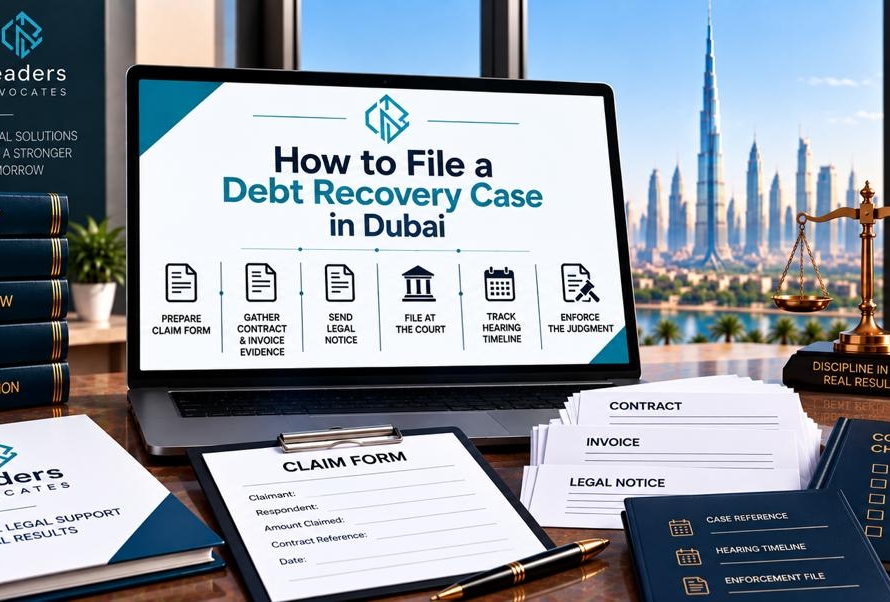
Give the lawyer the complete file, not selected invoices. Include contracts, orders, delivery evidence, messages, cheques, notices, licensing records, and all payments.
Ask for a written route assessment before filing. It should identify the debtor, forum, claim amount, evidence gaps, likely defenses, urgent deadlines, costs, and enforcement prospects.
Use that assessment to choose a proportionate strategy. Settlement may be best for a solvent debtor, while urgent security may matter more where assets are moving.
What does a debt recovery lawyer do in Dubai?
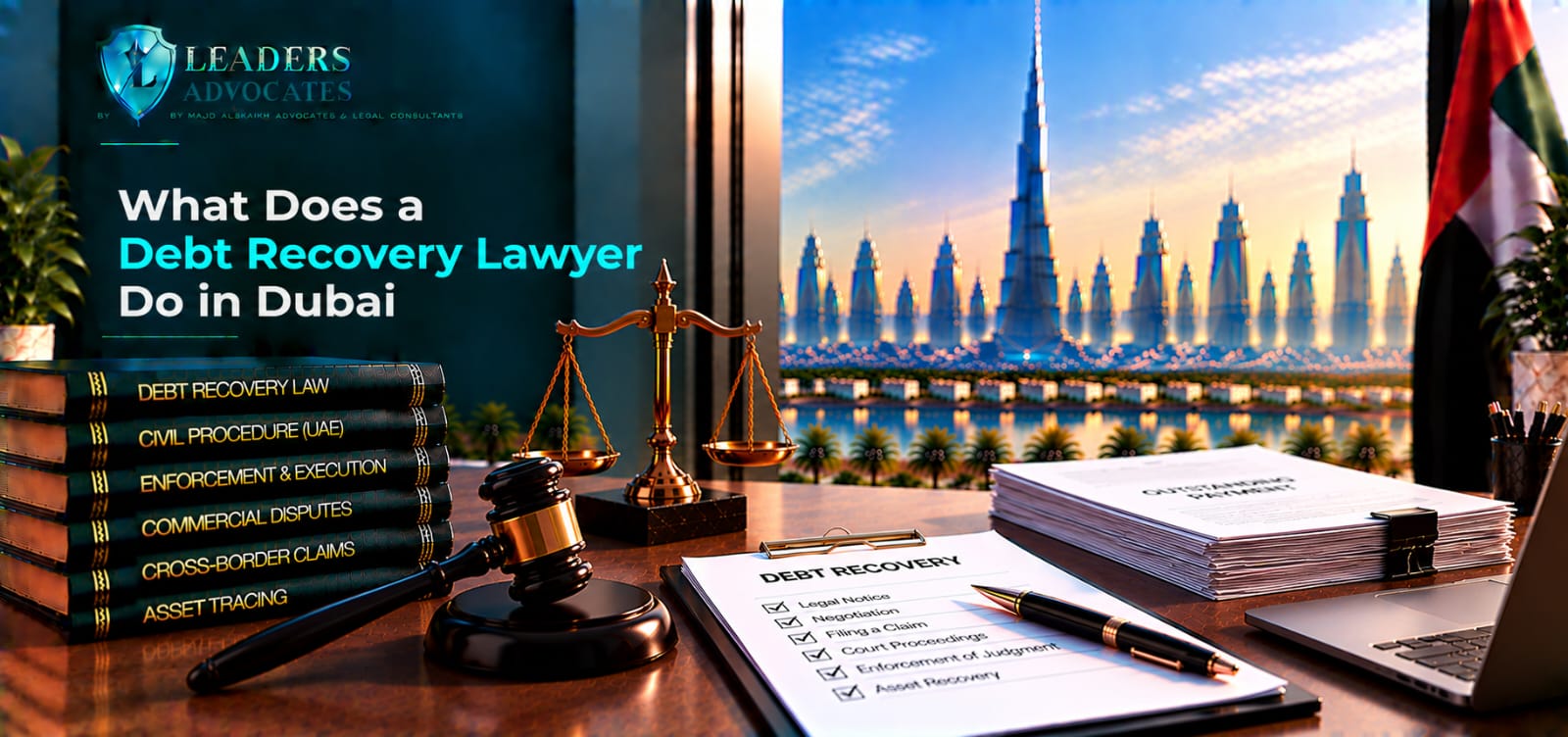
The lawyer acts as a route planner from evidence to collection. The same unpaid amount can require cheque execution, a payment order, conciliation, litigation, arbitration, or insolvency filing.
The first task is diagnosis. The lawyer should not promise an outcome before reviewing who owes the money, why it is due, and what can actually be enforced.
The second task is procedure. Every route has formal requirements, service rules, deadlines, appeal rights, and evidence standards.
The final task is collection. A debt file is incomplete when judgment is issued but no execution strategy exists.
Owed Money and Not Sure Where to Start?
Message Leaders Advocates on WhatsApp for a quick review of your documents and the best route to recovery.
Stage 1: Assess the Debt and Evidence
A lawyer reconciles the principal, payments, credits, agreed charges, and current balance. This avoids filing an amount that cannot be explained.
Counsel also identifies whether the debt is fixed and due. Future instalments, conditional payments, retention, and disputed variations may not be immediately recoverable.
The evidence review normally covers:
- Contracts, purchase orders, and incorporated terms.
- Invoices and a reconciled statement of account.
- Delivery notes, completion certificates, and acceptance records.
- Bank transfers, acknowledgments, and partial repayments.
- Emails, messages, meeting minutes, and call follow-ups.
- Cheques, guarantees, pledges, and other security.
- Demands, notices, court papers, and settlement drafts.
Federal Decree-Law No. 35 of 2022 recognizes electronic evidence. Complete exports and original files are stronger than isolated screenshots.
Stage 2: Identify the Correct Debtor
A business may trade under a brand that differs from its licensed legal name. A group may contain several companies with similar names.
The lawyer checks the contract, signature block, trade license, invoices, bank beneficiary, and correspondence. The aim is to identify who accepted the obligation.
Counsel also reviews personal guarantees, joint debtors, and guarantors. A company liability does not automatically become an owner’s personal debt.
For personal claims, the lawyer confirms the individual’s full name, identification, address, and current location. Service problems can delay an otherwise strong case.
Stage 3: Check Jurisdiction, Forum, and Limitation
Dubai Courts may have jurisdiction based on domicile, performance, contract, or other connecting facts. The answer should not be assumed from the creditor’s location.
An arbitration clause may require a private tribunal. DIFC or ADGM clauses may point to another court framework.
Some claims must pass through conciliation or a specialized forum. Rental, employment, construction, maritime, and regulated-sector debts can require particular analysis.
Limitation and statutory non-hearing periods vary by claim type. Maritime and transport claims can have much shorter periods than ordinary debts.
A lawyer should diary the earliest arguable deadline. Negotiations do not safely suspend every period.
Stage 4: Draft and Serve the Demand
A good demand identifies the parties, legal basis, amount, maturity, payment method, deadline, and intended route. It also preserves the creditor’s position without unnecessary threats.
For a payment order, Article 143 of Federal Decree-Law No. 42 of 2022 requires a prior demand allowing at least five days to pay.
The contract may require another method or longer period. The lawyer should satisfy both the statutory and contractual requirements where possible.
Service evidence matters. Registered mail, courier, agreed electronic service, or court methods may be used depending on the documents and procedure.
The demand can also invite a structured settlement. A settlement should define the balance, schedule, security, existing proceedings, default, and final release.
Stage 5: Choose the Procedure
Negotiation and Settlement
Settlement can recover money sooner and at lower cost. Counsel evaluates whether the proposal reflects the debtor’s cash flow, assets, and prior conduct.
The agreement should be enforceable and internally consistent. It should address cheques, guarantees, releases, and any pending case.
Cheque Execution
Article 667 of Federal Decree-Law No. 50 of 2022 gives specified returned cheques the force of an executive instrument. The bank return reason is critical.
A lawyer reviews the original cheque, return memo, underlying debt, payments, and settlement history. Not every returned cheque follows the same route.
Payment Order
Articles 143 to 150 provide a document-based payment-order procedure. It may suit a written, fixed, and due debt after the required demand.
A real dispute over liability, performance, or amount may require an ordinary claim. The lawyer should not force an unsuitable file into the faster procedure.
Ordinary Claim
An ordinary civil or commercial claim allows full pleadings, defenses, documents, and expert evidence. It is common where accounts or performance are contested.
Onshore court proceedings generally require Arabic pleadings and certified Arabic translations. Counsel organizes the chronology and documents for accurate translation.
Arbitration
Where a valid clause applies, the lawyer commences arbitration under the agreed rules. Those rules affect strategy and cost.
Stage 6: Run the Expert and Hearing Process
Dubai debt cases often involve a court-appointed accounting or technical expert. The expert may reconcile payments, performance, variations, and the remaining balance.
The lawyer prepares a clear submission, attends meetings, supplies indexed documents, and challenges factual or accounting errors. A disorganized file can distort the expert’s work.
Counsel also manages interim orders, service, procedural directions, hearing submissions, and appeal deadlines.
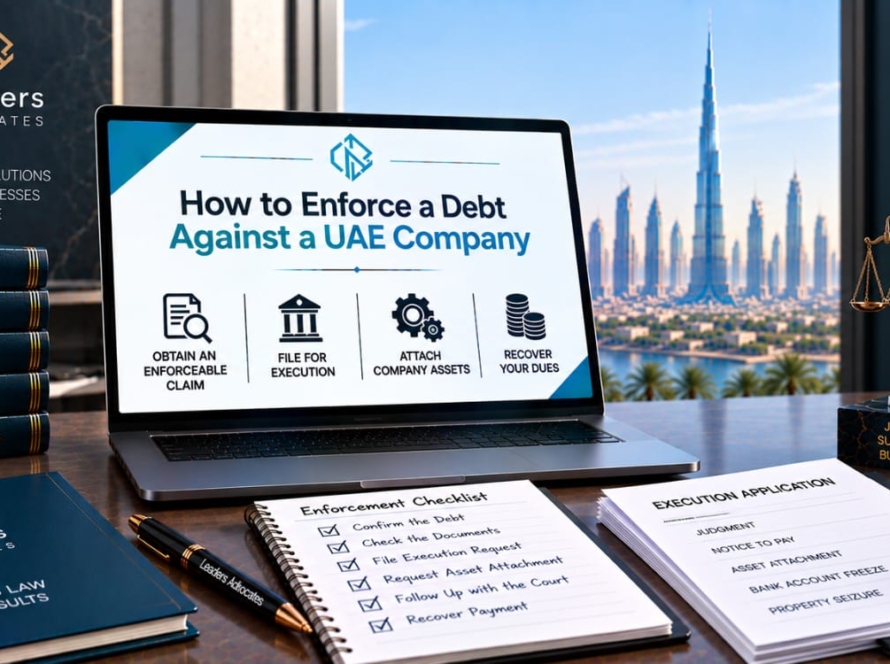
Stage 7: Enforce the Judgment or Award
The lawyer opens an execution file and requests measures against assets. These may include bank accounts, vehicles, property, shares, salary, and debts owed by third parties.
Article 324 permits a travel-ban request where the debt is at least AED 10,000 and the statutory conditions are met. The creditor must establish the required grounds.
The judge may require evidence, investigation, or safeguards. A travel ban is never automatic and does not itself produce payment.
Article 320 allows up to six months for payment. The execution judge may also permit instalments over three years with assessed guarantees or precautionary measures.
Enforcement requires active follow-up. Asset responses, employer information, third-party disclosures, objections, and payment proposals must be reviewed.
Stage 8: Handle Insolvency and Cross-Border Issues
Federal Decree-Law No. 51 of 2023 governs covered mainland debtors in financial restructuring and bankruptcy. It has applied since 1 May 2024.
If proceedings open, individual enforcement may be restricted and the creditor may need to submit a documented claim within the collective process.
What a Debt Recovery Lawyer Cannot Do
- Guarantee payment, judgment, attachment, or a travel ban.
- Create assets where the debtor has none.
- Seize property without court authority.
- Threaten criminal action for ordinary non-payment.
- Contact unrelated people to shame the debtor.
- Ignore arbitration, jurisdiction, or statutory time bars.
- Manufacture evidence or conceal unfavorable documents.
Faris Raian‘s Professional Contribution
Faris Raian, Managing Partner at Leaders Advocates, notes that clients often measure a debt lawyer by filing speed. He considers route selection more important than immediate filing.
In his view, time spent checking the documents, correct entity, and forum can save months. A claim filed against the wrong party or in the wrong forum rarely recovers faster.
This contribution reflects professional experience, not a guarantee. Every debt matter depends on its facts, documents, procedure, and available assets.
Documents the Lawyer Will Need
- The complete signed contract and every amendment.
- Invoices, account statements, and payment records.
- Delivery, completion, acceptance, or handover evidence.
- Full electronic communications and acknowledgments.
- Cheques, return memos, guarantees, and security documents.
- Debtor licensing, identity, address, and asset information.
- Earlier notices, settlements, court papers, and expert reports.
- A dated chronology identifying key people and events.
Provide unfavorable documents as well. Counsel needs to anticipate the defense rather than discover it after filing.
Common Client Mistakes
- Sending an informal demand that does not support a payment order.
- Providing only invoices without the underlying contract and delivery proof.
- Naming a brand rather than the contracting entity.
- Waiting until a limitation issue becomes urgent.
- Treating judgment as the end of the recovery process.
- Paying for extensive proceedings without checking assets.
- Accepting a settlement that does not address existing cheques.
- Making public accusations that create separate legal exposure.
Not Sure Which Recovery Route Fits Your Case?
Settlement, a payment order, cheque execution, or a civil claim can each apply. Send us your details on WhatsApp.
How a Lawyer Can Help
The lawyer connects evidence, procedure, settlement, and execution in one plan. That coordination is the practical value of specialist debt work.
Need a debt file taken from demand to collection? Leaders Advocates can assess the documents, debtor, forum, settlement prospects, and enforcement options.
Relevant Legal Services
The closest services for this matter are debt recovery lawyer services in Dubai, litigation lawyer services in Dubai, and civil lawyer services in Dubai. The suitable service depends on the facts, documents, regulator, forum, procedural stage, and requested remedy.
Relevant Success Story
The firm publishes selected completed matter examples in its Success Stories archive. A prior result does not guarantee a similar outcome. Every matter depends on its facts, documents, evidence, procedure, and legal circumstances.
Ready to Move From Demand to Collection?
Get your evidence, filing, and enforcement strategy aligned. Contact Leaders Advocates on WhatsApp.
FAQs
Final Takeaway
A debt recovery lawyer turns an unpaid amount into a legally supported collection plan. The work covers evidence, demands, procedure, settlement, judgment, and execution.
The safest next step is a complete document and asset review before filing. The result depends on the contract, evidence, defenses, forum, deadlines, debtor location, and recoverability.