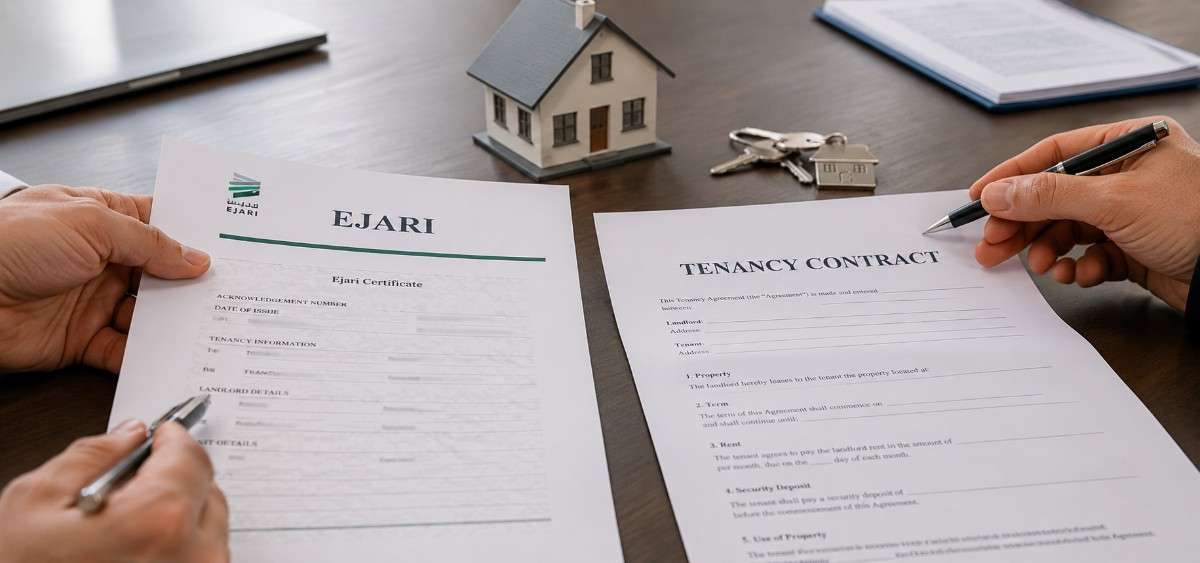

Many people think an Ejari certificate and a tenancy contract are the same document, but they’re not. Understanding the difference is essential because both play different legal roles when renting a property in Dubai. This guide explains what each document does, why you need both, and what happens if one is missing.
Quick Answer
The difference between Ejari and a tenancy contract is straightforward. A
A tenancy contract is the legal agreement between the landlord and tenant that sets out the terms of the lease.
Ejari is the Dubai Land Department’s official registration of that tenancy contract, making the lease legally recognized by government authorities.
In simple words: the tenancy contract creates your rights, while Ejari officially records and protects those rights with Dubai authorities.
This guide is for tenants and landlords in Dubai. People often confuse the two when something goes wrong. A DEWA connection may be refused, a visa application may become stuck, or an RDC case may be turned away. This guide explains what each document does, why you need both, and what happens if one is missing.
Ejari is the mandatory registration of that contract with RERA through the Dubai Land Department. Registration costs AED 177.75 online or about AED 220 at a trustee center It normally takes one to two working days.
Without Ejari, you cannot connect DEWA, sponsor family visas against the address, or file an RDC case. Registration is legally the landlord’s duty, although tenants usually complete it. Sign the contract first, register it within days, and keep both documents.
What Is a Tenancy Contract in Dubai?
A tenancy contract is the written agreement between a landlord and tenant that creates the lease.
Article 4 of Law No. 26 of 2007 requires the agreement to be in writing. It must state the following essential information:
Everything you may later argue about is recorded in this document. This includes:
Dubai uses a unified tenancy contract recognized by the Dubai Land Department. The parties can use an addendum to include any additional agreed terms.
Read the contract carefully before signing it. Ejari registration comes later and records whatever you signed, whether the terms are good or bad.
Want to know how a tenancy agreement is prepared? Read our step-by-step guide on “How to Make a Tenancy Contract in Dubai” to understand the legal requirements, essential clauses, and the documents you’ll need.
What Is Ejari Registration in Dubai?
“Ejari” means “my rent” in Arabic. It is the official system used to register tenancy contracts in Dubai.
RERA operates the system under the Dubai Land Department. Registration became mandatory under the 2008 amendment to the tenancy law.
The system records:
After registration, you receive an Ejari certificate with a unique number. Government systems use this number to recognise your tenancy.
DEWA requires it before connecting utilities. Immigration requires it for family visa applications. The Rental Dispute Centre also requires it before hearing your case.
Ejari does not replace your tenancy contract or improve its terms. It is official proof that the contract exists.
What Is the Difference Between Ejari and Tenancy Contract
Not Sure Which Document Protects Your Rights?
Our tenancy dispute lawyers in Dubai can review your contract and Ejari status and help you understand your legal position.
Is a Tenancy Contract Valid Without Ejari?
Yes. A signed tenancy contract binds the landlord and tenant as a matter of contract law.
Skipping Ejari registration does not erase the obligations accepted by either party. However, that validity provides limited practical protection.
An unregistered contract is not recognised by the government systems that matter. Without Ejari, you cannot:
The RDC treats Ejari registration as a condition for filing a case. Your rights may exist on paper, but you cannot enforce them through the normal channels until registration is completed.
A clause stating that “Ejari is not required” does not change the legal position. Registration is mandatory, and a private agreement cannot waive this requirement.
Who Is Responsible for Ejari Registration?
The landlord is legally responsible for registering Ejari.
The tenancy law places the registration duty on the landlord’s side. In practice, tenants usually complete the registration themselves.
Tenants often handle the process because they need the certificate for DEWA and visa applications. Either party is permitted to complete the registration.
If your landlord refuses to cooperate, register the contract yourself using the required documents. Keep all receipts and related communication.
A landlord who obstructs registration is breaching a legal duty. This will not help the landlord later at the Rental Dispute Centre.
Landlord Refusing to Register Ejari?
Understand your rights and available legal options before registration problems affect your tenancy.
Ejari Cost, Documents, and Registration Time
The cost of Ejari registration in Dubai depends on how you submit the application.
Documents Required for Ejari Registration
Prepare the following documents before applying:
When Should You Register Ejari?
Register a new tenancy contract promptly after signing it. Every renewal must also be registered within 14 days of the new term starting.
Each renewal requires a separate registration. Ejari never renews automatically.
Ejari and Tenancy Contract Laws in Dubai
The relationship between the tenancy contract and Ejari is governed by specific legal provisions.
Article 4 of Law No. 26 of 2007
The tenancy relationship must be recorded in a written contract. The contract must identify the property, its purpose, the duration, and the rent.
Article 4 as Amended by Law No. 33 of 2008
Tenancy contracts and any amendments must be registered with RERA through the Ejari system.
Article 6 of Law No. 26 of 2007
The tenancy contract renews automatically if the tenant remains in the property without an objection. This is why every renewal cycle requires a new Ejari registration.
Decree No. 26 of 2013
This decree established the Rental Dispute Settlement Centre. In practice, Ejari registration is required to file rental claims before the center.
Can You File an RDC Case Without Ejari?
No. The Rental Dispute Centre requires an Ejari certificate when a claim is filed.
A claimant without an Ejari certificate is usually directed to register the tenancy first. This delays the case and creates further difficulty when the landlord refuses to cooperate.
Registration also appears in rental judgments. In a December 2024 decision, an eviction claim was rejected.
The Rental Dispute Settlement Committee ordered the tenancy to be renewed for another year at the same rent. It also ordered the renewal to be recorded in an Ejari-registered contract.
This shows that registration is part of the lawful position the tribunal restores. The practical rule is simple: the contract wins your case, while Ejari gets you through the door.
You need both.
At Leaders Advocates, our team is recognised among the best advocates in Dubai, helping tenants and landlords resolve Ejari registration issues and Rental Dispute Centre cases efficiently.
Ejari vs. Tenancy Contract FAQs
One Contract, One Registration, No Gaps
Most Ejari problems are caused by timing. A renewal may be signed but never registered, or an existing registration may be cancelled too early.
If there is a gap in your paperwork and a dispute is approaching, deal with the gap first. Our tenancy dispute lawyers in Dubai can review the documents and help correct the sequence.
Need Clarity on Your Tenancy Rights?
A small mistake with Ejari or your tenancy contract can create bigger legal problems later. Speak with our Dubai tenancy lawyers for guidance based on your situation.