


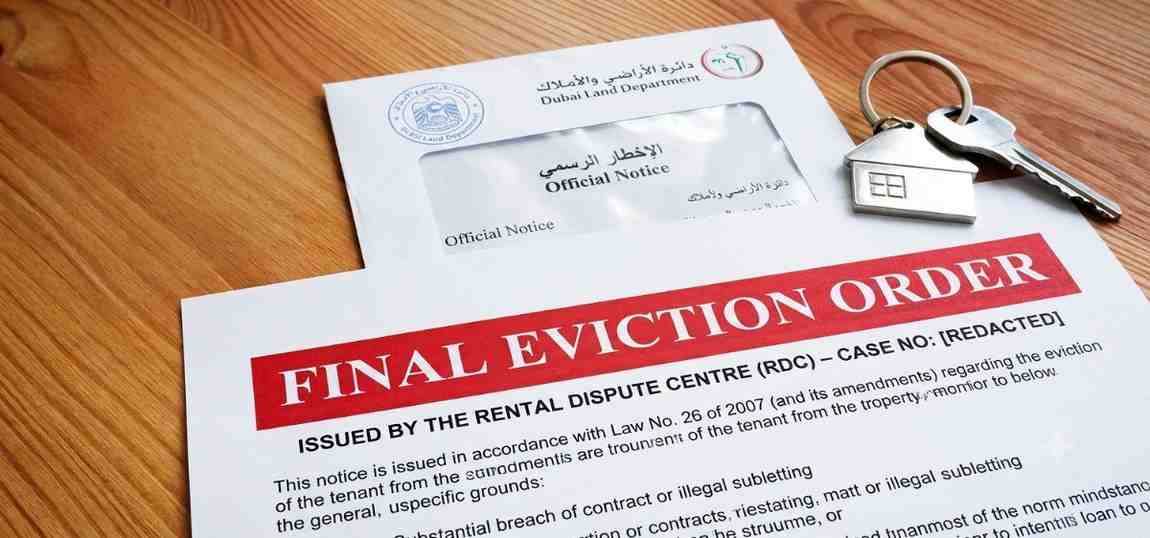

Many tenants in Dubai worry about receiving an eviction notice, while many landlords are unsure when they can legally ask a tenant to leave. The rules can be confusing, and making a mistake with the notice or legal process can lead to unnecessary disputes.
Yes, a landlord can evict a tenant in Dubai, but only in the situations allowed under Article 25 of Law No. 26 of 2007, as amended by Law No. 33 of 2008.
A landlord cannot evict a tenant simply because they want the property back or have found someone willing to pay higher rent. They must have a valid legal reason and follow the required notice procedure.
In this guide, you’ll learn when a landlord can legally evict a tenant, the difference between eviction during the tenancy and at the end of the lease, the notice requirements, and when it’s advisable to seek legal advice from the best advocates in Dubai to protect your rights under Dubai law.
Two Types of Eviction: During the Lease vs. at Renewal
Dubai’s tenancy law treats these as separate tracks, each with its own grounds and notice period.
| During the Lease Term | At the End of the Lease |
|---|---|
| Requires a specific tenant breach, such as non-payment of rent or unauthorized subletting. | Does not require any fault by the tenant. |
| The notice period is generally 30 days to remedy the issue. | Requires 12 months’ notice served through a notary public or registered mail. |
| Grounds relate to the tenant’s conduct or breach of the tenancy agreement. | Grounds relate to the landlord’s plans for the property, such as sale, renovation, demolition, or personal use. |
| Eviction can proceed if the tenant fails to remedy the breach within the required time. | Eviction can only proceed after the full notice period has expired. |
Grounds for Eviction During the Lease Term
Article 25(1) sets out a limited list of reasons a landlord can end a tenancy before it expires.
| Ground | What It Requires |
|---|---|
| Non-payment of Rent | Rent remains unpaid for 30 days after the landlord serves a formal written notice demanding payment. |
| Unauthorized Subletting | The tenant sublets all or part of the property without obtaining the landlord’s prior written consent. |
| Illegal Use | The property is used for activities that violate public order, public morals, or other applicable laws. |
| Misuse of the Property | The property is used for a purpose different from the one agreed upon in the tenancy contract. |
| Serious Damage | The tenant causes damage to the property that goes beyond normal wear and tear or affects its condition. |
For most of these grounds, the landlord must first serve a 30-day written notice giving the tenant a chance to fix the issue. Only if the tenant fails to do so can the landlord file a case with the Rental Disputes Centre.
Grounds for Eviction at the End of the Lease
Article 25(2) allows a landlord to decline to renew a lease for reasons that have nothing to do with the tenant’s conduct.
- The landlord wants to sell the property.
- The landlord or a first-degree relative wants to move in personally.
- The property needs major renovation or maintenance that cannot be done while occupied.
- The property is being demolished for reconstruction.
If a landlord recovers the property to use personally or houses a relative, the law prohibits re-letting it to a new tenant for two years from the eviction date. This is meant to stop the personal-use ground being used as a way around rent regulations.
Dealing with Non-Payment or Lease Breach?
A single technical mistake in serving a 30-day notice can delay your legal action at the Rental Disputes Centre. Have our tenancy lawyers draft or review your eviction notice.
The Notice Rules That Make or Break an Eviction
More evictions fail on notice technicalities than on the underlying reason for the eviction.
For end-of-lease eviction, the notice period is 12 months and must be delivered through a notary public or registered mail. The clock starts from the date the notice is actually served, not the date it was written or sent. A notice delivered by email, SMS, or WhatsApp does not satisfy the legal requirement, no matter how clearly it states the landlord’s intentions.
For mid-lease eviction grounds like non-payment, the notice period is generally 30 days, and the same emphasis on proper written delivery applies. A landlord who skips this step, or who cannot prove it was properly served, risks having the entire eviction thrown out regardless of how valid the underlying reason was.
Received an Unlawful Eviction Notice?
Notices sent via WhatsApp, email, or without proper 12-month legal grounds are invalid under Dubai law. Get an instant review of your eviction notice from our legal team.
How the Eviction Process Actually Works
Eviction in Dubai is not something a landlord can carry out unilaterally. It has to go through the Rental Disputes Centre.
- Identify the correct ground for eviction under Article 25, and confirm which notice period applies.
- Serve written notice through a notary public or registered mail, keeping proof of delivery.
- Wait out the full notice period, 30 days for most mid-lease grounds, 12 months for end-of-lease grounds.
- If the tenant has not vacated or resolved the issue, file a case with the Rental Disputes Centre.
- Attend mediation, and if that fails, a first-instance hearing where a judgment is issued.
- If the tenant still does not comply, the Execution Department enforces the judgment.
A landlord cannot legally change the locks, remove a tenant’s belongings, or cut off utilities to force someone out. Enforcement has to go through the Centre, even once a judgment has been issued.
What Happens if a Tenant Refuses to Leave
If a tenant does not leave voluntarily after a valid notice period, the landlord’s only lawful route is to file a case with the Rental Disputes Centre.
Once a judgment is issued in the landlord’s favor, and the tenant still refuses to vacate, the Execution Department carries out the eviction. This can include physically removing the tenant’s belongings under official supervision, but only after the proper judicial process, never before it.
Tenants who believe the eviction notice is invalid, whether because the ground does not apply or the notice was not properly served, can raise this directly at the Centre rather than simply refusing to engage.
Facing a Rental Disputes Centre (RDC) Case?
Whether you need to file an official eviction claim or defend against an unfair lockout or termination, our real estate advocates represent you directly before the RDC.
What a Landlord Cannot Do
A number of shortcuts landlords sometimes attempt are not legally valid and can backfire badly.
- Evicting a tenant without any of the grounds set out in Article 25.
- Sending the eviction notice by email, text message, or verbally instead of by notary or registered mail.
- Giving less than 12 months’ notice for an end-of-lease eviction.
- Cutting off electricity, water, or access to force a tenant out.
- Re-letting a property to a new tenant within two years of a personal-use eviction.
- Changing the locks or removing belongings without a court judgment and Execution Department involvement.
Any of these can turn a landlord’s valid underlying case into a losing one or expose them to a claim from the tenant.
Whether you are a landlord planning an eviction or a tenant who has received a notice, an experienced Dubai real estate lawyer from our team can review the notice and tell you plainly whether it holds up.
Frequently Asked Questions
A Dubai landlord can evict a tenant, but only within a framework that protects tenants from being removed casually.
Valid grounds, proper notice, and the Rental Disputes Centre process all have to line up. Miss any one of them, and even a landlord with a legitimate reason can lose the case.
If you are facing an eviction or considering one, our experienced real estate lawyers in Dubai can review the specific notice and grounds involved and tell you where things actually stand.
Need Direct Legal Advice on Your Tenancy Dispute?
Every tenancy situation has unique contract terms and notice dates. Contact our experienced Dubai real estate lawyers on WhatsApp for quick, direct legal guidance.