



Buying property in a different legal system can feel intimidating, even when the market itself looks straightforward.
So what does the actual process of buying property in Dubai involve, step by step?
In short, foreigners can buy freehold property in designated zones, the process runs through the Dubai Land Department, and most straightforward transactions close within a few weeks.
The details matter more than the headline, though. Financing, off-plan versus ready property, and the paperwork around the transfer can each add time or cost if you are not prepared for them.
How do you buy property in Dubai?
Foreign nationals, including non-residents, can buy freehold property in Dubai’s designated investment zones, such as Downtown Dubai, Dubai Marina, and Business Bay. The process runs through a RERA-licensed agent, a signed Memorandum of Understanding (Form F), a No Objection Certificate from the developer, and a final transfer at a Dubai Land Department trustee office.
Budget for the purchase price plus roughly 7 to 8% in transaction costs, including the 4% DLD transfer fee, agency commission, and trustee and admin charges. A straightforward cash purchase can close in 1 to 2 weeks once the NOC is issued, while mortgaged or off-plan purchases usually take longer. Property worth AED 2 million or more in a freehold zone can also qualify the owner for a 10-year Golden Visa.
Buying Property in Dubai?
Before paying a deposit or signing Form F, have an experienced Dubai real estate lawyer review the transaction to identify legal risks, hidden obligations, and unexpected costs.
Who Can Buy Property in Dubai
Dubai is one of the more open property markets in the region. Foreign nationals, whether they live in the UAE or not, can buy freehold property in areas the government has designated for foreign ownership.
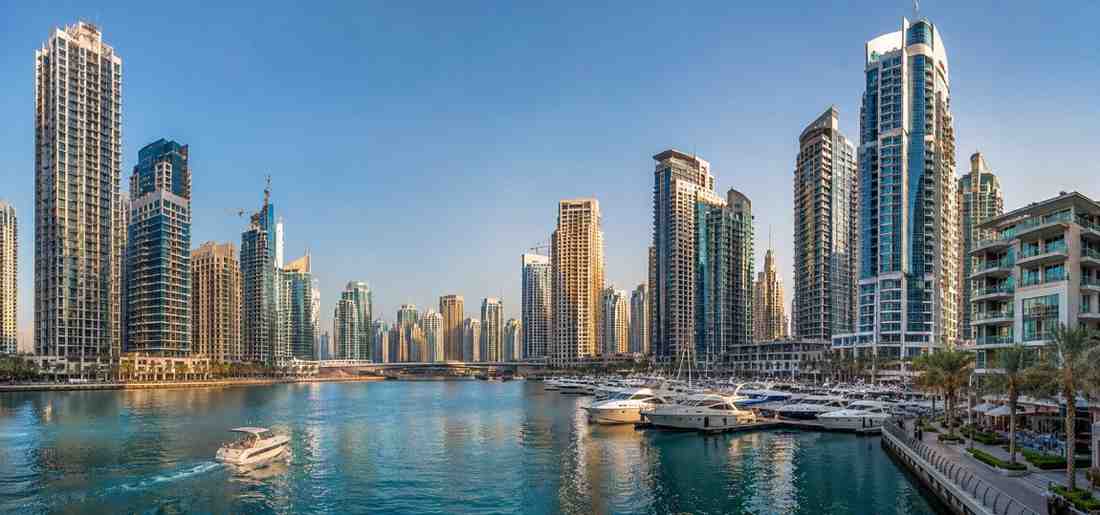
These designated freehold zones include well-known areas like Downtown Dubai, Dubai Marina, Palm Jumeirah, Business Bay, and Jumeirah Village Circle, along with many newer master-planned communities. Outside these zones, ownership options are more limited and usually take the form of long leasehold rights instead of full title.
Before falling in love with a specific building, it is worth confirming the area is actually within a freehold zone. Not every part of Dubai qualifies, even if the listing does not say so clearly.
Freehold vs. Leasehold, in Plain Terms
These two terms come up constantly, and mixing them up can change what you are actually buying.
Off-Plan vs. Ready Property
Both routes are common in Dubai, and each suits a different kind of buyer.
How to Buy Property in Dubai, Step by Step
The process is more procedural than complicated; once you know the order, the steps come in.
What is Form F in a Dubai property purchase?
Form F is the Memorandum of Understanding signed after the buyer and seller agree on the price, payment schedule, and transaction conditions.
- Work with an RERA-licensed agent to shortlist properties in freehold zones that fit your budget.
- Make an offer and agree on the price, payment schedule, and any conditions with the seller or developer.
- Sign the Memorandum of Understanding, known as Form F, and pay the deposit, usually 10% of the price.
- For secondary market purchases, the seller obtains a No Objection Certificate from the developer, confirming service charges are paid.
- If financing the purchase, get your mortgage pre-approval and final offer letter from the bank.
- Book an appointment at a Dubai Land Department trustee office, in person or through the Dubai REST app.
- Attend the appointment, pay the DLD transfer fee and other charges, and sign the transfer.
- Receive the new title deed in your name, which is your official proof of ownership.
For off-plan purchases, steps four through seven look different. Instead of an NOC and a title deed, you register the sale on the Oqood system and receive a title deed only once the project is complete.
Costs to Budget for Beyond the Purchase Price
The advertised price is never the full cost. Most buyers should plan for roughly 7 to 8% on top of the purchase price.
| Cost | Typical Amount |
|---|---|
| DLD Transfer Fee | 4% of the purchase price |
| Trustee Office Fee | AED 4,000 for properties under AED 500,000, or around AED 5,000 for properties above that |
| DLD Admin & Title Deed Fees | A few hundred dirhams combined |
| Agency Commission | Typically around 2% of the purchase price |
| Developer NOC Fee | AED 500 to AED 5,000 depending on the developer |
| Mortgage Registration Fee (If Financed) | 0.25% of the loan amount plus a small administration fee |
The 4% DLD fee is legally split between buyer and seller, but in practice buyers often cover the full amount. This is usually settled during the Form F negotiation, so raise it early rather than assuming.
The Laws That Protect Buyers
A handful of laws sit behind almost every property purchase in Dubai, and it helps to know what each one actually does.
| Law | What It Covers |
|---|---|
| Law No. 7 of 2006 | Real property registration and freehold ownership in designated areas. |
| Regulation No. 3 of 2006 | Defines which areas are open to ownership by non-UAE nationals. |
| Law No. 8 of 2007 | Escrow accounts that protect off-plan buyer payments. |
| Law No. 13 of 2008 (as amended) | The Interim Real Property Register (Oqood) for off-plan property sales. |
| Law No. 14 of 2008 | Mortgages over real property in Dubai. |
| Law No. 27 of 2007 | Jointly owned property, owners’ associations, and service charges. |
The escrow rules under Law No. 8 of 2007 are worth understanding if you are buying off-plan. They stop a developer from spending your payments before construction actually reaches the matching stage.
Financing a Purchase as a Foreign Buyer
Mortgages are available to non-resident and resident foreign buyers alike, though the terms differ.
Non-residents typically need a larger down payment than UAE residents, and banks look closely at income documentation from abroad. Getting a mortgage pre-approval before you start viewing properties is one of the more useful steps a buyer can take, since it sets a realistic budget before you fall for something outside your range.
If a mortgage is involved, expect the transfer timeline to stretch by a week or two. The bank’s valuation, final offer letter, and mortgage registration all need to happen before the trustee office appointment can go ahead.
Buying Your First Property in Dubai?
If you’re a foreign buyer or purchasing from overseas, our lawyers can guide you through the legal process, required documents, ownership rules, and transfer requirements.
Buying Property and the Golden Visa
Property investment in Dubai is one of the more direct routes to long-term UAE residency.
An investment of AED 2 million or more in a freehold zone can qualify the owner for a renewable 10-year Golden Visa. This can be a single property or several properties combined, as long as the total registered value on the title deeds reaches the threshold, and the properties sit in the applicant’s own name.
Mortgaged properties can sometimes count too, provided the paid-off portion meets the threshold and the bank issues a no-objection letter. Confirming the current rules directly with the Dubai Land Department or a lawyer before you buy is worth doing, since eligibility details can shift.
Common Mistakes to Avoid
Most problems buyers run into are avoidable with a bit of preparation.
- Assuming a property is freehold without checking the zone.
- Skipping due diligence on the developer’s track record for off-plan purchases.
- Not confirming who pays the 4% DLD fee before signing Form F.
- Forgetting to budget the full 7 to 8% in transaction costs on top of the price.
- Using an agent who is not registered with RERA.
- Assuming pre-approval guarantees final mortgage approval.
None of these are complicated to avoid. They just need to be checked before you sign, not after.
Buying property in Dubai for the first time, or bringing in a mortgage and an off-plan contract at once? An experienced Dubai real estate lawyer from our team can review your paperwork and confirm exactly what you are signing before your deposit goes out.
Frequently Asked Questions
Buying property in Dubai is a well-established process, and thousands of foreign buyers go through it every year without major issues.
The steps that trip people up are rarely about the law itself. They are usually about missed paperwork, unclear cost expectations, or signing a Form F without checking who pays what.
If you are preparing to buy in Dubai, our real estate lawyers in Dubai can review your Memorandum of Understanding, confirm the freehold status of the property, and make sure the transfer goes through without surprises.
Planning to Buy Property in Dubai?
From reviewing Form F and checking freehold ownership to advising on off-plan purchases, mortgages, and Dubai Land Department transfers, our real estate lawyers help buyers understand the legal process before they commit.