



Property Conveyancing in the UAE is the legal process of transferring real property ownership from seller to buyer. In Dubai, it is completed only when the transfer is registered with the Dubai Land Department.
Article 9 of Dubai Law No. 7 of 2006 was replaced by Dubai Law No. 7 of 2019. A disposition creating, transferring, changing, or extinguishing real property rights is ineffective unless recorded in the Real Property Register. Signing a sale agreement alone therefore does not transfer registered title.
Other emirates maintain their own land registries under their own laws. This guide does not cover those laws.
The Legal Framework Behind A Sale
Two layers of law apply: the sale contract and the registration rules.
| Point | What The Law Provides | Source |
|---|---|---|
| The sale contract | A sale is a contract under which the seller transfers ownership or another financial right to the buyer for a price in cash. The contract sets the parties’ obligations, while the transfer of the property right itself takes effect on registration. | Civil Transactions Law, Art 445 |
| Registration | A disposition that creates, transfers, changes, or extinguishes real property rights must be recorded in the Real Property Register, and it is not effective unless it is recorded. | Dubai Law 7/2006, Art 9, as replaced by Law 7/2019 |
| Off-plan units | An off-plan sale is recorded in the initial (interim) register, which the Land Department says preserves the buyer’s rights until the property is transferred to the real estate register. | Dubai Law 13/2008; Dubai Land Department |
| Ownership | Ownership passes when the sale is complete unless the law or the agreement says otherwise. For real property, the registration rules decide | Civil Transactions Law, Art 466(1) |
| Delivery | The seller must deliver the property free of any other right, with the ownership documents where their nature requires them. | Civil Transactions Law, Art 469 |
| Costs | The buyer pays the costs of paying the price and registering the sale, and the seller pays the costs of delivery, unless a contrary agreement, the law, or custom provides otherwise. | Civil Transactions Law, Art 521 |
Property Conveyancing in the UAE and the Steps of a Dubai Sale
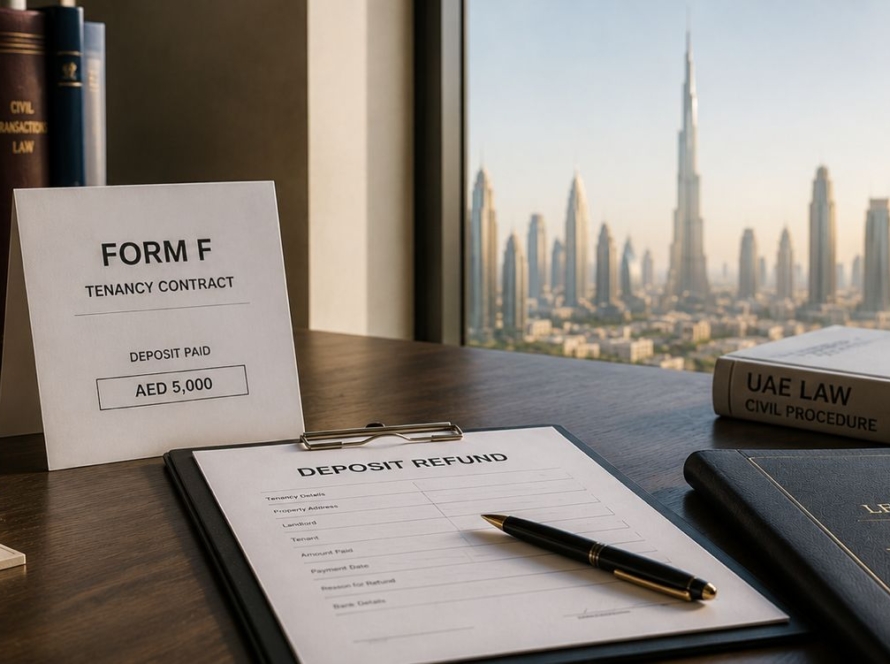
- Agree the sale terms in writing. Include the price, deposit, payment dates, handover date, and what the sale includes. A real estate agent usually prepares the memorandum of understanding. For the agreement before transfer, read whether Form F is legally binding in Dubai.
- Check the title, any mortgage and outstanding service charges. Check the developer’s or owners’ association’s approval where one is needed.
- Clear any mortgage and obtain the no-objection certificate where required. Arrange payment of the price and registration fees.
- Complete the transfer at a Dubai Land Department registration trustee office. The buyer and seller, or their authorized representatives, sign there and the sale is registered.
- Collect the new title deed in the buyer’s name, which is issued by the Dubai Land Department after the registration.
The Land Department charges a registration fee of 4% of the sale value. The parties agree who bears it, because the Civil Transactions Law permits agreements allocating costs (Article 521). In practice, the buyer usually pays.
What The Contract Should Protect
The buyer’s main protections come from the Civil Transactions Law, and the contract can strengthen them.
| Risk | What The Law Provides | Article |
|---|---|---|
| Third-party rights | The seller guarantees the property against any third-party right that existed before the sale. A term that removes or reduces that guarantee is void | 483, 489 |
| Hidden defects | The sale is made on the basis that the property is free of hidden defects. The buyer can return it or keep it and claim a reduction in price. A claim is not heard after one year from receipt unless the seller guaranteed it for longer, and the seller cannot rely on the year if he concealed the defect by fraud. | 493 to 495, 510 |
| Selling another’s property | A sale of property that the seller does not own does not bind the owner unless he approves it. | 532 |
| Unpaid price | The seller can hold the property until the price is paid, and a deferred-price sale can stipulate that ownership passes only on full payment. | 468, 512 |
| Knowledge of the defect | The seller does not guarantee a defect he disclosed or one the buyer knew of when buying. | 497 |
Using An Agent For The Transfer
- A friend or representative can sign for you only under a power of attorney naming the act. A sale, mortgage or similar act requires special authority (Civil Transactions Law, Article 870). For representation and sale preparation, see whether you need a lawyer to sell property in Dubai.
- A notary cannot notarize an instrument that creates, transfers, or ends a title to real property. The transfer itself is registered with the Land Department (Notary Law, Article 16).
Review Your Sale Agreement Before Paying a Deposit
Before paying a deposit, have the sale agreement or MOU checked. Send us the draft on WhatsApp or through the Contact Us page.
Questions About Property Conveyancing
Discuss Your Property Sale and Transfer.
To discuss a property sale, speak to our lawyers on WhatsApp or use the Contact Us page.

1 Comment