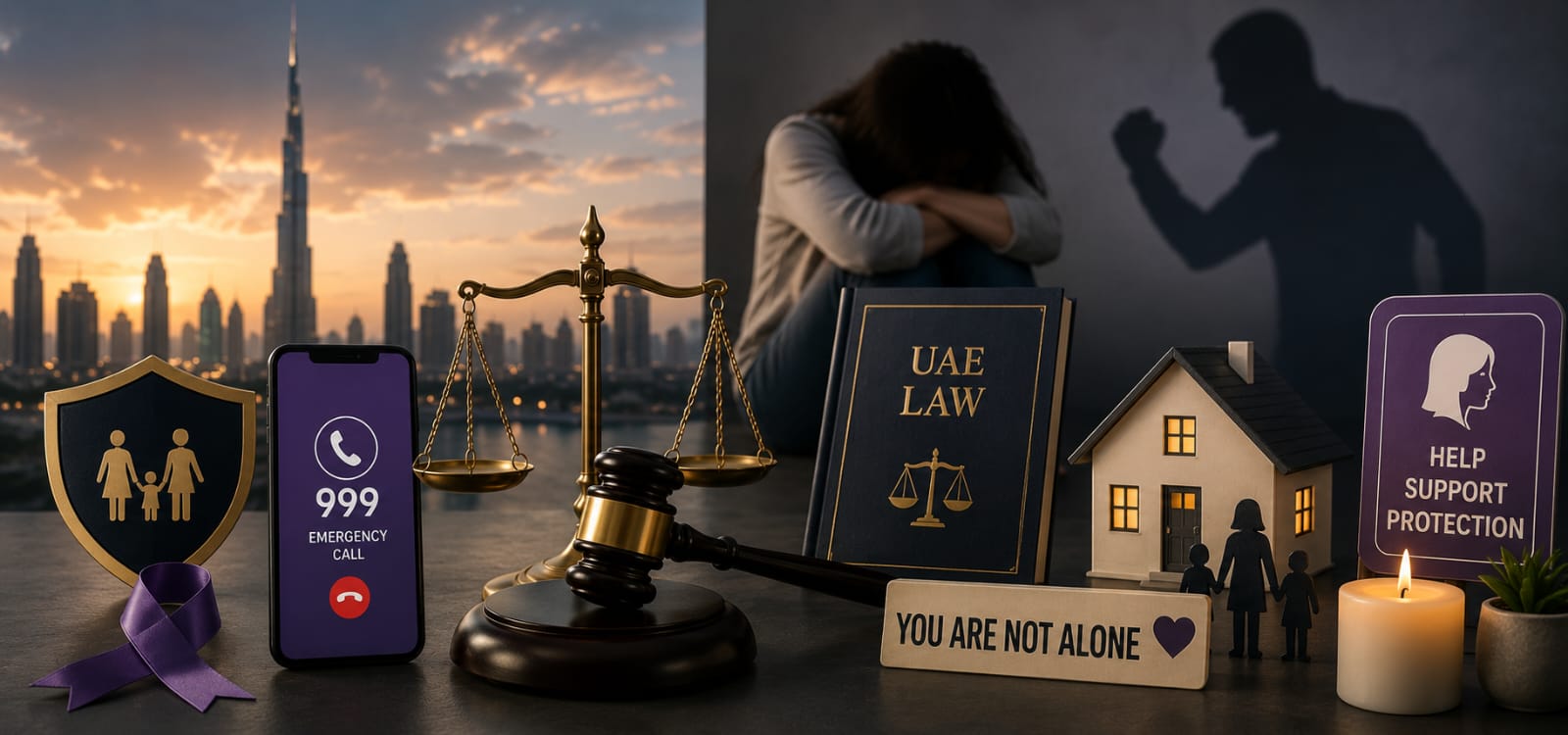

Many people wait for a serious physical injury before calling a situation domestic violence. Others avoid asking for help because they are not ready to make a police complaint or fear that psychological and financial control will not be taken seriously.
That delay can allow the risk to escalate.
Domestic violence in the UAE includes
physical, psychological, sexual, and economic harm,
as well as threats, neglect, and certain forms of exploitation within a family relationship.
If there is immediate danger, call 999.
Support, shelter, medical care, and legal protection may also be available before every long-term decision has been made.
Solution
For help choosing the right professional, see our guide on who is the best domestic violence lawyer in dubai.
Prioritise safety first. Move to a safe place when possible, seek medical help, preserve evidence without increasing the risk, and contact an official support channel. For immediate danger, call 999. Current channels include 800988 in Dubai, Dubai Foundation for Women and Children on 800111, EWAA on 8007283, and Sharjah Protection Services on 800700.
What Domestic Violence Means Under UAE Law
In cases like this, it is worth speaking with domestic violence lawyers in dubai.
Federal Decree-Law No. 13 of 2024 defines domestic violence broadly. It covers an act, omission, statement, threat, neglect, or sexual or economic exploitation by a family member that causes or is intended to cause physical, psychological, sexual, or economic harm.
The law is not limited to injuries. Coercive control, threats, financial deprivation, sexual abuse, and serious neglect may fall within the legal definition when the required conditions are met.
The family concept includes spouses, children, certain relatives, and people connected through guardianship, custody, or legal responsibility.
Signs That Should Not Be Ignored
We cover this in more detail in our guide on is verbal abuse a crime in UAE.
A pattern matters more than one isolated disagreement. Warning signs may include:
- Threats, intimidation, humiliation, or repeated verbal abuse.
- Physical assault, restraint, forced confinement, or destruction of belongings.
- Sexual pressure or forced sexual conduct.
- Control over salary, bank accounts, documents, transport, or basic spending.
- Isolation from family, friends, work, education, or medical care.
- Constant monitoring of calls, messages, location, or movement.
- Threats involving children, immigration status, reputation, or financial support.
- Neglect or denial of necessary care to a child, elderly person, or dependent family member.
The absence of visible injury does not make the situation safe. Escalating control and threats should be taken seriously.
Immediate Safety
Are You or Your Children in Immediate Danger?
Move to a safe place if possible and contact the police immediately. Tell them about any injuries, weapons, threats, children, or person who cannot leave safely.
What to Do in Immediate Danger
For a closer look at this, see our guide on verbal abuse law in the UAE.
Call 999 if there is immediate danger. Move to a safe place when possible and avoid confronting the person if doing so could increase the risk.
- Emergency help: Contact the police and explain whether there are injuries, weapons, children, threats, or a person unable to leave safely.
- Medical care: Seek treatment for injuries and ask for the medical findings to be documented.
- Safe contact: Use a phone or device the other person cannot monitor when possible.
- Essential items: Keep identification, medication, keys, money, and children’s documents accessible if leaving may become necessary.
- Evidence: Preserve messages, photographs, medical records, police reports, financial restrictions, and witness details without placing yourself at further risk.
A safety plan should be practical and private. Do not store it where the person causing harm can easily find it.
Where to Report or Ask for Support
A person can seek confidential guidance even before deciding whether to file a full police complaint. Current official UAE channels include:
- Police emergency: 999 when there is immediate danger.
- Ministry of Interior child protection: 116111 for child abuse reports.
- Community Development Authority in Dubai: 800988.
- Dubai Foundation for Women and Children: 800111.
- EWAA Shelter for Women and Children: 8007283.
- Sharjah child and women protection helpline: 800700.
The correct channel may depend on the victim’s location, age, safety needs, and the type of violence. Physical or sexual violence should be reported to the police so the necessary legal and medical steps can begin.
Protection Orders and Legal Measures
The 2024 law allows the Public Prosecution or the competent court to issue a restraining order. The order can prohibit contact, prevent the offender from approaching specified places, protect the victim’s property, and support referral to a shelter or safe location.
A court restraining order may last for up to six months or until the judgment becomes final. An extension of up to twelve months may be ordered after the final judgment where the legal conditions are met.
The law also protects the identity of the person reporting the incident, subject to judicial requirements. A victim should still ask the receiving authority how information will be handled in the specific case.
Understand Your Legal Options
Need Advice on Protection, Custody, or Financial Support?
Our UAE family lawyers can explain the legal options connected to restraining orders, divorce, custody, maintenance, housing, and related family proceedings. Emergency danger should always be reported to the police first.
What Support Can Include
- Shelter and safety planning: A secure place and support with immediate practical needs.
- Medical treatment: Care for injuries and health effects, with formal documentation where appropriate.
- Psychological support: Counselling and trauma-informed assistance for adults and children.
- Social support: Help with family needs, children, documents, housing, and access to services.
- Legal help: Advice on reporting, restraining orders, divorce, custody, financial support, and related proceedings.
Family law services in Dubai may be relevant when domestic violence is connected to divorce, custody, housing, maintenance, or travel concerns. The criminal report and the family case can require separate legal steps.
How to Support Someone Else
- Listen without blaming or demanding an immediate decision.
- Ask what would make the person safer today.
- Share official support numbers privately.
- Do not contact or threaten the alleged offender on the victim’s behalf.
- Offer practical help with transport, documents, children, or a safe phone call.
- Call emergency services if there is an immediate and serious danger.
Leaving can be a high-risk period. Pressure, public confrontation, or an unplanned intervention may make the situation more dangerous.
Common Mistakes to Avoid
- Waiting for physical injury before asking for help.
- Deleting messages or other evidence during a crisis.
- Using a monitored phone to plan an exit or contact support.
- Warning the offender before moving essential documents or seeking help.
- Assuming expatriate status prevents access to UAE protection.
- Treating a family-law case as a substitute for an urgent police report.
- Pressuring a victim to follow a plan that does not reflect their immediate safety risk.
Frequently Asked Questions
Domestic violence rarely begins as one dramatic event. A pattern of threats, control, isolation, financial deprivation, or fear can be enough to justify asking for help.
Family law services in Dubai can address connected divorce, custody, housing, and maintenance issues, but they do not replace emergency police or medical action when someone is in danger.
This article provides general information and does not replace advice based on the facts of an individual case.
You Do Not Have to Decide Everything Today
Get Clear Advice on the Next Safe Legal Step
A UAE family lawyer can help you understand how domestic violence may affect divorce, children, housing, financial support, and protective measures. Use a safe device when seeking help if your phone or messages may be monitored.
Legal advice does not replace urgent police or medical assistance when someone is in immediate danger.