


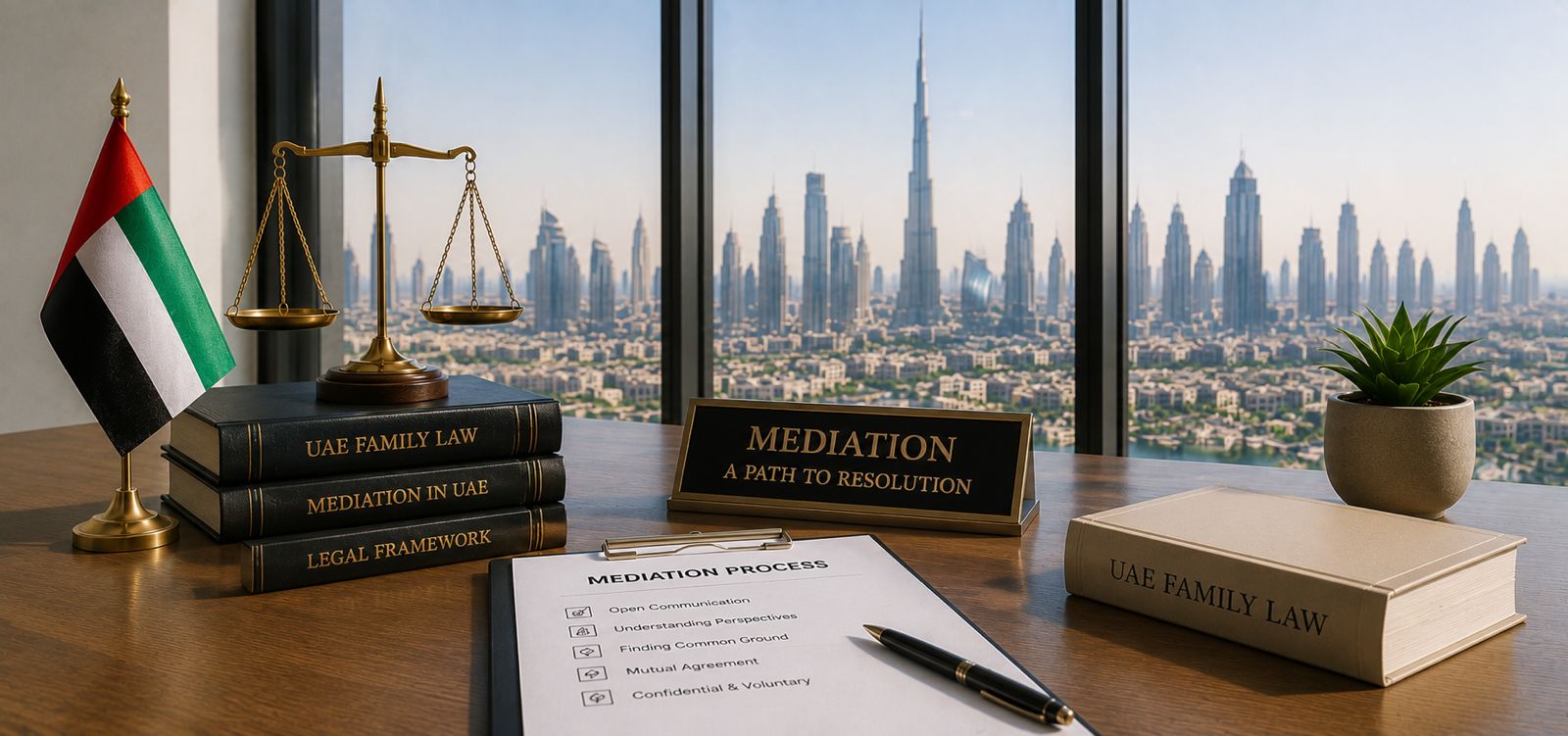

What is the purpose of mediation in UAE family law? It gives families a chance to settle divorce, custody and money disputes by agreement before a judge decides. That saves time and cost, and it protects children from long court battles.
Under Article 8 of Federal Decree-Law No. 41 of 2024, the supervising judge may refer the parties to the Family Guidance and Reconciliation Centre where this is appropriate. An agreement reached there and approved by the judge is enforceable.
This is our main guide to family mediation in the UAE. For when a settlement becomes binding, read is family mediation legally binding in the UAE.
What Is the Purpose of Mediation in UAE Family Law? Five Aims
- Reconciliation: help spouses resolve problems and stay together where possible.
- Settlement: reach an agreed divorce, custody or maintenance arrangement.
- Child protection: reduce conflict and keep children out of the dispute.
- Speed and cost: avoid long hearings, appeals and legal fees.
- Lighter court load: let the courts focus on disputes that truly need a judge.
What Mediation Can Settle
| Issue | Can mediation settle it? | What to know |
|---|---|---|
| Divorce terms | Yes | Parties can agree on the divorce and its effects |
| Child custody and visitation | Yes, within limits | The court checks the agreement against the child’s interest |
| Child maintenance | Yes | A child’s right to support cannot be waived |
| Wife’s maintenance and housing | Yes | Amounts and payment dates should be exact |
| Property and money | Often | Complex assets may need lawyers and valuations |
| Disputes with parents or adult children | Yes | Family guidance services cover wider family disputes |
How Family Mediation Works in the UAE
- Referral: the supervising judge refers the case to family guidance where appropriate.
- First session: a family counsellor meets the parties, together or separately.
- Discussion: the counsellor helps each side explain needs and explore options.
- Settlement report: any agreement is written in an official report signed by both parties and the counsellor.
- Approval: the supervising judge approves the report, and it becomes an enforceable instrument.
- No agreement: the case moves on to the competent court.
The UAE Government portal also describes reconciliation services in Dubai Courts and the Abu Dhabi Judicial Department. To get started, see how to start mediation in the UAE.
Muslim and Non-Muslim Families
Muslim families follow the federal Personal Status Law, where family guidance is a central step. Non-Muslim families under the civil personal status law, Federal Decree-Law No. 41 of 2022, can usually go straight to court, but they can still settle by agreement.
In Abu Dhabi, the Judicial Department runs its own Family Guidance service. Its aim is a binding family agreement without a full court case.
Want to prepare for your first mediation session? Speak to our lawyers on WhatsApp or through the Contact Us page.
How to Prepare for Mediation
- Know your numbers: income, expenses, school fees and housing costs.
- Plan for the children: a realistic custody and visitation schedule.
- Bring documents: marriage certificate, children’s records and salary proof.
- Set your limits: decide what you can accept before you go in.
- Get advice first: a lawyer can check that the terms protect you.
For custody-focused sessions, read child custody mediation in the UAE. For timing, see how long divorce mediation takes in Dubai.
What Happens After Mediation
If you settle, the approved report can be enforced like a judgment. It cannot be appealed unless it breaks the law.
If you do not settle, the case continues in court. Read what happens after divorce mediation for the next steps.
Frequently Asked Questions
Is Family Mediation Mandatory in the UAE?
Not in every case. Under the 2024 law, the judge may refer the parties to family guidance where appropriate.
Who Is the Mediator in UAE Family Cases?
A family counsellor at the Family Guidance and Reconciliation Centre, attached to the court.
Can We Agree on Custody in Mediation?
Yes. The court still checks that the agreement serves the child’s interest.
Is a Mediation Agreement Enforceable?
Yes, once the judge approves the signed settlement report. It then has the force of an enforceable instrument.
Do I Need a Lawyer for Family Mediation?
It is not required, but advice before you sign helps you avoid terms you will regret.
Get Help From a Family Mediation Lawyer
Our family mediation lawyers in Dubai and divorce lawyers prepare clients for mediation and review settlements before signing.
Speak to our lawyers on WhatsApp or use the Contact Us page.

2 Comments