


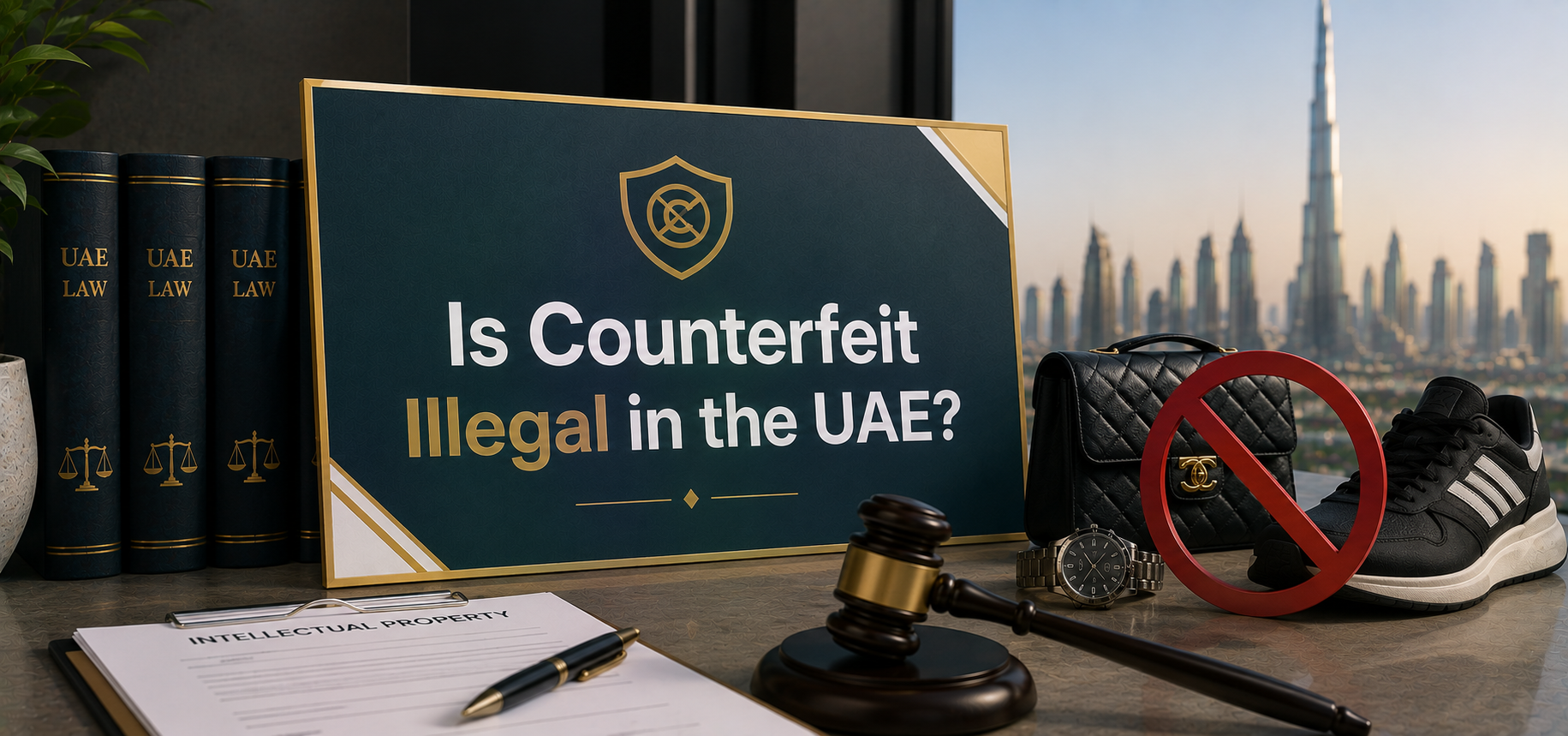

Is counterfeit illegal in the UAE? Yes. Importing, manufacturing, storing, transporting, promoting, selling, or trading counterfeit goods can create criminal liability, even where the customer knew that the goods were fake.
The legal framework also provides a separate trademark offence and specific remedies for a bona fide buyer who genuinely did not know the product was counterfeit. An intellectual property law firm in Dubai can advise on how to protect your trademark in the UAE and guide businesses through patent registration in the UAE.
Federal Decree-Law No. 42 of 2023 on Combating Commercial Fraud, which replaced Federal Law No. 19 of 2016 and applies in free zones, criminalizes importing, manufacturing, storing, transporting, promoting, selling, or trading counterfeit, adulterated, or spoiled goods. Under Article 17, the standard penalty is imprisonment of up to two years and a fine of AED 5,000 to AED 1,000,000. The fine rises to AED 100,000 to AED 2,000,000 for goods harmful to health, medicines, crops, organic food, or false weights and measures. Trademark law separately penalizes knowingly using or trading a forged or counterfeit mark commercially. Article 6(1) prevents a seller from relying on the buyer’s knowledge as a defence. A bona fide customer who genuinely did not know the goods were fake can choose a refund or exchange under Article 7 and can also claim compensation for further loss.
Why Is Counterfeit Illegal in the UAE?
UAE law addresses both the trade in counterfeit goods and the commercial use of forged or counterfeit trademarks.
Federal Decree-Law No. 42 of 2023
The Commercial Fraud Law covers selling, importing, manufacturing, storing, transporting, promoting, or trading counterfeit, adulterated, or spoiled goods. It replaced Federal Law No. 19 of 2016 and applies including within free zones.
Federal Decree-Law No. 36 of 2021
The Trademark Law separately covers forging a registered trademark and knowingly using or trading goods bearing a counterfeit trademark for commercial purposes.
Federal Law No. 15 of 2020
The Consumer Protection Law supports the buyer’s underlying right to accurate product information and fair treatment.
Found Counterfeit Goods in the UAE?
Whether you are a buyer, seller, or brand owner, counterfeit goods can create serious legal and financial consequences. Get advice on the right complaint, seizure, or compensation route.
Standard and Aggravated Penalties
- Standard Article 17 offence: imprisonment of up to two years and a fine from AED 5,000 to AED 1,000,000.
- Goods harmful to health, medicines, agricultural crops, organic food, or false weights and measures: a fine from AED 100,000 to AED 2,000,000.
- Knowingly using or trading a forged or counterfeit trademark commercially: generally imprisonment and a fine from AED 100,000 to AED 1,000,000, or either penalty.
The Buyer’s Knowledge Is Not a Defence for the Seller
Article 6(1) states that a seller is not exempt from the penalty even if the seller proves that the customer knew the goods were counterfeit at the time of purchase.
The seller remains liable regardless of the buyer’s understanding of the product.
Buyer Remedies Under Article 7
A bona fide customer who did not know that the goods were counterfeit can choose a refund or exchange under Article 7 without losing the right to claim compensation for further loss.
This consumer remedy depends on the buyer’s lack of knowledge, which is a different test from the seller’s liability.
Think You Bought a Fake Product?
Do not throw away your invoice, packaging, messages, or payment records. These documents can help establish what you bought and support a refund, exchange, or compensation claim.
How Counterfeit Enforcement Happens
- Customs seizure at import where the trademark is recorded specifically with Dubai Customs, allowing proactive interception at the border.
- A Department of Economic Development raid against in-market retail sales, which can sometimes move within days of a complaint.
- Referral to the police and Public Prosecution after a successful customs seizure or DED raid for criminal proceedings.
- A separate civil claim after the criminal judgment becomes final to recover damages and compensation.
Who Can Report Counterfeit Trade?
A report does not have to come from the trademark rights holder. Because the Commercial Fraud Law targets counterfeit trade itself, a customer or competitor can report suspected counterfeiting directly, separate from any private remedy pursued by the brand owner.
Practical Advice for Buyers
- Buy from trusted stores and verified online platforms.
- Check product details, country of origin, and expiry dates before buying.
- Keep invoices and warranty cards as evidence if the product is later found to be fake.
- Treat unlicensed social-media sellers and informal online marketplaces with caution.
Dealing with counterfeit goods in the UAE? A UAE lawyer from Leaders Advocates can advise a buyer, business, seller, or brand owner on the complaint, criminal exposure, seizure, or compensation route.
Common Mistakes
- Assuming the seller avoids liability if the customer knew the goods were fake, despite Article 6(1).
- Failing to keep proof of purchase needed to support a bona fide buyer’s refund or compensation claim.
- Assuming only the trademark owner can report suspected counterfeit trade.
Relevant Legal Services
A Criminal Defense Lawyer in Dubai can advise on criminal exposure or a complaint. A Trademark Lawyer in Dubai can protect the affected brand, while a Litigation Lawyer in Dubai can manage related court and compensation proceedings.
People Also Ask
Counterfeit is illegal in the UAE under commercial fraud and trademark rules. Seller liability remains even if the buyer knew, while an unaware buyer can seek a refund or exchange and further compensation.
Facing a Counterfeit Goods Issue in the UAE?
Whether you discovered a fake product, received a counterfeit complaint, or need to protect your trademark, the right legal response can make a significant difference.
1 Comment