

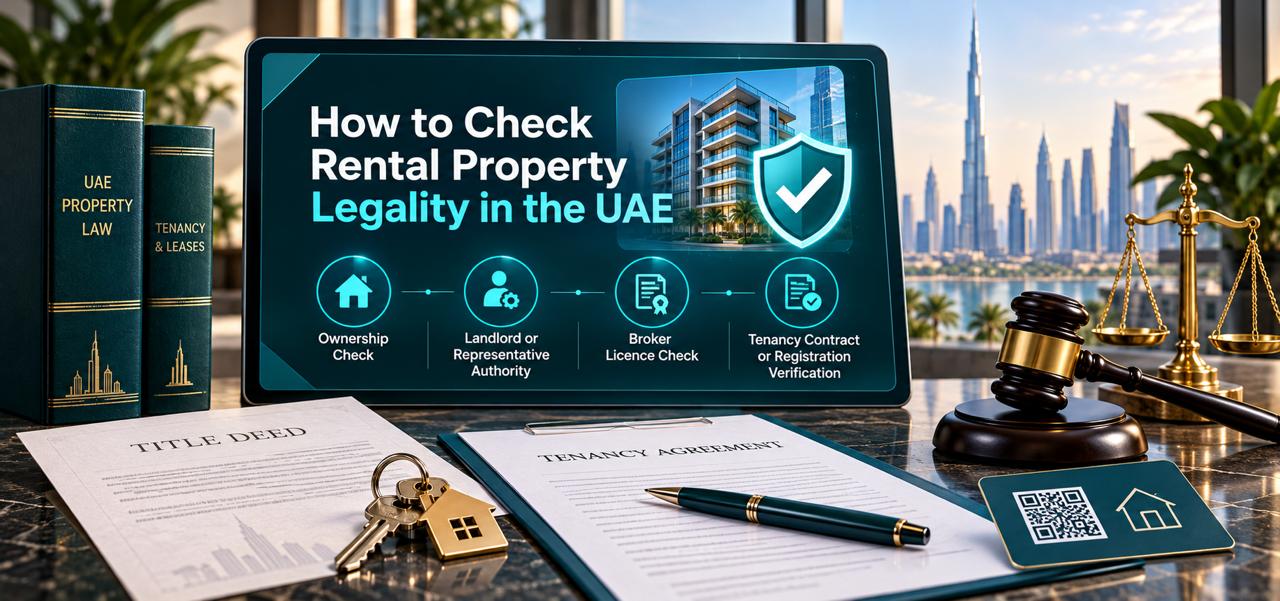

A property can exist and still be offered by the wrong person. A real unit does not prove legal authority to lease it or collect your money.
The UAE does not use one identical rental registration system across every emirate. Dubai references Ejari and RERA. Abu Dhabi uses its own Tawtheeq related processes.
You need to check the correct local system, the owner, any representative, the broker, the contract, and the payment recipient before committing funds.
Quick Answer
How to Check Rental Property Legality in UAE starts with identifying the emirate. Use the official local property and tenancy channels that apply where the rental unit is located.
In Dubai, verify ownership and broker details through Dubai Land Department or RERA channels and confirm how the signed tenancy will be registered through Ejari. In Abu Dhabi, tenancy records use the relevant Tawtheeq services. Other emirates have their own authorities and procedures, so a Dubai-specific check should not be applied nationwide.
Compare the owner, representative, broker, property unit, tenancy contract, and payment account. Inspect the property, keep written records, and stop the transaction if any person’s identity or authority cannot be independently confirmed.
Solution
Start with jurisdiction, then build a document chain. Every person, property detail, and payment instruction should match an official or independently verified record.
1. Identify the Emirate
The first question is where the property sits. Rental registration, property records, regulators, and dispute channels can differ by emirate.
Do not ask only whether a unit is legal in the UAE. Ask which local authority records the property and which system records the tenancy.
Dubai checks often involve Dubai Land Department, RERA, and Ejari. Abu Dhabi tenancy registration commonly involves Tawtheeq services and local municipal processes.
For another emirate, identify the competent land or municipality authority before relying on a form, app, certificate, or broker statement.
2. Verify the Property
Confirm the exact building, unit number, floor, type, and location. These details should remain consistent across the listing, ownership record, and tenancy contract.
Inspect the unit in person when possible. A viewing links the advertisement to the physical property and reveals access, condition, and occupancy issues.
Ask whether the property is already occupied or subject to another arrangement. Do not accept possession promises that conflict with what you observe.
Save dated photos and the original listing. They help show what was offered and whether the final contract describes the same unit.
3. Verify the Registered Owner
Review the relevant ownership document through the proper local process. A copy provided in a chat should not be your only source.
Compare the owner name and unit details with the proposed contract. Spelling changes, missing names, or a different unit require explanation.
Corporate ownership needs an additional check. Confirm the company name and the authority of the person signing or instructing payment.
Do not confuse property management access with ownership. A manager still needs clear authority for the acts performed on the owner’s behalf.
Not Sure If a Rental Property Is Legal?
Do not pay a deposit or sign a tenancy contract until the owner, representative, broker, property details, and payment instructions have been checked.
4. Check Written Authority
A representative may lawfully act for an owner, but the authority must cover the transaction. Ask for the relevant written instrument.
Check the parties, property, date, duration, and powers. Authority to show a unit does not automatically prove authority to sign or receive rent.
Confirm the document through an appropriate independent route when possible. Do not rely on a cropped page, screenshot, or unsigned letter.
If several representatives are involved, map each role. Identify who markets, negotiates, signs, receives funds, registers the lease, and delivers possession.
5. Check the Dubai Process
For a Dubai property, use Dubai specific records and tools. Ownership, broker status, tenancy registration, and disputes connect to different official functions.
Ejari is the system used to register Dubai tenancy contracts. Confirm the required documents and responsibility for registering the completed lease.
Do not use an old Ejari certificate as proof of your new tenancy. The final record should match the signed parties, unit, rent, and lease dates.
RERA is part of Dubai’s property framework. Broker and regulatory checks should use official Dubai channels rather than a private screenshot.
6. Check the Abu Dhabi Process
Abu Dhabi uses its own tenancy registration services. Tawtheeq related processes should be checked through the appropriate Abu Dhabi government channel.
Do not ask a Dubai broker to prove legality with Ejari for an Abu Dhabi unit. The location determines the relevant registration route.
Confirm the unit and owner information required for the local service. Check whether the contract can be entered through that process after signing.
When the property sits outside Abu Dhabi city, confirm which municipal authority and service applies. Local procedure should be verified before payment.
7. Verify the Broker
A broker should have the registration required in the relevant emirate. Ask for the individual and business details before discussing a fee.
In Dubai, check broker information through official Dubai Land Department or RERA tools. Confirm the brokerage through an independently sourced contact.
An online profile, business card, or branded email can be copied. Independent verification must connect the person to the licensed business.
Keep the advertisement permit, broker card details, company name, contact information, and fee request with the transaction file.
8. Review the Contract Parties
The contract should identify the landlord and tenant accurately. The landlord should match the owner or a representative with verified authority.
Check identity numbers, company details, addresses, and contact information. Do not ignore a mismatch because the commercial terms seem favorable.
Confirm the exact unit, lease term, rent, deposit, payment dates, renewal terms, maintenance duties, utilities, and handover commitments.
Record every negotiated promise in the signed contract or an attached signed schedule. Messages alone can create avoidable proof disputes.
9. Check the Intended Use
Confirm that the proposed use matches the property and contract. Residential, commercial, staff accommodation, and short term use can involve different requirements.
Do not rely on a statement that any activity is allowed. Ask which approval, building rule, or local requirement supports the intended use.
Check building access, occupancy, parking, pets, alterations, signage, and business activity where relevant. A legal tenancy should still fit applicable restrictions.
If your use needs a separate license or approval, confirm it before signing. A tenancy contract alone may not provide every required permission.
10. Verify Payment Instructions
The account receiving rent or a deposit should connect to the verified owner or authorized arrangement. Unexplained third party accounts create risk.
Compare the account name with the contract and authority documents. Repeat the check when instructions change shortly before payment.
Use traceable payments and clear references. Ask for a signed receipt that identifies the amount, purpose, property, parties, and date.
Do not send a fee only to reserve the unit unless the recipient, refund terms, and transaction authority are documented and verified.
11. Confirm Handover and Registration
Set a clear sequence for signing, payment, keys, condition inspection, and registration. Each step should have a document and responsible person.
Record keys, access cards, parking remotes, utilities, inventory, and existing damage. Keep dated photographs and a signed handover record.
After signing, complete the applicable tenancy registration process. Check the resulting record for the correct parties, unit, rent, and dates.
Store the contract, registration, receipts, and handover evidence together. These records can become important during renewal, dispute, or move out.
12. Investigate Irregularities
Pause when an official check fails or a document cannot be confirmed. Do not accept urgency as a reason to proceed around the problem.
Ask for a written explanation and supporting record. Then verify that record through the relevant authority or an independent professional.
Different problems need different routes. Broker misconduct, payment fraud, registration issues, and tenancy disputes may not go to one office.
A lawyer can identify the correct regulator, dispute body, court, or reporting channel. That choice should follow the actual facts and emirate.
13. Build a Legality Checklist
Your file should show the emirate, official system, property, owner, representative, broker, contract, payment recipient, handover, and registration plan.
Mark each item as verified, pending, or inconsistent. Do not transfer funds while a material identity, authority, or property detail remains pending.
Use official sources for final confirmation. Private portals and message attachments can support a file but should not replace authority records.
Repeat important checks immediately before payment. A substituted bank account or changed signatory can alter the risk at the final stage.
14. Check the Final Record
Verification should continue after signing. Obtain the completed local tenancy record and compare it with the contract you actually signed.
Check the names, unit, lease dates, rent, and registration number. Report an error promptly instead of waiting until renewal or a dispute.
Confirm that you received every key, card, receipt, inventory, and agreed document. Missing handover items should be recorded in writing.
Keep the official record in a secure folder with the ownership check, authority, broker verification, contract, payment proof, and condition report.
A complete file protects more than the first payment. It can support utilities, renewal, deposit recovery, and later proof of the tenancy terms.
Something Doesn’t Match Before You Pay?
A different owner name, unclear broker authority, unusual payment account, or registration problem can be a reason to stop and investigate. Get legal guidance before transferring money.
Final Takeaway
Rental property legality in the UAE begins with the correct emirate. Dubai, Abu Dhabi, and other emirates do not use one identical registration route.
Verify every connection before paying. The official record, owner, authority, broker, contract, account, and final registration should tell one consistent story.
Related Success Story
Review the firm’s published property success stories including Dubai outcomes involving tenant eviction, commercial lease termination, and real estate commission recovery.
Common Mistakes
- Using Dubai Ejari checks for a property in another emirate.
- Treating physical access as proof of ownership or authority.
- Paying an account that does not match the verified documents.
- Trusting a broker profile without checking official registration.
- Failing to verify the final tenancy registration after signing.
Relevant Legal Services
Explore our real estate due diligence in Dubai, RERA lawyer in Dubai, and tenancy lawyers in Dubai for ownership, broker, contract, and rental checks.
People Also Ask
About to Sign a UAE Tenancy Contract?
Before committing to the lease, Leaders Advocates can review the tenancy documents, ownership and authority issues, payment terms, and potential legal risks.