
A convincing listing can still be false. The photos may be copied. The advertiser may not own the unit or have authority to lease it.
The pressure often starts before you can verify anything. You may be asked for a holding deposit, agency fee, or first rent payment immediately.
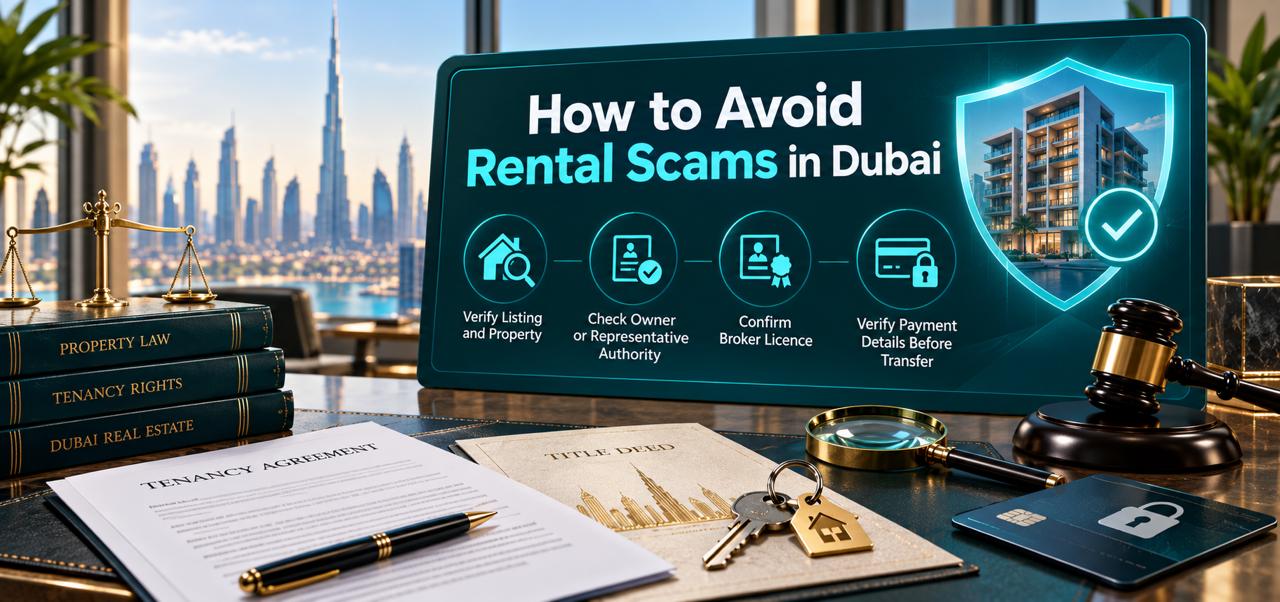
A safe rental decision needs several checks. You must connect the listing, property, owner, broker, contract, payment account, and Ejari process before money moves.
Quick Answer
To understand How to Avoid Rental Scams in Dubai, verify both the property and the person offering it. Never rely only on listing photos, messages, or a copy of an identity document. View the unit in person when possible, check the owner or written authority, and confirm the broker through official Dubai Land Department or RERA channels before paying any fee.
Read the tenancy contract before transferring money. The names, unit details, rent, deposit, payment dates, and handover promises should match the verified documents and discussions.
Use traceable payments, keep every receipt and message, and confirm how the tenancy will be registered through Ejari after signing. Pause the transaction if anyone creates urgency, demands payment before verification, or blocks reasonable checks.
Solution
Use one verification chain. Each step should confirm the next step before you sign, transfer funds, or accept the keys.
1. Pause Before Any Payment
Scammers depend on speed. They want payment before you compare the listing with official records or speak with the actual owner.
A low price is not proof of a bargain. Compare similar units in the same building, area, and condition before treating the offer as genuine.
Do not let a claimed waiting list control your decision. A real transaction should allow reasonable time for identity, authority, and contract checks.
Create a simple rule for yourself. No deposit, fee, or rent payment leaves your account until the verification file is complete.
2. Verify the Listing
Search the same photos and description online. Reused images, different prices, changing contact names, or conflicting locations can reveal a copied advertisement.
Ask for the exact building, unit number, and viewing time. Vague answers often prevent you from connecting the advertisement to a real property.
Compare the stated features with the unit. Check the floor, view, parking, furnished items, maintenance condition, and access arrangements during the viewing.
Save the original advertisement before it disappears. Keep the URL, screenshots, publication date, agent details, and every later change to the offer.
Not Sure If a Dubai Rental Offer Is Genuine?
Do not transfer a deposit or rent until the property, owner or authorized representative, broker, and tenancy documents have been checked. Get legal guidance before your money is at risk.
3. View the Unit in Person
An in person viewing is one of the strongest practical checks. It confirms that the unit exists and that someone can lawfully provide access.
Do not accept a video call as the only proof when a physical viewing is reasonably possible. Recorded videos can come from old listings.
During the visit, confirm the unit number and building. Ask security or management about access procedures without requesting private owner information they cannot disclose.
If you are outside the UAE, use a trusted representative. Give clear written instructions and request live video, dated photos, and document comparisons.
4. Confirm the Owner
The person receiving money should match the verified owner or hold clear written authority. A friendly message thread is not proof of that relationship.
Review the ownership document carefully. Compare the name, property description, and unit details with the contract and payment instructions.
When an agent or relative acts for the owner, ask for the written authority. Check its scope, date, names, and power to sign or receive funds.
Do not send money to an unrelated personal account without a documented explanation. A mismatch should be resolved before any transfer occurs.
5. Verify the Broker
Dubai property brokers should be properly registered. Ask for the broker card details and verify them through official Dubai Land Department or RERA tools.
A company logo, social profile, or office photograph is not enough. Confirm both the brokerage business and the individual handling the transaction.
Call the brokerage through a number you find independently. Ask whether the named broker works there and whether the listing belongs to that office.
Record the broker name, card number, company, phone, email, and advertisement permit details. Keep that record with the proposed contract.
6. Review the Tenancy Contract
Read the entire contract before paying. Do not rely on a summary sent in a message or a promise that details will be corrected later.
Confirm the parties, unit, lease dates, rent, security deposit, payment schedule, maintenance duties, utilities, parking, and furnished items.
Every side promise should appear in writing. This includes repairs, cleaning, early access, included appliances, commission, move in dates, and refund conditions.
Do not sign blank pages or incomplete forms. Initial agreed changes and keep a complete signed copy from the same transaction date.
7. Plan the Ejari Registration
Ejari is Dubai’s tenancy registration system. The new lease should be registered through the applicable process after the agreement is completed.
Ask who will handle registration and which documents are required. The answer should match the verified owner, property, and signed tenancy contract.
Do not treat a screenshot or old certificate as proof of your new registration. Check the final record through official channels once it is issued.
A refusal to discuss Ejari is a warning sign. It may show that the advertiser cannot connect the lease to the verified property record.
8. Keep Payments Traceable
Use a bank transfer or another traceable method. The recipient should match the verified owner, authorized representative, or properly documented brokerage arrangement.
Write a clear payment reference. Identify the unit, payment type, lease period, and contract when the banking channel allows it.
Request a signed receipt for every amount. The receipt should state the payer, recipient, purpose, date, amount, and related property.
Avoid cash to an unverified person. If cash is required for a legitimate reason, obtain reliable proof and confirm authority before handing it over.
9. Check the Handover
Payment and possession should follow the agreed sequence. Do not release a major amount only because someone promises to deliver keys later.
Confirm the keys, access cards, parking remotes, inventory, utility information, and move in condition. Record the handover with dated photos.
Test basic access and identify existing damage. Send a written condition report promptly so later deposit disputes do not begin with missing evidence.
Building management procedures may vary. Learn the required move in steps early and confirm that the proposed tenancy documents support them.
10. Watch for Red Flags
Artificial urgency is common. Be cautious when the advertiser says payment must arrive within minutes or the unit will disappear immediately.
A refusal to meet, show the property, verify a broker, or provide ownership authority should stop the transaction until the issue is resolved.
Changing bank accounts or names is another warning. Ask for a written explanation and repeat the identity and authority checks.
Poor document quality also matters. Cropped pages, missing numbers, inconsistent fonts, altered dates, and blurred names require independent confirmation.
11. Protect Digital Evidence
Keep messages in their original applications when possible. Exports, screenshots, emails, and call records can help reconstruct the transaction later.
Save payment requests and account details before they change. Include voice messages, deleted message notices, profile information, and the advertisement history.
Do not edit screenshots. Keep full images with dates, names, and surrounding context. Back up the material in more than one secure place.
Write a short timeline while events are fresh. Record who said what, when documents arrived, and when each amount was requested or paid.
12. Respond to a Suspected Scam
Stop further payments first. Contact your bank quickly when a transfer may have gone to a scammer because recovery options can be time sensitive.
Preserve the advertisement, contract, identity documents, payment proof, and communications. Do not continue an argument that could cause evidence to disappear.
Report through the appropriate official channel based on the conduct and location. A lawyer can help separate criminal, regulatory, and tenancy issues.
Do not assume one complaint solves every problem. Bank steps, police reporting, broker complaints, and a civil or tenancy claim may serve different purposes.
13. Use a Final Verification File
Put every check in one folder. Include the listing, viewing evidence, ownership record, authority, broker verification, contract, payment instructions, and planned registration steps.
Compare all names and numbers one final time. Small inconsistencies can expose a false identity, wrong unit, or unauthorized payment request.
Ask a direct question about every gap. A legitimate party should explain the document trail without forcing you to rely on trust alone.
If the facts remain unclear, walk away. Losing a supposed bargain is safer than funding a transaction that cannot be verified.
Being Pressured to Pay a Rental Deposit?
Urgent payment demands should not replace proper verification. Before transferring money, check the tenancy contract, payment details, property information, and the authority of the person requesting payment.
14. Repeat the Final Checks
Repeat the owner, broker, and account checks on the payment day. A genuine file can still be changed by a false last minute message.
Call a trusted contact when any instruction changes. Use a number you verified earlier rather than the number inside the new request.
Save the final approved contract and payment details together. That record shows exactly what you confirmed before funds left your account.
Final Takeaway
Rental fraud prevention is a sequence, not one document. Verify the listing, property, owner, broker, contract, payment route, and Ejari process together.
Pause when any link is missing. A short delay for verification can prevent the loss of money, access, evidence, and valuable time.
Related Success Story
See the firm’s real estate and tenancy success stories including published results involving tenant eviction and commercial lease termination in Dubai.
Common Mistakes
- Paying a holding deposit before viewing and verification.
- Trusting a copied identity document without checking authority.
- Using cash or an unrelated bank account without reliable proof.
- Signing an incomplete contract or relying on verbal promises.
- Ignoring the Ejari plan until after money has moved.
Relevant Legal Services
Explore our tenancy lawyers in Dubai, RERA lawyer in Dubai, and real estate lawyers in Dubai for rental checks, regulatory questions, and property disputes.
People Also Ask
Already Paid Money in a Suspected Rental Scam?
Preserve payment records, advertisements, contracts, receipts, messages, and the details of everyone involved. Leaders Advocates can assess the evidence and advise on the appropriate legal steps in Dubai.