



The difference between murder and manslaughter in the UAE law comes down primarily to intent. What separates murder from manslaughter under UAE law is what was going on in the accused person’s head beforehand. That question, intent, decides which category a case falls into, and each category carries a genuinely different penalty structure.
So what’s the actual difference between murder and manslaughter in the UAE?
Murder requires an intention to kill. Manslaughter doesn’t, it covers a death caused without that intent. A criminal defense lawyer in Dubai can help explain the applicable charges and legal process. The difference between kidnapping and abduction under UAE law may depend on the specific facts and circumstances. If an assault is involved, knowing how to file a physical assault case in the UAE can help identify the appropriate legal procedure. Where people often go wrong is assuming manslaughter is settled through blood money alone. It isn’t. Diya is a real criminal penalty, but it operates alongside imprisonment, not as a replacement for it.
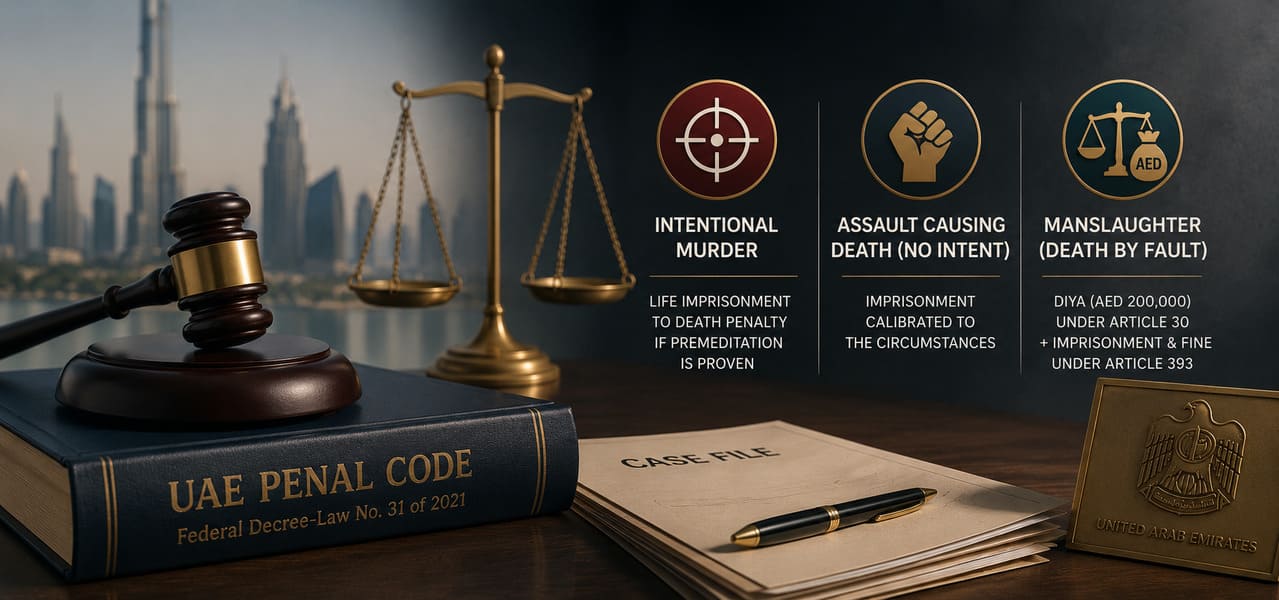
Under the current Penal Code, Federal Decree-Law No. 31 of 2021, an intentional killing carries life imprisonment as a baseline, rising to the death penalty where premeditation is proven, meaning the act was planned in advance and the means to carry it out were deliberately arranged.
Manslaughter, an unintentional killing, involves diya, blood money paid to the victim’s family, currently set at AED 200,000 for a male or female victim under Article 30, and Article 30 itself classifies diya as one of the penalties that makes a crime a misdemeanor, alongside imprisonment and fines, not a substitute for either.
A separate provision, Article 393, specifically addresses causing death by fault and carries its own imprisonment and fine, rising to a minimum of one year where the death involved a breach of professional duty, intoxication, or a refusal to help the victim, and to two to five years where more than three people died. Diya does not extinguish this exposure. The two penalties apply together.
Murder vs Manslaughter UAE: Intent Is the Whole Question
Deliberately taking someone’s life is treated as one of the most serious offenses on the books. The baseline sentence is life imprisonment. Where the prosecution can additionally prove premeditation, planning the act ahead of time and specifically procuring the means to do it, the sentence can escalate to the death penalty.
Premeditation isn’t the same as acting in the heat of the moment. It’s the planning itself, laying in wait, arranging a weapon, timing an opportunity that pushes a case from the baseline penalty toward the most severe one available.
Manslaughter: Diya Is a Criminal Penalty, Not an Alternative to One
This is the point worth getting right. Diya, currently AED 200,000, sits in Article 30 of the Penal Code. Article 30 doesn’t set diya apart from criminal punishment, it lists diya as one of three penalties, alongside imprisonment and a fine of more than AED 10,000, that together define what makes a crime a misdemeanor. Diya is a criminal penalty in its own right, not a civil compensation payment that stands in for a prison sentence.
The Separate Provision That Actually Covers Imprisonment
Article 393 addresses causing death by fault specifically, and it provides for imprisonment and a fine on its own terms. The minimum rises to one year where the death involved a breach of professional duty, intoxication, or a refusal to help the victim, and climbs further, to two to five years, where the fault caused more than three deaths at once.
Paying or settling diya does not make this exposure disappear. The two penalties operate side by side, not as alternatives where one replaces the other.
Facing a Murder or Manslaughter Case in the UAE?
The distinction between intentional killing, assault causing death and death by fault can significantly affect the charges and potential penalties. Get legal advice based on the specific facts and evidence in your case.
What Happens If the Family Waives Diya
Diya belongs to the victim’s heirs, and they can waive or settle it directly. That waiver doesn’t end the criminal case. For deliberate killing specifically, Article 384(3) converts the penalty into temporary imprisonment of not less than seven years where diya is waived. For death by fault under Article 393, the state’s own prosecution continues regardless of what the family decides about diya.
The Middle Category: Assault With No Intent to Kill
A further scenario sits between deliberate murder and manslaughter: an assault carried out with no intention of killing, where the victim dies anyway. This is generally addressed through its own imprisonment term, calibrated to the severity of the underlying attack, distinct from both the murder framework and the diya and death-by-fault provisions that apply to manslaughter.
The Structure, Side by Side
Facing a criminal matter involving a death, or trying to understand which of these categories applies to a specific situation? A UAE criminal lawyer from our team can review the facts against the current law directly.
Does Diya Affect the Criminal Case?
Diya and criminal liability can operate together. If a case involves death by fault, our criminal defense team can review the circumstances, applicable provisions, and potential exposure before you take further action.
Common Mistakes
In murder vs manslaughter UAE cases, the classification depends heavily on intent, the surrounding facts, and the evidence available to the prosecution.
- Assuming diya alone resolves a manslaughter case, when Article 393 imprisonment can apply on top of it.
- Treating a family’s decision to waive diya as the end of the criminal case, when state prosecution continues independently.
- Assuming any killing without a weapon or planning automatically counts as manslaughter, when an assault causing death sits in its own separate category.
Frequently Asked Questions
So, murder vs manslaughter UAE cases ultimately come down to intent, and manslaughter itself carries real, layered criminal exposure, not simply a payment that closes the matter. A UAE criminal lawyer from our team can assess where a specific case genuinely falls.
Need Legal Advice on a Serious Criminal Case in the UAE?
Cases involving a death require careful assessment of intent, evidence, and the circumstances surrounding the incident. Leaders Advocates can review the case and explain the legal position and available defense options.


2 Comments