


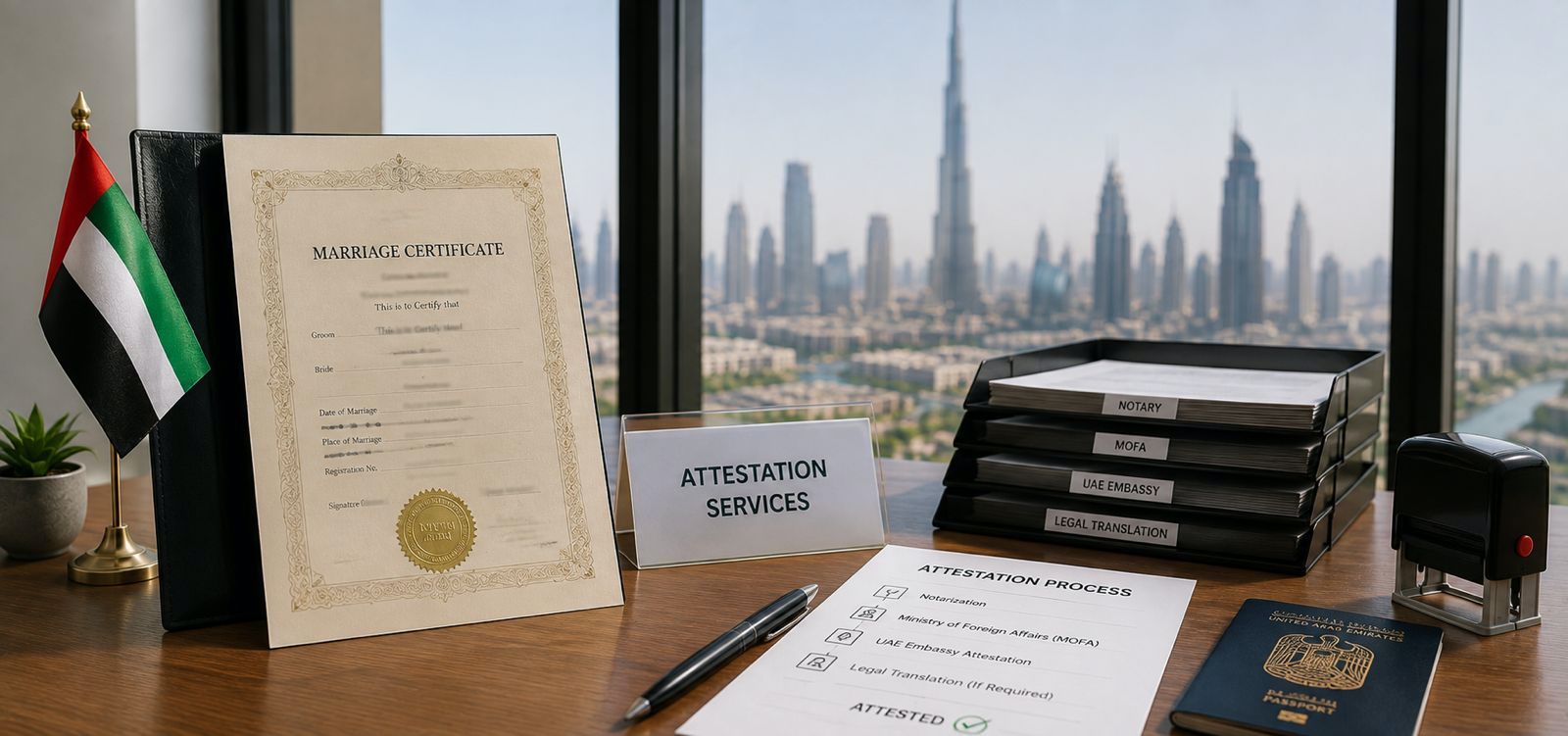

If you need to use a foreign marriage certificate in the UAE, getting it attested is an important step. The process can be confusing because the document usually needs approval from both the country where it was issued and UAE authorities. Whether you need it for a family visa, spouse sponsorship, or a legal matter, following the correct order can save you time and avoid delays.
Yes, but the visa depends on the property and the applicant. The available routes include a 2-year investor visa, a 5-year retirement visa for eligible applicants, and a 10-year Golden Visa. Off-plan and mortgaged property rules can differ depending on the visa route.
In most cases, the process is:
- Home-country authentication (apostille or the traditional legalization process).
- UAE Embassy attestation in the issuing country.
- UAE Ministry of Foreign Affairs (MOFA) attestation.
- Certified Arabic translation by a UAE Ministry of Justice-approved translator.
- Submission to the relevant authority, such as GDRFA, ICP, or the UAE courts.
An apostille alone is not enough for documents intended for use in the UAE.
How to Attest a Marriage Certificate in the UAE
For matters like this, consulting marriage lawyer in dubai can make the process easier.
Attesting a marriage certificate confirms that the document is legally recognized by UAE authorities.
Whether you are applying for a family visa, sponsoring your spouse, or using the certificate in court, the document must go through the correct attestation chain. Missing a single step can delay or even reject your application.
Make Sure Your Marriage Certificate Is UAE-Ready!
Missing an embassy, MOFA, or translation step can delay your application. Get your documents reviewed before submitting them to the UAE authorities.
What Is the Attestation Process?
Not sure who to choose? Our guide on who is the best marriage lawyer in dubai breaks down what matters most.
For a marriage certificate issued outside the UAE, the process usually follows this order:
- Authenticate the document in the country where it was issued (either by apostille or the traditional legalization process).
- Obtain attestation from the UAE Embassy in that country.
- Complete MOFA attestation after the document arrives in the UAE.
- Translate the certificate into Arabic through a Ministry of Justice-licensed translator.
- Submit the document to the authority requesting it.
The order matters. Completing the steps incorrectly often means starting the process again.
Does the Process Change Based on Your Country?
We cover this in more detail in our guide on marriage leave under UAE labor law.
Only the first step changes.
Hague Convention countries: Obtain an apostille before UAE Embassy attestation.
Non-Hague countries: Follow the local notarization and government legalization process before UAE Embassy attestation.
After that, the remaining UAE steps are the same regardless of where your marriage certificate was issued.
Do You Need an Arabic Translation?
Usually, yes.
Most UAE government authorities require an Arabic version prepared by a translator licensed by the UAE Ministry of Justice. An unofficial translation is generally not accepted.
Documents Required
You will typically need:
- Original marriage certificate.
- Passport copies of both spouses.
- Any existing home-country attestations or apostille.
- Authorization letter if someone is completing the process on your behalf.
- Some authorities may request additional documents depending on your application.
Not Sure If Your Certificate Has Been Properly Attested?
Our UAE family lawyers can check the attestation chain, identify missing documents, and explain what needs to be completed before you submit your marriage certificate.
Common Mistakes to Avoid
The most common reasons applications are delayed include:
- Assuming an apostille is enough.
- Skipping UAE Embassy attestation.
- Completing the Arabic translation before the document is fully attested.
- Applying for MOFA attestation before the embassy step.
- Having name differences between the passports and the marriage certificate.
Frequently Asked Questions
Get Your UAE Marriage Certificate Attestation Right!
Whether you need the certificate for a family visa, spouse sponsorship, or court proceedings, we can help you understand the required steps and avoid common attestation problems.

3 Comments