


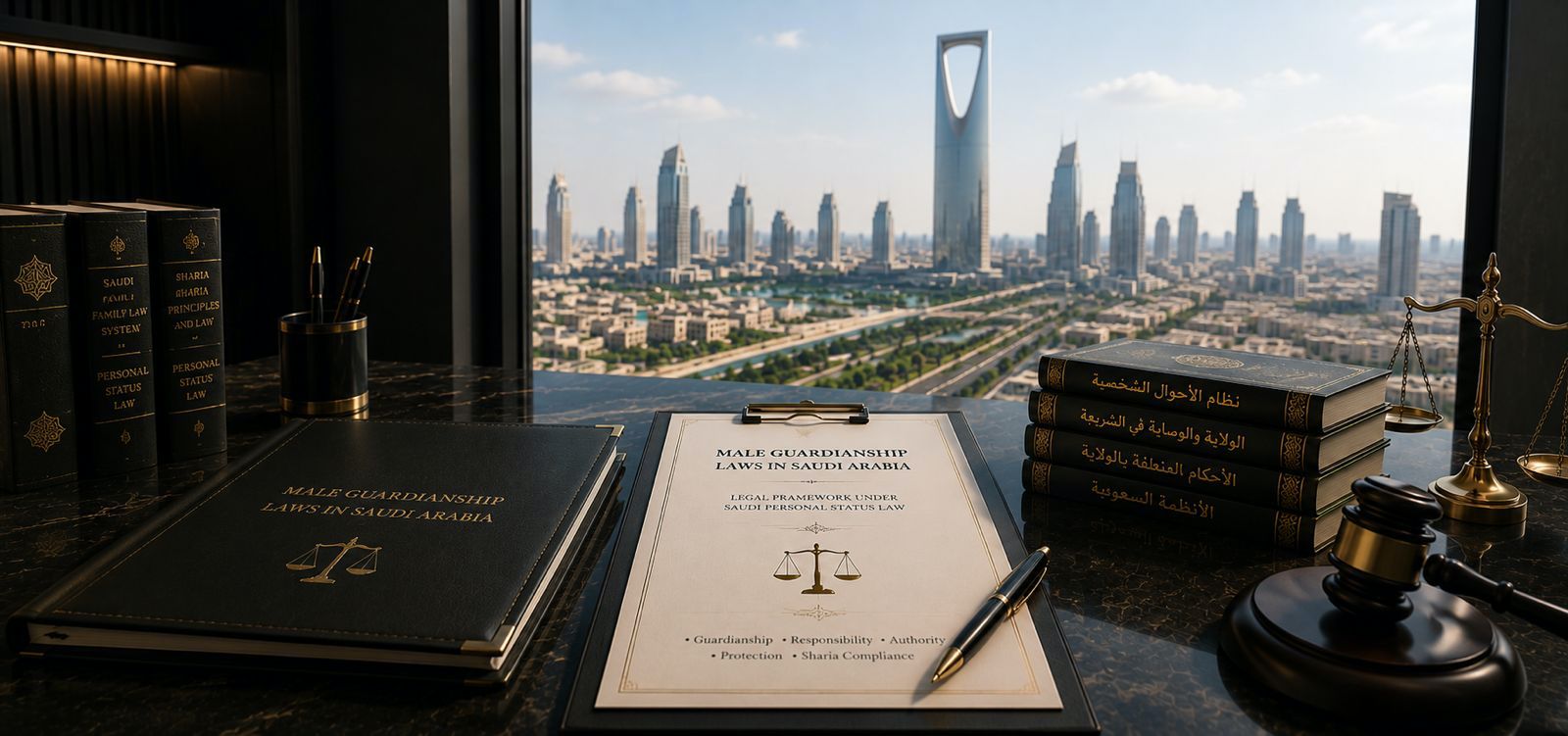

A quick clarification before anything else: this is Saudi Arabian law, a separate legal system from the UAE’s. The two countries are often confused in regional searches, but each sets its own personal status framework independently, and nothing in this article describes UAE law.
Since Royal Decree No. M/134, issued 30 July 2019, women aged 21 and older can obtain a passport and travel internationally without a male guardian’s permission. Women can also register births, marriages, and divorces directly, and mothers with custody can issue passports and authorize travel for their children independently. However, a male relative can still petition a court for a travel restriction, and women under 21 remain subject to guardian authorization rules on the same basis as men under 21. The 2022 Personal Status Law still requires a male guardian to contract a woman into marriage regardless of her age or prior marital status.
Separate the parts of the system that were reformed from those that remain in force. Check the woman’s age and the decision involved, then distinguish passport and travel rules from marriage, divorce initiation, maintenance, child custody, and legal guardianship.
Myth: “Saudi Arabia’s Guardianship System Has Ended”
For matters like this, consulting guardianship lawyer in dubai can make the process easier.
Less is required than before, but more remains than the widely repeated headline suggests.
Since 2019, adult women have gained real, meaningful rights, including the ability to travel and obtain a passport without a male guardian’s permission. At the same time, Saudi Arabia’s first codified family law, issued in 2022, wrote guardian authority over marriage directly into statute.
The travel reforms were genuine, but they did not abolish guardian authority across every area of family law.
Need Help Understanding Saudi Family Law?
Saudi guardianship, marriage, divorce, and custody rules can depend on the specific circumstances. Get professional guidance before taking legal action.
Myth: “The 2019 Reform Created an Unchallengeable Right to Travel”
For a closer look at this, see our guide on child travel bans in the UAE.
Royal Decree No. M/134 amended the Travel Documents Law and the Civil Status Law. Women aged 21 and above became able to apply for a passport and travel internationally without a male guardian’s authorization.
No affirmative right to travel was created. A male relative can still petition a Saudi court for an order restricting a specific woman’s travel, and while harder to obtain than before 2019, this route remains available.
The US State Department continues to advise that married women may require their husband’s permission to leave the country in practice and that unmarried women may still require their father’s or guardian’s permission, notwithstanding the legal change. Women under 21 remain subject to the older authorization rules on the same footing as men under 21.
The legal reform is significant, but age, court orders, and practical conditions still matter.
Myth: “The 2022 Personal Status Law Removed the Wali From Marriage”
Our guide on child visitation rights in the UAE explains this further.
Saudi Arabia’s first codified family law was issued on 8 March 2022 and took effect on 18 June 2022. It replaced judicial discretion with a single written statute, but it did not remove guardian authority from marriage.
A male guardian must contract a woman into marriage, regardless of her age or whether she has been married before. This applies equally to a first-time bride and a previously divorced or widowed woman.
The law also requires wives to obey their husbands in a reasonable manner, ties maintenance rights to compliance, gives men a unilateral right to divorce while requiring women to petition a court, and treats fathers as the default legal guardians of children even where mothers hold physical custody.
The 2022 law codified the family-law framework; it did not abolish the core marriage guardianship requirement described here.
Myth: “Physical Custody Makes the Mother the Default Legal Guardian”
Physical custody and legal guardianship are not described as the same status in the current framework.
Fathers remain the default legal guardians of children, even in cases where mothers hold physical custody. Mothers with custody did gain the ability to issue passports for their children and authorize their travel independently under the 2019 reform.
A mother’s custody powers and the father’s default legal guardianship position must be considered separately.
Myth: “Saudi Guardianship Rules Describe UAE Law Too”
If you are trying to decide who to hire, our guide on who is the best guardianship lawyer in dubai explains what to look for.
The UAE operates an entirely separate, independently evolving personal status framework.
UAE custody law was substantially reformed in 2024 to remove age-based cutoffs entirely, extending custody to 18 for both genders regardless of sex. That is a different trajectory from Saudi Arabia’s continued default guardianship position for fathers.
Reading about Saudi Arabia’s guardianship system should not be taken as a description of UAE rights or procedures.
Need Help With Marriage, Divorce, or Custody?
Saudi family law covers marriage, guardianship, divorce, maintenance, and child custody differently. Get professional legal guidance based on your specific circumstances.
Why the Result Depends on the Specific Right Involved
The current position is clearer when the reformed areas are separated from those that remain in force.
• Passport and international travel at age 21 or above: Reformed in 2019. Guardian permission is not legally required, although the position is not described as an unchallengeable right.
• Driving: Reformed in 2018, with no restriction remaining.
• Registering births, marriages, and divorces: Reformed in 2019, allowing women to register directly.
• Marriage contract: Not reformed. A male guardian’s consent remains legally required regardless of the woman’s age.
• Divorce initiation: Not reformed. Men retain a unilateral right, while women must petition a court.
• Default legal guardianship of children: Not reformed. Fathers remain the default even where mothers hold custody.
Proof: The 2019 Reform and the 2022 Personal Status Law Do Different Things
Until 2022, Saudi Arabia had no single written family code. Judges applied their own interpretations of Islamic legal texts case by case, producing inconsistent rulings on marriage, divorce, custody, and maintenance depending on which judge heard the case.
Royal Decree No. M/134, issued 30 July 2019, amended the Travel Documents Law and the Civil Status Law. It allowed women aged 21 and above to obtain a passport and travel internationally without a guardian’s authorization, equalized the under-21 threshold between men and women, enabled mothers with custody to issue passports and authorize travel for their children, and allowed women to register births, marriages, and divorces directly.
The Personal Status Law issued on 8 March 2022 and effective from 18 June 2022 replaced judicial discretion with a written statute. Human Rights Watch and Amnesty International has characterized it as writing guardian authority into statute for the first time rather than reducing it. The Saudi government describes the same law as comprehensive and progressive. Both characterizations address the same underlying provisions.
Other changes to women’s legal position are also unambiguous: the driving ban ended in 2018, female labor force participation rose past 36%, and women can work across most industries, own property, and participate in elections.
Both the reforms and the remaining restrictions appear in Saudi Arabia’s current legal framework; understanding the system requires reading them together.
Common Mistakes to Avoid
The most common errors come from treating one reform as if it changed every part of the system.
• Treating the 2019 travel reform as the complete abolition of male guardianship.
• Assuming women under 21 have the same travel position as women aged 21 and above.
• Ignoring the possibility of a court-ordered travel restriction in a specific case.
• Assuming the 2022 Personal Status Law removed the male guardian from the marriage contract.
• Confusing a mother’s physical custody with default legal guardianship of the children.
• Applying Saudi Arabian guardianship rules to UAE family-law questions.
Frequently Asked Questions:
So, what does Saudi Arabia’s guardianship system actually require today? Meaningfully less than it did a decade ago, but with real, codified guardian authority still governing marriage, divorce initiation, and default child guardianship. The 2019 travel reforms were genuine. The 2022 Personal Status Law preserved the core of the guardianship structure in written form rather than removing it.
Both the reforms and what remains are documented in Saudi Arabia’s own current legal texts, not a matter of dispute over the underlying facts, even where the reforms themselves are debated.
This article describes Saudi Arabian law specifically. For anything relating to UAE family law, our detailed guides on UAE custody, divorce, and marriage cover that separate legal system.
Need Help With UAE Family Law?
Saudi Arabian and UAE personal status laws are separate. If your matter involves UAE marriage, divorce, custody, or guardianship, make sure you get advice under the correct legal framework.