

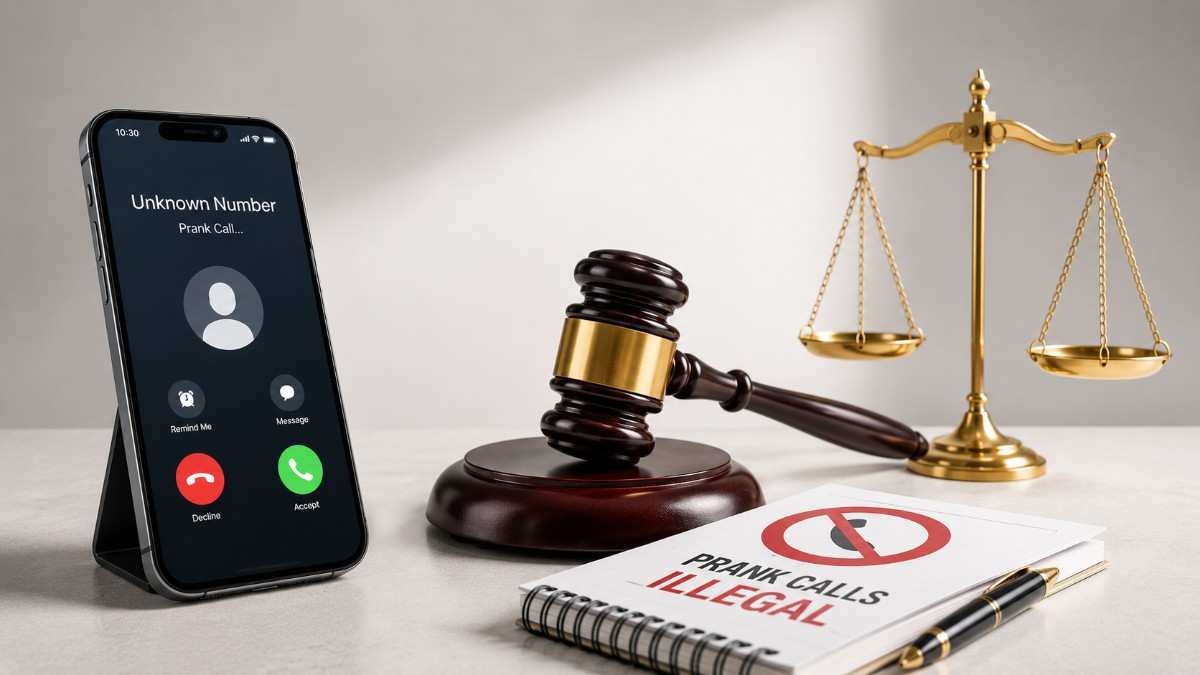

Most people think a prank call is just a joke. But in the UAE, one wrong word, a fake emergency, a threat, or recording the call without permission can quickly turn a harmless prank into a criminal case.
Many people don’t realize where the legal line is until someone files a police complaint. By then, the situation can become much more serious than expected.
A prank call is not automatically illegal in the UAE. However, it can become a criminal offence if it includes insults, threats, false information, misuse of emergency services, or recording or publishing a conversation without the other person’s consent. Depending on the circumstances, the case may fall under the UAE Penal Code or the Cybercrime Law, and penalties can include fines, imprisonment, and, in some cases, deportation for foreign nationals.
This guide explains “Is Prank Calling Illegal in the UAE?” and the laws that may apply. A prank may lead to criminal liability if it involves insults, threats, false reports, emergency service misuse, or recording and publishing conversations without consent. Depending on the circumstances, penalties can include imprisonment, substantial fines, and possible deportation for foreign nationals.
If a complaint has already been filed, early legal advice can help you understand your rights, avoid unnecessary mistakes, and respond appropriately during the police or prosecution process.
The Short Answer: The Content Decides
UAE law does not ban jokes. It bans specific conduct, and a prank call is judged by what is actually said and done during it, plus what happens to any recording afterwards.
Three features of the UAE system make prank calls riskier here than in many countries. Insult and defamation are criminal offences, not just civil wrongs.
Recording a private conversation without consent is itself a crime. And most of these offences are complaint-based, meaning one offended recipient is enough to open a police file.
The intent to joke is not a defence. Courts look at whether the words or acts themselves offend, threaten, or deceive, not at whether the caller found them funny.

When a Prank Call Becomes a Crime
The table below maps the common prank-call scenarios to the law that applies. Every figure is from the current legislation.
| What the Call Involves | Applicable Law | Penalty |
| Insulting words on an ordinary phone call | Article 427, Penal Code (31/2021) | Up to 6 months’ jail or a fine up to AED 5,000 |
| Insult or mockery via an app, VoIP, or social media | Article 43, Cybercrime Law (34/2021) | Detention and a fine of AED 250,000 to AED 500,000, or either |
| Recording or publishing the call without consent | Article 44, Cybercrime Law (34/2021) | At least 6 months’ jail and a fine of AED 150,000 to AED 500,000, or either |
| Spreading false or alarming information online | Cybercrime Law (34/2021) | Up to 1 year’s jail and a fine from AED 100,000 |
| Threats made during the call | Threat provisions, Penal Code (31/2021) | Jail terms that depend on the seriousness of the threat |
| False reports or misuse of emergency lines | False-report provisions, Penal Code (31/2021) | Jail and/or a fine, with police tracing repeated misuse of 999. |
Two general rules sit on top of this table. Aggravation applies where the target is a public official or where the content touches honour or family reputation. And under Article 126 of the Penal Code, a foreign national convicted of a misdemeanour can also be ordered deported, at the court’s discretion.
Insults and Offensive Jokes on a Call
The classic prank call script, mocking or insulting a stranger to get a reaction, sits squarely inside the Penal Code. Article 427 punishes defamation or insult delivered by telephone or face-to-face in front of others with imprisonment of up to six months or a fine of up to AED 5,000.
The same article covers the quieter version. An insult delivered to the victim alone, or in a private message, carries a fine of up to AED 5,000.
Aggravating circumstances raise the stakes. Insulting a public servant during or because of his duties, or using words that touch on honour or the reputation of families, moves the case into the harsher penalty range. Court practice in the UAE treats even mild words like “fool” as actionable when the recipient is offended, and fines in reported insult cases have reached AED 20,000.
Calls Through Apps Fall Under the Cybercrime Law
Here is the distinction most people miss. A prank call made through WhatsApp, an internet calling app, or any online platform is not judged under the ordinary phone provisions.
It falls under Federal Decree-Law No. 34 of 2021 on Combating Rumours and Cybercrimes.
The difference in exposure is dramatic. Insult or defamation through an information network carries detention and a fine of AED 250,000 to 500,000, or one of the two, under Article 43. The identical words, spoken on a landline, would cap at AED 5,000.
Where an information network or digital platform is used, the cybercrime law must be checked alongside the Penal Code. The facts determine which provision applies.
Been named in a complaint over a call, message, or video?
The first statement to police often decides the case. Speak to our criminal defence team before you respond.
Has Someone Reported Your Prank Call?
A police complaint does not automatically mean a conviction. Getting legal advice early can help you understand your rights before making any statement.
Recording and Posting the Prank: The Biggest Trap
Prank content is an entire genre online, and it is the most dangerous form of the joke under UAE law. Two separate offences stack on top of whatever was said in the call itself.
First, recording a conversation without the other party’s consent is an invasion of privacy. Article 44 of the cybercrime law punishes recording, transmitting, or disclosing conversations and private information without consent by imprisonment of at least six months and a fine of AED 150,000 to 500,000, or either penalty.
Second, publishing the recording is treated as a further act of disclosure, and it hands the victim permanent evidence. UAE courts have convicted and deported people over filmed pranks, and the platforms’ reach makes the harm, and the penalty, larger rather than smaller.
The rule of practice is short. In the UAE, never record a call without consent, and never post a recording of anyone without their clear agreement.
Hoaxes, Threats, and Emergency Numbers
Some prank formats are serious crimes everywhere, and the UAE is no exception. A fake bomb scare, a fake kidnapping, or any threat of harm made during a call is prosecuted as a criminal threat, with penalties that scale up to years of imprisonment depending on what was threatened.
Fake emergencies deserve their own warning. Knowingly making a false report to the police or other authorities is an offence under the Penal Code, and police trace repeated misuse of the 999 line back to the number’s owner. Abu Dhabi Police have publicly flagged waves of prank calls to 999, including 137 such calls from children over just two days in one reported period, precisely because they delay responses to real emergencies.
Parents should take note of that example. Children making prank calls create liability that lands on the household, and Dubai Police direct all non-urgent matters to 901 to keep 999 clear.
Worried the Situation Has Become Serious?
Whether the allegation involves prank calls, online messages, threats, or recorded videos, getting legal guidance early can help you avoid costly mistakes.
What to Do If You Are Receiving Prank Calls
The law protects recipients too, and the practical route is straightforward:
Persistent, targeted calls are treated seriously. Once a complaint is filed, callers are usually identifiable quickly, since SIM registration in the UAE ties numbers to Emirates IDs. If you have been contacted by the police or believe a complaint has been filed against you, the criminal defence team at Leaders Advocates can explain your legal position and the appropriate next steps based on your circumstances.