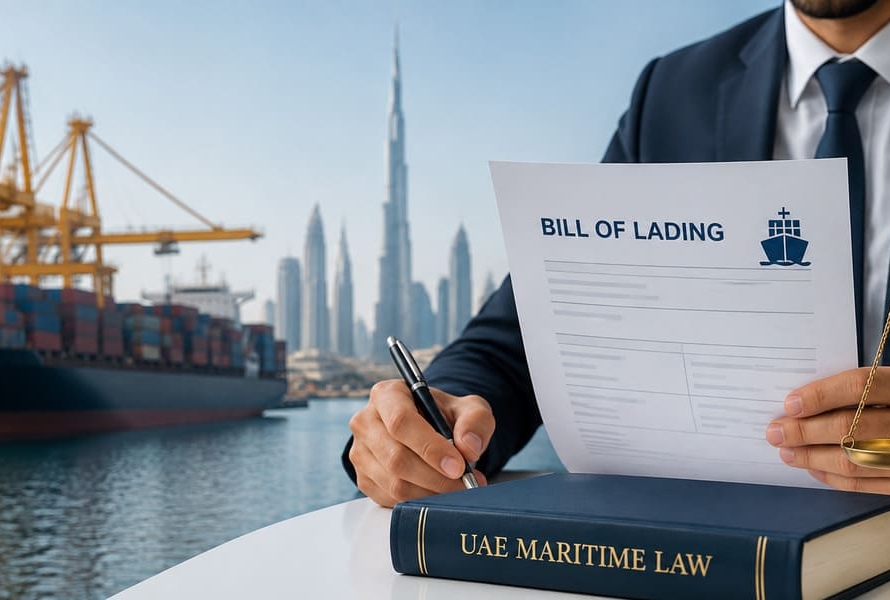



International maritime debt recovery. often begins when an unpaid shipping invoice meets a moving vessel, a foreign owner, and assets spread across several jurisdictions.
The creditor may have strong invoices and delivery records, yet recovery can fail if the ship leaves port or a statutory period expires. Classification and timing are therefore legally important.
Quick Answer
International maritime debt recovery in the UAE may involve a ship arrest, a substantive claim, negotiated release security, judgment, and execution. Federal Decree-Law No. 43 of 2023 permits prejudgment attachment only for qualifying maritime debts. The claimant must identify the liable party, locate an arrestable vessel, provide required security, and file the validity case within five working days. The correct route depends on the contract, vessel ownership, evidence, forum clause, assets, and applicable limitation period.
Start with a same-day legal and factual assessment. Confirm the debt category, calculate every limitation date, identify the registered owner, and verify the vessel’s current UAE location.
Prepare the claim documents and the applicant’s financial guarantee before applying. If arrest is granted, file the validity case within five working days and pursue suitable release security.
Need To Recover An Unpaid Maritime Debt In The UAE?
Contact Leaders Advocates for guidance on unpaid shipping invoices, UAE maritime debt claims, vessel arrest, shipowner liability, and urgent legal recovery options before the vessel departs.
How International Maritime Debt Recovery Works In The UAE
The main federal statute is Federal Decree-Law No. 43 of 2023 Concerning the Maritime Law. It took effect on 29 March 2024 and replaced the former maritime law.
Article 53 allows prejudgment attachment of a ship to satisfy a maritime debt. The remedy is not available for every unpaid commercial invoice merely because a ship appears in the transaction.
Article 53(2) lists maritime debt categories. They include claims connected with ship ownership, construction, repair, supplies, port charges, crew remuneration, towage, pilotage, salvage, chartering, and carriage.
The documents must show that the particular claim falls within a listed category. A clear classification also determines which vessel may be attached and which party should be named.
The Vessel That May Be Attached
Article 54 generally permits attachment of the ship connected with the debt or another ship owned by the debtor when the application is made. Statutory exceptions limit sister-ship arrest.
Those exceptions matter in ownership, co-owner, mortgage, possession, and sale disputes. A creditor should not assume that common management, branding, or group ownership proves identical legal ownership.
Article 55 addresses a debt owed by a charterer who manages the ship. Ownership records, charter terms, management documents, and the timing of ownership must be checked before filing.
Security And Release
Article 56 requires the court to accept a financial guarantee from the applicant covering the ship’s and crew’s security and safety needs during attachment. The amount and form require planning.
Under Article 57, the court may lift the attachment when sufficient security is provided. The law recognizes security that may include an acceptable guarantee from a protection and indemnity club.
A request to release the ship against security does not itself admit liability. The parties can still contest the debt, quantum, jurisdiction, and contractual defenses in the substantive proceedings.
The Five Working Day Deadline
Article 59 requires the applicant to file the case validating the attachment within five working days from the attachment date. Missing this deadline makes the prejudgment attachment null and void.
The same Article requires a hearing date within 15 days following the attachment report. It also provides a 15-day appeal period for the judgment affirming the attachment.
Article 60 gives the attaching court jurisdiction over the merits in specified cases. It expressly preserves an agreement referring the dispute to arbitration, so the forum clause remains central.
Is The Debtor’s Vessel About To Leave A UAE Port?
A potential ship arrest may require urgent action. Speak with maritime advocates in Dubai about qualifying maritime claims, vessel ownership, arrest security, and the five-working-day validity requirement.
A Practical Recovery Sequence
- Classify the claim under Article 53(2) and separate each principal amount, interest claim, cost, credit, and disputed item.
- Calculate contractual and statutory deadlines before sending further demands or waiting for promised payment.
- Identify the debtor, shipowner, charterer, guarantor, agent, and any related company without treating them as one legal person.
- Check the vessel’s registry, ownership history, current location, port call, flag, and expected departure time.
- Review the jurisdiction, governing-law, arbitration, service, and notice clauses in every relevant contract.
- Prepare the arrest application, supporting translations, power of attorney, and the Article 56 guarantee.
- After attachment, file the validity case within five working days and arrange prompt service on the proper parties.
- Evaluate release security, settlement, judgment, sale, and enforcement against assets beyond the vessel.
Maritime Liens Priority And Limitation Periods
Arrest creates security but does not automatically establish payment priority. Article 29 sets the ranking of maritime liens, beginning with specified judicial costs and public dues.
The ranking then addresses seafarers’ employment rights, salvage, general average, and other protected debts. Article 44 places a registered ship mortgage after the debts identified in Article 29(1) to (6).
Article 37 generally prevents hearing claims relating to ship liens after one year where the claim is denied and no legally admissible excuse exists. Certain Article 29(5) debts have six months.
The period may extend to three years where attachment in territorial waters was impossible, subject to Article 37(4). The protected nationality and domicile conditions must also be checked.
Other provisions create claim-specific periods. Article 106 states a one-year period for claims arising from a seafarer employment contract, while Article 136 addresses charter-party claims.
These periods should not be treated as one universal maritime deadline. The claim type, accrual date, interruption issue, contract, and relevant international instrument may change the analysis.
Evidence And Documents Needed
- The signed charter party, carriage contract, supply contract, repair order, agency agreement, or other contractual instrument.
- Bills of lading, delivery receipts, bunker delivery notes, timesheets, port records, survey reports, and completion certificates.
- Invoices, statements of account, payment schedules, credits, bank records, and written acknowledgments of the balance.
- Vessel registry extracts, ownership searches, charter records, management details, and evidence of the current port call.
- Emails, messaging records, default notices, settlement proposals, and documents showing that notice requirements were satisfied.
- The arbitration clause, governing-law clause, jurisdiction clause, guarantees, insurance documents, and relevant P and I correspondence.
Foreign corporate and contractual documents may require Arabic legal translation and formal authentication. The required form depends on the court, source country, and use of the document.
International Issues And Enforcement
A UAE attachment may secure a claim decided in arbitration because Article 60 preserves arbitration agreements. Counsel should coordinate the arrest file with the arbitral timetable and relief sought.
A foreign judgment or award requires a separate recognition and enforcement analysis. The place of the debtor’s assets matters more than the location where the contract was signed.
Service abroad, certified corporate records, translations, and proof of foreign law can add time. A recovery plan should budget for those stages before proceedings begin.
Article 117 treats the ship agent as the ship’s husband’s representative in cases filed by or against the ship’s husband in the State. Its precise application depends on the pleaded relationship.
Negotiation After Attachment
Attachment often changes the negotiation because delay can interrupt the vessel’s trading schedule. A creditor should still evaluate the proposed security, governing law, expiry, and issuing institution carefully.
A release agreement should identify the secured claim, interest, costs, forum, service method, and conditions for payment. It should also preserve defenses unless the parties intentionally settle them.
If security is limited, the claimant should compare its amount with the pleaded claim and expected costs. Accepting inadequate security may weaken later recovery after the vessel leaves.
Need Help With Maritime Security Or International Enforcement?
Contact Leaders Advocates for guidance on ship arrest release security, unpaid maritime invoices, arbitration clauses, foreign judgments, and enforcing shipping-related claims through UAE courts.
Common Mistakes And Risks
- Calling an ordinary trade debt a maritime debt without matching it to Article 53(2).
- Applying against a vessel without proving the required ownership or charterer connection.
- Waiting for another payment promise while a short limitation period continues to run.
- Obtaining attachment but missing the five-working-day validity deadline under Article 59.
- Ignoring the applicant’s guarantee, port costs, crew needs, and potential wrongful-arrest exposure.
- Focusing on judgment without checking whether the debtor has reachable assets after release.
How A Lawyer Can Help
A maritime lawyer can classify the debt, calculate limitation periods, trace the correct party, review vessel data, and prepare the urgent attachment evidence.
Counsel can also coordinate the merits case, arbitration, release security, settlement, judicial sale, and execution. Each step should support a realistic recovery outcome.
Professional Contribution From Faris Raian
Faris Raian, Managing Partner at Leaders Advocates, notes that maritime creditors often lose leverage by separating the limitation review from the vessel schedule. Both should be checked immediately.
His contribution from the original article is preserved here because the trading pattern and the legal clock can jointly determine whether effective security remains available.
Relevant Legal Services
- cargo and carriage of goods dispute lawyers can assess shipping documents, cargo evidence, and carrier liability.
- debt recovery lawyers in Dubai can plan the claim, settlement, and execution route.
- commercial litigation lawyers in Dubai can manage contested UAE court proceedings and enforcement.
Related Legal Guidance
Further Legal Publications And Professional Profiles
Explore professional legal publications and firm information through Leaders Advocates on Mondaq, the firm’s Lexology contributor profile, and its Legal 500 lawyer profiles.
Relevant Success Story
See the firm’s Success Stories for examples of how legal matters have been handled. Past outcomes do not guarantee a similar result. Every matter depends on its facts, documents, parties, assets, and legal circumstances.
Frequently Asked Questions
Final Takeaway
International maritime debt recovery requires speed, correct debt classification, reliable ownership evidence, and strict compliance with the five-working-day validity deadline.
The safest next step is an immediate review of the contract, invoices, vessel data, forum clause, assets, and limitation dates before the vessel departs or rights expire.
Protect Your Maritime Claim Before The Vessel Departs
Speak with Leaders Advocates for guidance on international maritime debt recovery, vessel arrest in the UAE, maritime liens, recovery security, arbitration, and enforcement through UAE courts. Get advice based on your documents and the applicable deadlines.