


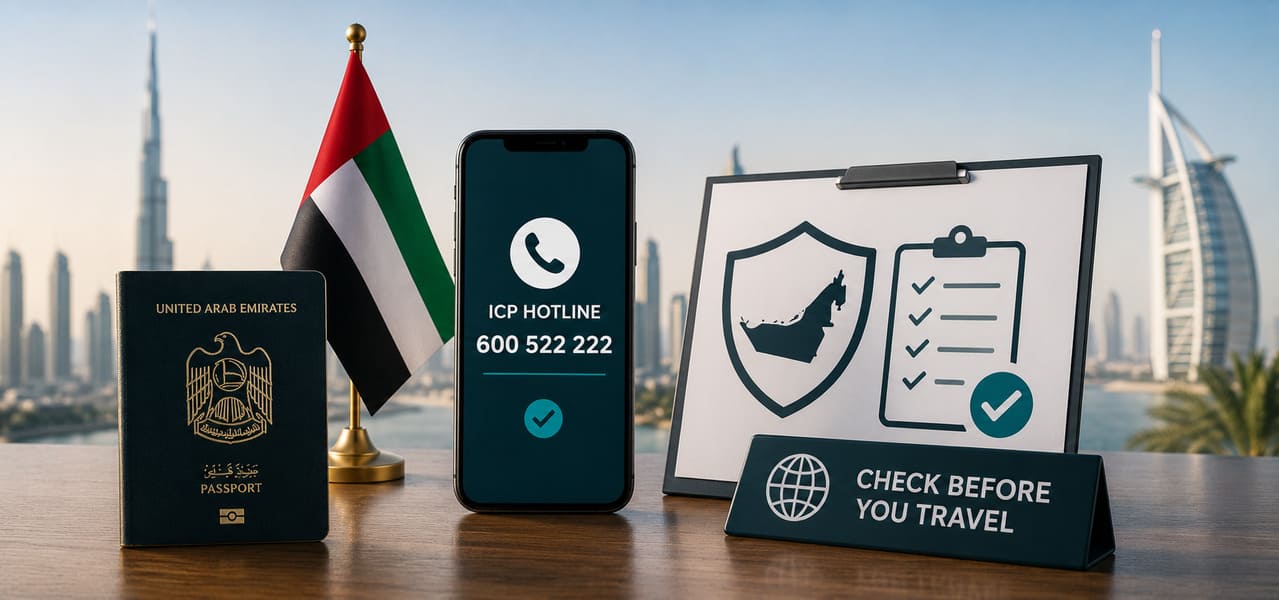

To check deportation status in the UAE, contact the Federal Authority for Identity, Citizenship, Customs and Port Security through its call centre on 600 522 222. Where the previous immigration matter was handled in Dubai, use GDRFA Dubai’s own channels as well.
The safest time to check is before booking a flight or making travel commitments. A criminal defense lawyer in Dubai can advise on absconding cases in the UAE and whether can a criminal record be cleared in the UAE applies to the circumstances. Prepare accurate passport and case details, identify the authority that handled the earlier matter, and record the answer you receive so any confirmed restriction can be addressed with time to act.
To check deportation status in the UAE, call the Federal Authority for Identity, Citizenship, Customs and Port Security on 600 522 222 and provide your passport details. For a matter that originated in Dubai, use GDRFA Dubai’s channels and Smart Services as the Dubai-specific route. Check before booking a flight rather than waiting until airport check-in.
Ask whether a deportation record or entry restriction is recorded, which authority issued it, and whether the record has a defined end date. If a restriction is confirmed, note the grounds and issuing authority, collect the related case and immigration documents, and seek advice on whether a formal removal application is available. A status inquiry and a removal request are separate steps.
Checking Through ICP
ICP’s 24-hour hotline, 600 522 222, is the main federal channel for checking your immigration status, including any deportation record. Have your passport details ready when you call.
Checking Through GDRFA for Dubai Specifically
Where a previous matter was handled through Dubai specifically, GDRFA’s own Smart Services channels allow a direct status check, relevant particularly if the deportation or immigration issue originated there.
Why Checking Before Booking Actually Matters
A deportation order generally comes with an accompanying immigration ban, and discovering that ban at the airport, after you’ve already booked flights and made arrangements, is a genuinely disruptive outcome. Checking directly beforehand gives you time to pursue a formal removal application if a restriction is actually confirmed, rather than finding out with no time to act.
Unsure About Your UAE Deportation Status?
Get legal guidance on your immigration history, possible entry restrictions, and the appropriate steps to take before making travel plans.
What to Do If a Restriction Is Confirmed
- Note the specific grounds and which authority issued it.
- Confirm whether the restriction has a defined end date or is indefinite.
- Pursue a formal removal application well ahead of any planned travel, not close to the departure date.
Prepare the Details Before You Check Deportation Status
A status check is more useful when the authority can identify the correct person and earlier matter. Prepare the passport currently used for travel, any previous passport connected to the case, the spelling of the name used at the time, nationality, date of birth, and any UAE file or unified number already available.
Collect documents from the event that may have led to deportation or an entry restriction. These may include visa or residence records, departure papers, police or prosecution references, court documents, and communications from an immigration authority. Do not guess at a case number when an older document can provide the exact reference.
Write a short chronology before making the inquiry. Include when the person entered or left the UAE, where the earlier matter was handled, whether Dubai was involved, and what the person was told at the time. A chronology helps distinguish confirmed information from assumption or memory.
- Current passport and any previous passport linked to the UAE record.
- Full name spellings, nationality, and date of birth used in the earlier file.
- Visa, residence, unified number, or immigration file details where available.
- Police, prosecution, court, deportation, or departure documents already received.
- Dates and the emirate or authority connected with the previous matter.
How to Check Deportation Status in the UAE Through ICP
ICP is the main federal contact identified in the source article. Call 600 522 222 and explain that you want to confirm whether a deportation record or entry restriction is connected to your passport details. Give the information exactly as shown in the relevant identity document.
Ask a focused set of questions and write down the responses. The useful points are whether a restriction is recorded, whether more information is required, and which authority or office should handle the next inquiry. A general answer about visa validity should not automatically be treated as a complete answer about every possible restriction.
If the person is outside the UAE, plan the inquiry early enough to follow any identification or document instructions given by the authority. The purpose is to confirm the position before travel, not to create an assumption from an unsuccessful online search or an old visa record.
- State that the inquiry concerns a possible deportation record or entry restriction.
- Provide passport information carefully and confirm the spelling back to the adviser.
- Ask which authority owns the record if a restriction is found.
- Record the date, channel, and any reference or next-step instruction provided.
- Do not book non-refundable travel while the status remains unclear.
When to Check With GDRFA Dubai
Use GDRFA Dubai’s channels when the earlier immigration issue originated in Dubai or was handled through Dubai’s residency and immigration system. The source identifies GDRFA Smart Services as the Dubai-specific route, and the current GDRFA site provides status and legal-service channels for Dubai matters.
Give GDRFA the same identity and case information used for the federal inquiry. If the answers appear incomplete or refer the matter elsewhere, note that direction rather than assuming the absence of a result means there is no restriction. The federal and Dubai checks serve different parts of the inquiry.
Checking both routes can be appropriate when the history is unclear. The aim is not to submit repeated applications. It is to identify where the record is held and which authority can give a reliable answer about the Dubai or federal position.
How to Record and Understand the Status Response
A clear note should state what was asked, the identity information used, the response, the date, and any reference number. Avoid rewriting a cautious answer as a final guarantee. If the authority requests an in-person inquiry, another document, or contact with a different office, record that as an open step.
Distinguish a deportation record, an entry restriction, a visa-status issue, and an unresolved earlier case in the working notes. They should not be merged into one label without confirmation. The next legal or administrative step depends on what the authority actually identifies.
If a lawyer is instructed, provide the original documents and inquiry notes instead of a summary from memory. This allows the legal team to compare the issuing authority, case background, and present immigration response before advising on a removal request or another route.
- The exact question asked and the authority contacted.
- Passport and file details used to identify the record.
- Whether a restriction was confirmed, denied, or remained unclear.
- The issuing authority, grounds, and end date if those details were provided.
- Any further document, appointment, application, or referral requested.
What to Do If a Deportation Restriction Is Confirmed
First, obtain the most precise available description of the restriction. Note the grounds, issuing authority, case reference, and whether the restriction has a defined end date or is indefinite. Do not begin a removal request based only on an informal account that does not identify the underlying record.
Next, assemble the related documents and assess whether a formal removal application is available for the specific grounds involved. The source article states that restrictions may be addressed through a formal removal application in many cases, but the result depends on the individual basis and should not be assumed.
File planning should begin well before any intended travel. An application may require documents or action connected to the earlier matter, and a pending request does not itself confirm that entry is permitted. Travel should be planned only after the current status is clear.
- Identify the precise authority and record behind the restriction.
- Collect any final case, prosecution, court, or immigration documents.
- Confirm whether the restriction is time-limited or indefinite.
- Ask what formal removal or review route applies to those grounds.
- Allow enough time to complete the process before arranging travel.
What a Lawyer Can Do Before Travel Is Booked
A lawyer can organize the identity, immigration, and earlier case records, identify missing information, and help direct the inquiry to the appropriate authority. Where the restriction is connected to a criminal or court matter, the legal review can address that background alongside the immigration position.
The first consultation should be specific. Explain what happened, which emirate handled it, when the person left, what documents were issued, and what present travel is being considered. Bring every passport and reference connected to the history, even if some documents appear old.
The lawyer should separate confirmation from removal. The first task is to establish whether a restriction exists and who issued it. The second is to assess whether a formal application is available and prepare it around the actual grounds. Keeping those steps separate avoids travel decisions based on an unresolved assumption.
- A concise chronology of the immigration and case history.
- All passports, UAE identity details, visas, and departure records.
- Police, prosecution, court, or authority communications related to the matter.
- Notes from ICP or GDRFA inquiries and any references provided.
- The proposed travel date and reason, without booking before confirmation.
Uncertain whether a UAE deportation or entry restriction still applies? Faris Raian and the team at Leaders Advocates can review the earlier case and immigration records, help identify the appropriate authority, and advise on a formal removal application where the specific grounds allow it.
Has a UAE Entry Restriction Been Confirmed?
Our legal team can review the underlying record, identify the issuing authority, and advise whether a formal removal or review process may be available.
Common Mistakes
- Booking travel before confirming your status, particularly with any history of deportation or a prior visa issue.
- Checking only one authority when the matter might actually be recorded through the other.
- Waiting until close to a planned trip to check, leaving no time to act if a restriction is found.
- Using only a current passport when the earlier UAE record may be linked to a previous passport or spelling.
- Treating a visa-status result as a complete answer about every possible deportation or entry restriction.
- Assuming that filing a removal request means the restriction has already been lifted.
Relevant Legal Services
A Criminal Defense Lawyer in Dubai can review a restriction connected to a criminal matter. A Litigation Lawyer in Dubai can advise where court or contested proceedings affect the record. A Civil Lawyer in Dubai can assess connected civil issues and supporting documents.
People Also Ask
To check deportation status in the UAE, use ICP and the relevant Dubai channels before booking travel, document the response carefully, and separate status confirmation from any later removal application. Accurate identity and case records are the foundation of both steps.
Check Your Position Before You Travel
Leaders Advocates can review your UAE immigration and case records and advise on the next legal steps where a deportation or entry restriction may apply.

3 Comments