

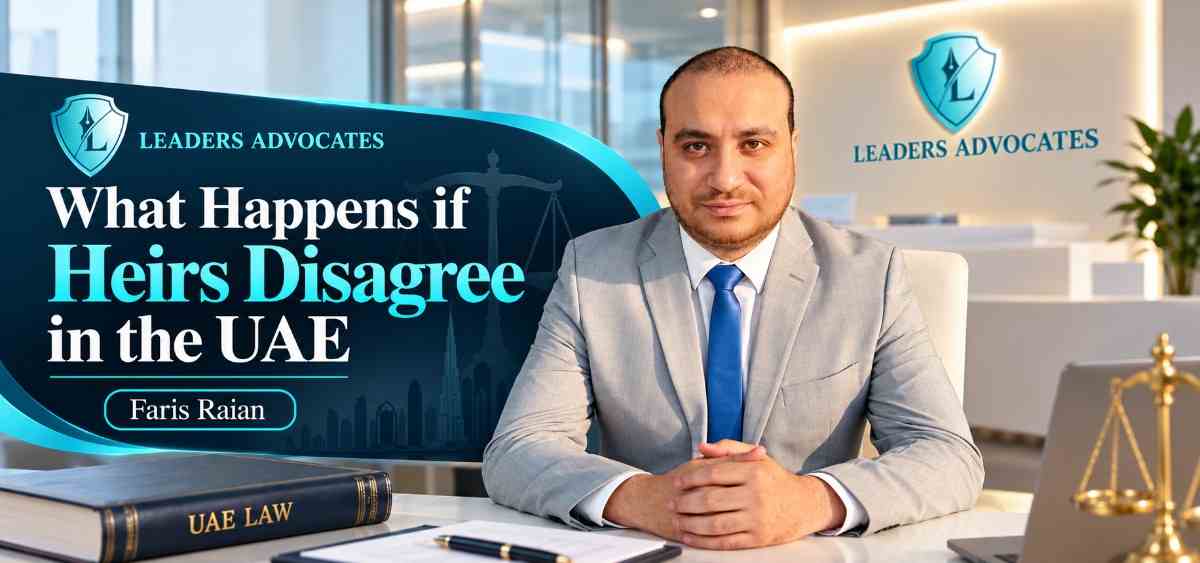
An estate can remain frozen when heirs dispute the will, hide records, reject a valuation, or refuse to sell an indivisible asset. Delay can increase costs and damage property value.
What Happens if Heirs Disagree in the UAE depends on the applicable succession framework and the exact disagreement. The estate judge has broad jurisdiction over inventory, liquidation, distribution, and connected disputes.
The safest route is formal estate administration supported by complete documents. Family pressure cannot replace an heirship decision, debt review, or registered property transfer.
When heirs disagree, the competent estate judge can determine the heirs, preserve and inventory assets, settle connected disputes, supervise liquidation, and distribute the estate. Article 5 of Federal Decree-Law No. 41 of 2024 gives the estate judge jurisdiction over heirship, estate inventory, liquidation, distribution, and related real estate or commercial claims. Article 201 requires funeral preparation, then debts, then a will within the one-third limit, before distribution to heirs. Muslim inheritance rules appear in Articles 200 to 250. Non-Muslim estates within Federal Decree-Law No. 41 of 2022 may follow Article 11 and any valid registered will. Heirs can negotiate a buyout or documented settlement. If an asset cannot be divided and no agreement is possible, a judicial sale may follow. Results depend on the estate, documents, law, and evidence.
CASE REVIEW
Need Help With an Heir Disagreement?
Message Leaders Advocates on WhatsApp now for a quick, confidential review of your estate documents and the exact points of disagreement.
The solution begins by opening or continuing the estate file. The court must identify the deceased, heirs, assets, liabilities, wills, and any related claims.
Next, separate legal disputes from commercial disagreement. A challenge to heirship is different from disagreement about sale price or who should occupy a property.
The heirs should then obtain reliable valuations and exchange written proposals. A buyout, asset allocation, or agreed sale can avoid a court-directed result.
If settlement fails, the estate judge can decide the disputed issues and supervise the route to distribution. Enforcement and DLD registration may still follow the judgment.
The Estate Judge Has Broad Jurisdiction
Article 5 of the 2024 Personal Status Law distinguishes the personal status judge from the estate judge. The estate judge has defined powers over estate administration.
Those powers include proving death, identifying heirs, listing assets, liquidating the estate, distributing it, and appointing a tutor or estate administrator where required.
The estate judge may also hear disputes concerning the inventory, liquidation, division, and distribution. Connected civil, real estate, or commercial claims can fall within that jurisdiction.
The court can consider disputes between heirs, guardians, administrators, and other persons connected to the estate. This reduces the need to fragment one estate across unrelated proceedings.
The correct procedural route still depends on the claim and emirate. Counsel should identify the competent court and required application before filing.
The Legal Order Before Distribution
Article 200 defines the estate as the property and financial rights left by the deceased. Article 201 then sets the order of rights affecting that estate.
The order is:
1
Proper preparation of the deceased’s funeral.
2
Settlement of debts owed to God or people.
3
Execution of the will within one-third, unless heirs approve an excess.
4
Distribution of the remainder among the heirs.
This sequence matters. An heir should not divide property or withdraw funds before debts, expenses, and valid testamentary obligations are addressed.
Deferred mahr can be a debt owed to the wife. It should be assessed as a liability before her inheritance share is calculated.
Creditors may have claims against the estate. Informal early distribution can create recovery disputes and personal exposure for those controlling assets.
ACT EARLY
Don’t Wait Until It Becomes a Bigger Problem
Early advice can prevent costly mistakes. Send your documents to Leaders Advocates on WhatsApp today.
Disagreement About Who The Heirs Are
The heirship or succession certificate identifies the persons legally entitled to participate. Birth, marriage, divorce, death, and lineage documents may be required.
Article 202 requires the deceased’s death, the heir’s survival, a legal basis for inheritance, and absence of an impediment. These questions can become contested.
An undisclosed marriage, child, divorce, or foreign civil status record may change the estate calculation. Foreign records can require legalization and certified Arabic translation.
No family member should be excluded because others doubt their status. The issue should be determined through evidence and the competent court.
Likewise, a person named in a will is not necessarily an heir. Heirship and testamentary benefit are legally distinct.
Disagreement About The Will
Article 173 executes a will within one-third after funeral expenses and debts. Article 193 addresses a will exceeding one-third.
The excess is generally suspended on the heirs’ approval and operates against the shares of those who approve. The statute also contains defined exceptions.
Article 184 restricts a will in favor of an heir. It may operate with approval from other mature heirs or where a likely interest is recognized by the court.
Challenges may concern capacity, authenticity, revocation, registration, pressure, or ownership of the bequeathed asset. The person alleging invalidity needs supporting evidence.
For non-Muslims within the 2022 civil framework, Article 11 gives effect to a registered will. Without a will, the default gives half to the spouse and half equally to children.
Article 11 also addresses estates without a spouse or children and permits certain requests concerning another applicable law. The full family structure must therefore be reviewed.
When One Heir Controls The Information
One relative may hold bank statements, keys, company records, or title documents. That control does not give them ownership of the entire estate.
The estate inventory should be established through the legal process. The court can address missing information, disputed assets, and questionable transactions.
Keep a written request identifying each missing document. Broad accusations are less useful than a specific list of accounts, properties, companies, vehicles, or policies.
Article 253 creates criminal exposure for concealing, squandering, destroying, or fraudulently seizing estate property. The penalty may include imprisonment and an AED 5,000 to AED 100,000 fine.
Criminal allegations should not be used as negotiation pressure. Report suspected conduct only after careful evidence review and advice about the correct authority.
Indivisible Property And Court Ordered Sale
A home, warehouse, or single commercial unit cannot always be divided physically among several heirs. Co-ownership can also become impractical.
The heirs should first consider an independent valuation. One heir may buy the others’ shares, or different assets may be allocated to equalize value.
An agreed market sale usually gives the family greater control over price, timing, repairs, broker selection, and possession. Every heir’s approval must be documented properly.
If division and settlement fail, a judicial sale may become necessary. The proceeds can then be distributed after costs and liabilities.
Property transfer in Dubai requires the relevant court documents and Dubai Land Department procedures. A family agreement alone does not update registered title.
Documented Settlement Between Heirs
Article 247 defines takharuj as an agreement by heirs or devisees to relinquish all or part of a share for known consideration. It must be documented before the competent authority.
Article 248 allows heirs to use that process subject to the estate information and statutory conditions. A settlement should not be based on concealed assets.
A complete agreement should identify valuations, consideration, payment security, transfer steps, fees, possession, rent, liabilities, and default consequences.
Heirs abroad can act through a properly prepared power of attorney. Its scope should cover estate proceedings, settlement limits, sale, registration, and receipt of funds where intended.
Independent advice may be appropriate when interests differ. One lawyer should not present conflicting advice to heirs whose positions are directly opposed.
Practical Steps Out Of Deadlock
1
Open the estate file promptly.
2
Obtain the heirship or succession certificate.
3
Prepare a complete asset and liability inventory.
4
Secure property, records, and digital account information lawfully.
5
Verify every will and lifetime transfer.
6
Obtain independent valuations for disputed assets.
7
Exchange written buyout or sale proposals.
8
Document any takharuj or settlement properly.
9
Ask the estate judge to decide unresolved issues.
10
Complete execution and registration after judgment.
Evidence And Documents Needed
- ●Death certificate and deceased’s identity records.
- ●Heirs’ passports, Emirates IDs, and civil status documents.
- ●Heirship or succession certificate.
- ●Original will and registration evidence.
- ●Property titles, bank records, and company documents.
- ●Loan, creditor, and funeral expense records.
- ●Mahr and family liability documents.
- ●Valuations and rental income records.
- ●Evidence of lifetime gifts or transfers.
- ●Powers of attorney for heirs abroad.
Foreign documents may require legalization and certified translation. Preserve original electronic files and avoid modifying metadata.
Common Mistakes And Risks
- !Waiting while property and accounts remain unmanaged.
- !Allowing one heir to administer without records.
- !Distributing assets before debts are settled.
- !Confusing a devisee under a will with an heir.
- !Rejecting valuation without obtaining another professional report.
- !Concealing assets or destroying records.
- !Signing a family settlement before full disclosure.
- !Using an inadequate power of attorney for an absent heir.
- !Forgetting DLD or company transfer formalities.
AVOID COSTLY MISTAKES
Protect Your Position Before It’s Too Late
Our family lawyers can review your situation and flag the risks before they turn into bigger legal problems.
How A Lawyer Can Help
An inheritance lawyer can identify the governing framework, court, heirs, liabilities, and disputed assets. Counsel can request preservation and prepare the estate inventory.
The lawyer can also structure a buyout, takharuj, agreed sale, or court application. After judgment, counsel can coordinate execution and registration.
Faris Raian and the team at Leaders Advocates can assess the estate documents and points of disagreement. The likely route depends on the assets, evidence, and parties.
Relevant Legal Services
Relevant support may include civil inheritance services in Dubai, Muslim family legal services in Dubai, and UAE family law services. The correct service depends on the documents, forum, legal framework, and remedy required.
Relevant Success Story
Examples of completed matters appear in the firm’s Success Stories archive. A previous result never guarantees the same outcome. Every matter depends on its facts, documents, evidence, procedure, and legal circumstances.
TRUSTED BY FAMILIES ACROSS THE UAE
See How We’ve Helped Families Like Yours
Every case is different, but our experience speaks for itself. Reach out to discuss your options in confidence.
Frequently Asked Questions
Final Takeaway
Heir disagreement does not remove the court’s ability to administer and distribute an estate. The estate judge can decide connected disputes and supervise the legal sequence.
The safest next step is a complete inventory and document review before settlement or filing. The result depends on the assets, liabilities, evidence, and governing law.
READY WHEN YOU ARE
Speak to Leaders Advocates About an Heir Disagreement
Get clear, practical advice from an experienced UAE family lawyer. No obligation, fast response.