

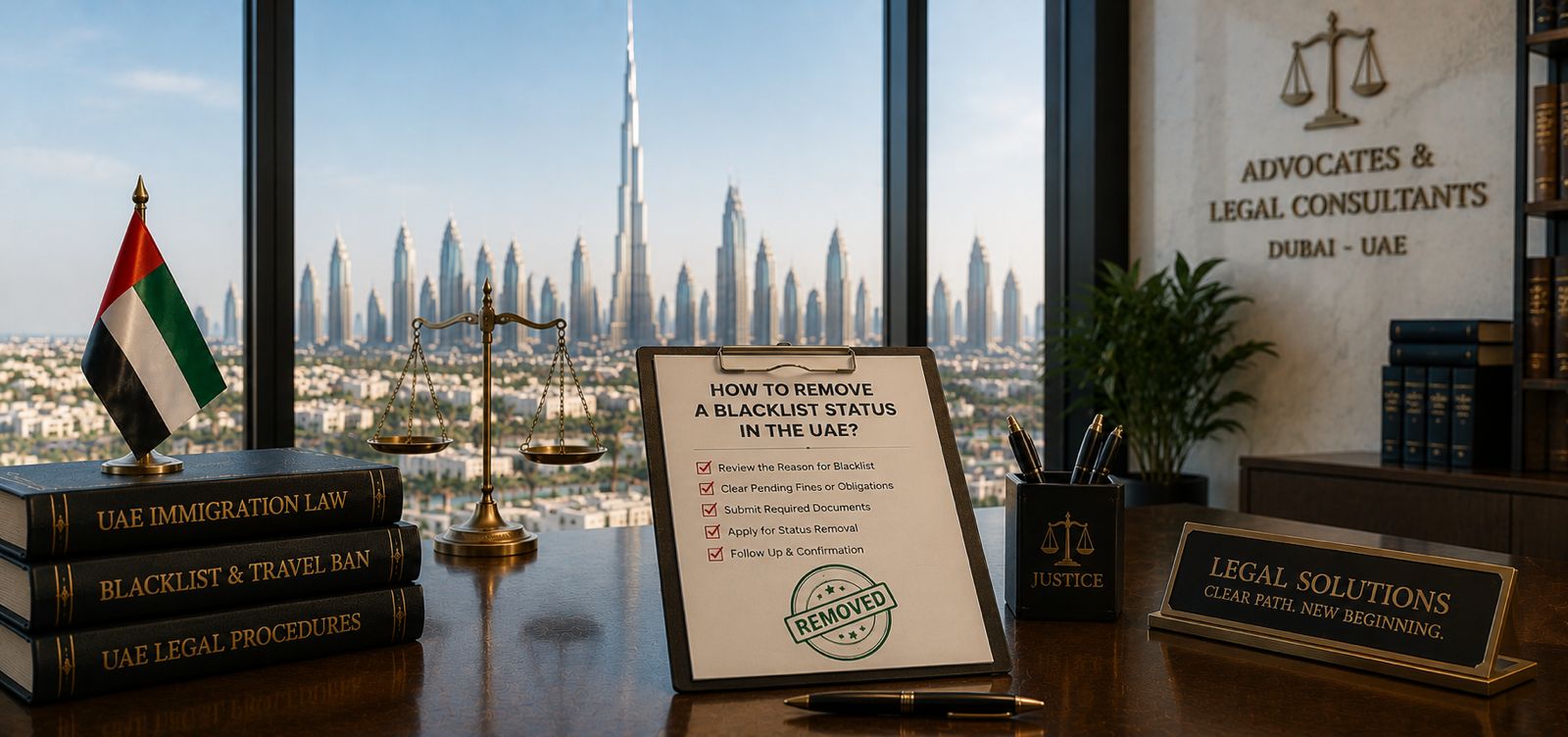

“Blacklist” is not a single, formal legal term in the UAE. It is commonly used to describe two genuinely different restrictions: a MOHRE labor ban preventing new work permits and a broader immigration restriction preventing entry.
Removing one requires knowing which type actually applies. A person can waste significant time by contacting MOHRE about an immigration restriction or approaching immigration about a labor-ban problem.
This guide explains how to identify the correct type, what commonly causes each restriction, which authority handles removal, what documents to prepare, and how to confirm that the status has actually changed. A criminal defense lawyer in Dubai can advise on how to remove immigration ban in UAE and matters involving immigration bans in the UAE.
Quick Answer
For a MOHRE labor ban, the removal route depends on why it was issued, such as absconding, a contract violation, or an unresolved employer dispute. Removal generally requires either the employer’s cooperation or a formal MOHRE application demonstrating that the underlying issue has been resolved.
For a broader immigration restriction, the removal process runs through GDRFA or ICP instead, following the same route as a formal immigration ban.
The first step is to identify which of these two restrictions genuinely applies. Check labor-related status with MOHRE and immigration-related status with GDRFA or ICP before pursuing removal.
The Two Different Restrictions
MOHRE Labor Ban
A MOHRE labor ban restricts the ability to obtain a new work permit. It may be connected to an absconding case, a contract violation, or an unresolved employer dispute.
The removal route is usually based on the cause. Employer cooperation may be needed, or the worker may submit a formal MOHRE application showing that the issue has been resolved.
Immigration Restriction
An immigration restriction is broader and can prevent entry to the UAE. The removal process is handled through GDRFA or ICP rather than MOHRE.
Because the two records have different effects, a person should not describe every work-permit problem as an immigration ban or every entry problem as a labor ban.
An appropriate UAE ban status check should identify what the available result covers before any application is submitted.
Not Sure Which UAE Blacklist Applies to You?
A MOHRE labor ban and an immigration restriction are not the same. Using the wrong authority can waste time and delay removal. Our Dubai lawyers can help identify the correct restriction and the right removal route.
How to Identify Which Blacklist Applies
Check the Immediate Effect
Ask what the person is unable to do. If the problem is obtaining a new work permit, the likely starting point is MOHRE. If the problem is entry, a visa transaction, or an immigration file, GDRFA or ICP is the likely starting point.
Obtain the Reference Number
Record the complaint, work permit, immigration file, visa, or transaction number. A name and passport number alone may not explain why the restriction exists.
Ask Which Authority Created the Status
Confirm whether MOHRE, GDRFA, or ICP holds the record. Do not send the same explanation to every authority without knowing which one controls the restriction.
Check for More Than One Issue
An employee dispute can affect work and immigration arrangements in different ways. Confirm whether only one status exists or whether a labor issue and an immigration issue both need separate action.
How to Remove a MOHRE Labor Ban
Step 1: Identify the Original Reason
Confirm whether the restriction is connected to an absconding case, contract violation, or employer dispute. Obtain the employer name, work permit number, complaint reference, and recorded date.
Step 2: Collect Employment Evidence
Useful documents can include the employment contract, resignation, termination letter, salary records, attendance, leave approvals, medical documents, messages, and any existing labor complaint.
Step 3: Seek Employer Cooperation Where Appropriate
The employer may be able to cooperate in withdrawing or resolving the underlying issue. Obtain the formal outcome instead of relying only on a verbal promise.
Step 4: Use the MOHRE Application Route
Where cooperation is not available or the report is disputed, submit a formal MOHRE application showing why the underlying issue has been resolved or why the status should be removed.
Step 5: Confirm the Work-Permit Status
After the decision, check that the labor status has been updated before relying on it for a new permit application.
Employment lawyers in Dubai can help organise the employer records and MOHRE submission when the ban is connected to a contract or workplace dispute.
Removing an Absconding-Related Status
Where the labor ban is tied to an absconding case, the specific process includes MOHRE’s formal cancellation mechanism under Ministerial Resolution No. 47 of 2022.
The detailed route to remove an absconding case in Dubai should focus on the report itself, the reason it was made, whether the absence was genuinely unexplained, and what evidence supports cancellation.
Possible supporting documents include resignation, authorised leave, medical emergency records, wage complaints, attendance, and communication with the employer. The evidence should be arranged in date order and connected directly to the disputed period.
Removing a Contract-Related Labor Ban
Where the restriction is tied to a contract dispute, resolving the underlying issue with the employer or filing a labor complaint can support removal.
First identify the disagreement. It may involve notice, resignation, termination, unpaid salary, failure to cancel a permit, transfer to another employer, or another employment obligation. The application should show what happened and what has now been resolved.
Avoid signing a settlement that is not understood merely to obtain a promise of cancellation. The written terms and actual MOHRE status should be checked.
How to Remove an Immigration Restriction
Step 1: Confirm GDRFA or ICP Responsibility
Determine which immigration authority holds the record. The correct route depends on the file and emirate involved.
Step 2: Obtain the Reason
Ask for the specific original grounds rather than applying with the single word “blacklist.” The required evidence depends on why the restriction exists.
Step 3: Resolve the Underlying Issue
The person may need to correct a file, pay an official amount, provide a required decision, or complete another step identified by the authority.
Step 4: Submit the Formal Removal Application
Use the official GDRFA or ICP channel and keep the transaction reference, payment receipt, uploaded documents, and result.
Step 5: Recheck Before Travel
Do not assume that submission or payment equals removal. Confirm the updated status before applying for a visa or booking non-refundable travel.
Documents Commonly Needed
• Current passport and relevant old passports.
• Emirates ID and residence visa records.
• Work permit and employment contract.
• Employer and establishment details.
• MOHRE complaint or labor-ban reference.
• Absconding report and cancellation evidence.
• Resignation, termination, attendance, and leave documents.
• Salary, wage complaint, or settlement records.
• GDRFA or ICP file and transaction references.
• Official payment receipts.
• Written decision showing that the underlying issue ended.
• Power of attorney and translation where required.
Use consistent names, dates, and passport details. If an old passport was used when the status was created, include it rather than relying only on the current document.
Applying From Outside the UAE
A person outside the country should first identify the authority and determine whether the application can be started online or through an authorised representative.
The representative may need a power of attorney and identity documents. Requirements can vary, so confirm them with MOHRE, GDRFA, or ICP before sending papers.
Do not travel solely to test whether the blacklist was removed. Obtain the official decision and recheck the relevant status first.
How to Organise the Evidence File
Create separate sections for identity, employment, the original complaint or restriction, evidence resolving the issue, applications, payments, and official decisions. Put documents in date order within each section.
Add a one-page chronology showing the employer or immigration authority, file number, date created, reason given, action taken, and current result. This makes it easier to see whether any step or document is still missing.
Use the same name spelling and passport information throughout. Where an old passport or different spelling appears in the original record, explain the connection and include copies rather than silently changing the details.
How to Know Whether Removal Is Complete
An application receipt proves submission, not removal. A payment receipt proves payment, not necessarily that the entire status has been updated. Ask for the decision or updated status from the authority handling the record.
For a labor matter, confirm the work-permit position. For an immigration matter, confirm the relevant entry or file status. If both types existed, check each one separately.
Keep the final documents even after a new permit or visa is issued. They may be needed later if an old record appears again or another authority asks how the original issue ended.
Facing a MOHRE Labor Ban or Absconding Case?
If an employer dispute, absconding report, resignation issue, or contract problem is blocking your next work permit, our employment lawyers in Dubai can review the record and help prepare the correct MOHRE application.
How Long Does Removal Take?
There is no single period for every blacklist. Timing depends on the type of restriction, the original reason, whether the employer cooperates, whether documents are complete, and whether more than one authority must update a record.
Ask for the estimate attached to the actual application. Keep the reference number and follow up through the same authority rather than starting duplicate requests with different explanations.
What to Do After Removal
Obtain the written decision or updated status, keep every receipt, and confirm whether a new work permit, visa, or entry application can now proceed.
If the restriction affected both employment and immigration arrangements, recheck both sides separately. Removal of one should not be assumed to update the other automatically.
Common Mistakes
• Assuming one unified UAE blacklist exists.
• Applying through MOHRE for an immigration matter.
• Applying through GDRFA or ICP for a labor-ban dispute.
• Failing to obtain the complaint or file number.
• Ignoring the employer’s formal role in an employment record.
• Using an informal promise instead of a written outcome.
• Submitting inconsistent dates or passport details.
• Paying an unofficial agent without an authority receipt.
• Assuming submission means the restriction has already been removed.
• Booking travel before the updated immigration status is confirmed.
People Also Ask
Conclusion
Removing a blacklist status in the UAE begins by identifying whether the problem is a MOHRE labor ban or a broader immigration restriction.
Resolve the original reason, submit through the correct authority, keep the official decision, and confirm the updated work-permit or immigration status before relying on the result.
Blocked From Working or Entering the UAE?
Do not rely on an unofficial “blacklist cleared” promise. Our legal team can help you identify whether the restriction sits with MOHRE, GDRFA, or ICP, resolve the underlying issue, and confirm the updated status before you apply again or travel.