

A project searching for the best tokenization lawyer in UAE usually has technology, an asset, and a commercial model. The unresolved issue is how regulators and investors will classify the token and its rights.
Choosing counsel is legally important because classification determines the regulator, license, disclosure package, custody model, marketing limits, and enforcement route. No official ranking identifies one objectively best lawyer.
Quick Answer
The best tokenization lawyer in UAE for a particular project is the lawyer who can classify the token, identify the correct jurisdiction, and connect on-chain records with enforceable off-chain rights. In Dubai outside the DIFC, VARA regulates virtual assets under Law No. 4 of 2022 and its rulebooks. The DFSA regulates Investment Tokens and relevant Crypto Token activity in the DIFC. ADGM’s FSRA regulates Digital Securities and virtual asset activity within ADGM. Federal capital market questions may involve the Capital Market Authority, which replaced the Securities and Commodities Authority under Federal Decree-Law No. 32 of 2025. Payment token issues may involve the Central Bank. The right choice depends on the asset, investors, documents, activities, and planned markets.
Not Sure Which Regulator Applies to Your Token?
Message our team on WhatsApp with your project details and we will help you identify the right framework.
Solution
Select counsel through a project-specific interview, not a general claim. Give each candidate the same term sheet and ask for a written issue map covering classification, regulator, license, structure, disclosures, custody, marketing, and enforcement.
- Require a reasoned classification of the token and at least one alternative analysis.
- Ask which entity issues the token and which entity owns or controls the underlying asset.
- Identify every regulated activity, including issuance, custody, exchange, brokerage, lending, and management.
- Confirm how investors obtain, transfer, redeem, and enforce their rights if the issuer fails.
- Test whether the lawyer can coordinate technology, corporate, regulatory, property, and cross-border work.
How To Choose The Best Tokenization Lawyer In UAE
Start with classification skill. A strong adviser does not accept labels such as utility token, real-world asset, stablecoin, or digital share without testing the legal rights and economic substance.
Then test jurisdiction knowledge. Dubai, the DIFC, ADGM, and the federal framework have different regulators and rulebooks. A structure may also touch more than one regime.
Finally, examine execution experience. The lawyer should translate the analysis into entity documents, investor terms, asset controls, technology specifications, applications, disclosures, and continuing compliance.
Classification Comes Before Drafting
Classification begins with what the holder receives. Questions include profit rights, voting rights, redemption, claims against reserves, ownership interests, access rights, payment use, and exposure to an underlying asset.
The same technical token standard can support very different legal products. A token may represent a security, derivative, fund interest, virtual asset, payment token, contractual claim, or evidence linked to registered property.
A white paper cannot change substance through wording alone. Regulators and courts examine the rights, promises, governance, distribution, marketing, and actual conduct of the parties.
Dubai Outside The DIFC And VARA
Law No. 4 of 2022 established VARA to regulate virtual assets in Dubai outside the DIFC. VARA’s Virtual Asset Issuance Rulebook applies to entities issuing virtual assets in the Emirate during business.
The rulebook distinguishes Category 1, Category 2, and exempt issuances. The applicable category affects licensing, approval, disclosure, and ongoing requirements.
VARA also maintains specific annexes, including rules for fiat-referenced and asset-referenced virtual assets. A VARA analysis should use the latest rulebook version because the framework continues to develop.
Launching a VARA-Regulated Token?
Talk to Leaders Advocates on WhatsApp about your issuance category and rulebook requirements.
DIFC, DFSA, ADGM, And FSRA
In the DIFC, the DFSA’s Investment Token framework covers Security Tokens and Derivative Tokens. The DFSA also regulates financial services involving recognized Crypto Tokens under its separate regime.
In ADGM, a digital token with the characteristics of a Security is treated as a Security by the FSRA. Digital Securities may engage offering, listing, trading, custody, market infrastructure, and financial service requirements.
A lawyer should not choose DIFC or ADGM only because the project uses blockchain. The commercial model, investor base, asset location, desired permissions, and market infrastructure must support the choice.
Federal Capital Market And Payment Token Issues
Federal Decree-Law No. 32 of 2025 created the Capital Market Authority as the successor to the Securities and Commodities Authority. Federal securities activity should be assessed under the current CMA framework.
Federal Decree-Law No. 33 of 2025 addresses regulation of the capital market. Tokenized securities can therefore require analysis beyond a virtual asset license.
Tokens designed for payment or stable value may involve the Central Bank’s payment token framework. VARA rules also reserve AED-referenced fiat token matters to the Central Bank’s regulatory perimeter.
Connecting The Token To The Underlying Asset
A token is only as reliable as the legal structure beneath it. The documents must explain who owns the asset, who holds it, what liabilities rank ahead, and how a holder enforces.
For real estate, official title records remain critical. Token records should not be described as replacing an official property registry unless the applicable authority has created a recognized mechanism.
For receivables, commodities, intellectual property, or company interests, the transfer, security, custody, perfection, and insolvency rules differ. One template cannot safely cover every asset.
Licensing, Disclosures, And Continuing Compliance
The project may need permissions for more than issuance. Custody, exchange, transfer services, brokerage, management, lending, and marketing can create separate regulated activities.
Disclosures should describe rights, technology, governance, conflicts, fees, reserves, valuation, custody, redemption, cybersecurity, and insolvency outcomes. Marketing must remain consistent with the legal documents.
Federal Decree-Law No. 10 of 2025 governs the current AML framework. The structure should support customer due diligence, beneficial ownership, transaction monitoring, sanctions controls, records, and regulator reporting.
Documents To Prepare Before Choosing Counsel
- A concise term sheet describing the token, holders, rights, transfer rules, price, supply, and redemption.
- A diagram showing the issuer, asset owner, custodian, platform, technology providers, and investor flows.
- Evidence of title, contracts, valuations, restrictions, security interests, and liabilities affecting the asset.
- Target investor countries, investor categories, marketing channels, exchanges, and expected secondary markets.
- Draft smart contract specifications, control keys, upgrade powers, pause functions, and incident procedures.
- A financial model covering reserves, fees, distributions, redemptions, audits, and issuer insolvency.
Common Mistakes And Risks
- Selecting a jurisdiction before classifying the token and its activities.
- Assuming that one virtual asset license covers issuance, custody, trading, advice, and management.
- Using marketing language that promises ownership or returns beyond the legal documents.
- Failing to reconcile the token ledger with the official registry for the underlying asset.
- Leaving reserve control, redemption, insolvency, and technology failure for later drafting.
- Launching before AML, sanctions, cybersecurity, governance, and complaint systems are operational.
Already Chosen a Jurisdiction Without Classifying Your Token?
Message our team on WhatsApp before you file any application or marketing material.
Questions To Ask During Counsel Interviews
- Which facts could change your initial classification, and when will that view be updated?
- Which regulator should be approached first, and what pre-application engagement is available?
- Which activities require separate permissions, partners, outsourcing controls, or licensed providers?
- How will token rights remain enforceable during insolvency, technology failure, or loss of custody?
- Which team members cover regulation, corporate structure, property, technology, disputes, and cross-border work?
- What are the deliverables, assumptions, dependencies, regulator costs, and decision deadlines?
Plan For Failure Before Launch
A sound structure explains what happens if reserves fall, an oracle fails, a custodian defaults, a wallet key is compromised, or the issuer becomes insolvent.
Documents should allocate control over pause, upgrade, mint, burn, redemption, and emergency transfer functions. Governance should prevent one person from changing holder rights without accountable approval.
The project also needs complaint handling, incident reporting, data recovery, orderly wind-down, and record retention. These provisions protect investors and make the regulatory application more credible.
Is Your Token Structure Ready for a Worst-Case Scenario?
Send our team your documents on WhatsApp and we will help you pressure-test the structure.
How A Lawyer Can Help
Counsel can prepare the classification memorandum, choose the structure, coordinate applications, draft transaction documents, and align smart contract functions with legal rights. Counsel should also plan failure scenarios.
The engagement should define who covers corporate, regulatory, property, tax, technology, data, and cross-border issues. Tokenization rarely fits inside one narrow practice area.
A useful mandate also identifies regulatory dependencies and stop points, so development does not outrun approvals, disclosures, custody readiness, or investor protections.
Professional Contributions
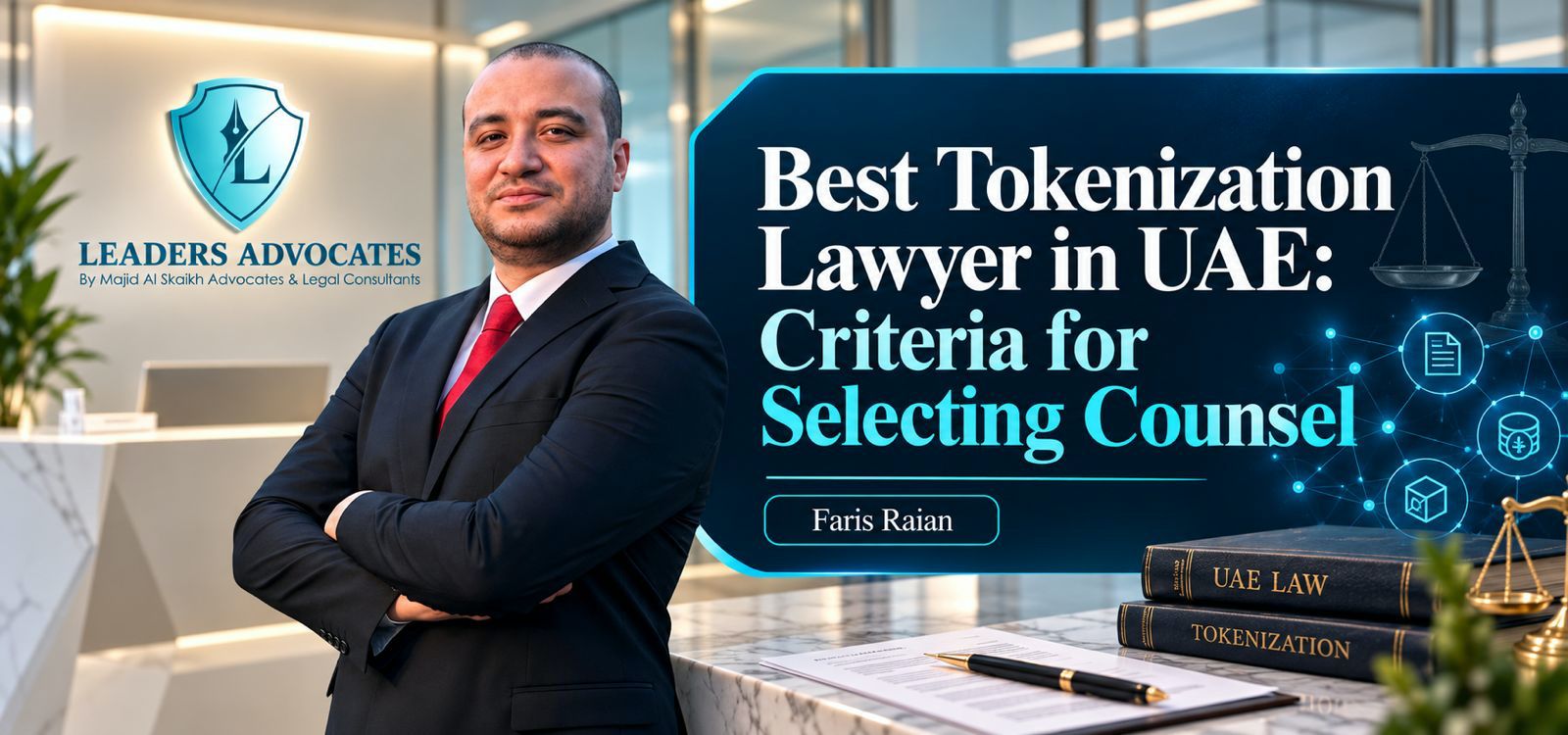
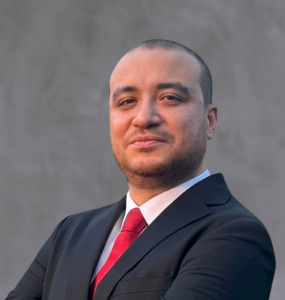
Faris Raian
Faris Raian, Managing Partner at Leaders Advocates, emphasizes that tokenization projects should define what the holder owns before finalizing the white paper. The asset, issuer, structure, and enforcement route must align.
Katerina Potseva
Katerina Potseva’s contribution is relevant where founders, investors, technology providers, and assets span several countries. Cross-border planning should address offering rules, documents, evidence, disputes, and enforceability together.
These profiles do not establish an objective ‘best’ ranking. Clients should compare the assigned team’s relevant analysis, regulatory knowledge, delivery plan, availability, and written scope for the specific project.
Relevant Legal Services
- crypto lawyer services in Dubai: classification, VARA licensing, virtual asset issuance, custody, marketing, and compliance advice
- corporate lawyer services in Dubai: issuer structures, governance, shareholder rights, investment terms, and transaction documents
- commercial law services in Dubai: contracts for platforms, custodians, technology providers, investors, and underlying assets
Relevant Success Story
The firm’s relevant Success Stories illustrate how legal teams may structure and resolve complex matters. They do not guarantee a comparable outcome. Every project depends on its assets, activities, jurisdictions, investors, facts, and documents.
Frequently Asked Questions
Final Takeaway
Do not choose tokenization counsel through rankings or slogans. Choose the team that can classify the product, identify every permission, and make the holder’s rights enforceable.
The safest next step is a scoped legal assessment of the term sheet, structure, asset documents, investors, and planned activities. The answer depends on those facts and documents.
Follow Leaders Advocates on LinkedIn or Leaders Advocates on Facebook for more UAE legal updates.
Ready to Choose the Right Tokenization Counsel?
Message Leaders Advocates on WhatsApp to scope your classification, licensing, and structure.