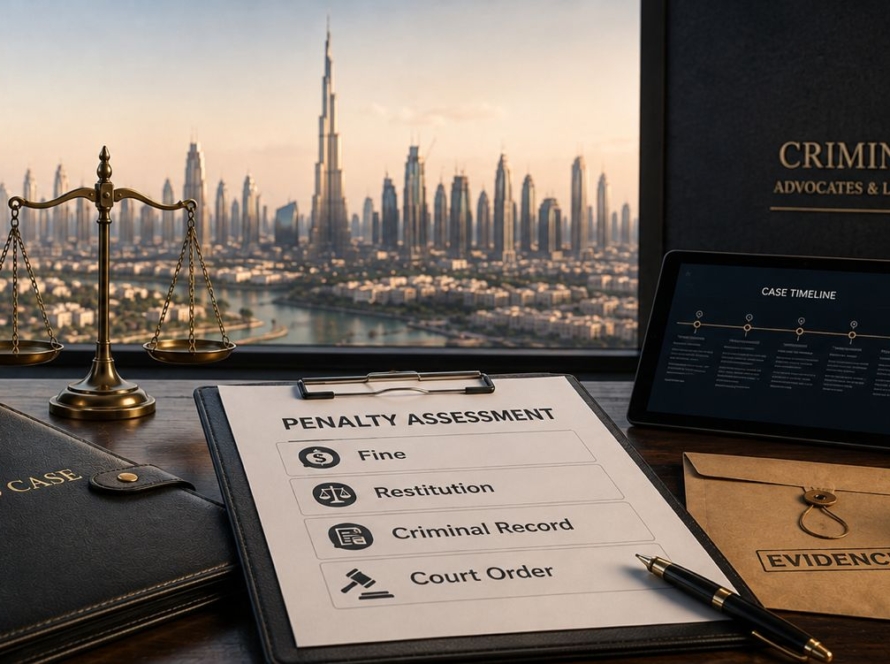




A person summoned after a police report may assume the investigation is informal until a court hearing begins. In fact, the Public Prosecution can question, detain, release, restrict travel, examine assets, and decide whether the case reaches court.
Understanding Public Prosecution’s Role In The Criminal Investigation is therefore essential for both accused persons and victims. Evidence and explanations submitted at this stage may determine referral, closure, release, and the shape of any trial.
Quick Answer
The Public Prosecution leads criminal investigations under Federal Decree-Law No. 38 of 2022. An arrested person must be referred to it within 48 hours and questioned within 24 hours after referral.
The prosecution can question the accused and witnesses, request records, appoint experts, order release with or without bail, and authorize initial remand within statutory limits.
It can issue procedural restrictions, including travel-ban orders governed by Article 99, and take precautionary asset measures under Articles 115 to 117. The law also gives it functions within plea bargaining, starting at Article 360 for misdemeanors and Article 368 for felonies.
After completing the investigation, the prosecution closes the file or refers it to the competent criminal court. The outcome depends on the charge, evidence, statements, expert findings, deadlines, and complete record.
Detailed Legal Explanation
Public Prosecution’s Role In The Criminal Investigation
The Public Prosecution is the authority responsible for criminal investigation and prosecution within the applicable jurisdiction. It is not the court that finally determines guilt.
Police receive complaints, gather initial information, and perform judicial-police functions. The prosecution directs or conducts the formal investigation and decides whether the evidence supports court referral.
The competent criminal court independently examines a referred case and renders judgment. A prosecution decision to refer is not a conviction.
Evidence capable of preventing referral should be raised during investigation when possible.
Transfer After Arrest
Federal Decree-Law No. 38 of 2022 requires an arrested person to be referred to the Public Prosecution within 48 hours. The prosecution must question the person within 24 hours after referral.
These deadlines regulate early custody and questioning. They do not require the investigation, trial, or final judgment to finish within the same period.
At the first questioning, the prosecution identifies the accusation and records the accused’s response. It also reviews the available police material and immediate procedural requests.
The accused should disclose medical needs, interpreter issues, identity details, and any urgent evidence through the proper channel. Incomplete information may affect immediate decisions. If there is any uncertainty about an outstanding arrest warrant, this should be verified through the correct channel before any other step.
Questioning the Accused
Prosecution questioning places the accused’s formal account into the investigation file. Answers should be accurate, complete, and limited to what the accused knows.
The accused must be informed of the accusation and has the right to remain silent within the legal framework. Arabic statements should be reliably explained before signature.
Witnesses and Complainants
The prosecution may hear complainants and witnesses and compare their direct observations with records, expert findings, and physical or digital material.
Evidence should be organized by chronology and legal issue. Witness contact must remain lawful and must not involve pressure, coaching, or requests to delete evidence.
Been Summoned or Questioned by the Public Prosecution?
Message us on WhatsApp now for immediate guidance before your next questioning session or deadline.
Release Bail and Remand
After questioning, the Public Prosecution may order release with or without bail or authorize initial remand custody within the statutory limits. Clients frequently ask how to apply for bail in Dubai at exactly this stage.
Initial remand may run for seven days and be renewed for up to 14 days. Further extensions require a decision by the competent criminal court judge.
The judge may extend detention for periods of up to 30 days at a time, subject to renewal under the law. The judge may also order release with or without bail.
Where an extension is issued in the accused’s absence, a grievance may be filed within three days from notification or knowledge. The actual order and service record should be checked at once.
A release request may address cooperation, residence, health, family needs, evidence security, and suitable guarantees.
Travel Ban Orders
The prosecution stage may include a travel restriction. Article 99 of the Criminal Procedures Law addresses the content of notice, arrest-warrant, and travel-ban orders.
The law provides for circulation of a travel-ban order to the UAE’s ports. A person should not infer travel status merely from physical possession of a passport. Always check UAE travel ban status through the correct official channel rather than assuming it from a passport alone.
Release does not automatically remove a travel ban. Obtain official confirmation before making travel plans. A related question in cross border cases is covered in our overview of extradition representation in the UAE.
Searches Seizures and Digital Evidence
The investigation may involve searches, device seizure, and requests to service providers or banks. The seizure record should identify items taken, and relevant material must not be altered or erased.
Experts and Technical Investigation
The Public Prosecution may appoint digital, accounting, medical, handwriting, or other experts. The question posed defines the report’s scope.
Parties should identify the materials supplied and any missing records. Where procedure permits, counsel may request clarification and should identify any concrete methodological or factual defect.
Precautionary Measures Over Assets
Articles 115 to 117 of the Criminal Procedures Law address precautionary measures involving assets linked to suspected crimes. The framework includes tracing, freezing, and asset freeze orders and custodianship measures.
These powers may be important in fraud, cybercrime, money laundering, or alleged-proceeds cases. Our guide on choosing the best embezzlement lawyer in Dubai looks at how these asset measures are typically handled. Victims and accused persons should provide early records about transfers, ownership, lawful sources, and third-party interests.
Facing an Asset Freeze or Travel Ban?
Don’t wait to act. WhatsApp us your case details now and get a same-day initial assessment.
Plea Bargaining
The Criminal Procedures Law includes plea-bargaining provisions for misdemeanor cases beginning at Article 360. The provisions for felony cases begin at Article 368.
A plea proposal may involve an admission for a reduced penalty within the statutory mechanism. The accused should understand the evidence, civil rights, confiscation, residency risk, and other consequences. Financial crime allegations, such as those addressed in our overview of the best white collar crime lawyer in Dubai, often intersect with plea considerations.
No lawyer can guarantee that a plea proposal will be made or accepted.
Referral to Criminal Court
The prosecution refers the matter when it concludes that the evidence supports proceeding before the competent criminal court. The referral defines the accusation presented for trial.
Referral does not remove the presumption of innocence. The court reviews the evidence and independently determines guilt and sentence.
Counsel should compare the referral with the evidence and earlier statements. An incorrect legal classification, missing element, unreliable expert conclusion, or procedural defect may require focused argument.
Closure Without Trial
The Public Prosecution may close the investigation when the evidence or legal basis does not support referral. The decision and any review route should be checked.
Timely exculpatory evidence matters because material saved for trial cannot influence an earlier referral decision.
Settlement and Reconciliation
The prosecution also receives and processes settlement or reconciliation where the law permits. Eligibility depends on the charged offense and statutory route.
For listed cybercrime offenses, Article 68 of Federal Decree-Law No. 34 of 2021 allows an accused to invoke a victim settlement before final judgment. Article 67 provides a separate authority-based route. If you need to report cyber crime in the UAE, the settlement route above may still apply to your matter.
A complainant’s withdrawal does not automatically end every offense. Negotiations also do not stop detention review, summonses, referral, or deadlines without formal legal effect.
Faris Raian on the Referral Decision
The original article preserved Faris Raian‘s view that clients often assume the trial is the point where the case will be decided. In many files, the prosecution’s referral or closure decision is the practical turning point.
His contribution emphasizes submitting evidence and explanations during investigation. Waiting for trial may lose the opportunity to prevent referral or shape the initial accusation.
Faris Raian is Founder and Managing Partner at Leaders Advocates. His professional contribution is relevant to prosecution strategy, detention issues, evidence submissions, referral, and criminal litigation.
Practical Steps
- Obtain the police and prosecution references and record every referral questioning detention hearing and service date.
- Prepare a concise chronology and evidence index linked to the alleged legal elements and disputed facts.
- Preserve original devices files messages financial records photographs reports and witness information lawfully.
- Ask counsel to identify the current order next deadline release option travel status and evidence gap.
- Attend every summons and comply with release bail travel and evidence-preservation requirements.
- Submit favorable documents at the proper investigation stage instead of assuming they can wait until trial.
- Keep official copies of settlement submissions expert reports referral papers closure decisions and receipts.
Evidence and Documents Needed
- Passport Emirates ID visa details addresses contact information and company authority documents.
- Police complaint arrest papers prosecution summons statements detention orders release papers and bail records.
- Travel-ban information seizure lists search records device details and property or asset restriction documents.
- Complete communications digital exports contracts bank records invoices approvals medical records and photographs.
- Expert appointments reports source materials questions objections and any permitted clarification submissions.
- Witness names contact details and a note stating what each person directly observed.
- Certified Arabic translations legalizations attestations and powers of attorney where required.
Need Help Preparing Your Documents?
Send your case summary on WhatsApp and our team will tell you exactly what to gather and prioritize.
Common Mistakes and Risks
- Treating prosecution questioning as an informal conversation rather than a recorded investigation step.
- Signing an Arabic statement before checking that the complete wording matches the intended account.
- Saving exculpatory evidence for trial even though it could affect the referral decision.
- Assuming release from custody also removes travel restrictions or closes the investigation.
- Missing the three-day grievance period for a detention extension decided in absence.
- Accepting settlement or plea terms without reviewing admissions civil rights confiscation and immigration consequences.
How a Lawyer Can Help
A lawyer can prepare the client for questioning, address release and travel issues, submit evidence, review expert work, and identify settlement or plea routes before referral.
Counsel can also protect victim interests by organizing the complaint, identifying assets, documenting loss, and following investigative requests. The correct strategy depends on the client’s role.
The Public Prosecution and court remain independent decision-makers. Advice must follow a complete review of the charge, statements, orders, evidence, deadlines, and requested outcome.
Relevant Legal Services
The closest services for this subject are criminal defense lawyer services in Dubai, criminal litigation lawyer services in Dubai, and cybercrime lawyer services in Dubai. The appropriate service depends on the charge, procedural stage, evidence, deadlines, and requested remedy.
Relevant Success Story
The firm publishes completed matter examples in its Success Stories archive. A prior result does not identify the likely outcome of another criminal case. Every matter depends on its facts, documents, evidence, procedure, and legal circumstances.
Follow Leaders Advocates on LinkedIn or Leaders Advocates on Facebook for more UAE legal updates.
Frequently Asked Questions
Final Takeaway
Public Prosecution’s Role In The Criminal Investigation includes questioning, detention and release decisions, evidence gathering, expert work, travel and asset measures, plea functions, referral, and closure. The safest next step is an early review of the official record, evidence, orders, and deadlines.
Need Guidance on a Prosecution Matter Right Now?
Don’t wait for the next hearing to act. WhatsApp Leaders Advocates now and speak with our criminal team directly.
Leaders Advocates | UAE legal information | Review the facts and documents before acting