

An individual has lent money, completed freelance work, supplied services, or is owed rent. The debtor now delays, denies the arrangement, or has left the UAE.
The case depends on proof that money was lent or earned, the repayment date, the correct forum, and whether the debtor has reachable assets.
Quick Answer
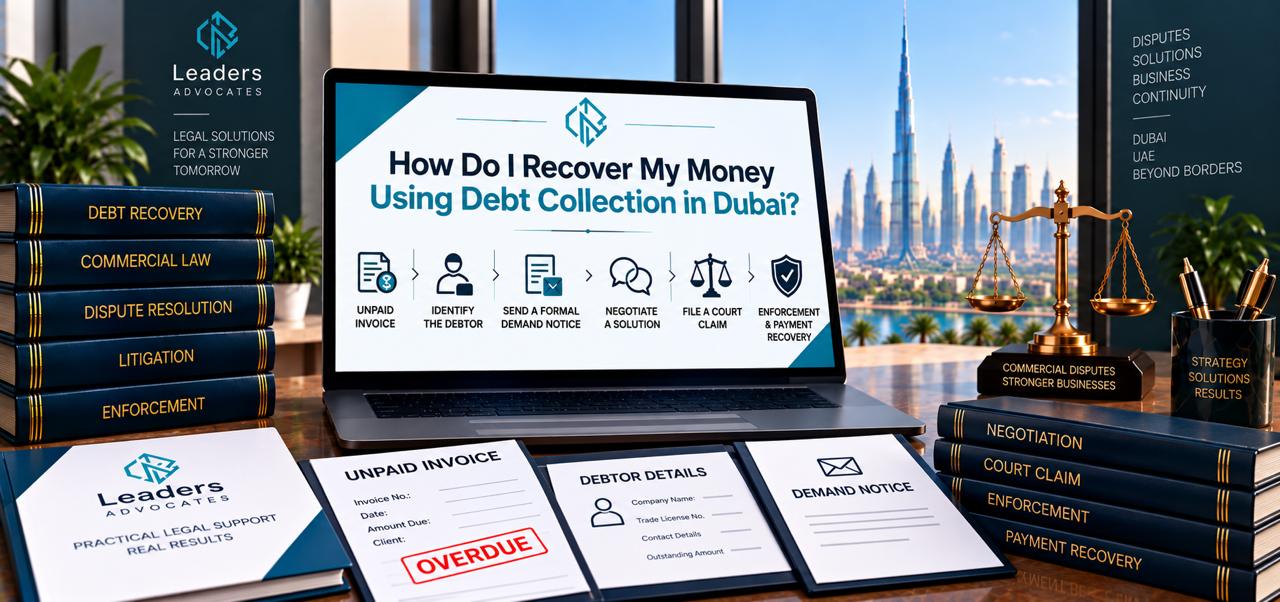
How do I recover my money using debt collection in Dubai? Start by proving the debt with transfers, contracts, invoices, messages, acknowledgments, and performance records. Send a written demand that identifies the amount, basis, and deadline.
A qualifying cheque may proceed directly to execution under Article 667. A fixed, due, documented debt may support a payment order under Articles 143 to 150 after a demand allowing at least five days. Other disputes require a claim.
Electronic evidence is recognized under Federal Decree-Law No. 35 of 2022. The result depends on authenticity, documents, defenses, jurisdiction, deadlines, and the debtor’s assets. Enforcement planning matters.
First Identify the Legal Basis of the Money Owed
The same bank transfer can represent a loan, investment, gift, refund, purchase price, or business payment. The creditor must prove the correct legal basis.
Write a chronology explaining why the money moved, what was promised, when repayment became due, and what happened after default.
For earned money, show the work, delivery, acceptance, agreed price, and maturity. For rent, identify the tenancy contract and competent rental forum.
Evidence for Personal Loans and Informal Arrangements
- Bank transfer with a meaningful reference.
- Messages discussing the loan and repayment.
- Written promise or acknowledgment.
- Partial repayments consistent with the arrangement.
- Cheque or guarantee issued for repayment.
- Evidence explaining any cash delivery.
A bank transfer alone may prove payment but not necessarily a loan. The surrounding communications often determine whether repayment was intended.
Federal Decree-Law No. 35 of 2022 recognizes electronic evidence. Preserve full conversations and information connecting the account to the debtor.
For civil obligations exceeding AED 50,000, witness testimony alone is generally restricted, subject to legal exceptions. Documents and electronic records become especially important.
Evidence for Freelance and Service Fees
Keep the quotation, scope, approvals, deliverables, revisions, acceptance, invoice, and payment reminders. Show which legal entity or individual engaged the work.
If the customer denies acceptance, preserve evidence of publication, use, access, download, feedback, or benefit from the work.
Distinguish a freelance civil or commercial claim from an employment claim. The relationship and forum depend on the actual agreement and conduct.
Demand Payment Without Creating New Risk
Send a factual written demand stating the legal basis, amount, due date, supporting documents, payment method, and deadline.
For a possible payment order, Articles 143 to 150 require a prior demand allowing at least five days. Confirm the notice method for the actual case.
Do not threaten imprisonment for ordinary nonpayment, take property privately, publish accusations, or pressure unrelated family members and employers.
Owed Money and Not Sure Where to Start?
Send your documents on WhatsApp now and get a free read on your evidence and the fastest recovery route.
Choose the Recovery Route That Fits the Evidence
A negotiated settlement can work when liability is accepted and the debtor has a credible payment source.
A payment order may fit a fixed, due, documented debt. A substantive claim is usually needed when the debt, performance, or amount is genuinely disputed.
A qualifying returned cheque may proceed directly to execution under Article 667 of Federal Decree-Law No. 50 of 2022.
A valid arbitration clause, tenancy relationship, DIFC or ADGM connection, or specialized regime can change the competent forum.
What Happens After Filing
The debtor is served and may defend the claim. The court can require further documents or appoint an expert where accounts or performance need technical review.
Respond on time and keep the claim calculation current. Explain partial payments, credits, and any settlement discussions accurately.
Track the judgment and applicable appeal period. Do not assume that a favorable decision produces immediate payment.
Execution and Collectability
Execution may target bank accounts, property, vehicles, shares, or money owed to the debtor by third parties, subject to lawful court procedures.
Articles 324 to 327 regulate certain travel-ban requests against individuals. The AED 10,000 threshold is only one condition, and an order is not automatic.
If the debtor has left the UAE, the creditor may still pursue UAE assets. Foreign enforcement depends on the other country’s recognition rules and available assets.
Documents to Assemble Now
- Agreement, quotation, or loan terms.
- Bank transfers and payment history.
- Invoices and account calculation.
- Delivery, work, or acceptance evidence.
- Complete emails and messages.
- Cheque, guarantee, or security records.
- Debtor identification, address, and license.
- Demand notice and delivery evidence.
Common Recovery Mistakes
- Assuming a transfer proves a loan without context.
- Waiting while evidence and assets disappear.
- Returning an original cheque before payment.
- Filing a tenancy claim in the wrong forum.
- Using the wrong company entity.
- Stopping after judgment instead of pursuing execution.
Made One of These Mistakes Already?
It’s often not too late to fix course. Message us on WhatsApp and we’ll tell you exactly where your case stands.
How a Lawyer Can Help
Counsel can classify the claim, review the evidence, identify the forum, send a compliant demand, and select negotiation, execution, or litigation.
A lawyer can also test collectability before major costs are incurred. No adviser can guarantee recovery when assets are unavailable.
When the Debtor Denies That the Money Was a Loan
The debtor may describe the transfer as a gift, investment, partnership contribution, repayment, or purchase. The court will examine the actual evidence.
Messages sent before and immediately after the transfer can be more persuasive than statements created after the dispute began.
Identify any agreed repayment date, profit arrangement, security, or installment. Avoid changing the explanation simply to fit a preferred legal route.
Cash Payments and Missing Receipts
Cash is harder to trace than a bank transfer. Look for contemporaneous messages, withdrawal records, signed receipts, later acknowledgment, partial repayment, or witnesses.
The absence of a receipt is not automatically fatal, but it increases the importance of consistent surrounding evidence.
Do not create or backdate documents after the dispute. Authenticity concerns can damage the entire case and create separate legal exposure.
Returned Cheques and Direct Execution
Keep the original cheque and obtain the bank return documentation. Confirm the drawer, amount, date, and exact reason for return.
Article 667 may permit direct execution for qualifying cheques. Other return reasons or authenticity disputes may require different action.
Do not surrender the original cheque merely in exchange for another promise. If replacement security is accepted, document the treatment of both instruments.
Settlement and Payment Plans
A voluntary plan can recover money sooner when the debtor has income but lacks immediate funds. Require precise dates, amounts, payment method, and default terms.
Consider security, acknowledgment, costs, interest, and what happens to any pending case. Keep proof of every installment.
Do not accept an unrealistic schedule simply to avoid conflict. Repeated failed plans consume time and may allow assets to disappear.
Dealing With a Bounced Cheque or Broken Payment Plan?
Get a fast WhatsApp assessment of your execution options before the debtor moves their assets.
Assess Whether Recovery Is Commercially Sensible
Compare the debt with legal fees, court charges, translation, expert cost, time, defenses, and the debtor’s asset position.
A smaller claim with strong documents and identifiable assets may be more practical than a larger claim against an insolvent debtor.
Ask whether a judgment can realistically be enforced. The purpose is recovery, not merely obtaining a favorable decision.
Protecting the Relationship Without Losing the Claim
A firm but accurate demand does not have to destroy a personal or commercial relationship. It can clarify the amount and create a final opportunity to pay.
What if the Debtor Disputes Only Part of the Amount?
Separate the admitted amount from the disputed balance. Ask the debtor to identify the reason and supporting evidence for every disputed item.
A partial settlement can recover the undisputed sum while preserving the remaining claim, but the written terms must avoid an unintended full release.
Update the account after every payment. The demand and any court filing should show the correct remaining balance.
What if Several People or Companies Were Involved?
Identify who requested the money or work, who received it, who promised repayment, and who provided security. Those roles may belong to different parties.
Do not sue every connected person without a legal basis. Shareholders, managers, relatives, and related companies are not automatically liable.
A valid guarantee, assignment, joint obligation, or separate wrongful act requires its own documents and analysis.
A Practical Recovery Timeline
Set a short evidence-gathering period, issue the demand, and establish a clear decision date for settlement or legal action.
After filing, track service, defenses, experts, hearings, judgment, appeal, and execution as separate stages. Each can affect timing.
Keep searching for reliable asset information throughout the case. Collectability may change before a final judgment is issued.
Final Decision Checklist
- Debt basis proved.
- Amount reconciled.
- Correct debtor identified.
- Forum confirmed.
- Demand ready.
- Limitation reviewed.
- Costs estimated.
- Assets considered.
- Settlement authority defined.
Relevant Legal Services
The appropriate service depends on the claim, the contract, the forum, and the enforcement position.
Relevant Success Story
See our debt recovery success stories for an example of how documented recovery work may progress.
Past results do not guarantee a similar outcome. Every matter depends on its own facts, documents, assets, and legal circumstances.
Follow Leaders Advocates on LinkedIn or Leaders Advocates on Facebook for more UAE legal updates.
Frequently Asked Questions
Final Takeaway
Recovering money begins with proof, a proper demand, and the legal route supported by the documents. Enforcement planning should start before judgment.
Review the facts, evidence, forum, deadlines, and debtor’s assets. The safest next step depends on the complete transaction record. Review carefully.
Ready to Start Recovering What You’re Owed?
Message Leaders Advocates on WhatsApp now for a fast, free read on your debt, your evidence, and your fastest path to payment.