

Quick Answer
To check a forex broker license in the UAE, identify the claimed regulator first. Use the CMA for relevant mainland activity, the DFSA for the DIFC, and the FSRA for ADGM.
Open the regulator’s official register directly instead of using a link supplied by the broker.
Confirm that the license is current and matches the legal name and number. The permitted activities must cover the offered forex or derivatives service and client type. Advice, promotion, and introduction are different activities.
Match the domain, address, and contacts to the register. Save a dated copy before depositing. Repeat the check if the website or payment instructions change.
Overview
Trading websites often claim to be licensed and regulated. That statement proves little without an official register entry. A license matters only for the activities and clients it covers. This guide explains how to check forex broker licence UAE claims through official records.
So How Do You Check a Forex Broker License in the UAE?
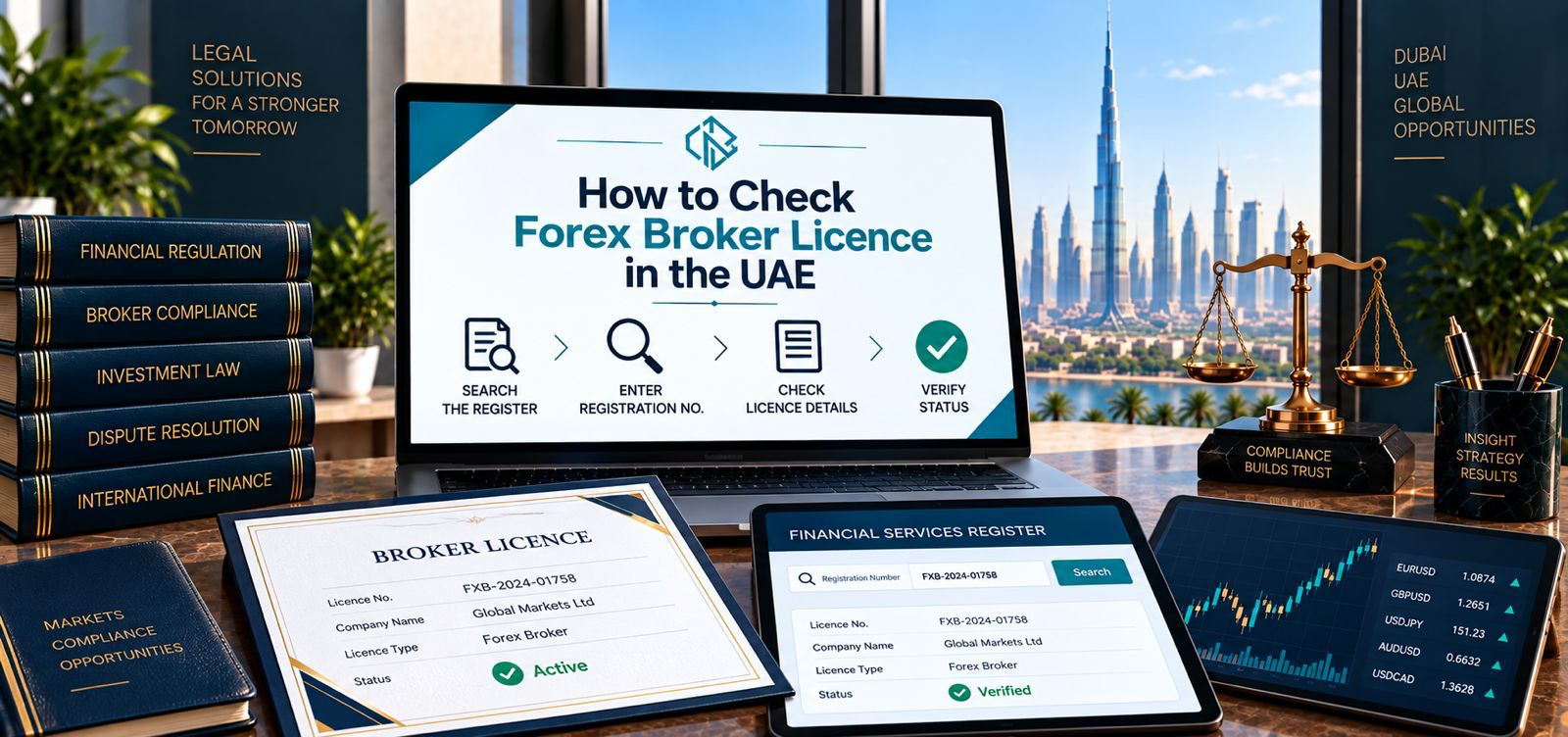
Identify which regulator the broker claims, search that regulator’s official register, confirm the license is current and covers forex or derivatives dealing, and match every entity detail to the register.
Step 1: Identify the Right Regulator
- UAE mainland: Capital Market Authority (CMA), formerly the SCA
- Dubai International Financial Centre: Dubai Financial Services Authority (DFSA)
- Abu Dhabi Global Market: Financial Services Regulatory Authority (FSRA)
If the broker names a regulator that does not match its claimed location, treat that as a warning sign.
Step 2: Search the Official Register
- CMA license check: use the CMA’s official website to search its licensed entities. Existing SCA licenses carried over to the CMA.
- DFSA register search: use the DFSA’s public register of authorized firms.
- FSRA public register: use the FSRA’s public register for ADGM firms.
Type the website address yourself rather than following links from emails, adverts or the broker’s site. Some scams use lookalike regulator pages.
Not Sure If Your Broker Is Actually Licensed?
Send us the broker’s name and license number on WhatsApp and we’ll help you read the register result correctly.
Step 3: Read the License Scope
This is where many checks fall short. A firm may be properly licensed for one activity and still be operating outside that license. Look for:
- Whether the permitted activities include dealing in forex, contracts for difference or other derivatives.
- Whether the firm may deal with retail clients or only professional clients.
- Whether the license covers holding client money.
- Any conditions, restrictions or suspensions noted on the register.
A firm licensed only to promote, introduce or advise is not authorized to execute your trades or hold your funds on that basis.
Step 4: Match the Entity Details
- Exact legal name, including the entity type.
- License or reference number.
- Registered address.
- Website domain and contact details.
- The name on the bank account you are asked to pay.
Any mismatch could mean a clone firm or an unlicensed affiliate using a regulated group’s name — a pattern closely related to identity theft in the UAE.
Common License Tricks
- “Regulated in the UAE” with no license number: Vague claim that cannot be verified
- License number belongs to a different company: Clone or impersonation
- “Part of a regulated group”: Your contract may be with an unregulated group entity
- Foreign license only: No UAE authorization for local services
- Outdated SCA references with odd details: Needs closer verification on the CMA register
After the Check
If the license is valid, confirm that the same entity appears in the client agreement. The regulator supervises that legal entity, not every company in its group. If the check fails after payment, notify the bank, police, and relevant regulator as appropriate. Those steps may run together.
Common Mistakes
- Accepting a license number without searching it.
- Following the broker’s link to a “regulator” page.
- Ignoring license scope and client-type limits.
- Signing with a group entity that is not the licensed firm.
- Assuming a foreign license gives UAE protection.
Collect the Broker’s Claimed Details
Ask for the legal name, license number, regulator, registered address, website, and the entity named in the agreement. Record the information before searching.
Do not search only the brand name. A regulated group may use several companies, and only one may hold the required authorization.
Note the service offered to you. The relevant scope may involve derivatives dealing, advice, promotion, introduction, or custody of client money.
Search the Register Without Broker Links
Open the regulator’s official website independently. Scammers can copy a register page or create a lookalike site with a similar address.
Search the exact legal name and license number. Try the former SCA name only when checking an older document, then confirm the current CMA record.
For a DIFC firm, use the DFSA public register. For an ADGM firm, use the FSRA public register and confirm the same legal entity.
Confirm the License Status
Check whether the firm is authorized, suspended, withdrawn, canceled, or subject to restrictions. Do not rely on an old certificate supplied as an image.
Record the date shown on the register and any condition attached to the permission. A current authorization may still restrict products or clients.
Check the regulator’s warning list as well. A warning may identify an unauthorized website using a genuine firm’s details.
Read the Scope Line by Line
Confirm that the approved activities cover what the salesperson offers. An introducer cannot rely on that permission to execute trades or hold funds.
Check whether the permission covers retail clients. Some firms may deal only with professional clients or eligible counterparties.
Review whether the firm can hold client money. If another regulated custodian is used, identify it and confirm the arrangement in the agreement.
Already Deposited With a Broker You Can’t Verify?
Message us now on WhatsApp — the sooner you act, the more options you have to protect your funds.
Match Every Contact Detail
Compare the registered address, domain, telephone number, and email suffix with the broker’s communications. Contact the firm through the register details.
Check the legal name on the client agreement and payment instructions. A regulated parent company does not automatically authorize an unlicensed subsidiary.
Do not send funds while a mismatch remains unexplained. Ask the regulator or licensed firm directly when an impersonation is possible.
Create a License Check File
- Save the register result as a dated PDF or screenshot.
- Save the license scope and every restriction shown.
- Save the agreement naming the contracting entity.
- Save the website domain and original advertisement.
- Save the bank account and payment instructions.
- Record the official contact used to confirm the firm.
Keep the file before opening the account. It creates a reliable record if the website or register later changes.
Check Regulatory Warnings and Restrictions
Search the regulator’s warning notices for the company name, brand, domain, telephone number, and license number. A warning may identify a clone or unauthorized solicitation.
Read any restriction or enforcement notice linked to the licensed firm. A valid license may be subject to conditions that affect the service offered.
Save the notice with its publication date. Do not assume removal from a search result proves that the underlying concern was resolved.
Confirm the Client Classification
The register may allow business only with professional clients or eligible counterparties. The broker should explain why the client meets the relevant classification.
Review any declaration about assets, experience, or trading knowledge before signing. Do not accept a false classification merely to obtain access to a product.
Client classification can affect disclosures and protections. Ask for a written explanation when the application does not match the client’s actual circumstances.
Match the Agreement to the Permission
The client agreement should name the licensed entity and describe the same service shown on the register. Check schedules, risk disclosures, and payment instructions.
If another group company provides technology or support, identify its role. That company should not quietly replace the regulated counterparty.
Check the complaints clause and governing forum. A mismatch may change where the client can report conduct or seek recovery — a question best reviewed against your civil case options in the UAE.
Repeat the Check Before Major Transfers
License status, domain details, and bank instructions can change after account opening. Repeat the register and warning-list review before a large additional deposit.
Confirm any new beneficiary through the firm’s official contact details. Do not approve the change through the same message that announced it.
Keep each dated check. The sequence may show when an account, domain, or representative stopped matching the regulated firm.
What to Do When the License Fails
Do not deposit more money or provide remote access to a device. Preserve the communications and payment instructions in their original form.
If money was sent, contact the bank or payment provider promptly. Report suspected fraud to the police and report the fraud in Dubai to the relevant regulator. Where the broker used a fake site or impersonated a licensed firm, this can also be worth raising through a cybercrime report in the UAE.
Review the agreement, payment route, jurisdiction, and recipient assets with counsel. A license failure does not automatically identify the best recovery forum. As Leaders Advocates explains in its Mondaq analysis on choosing the right fraud lawyer in Dubai, waiting to contact the bank while funds keep moving through additional accounts is one of the most common and costly mistakes victims make.
Lost Money to an Unlicensed or Cloned Broker?
Leaders Advocates can review your payment route, agreement, and recovery options before you decide on a next step.
Related Success Story
Leaders Advocates publishes a corporate fraud and embezzlement matter resolved in Dubai. Review the Leaders Advocates Success Stories page for the available summary. As the firm’s Mondaq piece on choosing an embezzlement lawyer in Dubai notes, this case illustrates the value of coordinated financial and legal analysis.
The facts, payment route, and available assets were different. The published result does not predict another broker dispute.
Final Takeaway
Learning how to check forex broker licence UAE records starts with the regulator’s own register. The legal review then examines the license status, scope, and entity details.
Confirm the current status, permitted activity, client type, entity, domain, and payment account. Do not deposit until every material detail matches. If the picture resembles organized white collar crime rather than a simple compliance gap, get advice before sending further funds.
Relevant Legal Services
- Forex Lawyer in Dubai — for license-scope checks, client agreements, withdrawal disputes, and recovery planning.
- Cybercrime Lawyer in Dubai — for clone websites, impersonation, payment evidence, and online fraud reports.
- Litigation Lawyer in Dubai — for civil recovery, jurisdiction, protective measures, and enforcement.
Follow Leaders Advocates on LinkedIn or Leaders Advocates on Facebook for more UAE legal updates.
Frequently Asked Questions
Not Sure About Your Broker’s License?
Send us the details on WhatsApp now and we’ll help you verify the register before you deposit another dirham.