

Quick Answer
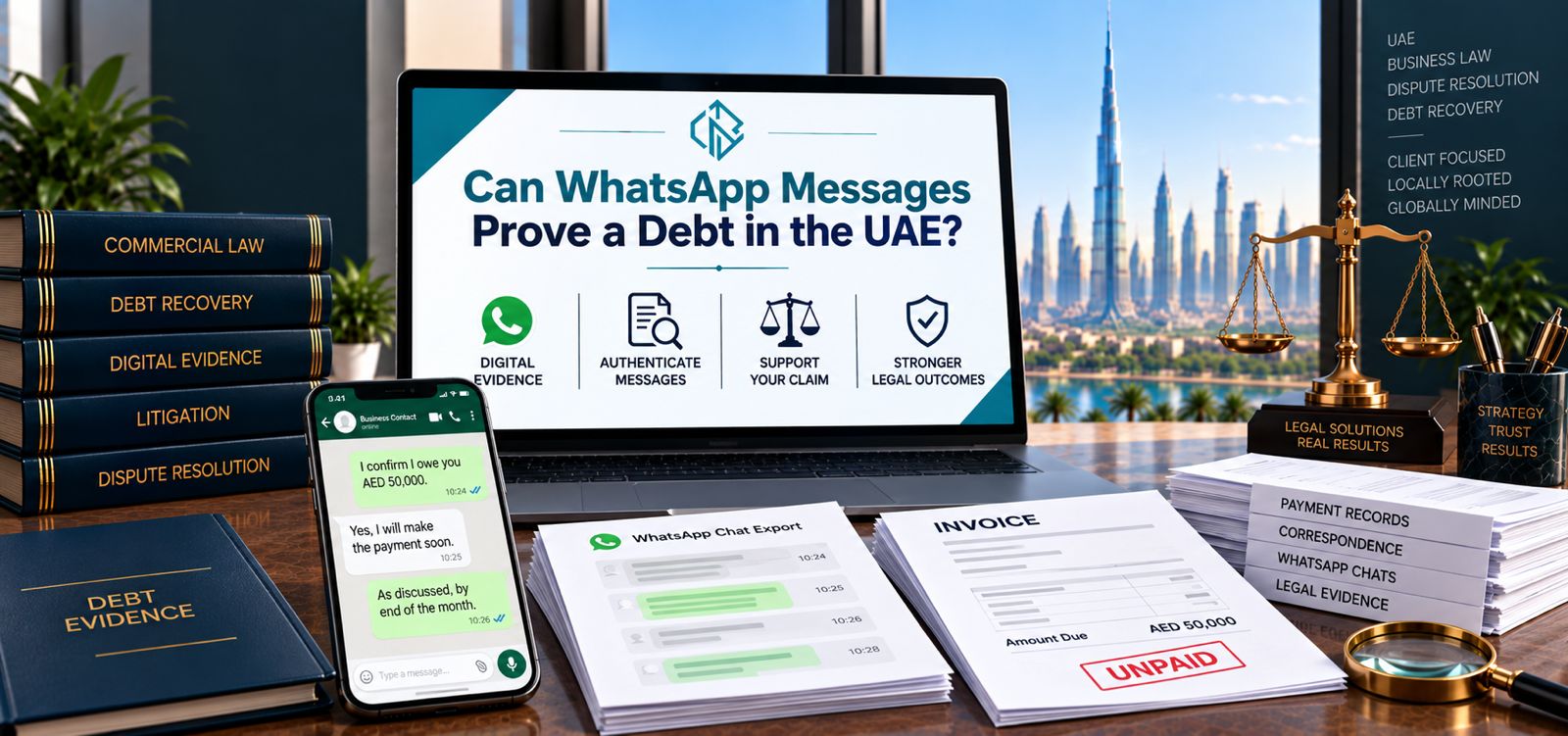
WhatsApp messages can help prove a debt in the UAE. Federal Decree-Law No. 35 of 2022 recognizes electronic evidence in Articles 53 to 57, including messages exchanged through information technology.
Courts examine the authenticity of the messages, the sender’s identity, and their connection to the claimed debt. If a chat is disputed, technical examination may become relevant.
The Dubai Court of Cassation, in Cassation No. 468 of 2024 (Civil), accepted WhatsApp messages as evidence of a loan where the borrower’s identity was established through the linked mobile number. Messages are stronger when supported by bank transfers and other records.
Overview
Many loans in the UAE are agreed in a chat window. “Can you send me AED 20,000 until next month?” followed by a transfer and a thumbs-up is how countless informal debts begin. When repayment never arrives, the chat may be the only record. So can WhatsApp messages prove a debt in the UAE?
Often they can help a great deal, but their value depends on authenticity and on what the messages say.
So can WhatsApp messages prove a debt in the UAE?
Yes, they can be admissible evidence in civil and commercial cases, provided the court is satisfied about who sent them, that they are intact and that they relate to the debt claimed.
Only Have WhatsApp Messages to Prove the Debt?
Your messages may help support a UAE debt claim, but the sender, amount, repayment promise, bank transfer, and complete conversation can all matter. Get your evidence reviewed before filing.
How the Evidence Law Treats Electronic Messages
The 2022 Evidence Law treats electronic evidence as its own category of proof. Data created, stored, sent or received through information technology can be used to establish rights if it can be retrieved and understood.
This is why WhatsApp evidence in UAE court proceedings is now routine rather than exceptional in civil and commercial cases.
This law governs civil and commercial matters. Criminal cases follow separate rules, so the analysis here concerns debt claims, not criminal prosecutions.
What the Court Looks At
• Who sent the messages?: The phone number’s link to the debtor, prior use of that number, other chats
• Are the messages intact?: Original device, full export, no gaps or edits
• Do they show a debt?: Clear words about a loan, amount and repayment
• Is the debt still unpaid?: Bank records and later messages acknowledging the balance
What the Dubai Cassation Case Shows
In Cassation No. 468 of 2024 (Civil), the Dubai Court of Cassation dealt with a loan agreed through WhatsApp without a signed contract. The court treated the exchange as valid evidence, relying on the electronic transactions and evidence laws, where the sender’s identity was established through the mobile number linked to the borrower.
The case should be read carefully. It does not mean every WhatsApp message automatically proves a debt. It shows that properly authenticated messages can carry real weight, and that identity and content remain the key questions.
Screenshots as Evidence: Strengths and Limits
Screenshots are convenient, but they are also the easiest form to challenge. A debtor may deny sending the messages or claim they were edited. Screenshots alone can be persuasive where the other side does not dispute them.
If authenticity is contested, the court may need the original device or a full chat export, and it may appoint a technical expert.
How to Preserve Electronic Evidence of a Debt
• Keep the original phone and do not delete the chat.
• Export the full conversation, including media, rather than selected parts.
• Back up the chat to secure storage.
• Keep bank transfer records that match the amounts discussed.
• Note the phone number used and any evidence tying it to the debtor.
• Avoid accessing another person’s phone or account to obtain messages, as that can create separate legal problems.
Don’t Lose the WhatsApp Evidence You May Need
Cropped screenshots may be easier to challenge. Preserve the original phone, full conversation, attachments, voice notes, phone number, backups, and matching payment records.
Messages That Strengthen a Claim
• A message asking for a loan of a stated amount.
• Confirmation of receipt after your transfer.
• Promises to repay by a date.
• Later messages acknowledging the outstanding balance.
An acknowledgment of the balance can be especially useful. A clear written or electronic acknowledgment may support a payment order under Articles 143 to 150 of the Civil Procedure Law. The debt must be fixed and due. The written demand must give at least five days to pay.
Common Mistakes
• Relying only on cropped screenshots.
• Deleting the chat or changing phones without a backup.
• Treating vague messages as proof of a specific amount.
• Ignoring bank records that should match the chat.
• Obtaining messages by accessing someone else’s device.
Build a Message Timeline
Export the full conversation and create a short timeline. Record the request for money, transfer, receipt confirmation, promised repayment, reminders, and any later acknowledgment.
Keep dates, times, phone numbers, and attachments. Do not remove messages that appear unhelpful.
The timeline should point to the original chat, not replace it. A court or expert may need the complete record.
Link the Phone Number to the Debtor
Preserve evidence showing who used the number. This may include prior conversations, contact details, account information, business records, or messages that identify the sender.
Do not rely only on the saved contact name. A user can label any number with any name.
If the number changed, keep messages explaining the change and later communications from the new number.
Connect the Chat to the Money Transfer
Match the amount, date, and purpose discussed in the messages to bank records. Keep the transfer confirmation and full statement entry.
If cash was used, gather receipts, withdrawal records, witnesses where legally relevant, and later acknowledgments.
Explain any difference between the amount requested and the amount transferred. A clear reconciliation helps the court follow the claim.
Preserve Context and Attachments
Export media, voice notes, documents, and replies with the text. A single screenshot may omit the message being answered.
Keep the original phone and backup. Avoid editing images, renaming files in a misleading way, or deleting the chat.
Record any device replacement or account restoration. These facts may matter if authenticity is challenged.
Read the Words Carefully
A useful message should connect the sender to a specific obligation. Requests, receipt confirmations, balance acknowledgments, and repayment dates can be important.
Vague phrases such as “I will sort it out” may not prove a particular debt. Read them with the surrounding conversation and transaction records.
Separate a loan from a gift, investment, expense reimbursement, or business contribution. The legal characterization affects the claim.
Prepare for a Denial or Technical Review
The debtor may deny the number, wording, context, or integrity of the screenshots. Keep the original material available for examination.
Do not create a new chat solely to obtain an aggressive admission. Communicate factually and avoid threats or deceptive tactics.
If an expert is appointed, follow the court’s instructions for device access and data production. Preserve confidentiality unrelated to the dispute.
Debtor Denying the WhatsApp Messages?
If the debtor denies the phone number, wording, context, or authenticity of the chat, your original records and evidence connecting the number to that person can become important.
Use Messages With the Wider Evidence File
Collect contracts, transfer records, invoices, account statements, demand notices, and later payments. The messages are stronger when the other records match.
Prepare a balance calculation that credits every payment. Quote only the messages needed to explain liability and the outstanding amount.
If the debt is fixed and due, ask whether the file meets the payment-order conditions described in the source article.
Prepare Messages for Translation and Court Use
Court proceedings may require certified Arabic translations. Keep the source language, original export, and translated extract connected through dates and message order.
Do not translate only one favorable sentence when the surrounding exchange changes its meaning. Give the translator the complete relevant sequence.
Names, phone numbers, dates, amounts, and currency should match the bank and claim records. Resolve spelling differences before filing.
If the chat contains unrelated private material, obtain advice on a focused submission. Preserve the full original even when only selected portions are filed.
Prepare for the First Consultation
• Bring the original phone when practical and the complete chat export.
• Bring screenshots showing the number, date, and surrounding messages.
• Bring bank transfers, receipts, contracts, and account statements.
• Identify the debtor’s legal name and connection to the phone number.
• Prepare a balance calculation that credits every repayment.
• Explain any deleted message, changed device, or disputed account.
The lawyer should identify authenticity risks, missing evidence, the likely procedure, and the next preservation step.
After the meeting, keep one untouched evidence copy and one working copy. Record every later message or payment. Update the balance without changing the original export. This preserves the sequence and makes later court or expert review easier.
Related Success Story
Leaders Advocates publishes a Dubai debt recovery matter involving successful loan recovery. Review the Leaders Advocates Success Stories page for the available summary.
That matter involved its own evidence and parties. It does not guarantee the result of another claim based on electronic messages.
Final Takeaway
WhatsApp messages can support a UAE debt claim when the sender, content, and integrity can be established. Complete context matters more than a cropped screenshot.
Preserve the original chat and connect it to the transfer, due date, and unpaid balance. Use the messages as part of a complete evidence file.
Relevant Legal Services
• Debt Recovery Lawyers in Dubai – for demands, payment claims, settlement, and recovery planning.
• Litigation Lawyer in Dubai – for electronic evidence, payment orders, civil claims, and execution.
• Civil Lawyers in Dubai – for loans, acknowledgments, guarantees, and other monetary disputes.
Frequently Asked Questions
Have Messages, Transfers, but Still No Repayment?
Bring the WhatsApp conversation together with your bank transfers, receipts, acknowledgments, due date, and outstanding balance to assess the available debt recovery route.