Your work has appeared online without permission. A competitor may have copied text, artwork, software, photographs, or marketing materials.
The infringement may be spreading while you decide what to do. Screenshots can vanish. Accounts can change. Commercial harm can grow quickly.
You need more than a general explanation of copyright. You need a lawyer who can preserve proof, assess ownership, and choose proportionate enforcement.
Quick Answer
The best copyright lawyer in Dubai should understand UAE copyright law and real enforcement. Copyright protection normally arises when an original work is created, and registration is not required for the right to exist.
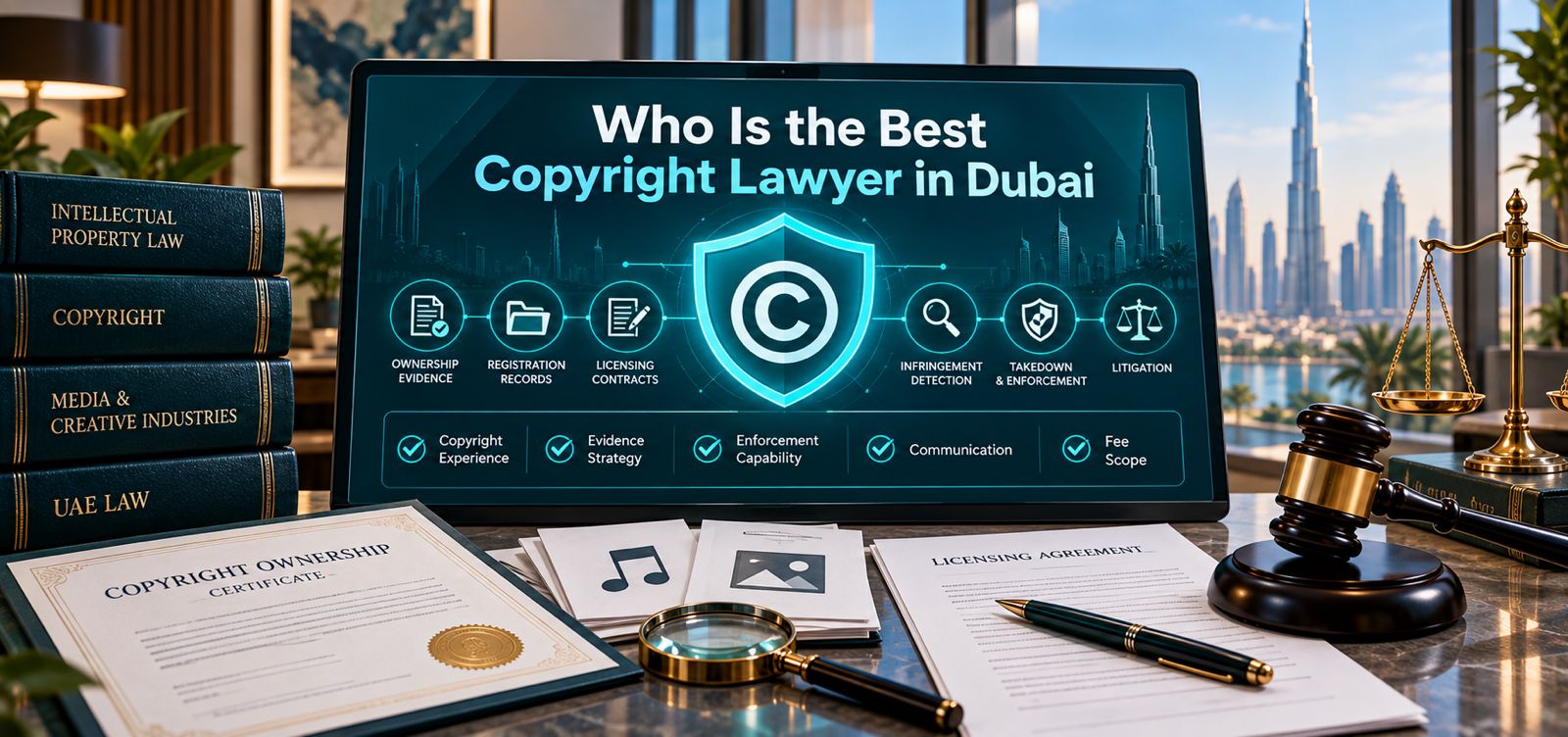
The lawyer should be able to move quickly by preserving digital evidence, identifying the responsible party, sending a focused legal notice, and seeking a platform takedown where appropriate. Serious infringement may also require urgent relief, a damages claim, or coordinated commercial and cyber action.
Faris Raian and Ekaterina Butseva bring complementary experience at Leaders Advocates. Faris adds long UAE dispute experience, while Ekaterina adds a careful cross-border and client-focused approach. The right strategy ultimately depends on the work, ownership record, unauthorized use, and available evidence.
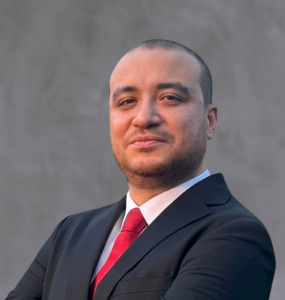
Faris Raian is Founder, Managing Partner, and Senior Legal Consultant at Leaders Advocates. He has more than 15 years of UAE legal experience.
His work spans corporate, commercial, criminal, and intellectual property matters. That range matters when copying affects a business, contract, online account, or active dispute.
Faris has warned that copyright owners often act too slowly. He notes that urgent takedown work can be time sensitive because online material may change or disappear.
His practical view is simple. Preserve the infringement before demanding removal. That first step can shape the strength of a later claim.
Ekaterina Butseva is a Founder Partner at Leaders Advocates. She works with international clients and helps translate complex UAE procedures into clear decisions.
Her approach is useful where ownership, licensing, publication, or loss crosses borders. These matters often require careful document review and disciplined communication.
Together, they can assess both the immediate enforcement problem and the wider business risk. No lawyer can promise an outcome before reviewing the evidence.
Solution
Use a staged response. Protect the evidence first. Then confirm the right, measure the use, and select the narrowest effective remedy.
1. Start With Automatic Protection
Federal Decree Law No 38 of 2021 governs copyright and neighboring rights in the UAE. Protection generally arises when an eligible original work is created.
A creator does not need to complete a registration step before copyright can exist. This makes ownership records and creation history especially important.
Automatic protection does not remove every dispute. The opposing party may challenge originality, authorship, ownership, permission, or the scope of the alleged copying.
A lawyer should identify the precise protected elements. Ideas, methods, and general themes are different from the original expression used to present them.
2. Confirm Who Owns the Work
The person who created a work may not be the only relevant party. Employment terms, commissions, assignments, licenses, and company policies can affect control.
Collect the original agreement before sending a demand. Review clauses about intellectual property, deliverables, payment, reuse, territory, and duration.
If several people contributed, identify each contribution. A shared project may create different rights in text, design, code, music, or recorded performance.
Do not describe yourself as the sole owner without checking the documents. An inaccurate ownership claim can weaken an otherwise strong enforcement position.
Has Someone Copied or Used Your Work Without Permission?
Do not wait while unauthorized content continues to spread. Get your ownership, evidence, infringement, takedown options, and potential legal remedies reviewed by a Dubai copyright lawyer.
3. Preserve Digital Evidence Immediately
Capture the full page, account name, date, time, URL, and surrounding context. Save the original files rather than relying only on cropped screenshots.
Keep source files showing creation dates and development history. Drafts, emails, cloud records, design files, and publication logs can support the timeline.
Record the scale of use. Note views, sales, advertising, downloads, search visibility, and every location where the material appears.
Do not alter your own files after discovering the infringement. Preserve a clean copy and create a separate working folder for the legal review.
4. Identify the Actual Use
Not every similarity is the same. The lawyer should compare the protected work and the challenged material element by element.
Ask what was copied, how much was used, and where it appeared. Also ask whether the use was commercial, repeated, credited, altered, or licensed.
A platform repost, printed copy, software reuse, and unauthorized campaign each create different evidence and remedy questions.
The analysis should remain factual. Avoid public accusations before the legal basis and identity of the responsible party are reasonably clear.
5. Review Permissions and Licenses
A past permission may explain some use but not all use. Check the approved media, territory, audience, term, payment, and right to sublicense.
Informal approvals can create difficult factual disputes. Preserve messages and emails that show what the parties actually discussed.
A license may have ended or may cover only one channel. Use beyond that scope can still require a legal response.
The lawyer should separate a licensing disagreement from deliberate copying. The correct classification affects tone, remedy, and settlement options.
6. Choose the First Enforcement Step
The first step should match the risk. Some matters need a preservation letter. Others call for a cease and desist demand or platform complaint.
A demand should identify the work, ownership basis, challenged use, requested action, and response deadline. It should not overstate facts or remedies.
Where continued publication causes immediate harm, speed may matter more than a long exchange. Counsel can assess available urgent options.
Where the relationship has value, a negotiated license may be practical. Enforcement does not always require ending a useful commercial relationship.
7. Use Platform Takedowns Carefully
Online platforms often provide reporting tools. Their forms, proof requirements, counter notice procedures, and response times can differ.
Submit accurate ownership and contact information. A careless report can trigger delay, rejection, or a dispute about misuse of the process.
Preserve the material before requesting removal. A successful takedown may remove public proof that was never separately saved.
A platform decision does not necessarily decide the legal dispute. It may address hosting while ownership, damages, and repeat use remain unresolved.
8. Assess Litigation Readiness
Litigation may be justified when the infringement is serious, repeated, commercially damaging, or resistant to a reasonable demand.
A case file should include the protected work, ownership chain, comparison, infringement capture, communications, and evidence of harm.
The lawyer should also test defenses and weak points. Early risk analysis helps prevent expensive proceedings built on incomplete proof.
Registered advocacy and court experience matter if the dispute reaches UAE litigation. Ask who will handle filings, hearings, and evidence strategy.
9. Measure Commercial Harm
Loss should be documented, not guessed. Keep records of canceled work, reduced sales, diverted traffic, replacement costs, and client confusion.
Separate direct evidence from assumptions. A clear loss schedule is more useful than a large number without a traceable basis.
The value of a license can also matter in negotiation. Preserve past fees, comparable agreements, and normal commercial terms.
Some cases are mainly about stopping use. Others require a financial claim. The remedy should reflect the client’s actual objective.
10. Address Cross Border Copying
Digital copying may involve a creator, host, company, audience, and payment provider in different countries. Jurisdiction must be examined early.
A UAE lawyer can assess the local conduct and local remedies. Foreign advice may also be needed for action against an overseas party.
Do not assume one takedown reaches every country or platform. Build a coordinated list of targets and priority markets.
Contracts should specify governing law, forum, ownership, and enforcement cooperation. Clear terms can reduce uncertainty before a cross border dispute begins.
11. Protect the Business During the Dispute
Keep publishing and commercial decisions controlled. Inconsistent statements by staff can complicate ownership or permission arguments.
Choose one internal contact for the matter. Preserve communications and prevent unauthorized public responses from social media teams.
Review access to source files and brand assets. Limit permissions where a former contractor, employee, or agency remains connected.
Update future contracts after the dispute. Better assignment, license, confidentiality, and delivery clauses can prevent the same problem from returning.
12. Evaluate the Lawyer Before Instructing
Ask for recent experience with copyright enforcement, not only trademark filing or general intellectual property advice.
Confirm who will preserve evidence, draft the demand, manage platform reports, and appear in court if escalation becomes necessary.
Request a staged fee plan. A clear plan should separate initial assessment, urgent action, negotiation, and litigation.
A strong lawyer should explain uncertainty. Be cautious of anyone who promises removal, damages, or a court result before reviewing the file.
13. Build a Practical Copyright File
Prepare one folder with ownership documents, original files, infringement captures, communications, licenses, and a short loss record.
Add a chronology. Each entry should show the date, event, proof, and practical effect on the business or creator.
Write a one paragraph objective. State whether you want removal, attribution, payment, a license, disclosure, or litigation.
Need to Stop Copyright Infringement Quickly?
Preserving digital evidence and choosing the right enforcement route can be critical. Discuss legal notices, platform takedowns, urgent relief, and other available options with Leaders Advocates.
This file lets counsel act faster. It also helps separate a strong legal issue from a misunderstanding that can be resolved quickly.
- Save original and copied material in stable formats.
- Identify every person or company in the ownership chain.
- List all live URLs and platform account details.
- Keep evidence of commercial impact and prior license value.
Final Takeaway
The best copyright lawyer in Dubai is not chosen by a slogan. The right fit combines copyright analysis, evidence discipline, commercial judgment, and UAE enforcement experience.
Act early, but act accurately. Preserve the work and the infringement before seeking removal, payment, settlement, or court relief.
Related Success Story
Review Leaders Advocates success stories to see how the firm approaches evidence, strategy, and client outcomes. Each copyright dispute still turns on its own facts.
Common Mistakes
- Assuming copyright exists only after formal registration.
- Requesting a takedown before preserving the full online evidence.
- Ignoring employment, commission, assignment, or license documents.
- Making public accusations before confirming the responsible party.
- Choosing general IP familiarity without testing enforcement experience.
- Demanding damages without keeping a traceable record of loss.
Relevant Legal Services
An Intellectual Property Lawyer in Dubai can assess ownership and infringement. A Cybercrime Lawyer in Dubai can review digital conduct and evidence. A Litigation Lawyer in Dubai can plan court action when a dispute cannot be resolved.
People Also Ask
Facing a Serious Copyright Dispute in Dubai?
Whether the dispute involves online content, commercial use, ownership, damages, or cross-border infringement, get legal guidance on the enforcement strategy that fits your evidence and circumstances.