


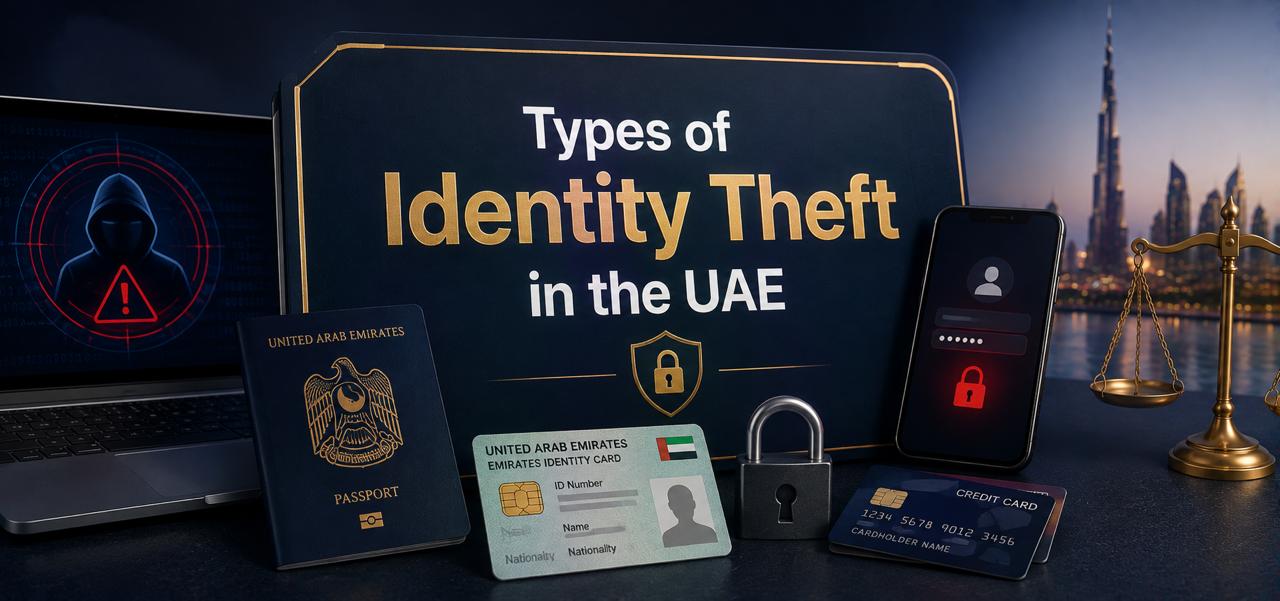

Identity theft is not one single offence with one fixed penalty. A stolen password, fake social-media account, cloned payment card, forged Emirates ID, SIM-swap attack, false loan application, or synthetic customer profile can involve different conduct, evidence, victims, and legal provisions. The first task is to identify what part of the identity was taken and what the offender did with it.
Delay can multiply the harm. A criminal defense lawyer in Dubai can help assess the legal implications of a cyber incident, while those facing digital offences may also consider whos the best cybercrime lawyer in Dubai. An attacker may reset an email account, intercept one-time passwords, empty a bank account, open credit, impersonate a director, deceive relatives, or create a false record before the victim understands the first alert. The response must therefore address common cyber security threats in the UAE and questions such as is computer hacking a crime in the UAE, while combining account containment, evidence preservation, authority reporting, and legal classification without deleting the material needed to prove the case.
Quick Answer
The main UAE identity-theft patterns are financial and payment fraud, account takeover and SIM swap, online impersonation, document misuse or forgery, synthetic identity creation, and business, medical, or employment identity misuse. UAE law addresses them through multiple provisions of Federal Decree-Law No. 34 of 2021 and the Crimes and Penalties Law, depending on the data, document, deception, and resulting loss.
Classify the incident by asset, access method, impersonation, transaction, and harm. Then preserve originals, secure unaffected channels, notify the relevant bank, telecom provider, platform, employer, and police authority, and separate criminal reporting from recovery or compensation.
Faris Raian is the Founder, Managing Partner, and Senior Legal Consultant at Leaders Advocates, with more than 15 years of UAE legal experience across criminal, corporate, commercial, civil, real-estate, and cyber-related matters. That combination is directly relevant to identity theft: one incident may require urgent digital-evidence preservation, a police and Public Prosecution strategy, coordination with banks, telecom providers, platforms, or employers, and a separate recovery or compensation route. His role is to connect those tracks to the specific identity misuse rather than treating every case as a generic online scam.
Identity Theft Is a Legal Umbrella, Not One Offence
Federal Decree-Law No. 34 of 2021 on Countering Rumours and Cybercrimes does not rely on a single offence called identity theft. It criminalises specific conduct such as unauthorised handling of personal electronic data, acquisition of passwords or codes, fake accounts and emails, electronic-payment misuse, internet fraud, privacy invasion, hacking, and electronic-document forgery. Several provisions can apply to one incident.
Physical identity misuse may engage the forgery, use-of-forged-document, fraud, and false-information provisions of Federal Decree-Law No. 31 of 2021. The correct charge depends on whether a genuine document was altered, a false document was created, another person’s genuine document was used, or deception caused a victim to transfer money, property, a signature, or a legally significant document.
Victim response should also be divided into tracks. A police or Public Prosecution case seeks criminal accountability. A bank, platform, telecom, credit-bureau, or employer process seeks containment and record correction. A civil claim may seek recovery or compensation. Success in one track does not automatically complete the others, so every reference and decision should be preserved.
Financial Identity Theft and Payment-Instrument Misuse
Financial identity theft includes unauthorised bank access, fraudulent transfers, purchases, credit applications, loans, wallet use, and misuse of card or payment data. The offender may begin with phishing, a data breach, a stolen document, remote-device access, social engineering, or a SIM swap that intercepts verification messages. The final transfer is only one part of the evidence chain.
Article 6 punishes unauthorised acquisition, possession, alteration, destruction, disclosure, copying, publication, or other handling of personal electronic data with at least six months’ imprisonment and/or a fine from AED 20,000 to AED 100,000. Medical, health, bank-account, and payment information are expressly treated as an aggravating circumstance because misuse can cause immediate financial or personal harm.
Victim of Identity Theft or Online Impersonation in the UAE?
Identity theft can involve bank accounts, SIM cards, fake profiles, forged documents, payment fraud, or stolen credentials at the same time. Our team can help classify the conduct, preserve the evidence, and identify the correct police, provider, and recovery steps.
Article 15 addresses forging, cloning, or copying cards and other electronic-payment instruments, unlawfully obtaining their data, creating enabling tools, using the instruments or data without authority to obtain funds or services, and knowingly accepting their unlawful use. The prescribed penalty includes imprisonment and/or a fine from AED 200,000 to AED 2,000,000. Internet fraud under Article 40 may also apply where deception or impersonation causes loss.
• Notify the bank through a verified channel and record the fraud reference, disputed transactions, and time of notice.
• Freeze or replace compromised cards and credentials without destroying the affected device or messages.
• Check credit, loan, wallet, and beneficiary records for misuse beyond the first transaction.
• Preserve statements, alerts, call recordings, email headers, URLs, and device-security logs.
Account Takeover, Credential Theft, and SIM Swap
Account takeover occurs when another person gains control of email, banking, social media, cloud storage, government, e-commerce, or workplace accounts. Article 9 addresses unauthorised acquisition of another person’s PIN, cipher, password, or similar access credential. Hacking and personal-data provisions may apply depending on how the credential was obtained and used.
A SIM swap is often a bridge rather than the final offence. By moving a number to another SIM or eSIM, an attacker may intercept calls and one-time passwords, reset email and bank accounts, and impersonate the subscriber. The evidence can sit with the telecom provider, device, email service, bank, and affected platform. Each must be asked to preserve its own logs promptly.
Containment should begin from a clean device and an unaffected contact channel. Secure the primary email first because it may control password resets elsewhere. Change passwords, end unknown sessions, replace recovery methods, activate stronger authentication, and notify affected providers. Do not factory-reset the compromised device until necessary material has been preserved or professionally captured.
Online Impersonation and Fake Accounts
Article 11 applies to creating a fake website, electronic account, or email and falsely attributing it to a natural or legal person. The basic penalty includes imprisonment and/or a fine from AED 50,000 to AED 200,000. If the fake resource is used in a way that harms the person to whom it is attributed, the provision prescribes at least two years’ imprisonment.
The article provides a more severe rule where the impersonated account, email, or website is attributed to a UAE entity, with imprisonment that may reach five years and a fine from AED 200,000 to AED 2,000,000. A fake executive, bank, government, law-firm, delivery, or customer-service account may also support fraud, payment, privacy, false-document, or extortion allegations.
Preserve the full profile and interaction, not only a screenshot of the display name. Record the account URL, handle, user ID where available, creation clues, profile image, linked number or email, messages, payment instructions, recipient accounts, platform-report reference, and people deceived. A fake account can be renamed or deleted quickly, making early preservation particularly important.
Document-Based and Synthetic Identity Theft
Document-based identity theft includes altering or fabricating an Emirates ID, passport, visa, licence, company document, salary certificate, power of attorney, or signature, as well as knowingly using a forged document. A genuine copy can also be misused to impersonate the holder in a separate transaction. The legal analysis distinguishes creation, alteration, possession, presentation, and the intended benefit.
Synthetic identity fraud combines real and invented information to build a profile that does not correspond completely to one victim. A genuine identity number may be paired with a different photograph, address, employer, phone, or financial history. The harm can remain hidden until debt collection, immigration, employment, insurance, or compliance checks connect the false profile to the real data subject.
Victims should request the disputed application, document copies, signatures, device or branch details, verification method, and transaction chronology from the relevant institution through lawful procedures. A simple statement that the application was not made may stop immediate processing, but record correction and criminal proof often require a formal complaint reference and comparison of the submitted document with the genuine record.
Business, Medical, Insurance, and Employment Identity Misuse
Business identity theft may involve impersonating a director, changing supplier bank details, registering a fake domain, issuing false invoices, using company licences, or opening accounts under a business name. Business email compromise frequently combines account takeover, a lookalike domain, false authority, and payment diversion. Companies should preserve mail headers, approval logs, payment changes, and the genuine communication chain.
Medical or insurance identity misuse can create false treatment, claim, prescription, or policy records under another person’s identity. Employment misuse may involve forged qualifications, salary documents, work records, or onboarding under stolen data. These cases can create long-term record and reputation problems even without an immediate cash loss. Article 6 expressly recognises medical and health information as especially sensitive.
A victim should avoid publicly accusing a suspected person before the evidence is verified. False public allegations can create separate defamation or privacy issues. Provide a truthful chronology to the competent authority, preserve the originals, and ask each affected organisation for a case or correction reference. Where funds or credit are involved, act urgently while keeping the criminal and civil strategies consistent.
• Create a timeline of every alert, login, call, message, transaction, document, and report.
• List every account that shares the compromised email, number, password, or identity document.
• Keep originals and certified copies; do not annotate the only version of key evidence.
• Follow up separately on criminal status, account restoration, record correction, and financial recovery.
Dealing with identity theft or impersonation in the UAE? Leaders Advocates can classify the conduct, preserve digital and document evidence, coordinate the police and Public Prosecution route, and assess bank, platform, telecom, corporate, recovery, and compensation steps.
Bank Account, Email, SIM, or Social Media Account Compromised?
Fast action can limit further damage, but resetting or deleting everything too early can destroy useful evidence. Get the account takeover, device records, login alerts, transactions, messages, and telecom or bank references reviewed before the trail disappears.
Common Mistakes
• Treating identity theft as one offence without mapping the data, document, access, deception, and loss.
• Resetting or discarding the compromised device before preserving messages, sessions, and logs.
• Reporting only the first fraudulent payment while ignoring email, SIM, credit, or document misuse.
• Using the attacker-controlled email or phone number to recover other accounts.
• Posting the suspected offender’s name publicly before evidence and identity are verified.
• Assuming a bank refund automatically corrects police, telecom, platform, credit, or government records.
Relevant Legal Services
A Cybercrime Lawyer in Dubai can map hacking, credentials, fake accounts, payment misuse, privacy, and digital evidence. A Criminal Defense Lawyer in Dubai can manage police and Public Prosecution procedure where fraud, forgery, or impersonation is alleged. A Civil Lawyer in Dubai can assess record correction, recovery, compensation, and claims against responsible parties.
People Also Ask
Conclusion
The fastest way to understand identity theft is to map the identity element taken, the access or document used, the impersonation performed, and the resulting transaction or record.
UAE law then supplies the relevant cybercrime, fraud, forgery, and civil routes. Early containment matters, but evidence preservation must happen at the same time.
Need Help Correcting Records or Recovering Losses After Identity Theft?
A police report is only one part of the response. Leaders Advocates can assess bank, telecom, platform, employer, credit, document, and civil recovery issues and help coordinate the criminal complaint with record correction and compensation steps.

2 Comments