


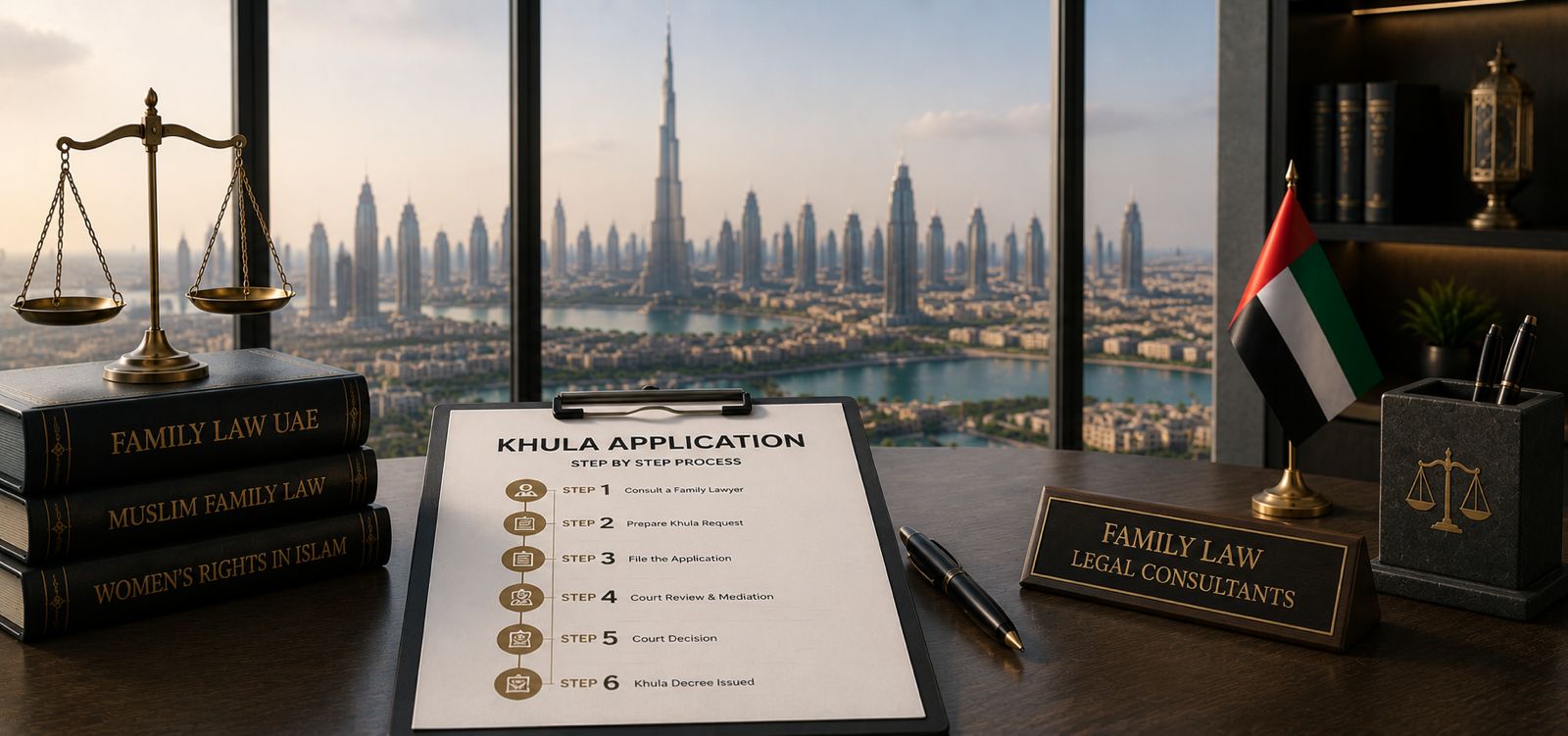

Deciding to seek khula is often the hardest step. Filing correctly is more practical, but the order of the stages matters.
Many applications are delayed not because the case is weak, but because a document was not translated or the reconciliation stage was skipped.
This guide explains how to apply for khula in Dubai, from reconciliation through to the final divorce certificate.
The khula process starts with mandatory family guidance and reconciliation through Dubai courts. If reconciliation fails, the wife files an Arabic statement of claim with the Personal Status Court, stating that she seeks khula and identifying the compensation offered, usually her dowry. The court notifies the husband and holds hearings if needed. His refusal does not automatically stop the case, because the court can grant khula and set an appropriate amount. A clean, uncontested case usually takes about two to three months.
If you are weighing khula against another route, the divorce lawyers in Dubai at Leaders Advocates can review your circumstances and explain which option protects your position best before anything is filed.
Is Khula the Right Route for You?
Not sure who to choose? Our guide on who is the best female divorce lawyer in dubai breaks down what matters most.
Khula does not require proof that the husband did something wrong. It does require compensation, usually the dowry.
A wife who wants to keep her full financial rights may consider judicial divorce instead. That route may require proof of harm, non-maintenance, addiction, or desertion.
| Point | Khula | Judicial Divorce |
|---|---|---|
| Proof of Fault | Not required | Evidence of a recognized ground is required. |
| Compensation | Offered by the wife, usually the dowry | Not offered as a condition of the divorce |
| Financial Rights | Dowry is usually returned or waived | The wife may seek to keep her full financial rights. |
| Typical Difficulty | Simpler, because fault is not in issue | Longer, because the ground must be proved. |
The choice is not only procedural. It affects what you keep at the end of the case, so it is worth confirming with alimony lawyers in Dubai before deciding which claim to file.
How to Apply for Khula in Dubai
This connects closely with our guide on do you need a lawyer for an uncontested divorce in dubai.
Step 1: Gather the Documents
- Marriage certificate.
- Emirates ID copy.
- Evidence that supports the case, where relevant.
- Certified Arabic translations of non-Arabic documents.
- Embassy and UAE Ministry of Foreign Affairs attestation for foreign documents, where required.
Incomplete translation or attestation is a common cause of delay. Prepare these items before filing. Where the marriage was concluded abroad, our marriage lawyers in Dubai can confirm what attestation the court will accept.
Step 2: Attend Family Guidance and Reconciliation
Register the case through the Dubai Courts portal. A court-appointed conciliator then tries to resolve the matter through the Dubai Courts family conciliation service.
This stage is not optional. Under Article 8 of Federal Decree-Law No. 41 of 2024, the supervising judge may refer the parties to the Family Guidance and Reconciliation Centre before the case moves to the competent court.
If reconciliation fails, the conciliator issues the clearance needed to proceed to the Personal Status Court.
Step 3: File the Khula Application
The statement of claim must be in Arabic. It should state the request for khula, the reasons, and the compensation offered.
- Submit the claim through the Dubai Courts e-portal.
- Attach the marriage and identity documents.
- Pay the assessed court filing fees.
This document carries more weight than any other in the file. Errors in the statement of claim are difficult to correct later, which is why many applicants ask family lawyers in Dubai to prepare it.
Step 4: The Husband Is Notified
The court formally notifies the husband. He may accept the khula and compensation or contest them.
His agreement is not the deciding factor. The court can still grant khula and set compensation if he refuses without valid reason.
Has Your Husband Refused to Agree?
A refusal does not end your case. The court can grant khula and set the compensation itself. Leaders Advocates can explain what happens next and represent you through the hearings.
Step 5: Attend the Hearings
The court reviews the reconciliation efforts and the wife’s intention to end the marriage. Khula does not require proof of the husband’s fault.
The main questions are the genuine intention to separate and the reasonableness of the compensation.
Step 6: Settle the Dowry
The dowry is the most common form of compensation. Returning what was actually received is generally sufficient.
Any deferred portion still owed is dropped as part of the settlement. Accurate dowry records make this stage faster.
Step 7: Obtain and Register the Divorce Certificate
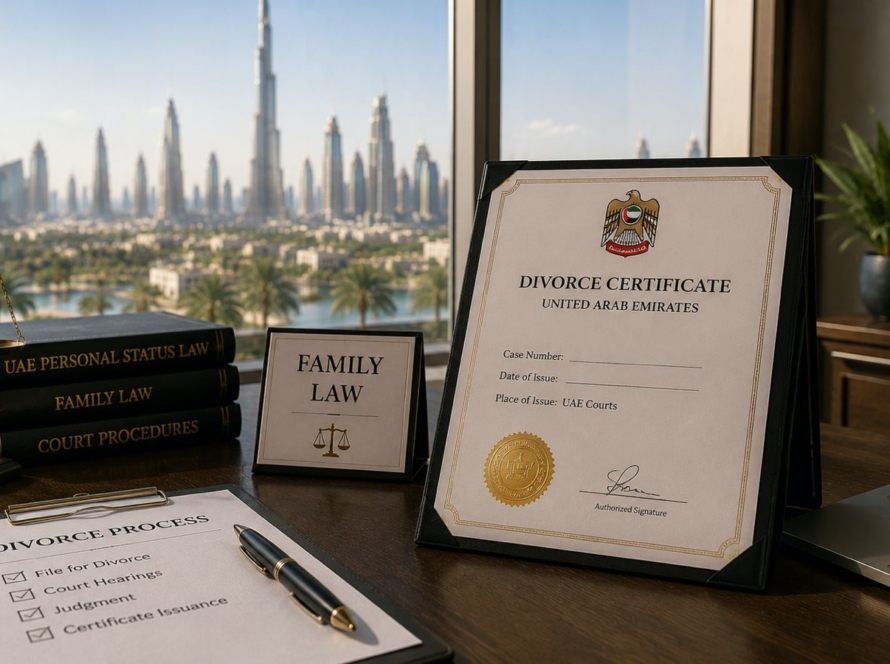
The court issues a divorce certificate after granting khula. Register it with the relevant authorities to complete the process.
An expatriate should also check whether the certificate needs registration or attestation in her home country.
Where children are involved, custody, maintenance, and travel arrangements are handled separately from the divorce itself. Our child custody lawyers in Dubai can advise on what needs to be filed alongside the khula claim.
Timeline and Costs
The typical figure for uncontested khula with documents ready is around two to three months. A contested case takes longer, potentially six months or more. The same pattern applies across most family matters, as set out in this analysis of how long divorce takes in Dubai.
| Item | What to Expect |
|---|---|
| Uncontested Case | Around two to three months with documents ready |
| Contested Case | Six months or more, depending on complexity |
| Court Filing Fees | Relatively modest, assessed at the filing stage |
| Legal Fees, Amicable | Commonly around AED 8,000 to AED 25,000 |
| Legal Fees, Contested | Higher, depending on the issues in dispute |
| Translation and Attestation | May add several thousand dirhams |
Want a Clear Cost Estimate Before You File?
Fees depend on whether the case is contested and how much translation your documents need. Send us your situation and we will give you a realistic figure and timeline, with no obligation.
Common Mistakes to Avoid
- Skipping the required reconciliation stage.
- Submitting an incomplete Arabic statement of claim.
- Filing a foreign marriage certificate without proper attestation.
- Assuming the husband’s refusal ends the process.
- Losing the records that show the dowry paid or received.
- Ignoring home-country registration or attestation requirements.
Frequently Asked Questions
Correct documents and a clear statement of claim help keep the case on the shorter timeline. Most of the delay in khula applications comes from paperwork, not from the law itself.
If you are unsure whether khula or judicial divorce better protects your position, it is worth resolving that question before you file rather than after.
Ready to Begin Your Khula Application?
The divorce team at Leaders Advocates handles khula cases from the reconciliation stage through to the final certificate, preparing the Arabic statement of claim, managing translations and attestation, and representing you at every hearing.

1 Comment