

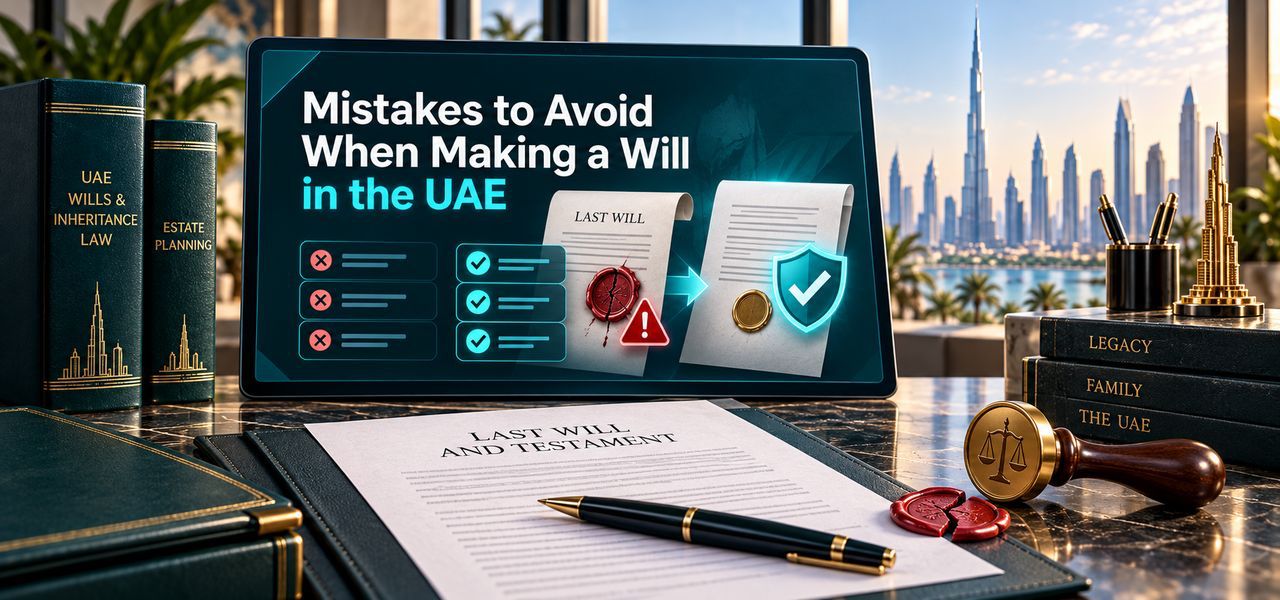

A foreign will may feel complete because it already names beneficiaries and an executor. That does not prove it covers UAE based assets effectively.
Parents can also overlook guardianship. Others sign a will once, store it poorly, and never update it after major family or financial changes.
These gaps often become visible only after death or incapacity. At that point, relatives must resolve uncertainty while also managing grief and urgent expenses.
Quick Answer
Mistakes to Avoid When Making a Will in the UAE start with assuming a foreign will automatically governs UAE based assets. Local registration may still be needed.
Another common mistake is failing to name a guardian for minor children directly. Leaving that issue open may produce an outcome different from the parent’s wishes.
A will should also be reviewed after new assets, marriage, divorce, births, deaths, business changes, or relocation. An old document may no longer match reality.
Finally, do not delay the process or treat drafting as the only step. Confirm the recognized UAE route, complete every formality, store the final document, and update it when circumstances change.
Treat the will as a working estate plan. Start with UAE assets and family needs, then confirm the correct route, wording, formalities, storage, and review cycle.
1. Confirm Which Assets the Will Covers
List every UAE based asset before drafting. Include real estate, bank accounts, company interests, vehicles, investments, digital holdings, and valuable personal property.
Record the legal owner of each asset. A family understanding is not enough when a title, account, or share register shows something different.
Identify jointly held property and any beneficiary designation. These features can affect what enters the estate and what the will can realistically address.
Use current account numbers, title details, and company records. Vague descriptions can create delay when relatives later try to identify the intended property.
Separate UAE assets from assets elsewhere. A clear map helps advisers coordinate documents without assuming that one jurisdiction’s form automatically works in another.
2. Do Not Assume a Foreign Will Is Enough
A will drafted abroad does not automatically have the same effect over UAE based assets as a will completed through a recognized UAE channel.
Recognition, translation, authentication, and local procedure can affect how a foreign document is used. The correct route depends on the person and assets involved.
Do not rely only on the document’s governing law clause. Practical administration may still require local steps before a UAE authority can act on it.
Ask how each UAE asset would be transferred after death. That practical question often exposes gaps that general estate language does not reveal.
Coordinated planning may involve more than one document. Any documents should be reviewed together so one will does not accidentally revoke another.
Not Sure If Your Foreign Will Covers Your UAE Assets?
Message us on WhatsApp with your situation and get a quick read on what still needs to be done.
3. Choose a Recognized UAE Route
The appropriate registration route depends on residence, religion, nationality, asset location, and family circumstances. There is no universal form for every person.
Confirm the authority that will receive, register, or later apply the will. Use its current requirements rather than an old checklist or informal summary.
Review language, witness, identification, and signing requirements before the appointment. Missing one formal step can delay registration or create later challenges.
Make sure the chosen route can address the assets and guardianship issues that matter. A limited document may not solve every estate planning need.
Keep proof of registration and payment with the final will. Relatives should know where those records are kept and how to access them when needed.
4. Name Beneficiaries Precisely
Use complete names and reliable identifying details. Similar names, spelling differences, or outdated passports can create avoidable uncertainty during estate administration.
Define each gift clearly. State whether a beneficiary receives a specific asset, a fixed amount, a percentage, or part of the remaining estate.
Plan for a beneficiary who dies first. A substitute beneficiary or clear fallback direction can prevent that gift from becoming difficult to distribute.
Avoid informal labels unless they are defined. Terms such as family home, business account, or eldest child may not identify the intended person or asset conclusively.
Check the total percentages and any conditions. Conflicting gifts or an incomplete remainder clause can leave part of the estate without clear instructions.
5. Address Guardianship Directly
Parents of minor children should not treat guardianship as an assumed detail. The will can name the person they want considered for that role.
Discuss the appointment with the proposed guardian first. Confirm willingness, location, family responsibilities, health, and ability to care for the children.
Consider a backup guardian in case the first choice cannot act. Circumstances can change between registration and the time the appointment becomes relevant.
Keep guardianship wording clear and separate from financial management. The person caring for a child may not always be the best person to manage assets.
Review the choice after relocation, illness, family conflict, or a major change in the proposed guardian’s circumstances. Suitability should not be assumed forever.
Haven’t Named a Guardian for Your Children Yet?
This is one of the most overlooked steps in UAE estate planning. Message us on WhatsApp and we’ll walk you through it today.
6. Choose the Executor Carefully
The executor handles practical estate work. Choose someone organized, available, trustworthy, and able to communicate with beneficiaries, authorities, banks, and professional advisers.
Explain the role before naming the person. The executor should understand that administration can require records, applications, payments, and patient follow up.
Consider distance and language. An executor living abroad may still be suitable, but local logistics can affect speed, cost, and document handling.
Name a substitute where appropriate. A will can become harder to administer if the only executor dies, refuses, or becomes unable to act.
Do not leave the executor without information. Maintain an asset list, contact list, and secure instructions that can be found without exposing private credentials.
7. Coordinate Business Interests
Business ownership needs separate attention. A personal will does not replace company documents, shareholder agreements, constitutional records, or an effective succession plan.
Confirm the exact shares or interests owned by the testator. Check transfer restrictions, partner rights, valuation terms, and any insurance connected with ownership.
Separate ownership from management. A beneficiary may inherit economic value without automatically gaining the authority or skills needed to run the business.
Plan for urgent decisions after death. Payroll, banking, contracts, licenses, and customer obligations can continue while the estate process is still underway.
Review personal and company documents together. Conflicting instructions can trigger disputes between beneficiaries, surviving partners, directors, and creditors.
8. Record Debts and Obligations
An estate includes liabilities as well as assets. List mortgages, personal loans, guarantees, business obligations, taxes, family loans, and continuing payment commitments.
Keep supporting agreements and current balances. Beneficiaries cannot plan accurately if the apparent value of an asset ignores debt secured against it.
Do not promise the same asset without considering the attached liability. State how related expenses should be handled when clear instructions are appropriate.
Review personal guarantees carefully. A guarantee connected to a business can affect the estate even when company ownership is addressed elsewhere.
Update the liability file as debts are paid or replaced. An old list can mislead the executor and cause unnecessary inquiries or payment delays.
Own a Business or Property in Dubai?
Business interests and debts need to be addressed correctly in your will. Message us on WhatsApp for a fast, confidential review.
9. Complete Every Formality
Good intentions do not cure a defective process. Follow the current signing, witness, identification, language, and registration steps required by the chosen channel.
Use consistent names across the will and identity documents. Record any transliteration differences so the authority can connect the same person across records.
Read the final version before signing. Confirm beneficiaries, percentages, guardians, executors, asset references, revocation language, and the date of the document.
Do not make handwritten changes afterward. An informal amendment can create uncertainty about validity and may conflict with the registered version.
Keep copies of submission confirmations and final approvals. A draft on a laptop is not proof that the intended registration was actually completed.
10. Store the Final Documents Safely
The will must be available when needed. Store the original and registration records securely, but make sure trusted people know how to locate them.
Keep a separate inventory of assets and key contacts. Do not place passwords or sensitive access codes inside a widely shared copy of the will.
Tell the executor which authority holds the registered record. Provide reference numbers and adviser details without distributing more personal information than necessary.
Protect electronic copies from alteration. Use clear filenames, reliable backups, and access controls so a draft is not confused with the final signed version.
Review storage after a move or change of adviser. A perfectly drafted will can still create problems if relatives cannot find the operative document.
11. Review After Major Changes
A will is not a one time task. Marriage, divorce, birth, death, relocation, and major asset changes can affect its practical operation.
Review it after buying or selling UAE property. A specific gift may fail or become unclear if the described asset no longer exists.
Check guardians and executors regularly. Their health, residence, relationship, or willingness may change even when the rest of the estate stays stable.
Coordinate new foreign planning with the UAE document. Later wills should not accidentally revoke valid instructions intended to remain in force elsewhere.
Use a scheduled review as well as event based reviews. A periodic check can catch expired identification, renamed accounts, and overlooked family developments.
12. Do Not Delay the Process
Delay is itself a common mistake. Registration cannot be arranged after death, and incapacity can make later decision making more difficult.
Start while documents and intentions are clear. Gathering titles, account details, family records, and identification usually takes longer than expected.
Do not wait for a perfect asset list before seeking advice. An initial review can identify priorities and the documents still needed.
Set a realistic completion date. Assign responsibility for collecting records, reviewing the draft, attending appointments, and storing the final documents.
A completed, current plan is more useful than an ideal plan left unfinished. Careful preparation reduces uncertainty for the people who will rely on it.
Final Takeaway
The biggest will problems usually begin with assumptions. Foreign documents, guardianship wishes, and old asset lists should never be treated as automatically sufficient.
Map the estate, choose a recognized UAE route, complete the formalities, store the final record, and review it whenever life or ownership changes.
Related Success Story
Explore our published inheritance and family success stories for examples of evidence led planning and legal strategy in matters involving families, assets, and court processes.
Common Mistakes
- Assuming a foreign will automatically governs every UAE asset.
- Leaving guardianship for minor children unstated.
- Using vague beneficiary or asset descriptions.
- Treating a signed draft as completed registration.
- Failing to review the will after major changes.
Relevant Legal Services
Review our inheritance lawyers in Dubai, guardianship lawyers in Dubai, and family lawyers in Dubai for coordinated planning around UAE assets, minor children, and family arrangements.
Follow Leaders Advocates on LinkedIn or Leaders Advocates on Facebook for more UAE legal updates.
People Also Ask
Ready to Protect Your UAE Assets and Your Family?
Message Leaders Advocates on WhatsApp now and get a clear, confidential plan for your will in the UAE today.