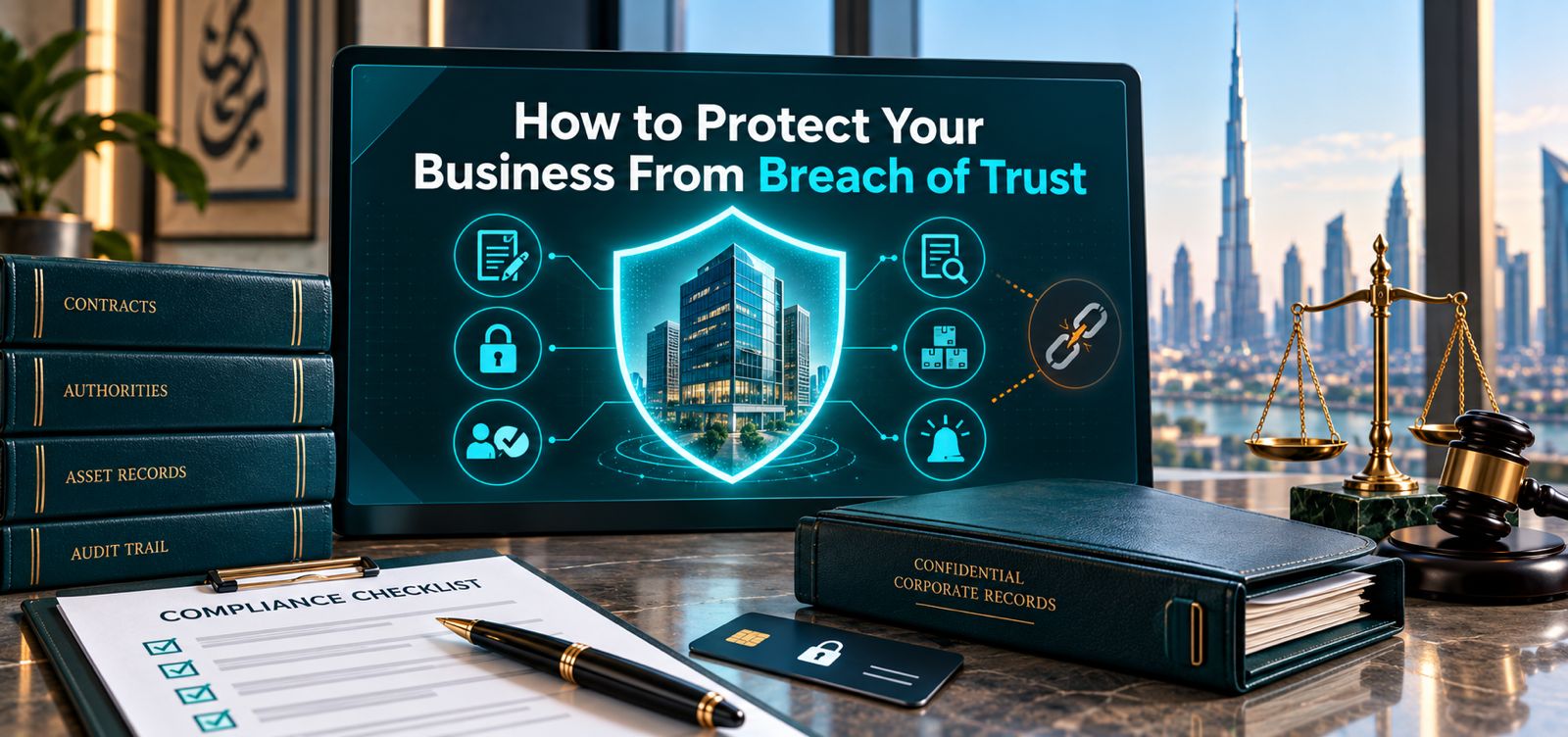

A trusted employee, manager, partner, agent, or contractor may control money, goods, data, or documents. The business often notices a problem only after records stop matching reality.
Broad access and informal approvals make the loss harder to prevent. They also make it harder to identify who received property, what authority applied, and how the misuse occurred.
You need controls that support daily work without paralyzing the company. You also need an incident plan that preserves evidence and avoids reckless accusations.
Quick Answer
How to Protect Your Business from Breach of Trust starts with limited access. Give each person only the money, property, data, and approval authority required for that role.
Separate requesting, approving, paying, receiving, and reviewing. Use clear limits and maintain records showing who held property, why they held it, and what use was permitted. Regularly reconcile accounts, stock, expenses, refunds, vendors, payroll changes, and unusual transfers while evidence remains available.
If a warning sign appears, preserve records and restrict risk carefully. Article 453 may be relevant where entrusted property is misused, although the legal classification will depend on the specific facts and available evidence.
Faris Raian is Founder, Managing Partner, and Senior Legal Consultant at Leaders Advocates. He has more than 15 years of UAE experience across corporate, commercial, and dispute matters.
He has observed that businesses often discover suspected breach of trust after the loss has grown. Earlier access controls and regular review can expose irregular activity much sooner.
His view is that role based limits are ordinary financial governance. They do not accuse staff. They reduce opportunity and create a record that protects both the company and honest employees.
When a concern arises, Faris emphasizes prompt evidence preservation. A rushed accusation can damage the investigation, while delay can allow records or assets to disappear.
Solution
Build prevention and response together. The same records that deter misuse can later establish custody, authority, transactions, loss, and the company’s immediate actions.
1. Map Entrusted Assets
List the assets that people receive on behalf of the business. Include cash, accounts, cards, inventory, equipment, credentials, confidential data, documents, and customer payments.
Identify the person, purpose, limit, duration, and return duty for each asset. The record should show the permitted use rather than relying on custom or memory.
Map digital access as carefully as physical property. Administrative rights, payment portals, accounting tools, cloud files, and vendor systems can create significant exposure.
Review the map after promotions, departures, restructures, new products, and acquisitions. Old access often survives after the business reason has ended.
2. Limit Access by Role
Use the least access needed for each job. A person who prepares a payment may not need authority to approve or release it.
Set written financial limits by role and transaction type. Apply separate rules for cash, refunds, purchasing, vendor changes, payroll, inventory, and related party payments.
Avoid shared accounts and generic credentials. Individual access records help the business identify who acted and when.
Temporary access should expire automatically when possible. If a system cannot do that, schedule a manual review and document the removal.
Worried Someone Is Misusing Your Business Assets?
Do not wait for missing money, property, or records to become a larger loss. Get legal advice on preserving evidence, restricting access, and assessing the appropriate response.
3. Separate Key Duties
Do not let one person request, approve, execute, and reconcile the same transaction. Separation makes concealment harder and ordinary errors easier to detect.
Design the control around actual staffing. A small company may use owner review, bank alerts, external bookkeeping, or rotating checks when full separation is not practical.
Record exceptions. Emergency authority should state the reason, amount, period, approving person, and later review requirement.
Test whether staff follow the designed process. A written policy has little value when passwords, signatures, or approvals are routinely shared.
4. Strengthen Vendor Controls
Vendor creation and bank detail changes deserve independent checks. Fraud and misuse can hide behind a real supplier name with altered payment instructions.
Require supporting records for new vendors. Confirm identity, ownership, bank details, contract, tax information, contact data, and the business reason for engagement.
Verify payment changes through a trusted channel. Do not rely only on an email sent from the same account requesting the change.
Review duplicate vendors, round payments, weekend activity, unusual addresses, personal accounts, and repeated urgent exceptions. No single sign proves wrongdoing, but patterns require attention.
5. Control Cash and Expenses
Cash creates weak audit trails. Reduce cash use where practical and require receipts, business purpose, approver identity, and timely reconciliation for every withdrawal or float.
Corporate cards should have individual holders and clear categories. Set limits, block unnecessary merchant types, and review transactions soon after posting.
Expense reimbursement needs original support and a conflict check. The claimant should not be the only person who approves the payment.
Repeated small amounts can matter as much as one large transaction. Review patterns across time, departments, vendors, and connected employees.
6. Protect Inventory and Equipment
Use numbered records for stock, high value tools, devices, keys, and vehicles. Record issue, transfer, return, damage, disposal, and physical count results.
Separate custody from count review when possible. Surprise checks can test whether daily records match the assets actually present.
Investigate repeated adjustments, write offs, returns, and damaged stock. These entries can hide ordinary error, weak procedure, or intentional removal.
Departing staff should complete a documented return process. Remove building and system access at the correct time and confirm every business asset received.
7. Improve Contract Records
Contracts and policies should define authority, custody, confidentiality, reporting, audit, conflicts, expenses, and return duties. The wording must reflect actual operations.
Do not rely only on a broad honesty clause. Specific controls show what the person could do and what required separate approval.
Keep signed versions, amendments, delegations, powers, job descriptions, and policy acknowledgments together. Missing records can blur the limits that applied at the relevant time.
Review the documents when duties change. A promoted employee may gain practical control long before the written authority is updated.
8. Monitor Without Overreacting
Use regular exception reports and reconciliations. Review unusual payments, access changes, manual journal entries, refunds, stock adjustments, payroll changes, and inactive vendor activity.
Create a clear reporting route for staff. A person should know where to raise a concern without confronting the suspected individual or spreading an allegation.
Treat an alert as a reason to check, not proof of guilt. Legitimate operational explanations should be documented with the same care as suspected misconduct.
Apply monitoring lawfully and consistently. Privacy, employment, data, and internal policy issues may affect how records and devices are reviewed.
9. Respond to Warning Signs
Create an incident group with limited membership. Assign responsibility for legal advice, evidence, systems, finance, employment decisions, insurance notice, and business continuity.
Preserve relevant accounts, logs, devices, documents, messages, access records, payments, contracts, and video. Keep an audit trail of every preservation step.
Restrict further exposure proportionately. Changing credentials, pausing authority, or requiring dual approval may protect assets without announcing an untested accusation.
Do not interview everyone immediately. A planned sequence can prevent witnesses from comparing accounts and can protect the integrity of records.
10. Assess Article 453 Carefully
The source article identifies Article 453 of the Crimes and Penalties Law in connection with breach of trust involving entrusted property. The exact classification depends on facts.
A legal review should examine how the property was received, the permitted purpose, the authority given, the challenged act, and the evidence of misuse or loss.
Not every accounting discrepancy proves a criminal breach of trust. Contract error, weak controls, negligence, authority disputes, or civil claims may require different analysis.
Avoid labeling a person publicly before the evidence is tested. False or reckless statements can create separate legal and commercial risk.
11. Plan Legal and Commercial Action
Ask counsel to map the available criminal, civil, employment, corporate, insurance, and contractual steps. The correct combination depends on the relationship and evidence.
Decide the immediate objective. The business may need to stop loss, secure systems, preserve assets, recover property, terminate authority, report conduct, or negotiate repayment.
Coordinate actions so one step does not damage another. An unplanned dismissal, demand, system wipe, or public notice can affect evidence and recovery.
Keep the board or owners informed through factual updates. Separate confirmed findings, open questions, legal advice, and proposed decisions.
12. Build a Prevention Calendar
Schedule access reviews, bank reconciliation, vendor checks, stock counts, card review, payroll change reports, policy updates, and staff departure controls throughout the year.
Assign an owner to each check. A control without a responsible person, record, and escalation rule often disappears during busy periods.
Track exceptions and closure. Management should know which issue was found, who reviewed it, what evidence supported the result, and what control changed afterward.
Found Suspicious Transfers or Missing Business Property?
Preserve transaction records, approvals, messages, access logs, contracts, and other evidence before taking action. A lawyer can assess the facts and help determine the appropriate legal route.
Use incidents to improve the system. The goal is not only to address one person. It is to remove the weakness that allowed the exposure.
Final Takeaway
How to Protect Your Business from Breach of Trust requires clear custody, limited access, separate approvals, regular review, complete records, and a controlled incident response.
When a concern appears, preserve evidence before making broad accusations. A lawyer can assess Article 453 and any connected corporate, contract, employment, civil, or recovery issues.
Related Success Story
Read the Corporate Fraud and Embezzlement success story listed by Leaders Advocates for an example of how focused evidence and dispute strategy can support a serious business matter.
Common Mistakes
- Giving broad access because it is operationally convenient.
- Allowing one person to request, approve, pay, and reconcile.
- Using shared credentials that hide individual activity.
- Waiting for the annual audit after warning signs appear.
- Making a public accusation before preserving and testing evidence.
Relevant Legal Services
Explore our corporate lawyers in Dubai, contract lawyers in Dubai, and criminal defense lawyers in Dubai for prevention, investigation, agreements, and dispute support.
People Also Ask
Suspect a Breach of Trust in Your Business?
Leaders Advocates can assess the entrusted property, authority limits, financial records, available evidence, and circumstances to help determine the appropriate next legal steps.