
You transferred money into an investment, but withdrawals are blocked, the promised manager has disappeared, or further payments are being demanded to release your funds. Knowing how to complain about investment fraud in the UAE helps you prioritize the bank call, reporting, and evidence preservation while avoiding a second loss to someone promising recovery.
Quick Answer
Contact your bank immediately, stop further payments, and report suspected fraud through official police channels. Notify the relevant regulator where appropriate and preserve the complete evidence. Seek advice on recovery, which may require civil action and is never guaranteed.
Organize the immediate response around the payments and the representations that led you to make them. Use official channels, retain report references, and keep a clear chronology. Separate the report of suspected wrongdoing from the assessment of how funds might be recovered.
Reporting Channels and the Legal Framework
To complain about investment fraud in the UAE, first contact your bank about the payments. Then report the fraud through official channels. The UAE government portal lists the Ministry of Interior’s E-Crimes platform (through the MOI UAE app), the Federal Public Prosecution’s My Safe Society app and local police stations, with 999 for emergencies. Dubai cases are commonly reported through the E-Crime platform and the Dubai Police app, and Abu Dhabi Police runs the Aman service.
Report unauthorized financial activity to the relevant regulator: the Capital Market Authority (CMA) for mainland securities and derivatives activity, the Central Bank for its licensed institutions, the DFSA in the DIFC or the FSRA in ADGM. Fraud is an offense under Article 451 of the Penal Code. Recovery is not guaranteed and may require civil action.
Immediate Steps After Suspected Investment Fraud
Call your bank’s fraud line promptly, because early action improves the chance of stopping or recalling payments. Stop further payments, particularly requests for fees supposedly needed to release your funds.
File a police report to create an official record and start the investigation. Save messages, websites, and receipts before they disappear. Secure your accounts and change passwords if you shared login details or codes.
Give the bank identifiable payment details
Have the payment date, amount, recipient details, and transaction reference ready when you call. Explain why you now suspect fraud and identify any further payment requests. Keep a note of the bank’s response and the reference it provides. If several transfers were made, describe each separately so the discussion concerns identifiable transactions rather than one combined estimate of the loss.
Be accurate about how the payments happened. Distinguish a transfer you made after being persuaded to invest from activity you did not authorize. Give the bank the facts and let it explain the available processes under the applicable rules. Record any information it asks you to provide and keep copies of the material you submit.
Preserve evidence while securing access
Save the messages and account information already available to you. If the platform is still accessible, retain the relevant records without making another deposit to test a promise of withdrawal. Keep a copy of the latest demand for payment and the explanation given for it. Contacting the bank and preserving evidence should proceed promptly; there is no reason to wait for a self-imposed 48-hour window to end.
Already Sent Money and Now Can’t Withdraw It?
Don’t pay another “release fee.” Message us on WhatsApp now and we’ll walk you through the right first steps.
Where to Report Investment Fraud in the UAE
- Police: through the E-Crimes platform in the UAE (MOI UAE app), local police channels such as the Dubai Police app and E-Crime platform, the Abu Dhabi Police Aman service, or a police station.
- Public Prosecution: the My Safe Society app is listed as a reporting channel.
- Financial regulators: the CMA, the Central Bank, the DFSA or the FSRA, depending on the activity and location.
- Your bank: for payment recall, chargeback or account protection under applicable rules.
These channels do different jobs, so use more than one where appropriate. A regulator complaint helps regulators act against unauthorized firms. A police report supports a criminal investigation.
Use an official channel you have located independently, rather than a reporting link supplied by the suspected operator. Record the channel used, the date, and any reference number. If you are unsure which authority’s remit covers the activity, organize the available information about the firm, investment, and location before seeking guidance. Avoid guessing that every financial scheme belongs to the same regulator.
Explain whether you have already contacted the bank or another reporting channel and retain the responses. Keep the central facts consistent across submissions. Different organizations may ask different questions, but the payment dates, amounts, and representations should come from the same underlying records. Where a mistake is discovered in your account, keep track of the correction rather than quietly circulating conflicting versions.
For a scheme involving online impersonation or a fraudulent platform, Leaders Advocates’ cybercrime legal services in Dubai can help assess the digital evidence and the issues relevant to the complaint.
Evidence to Include in an Investment Fraud Complaint
- Adverts, social media profiles and website addresses.
- Chats, emails and call logs with the people involved.
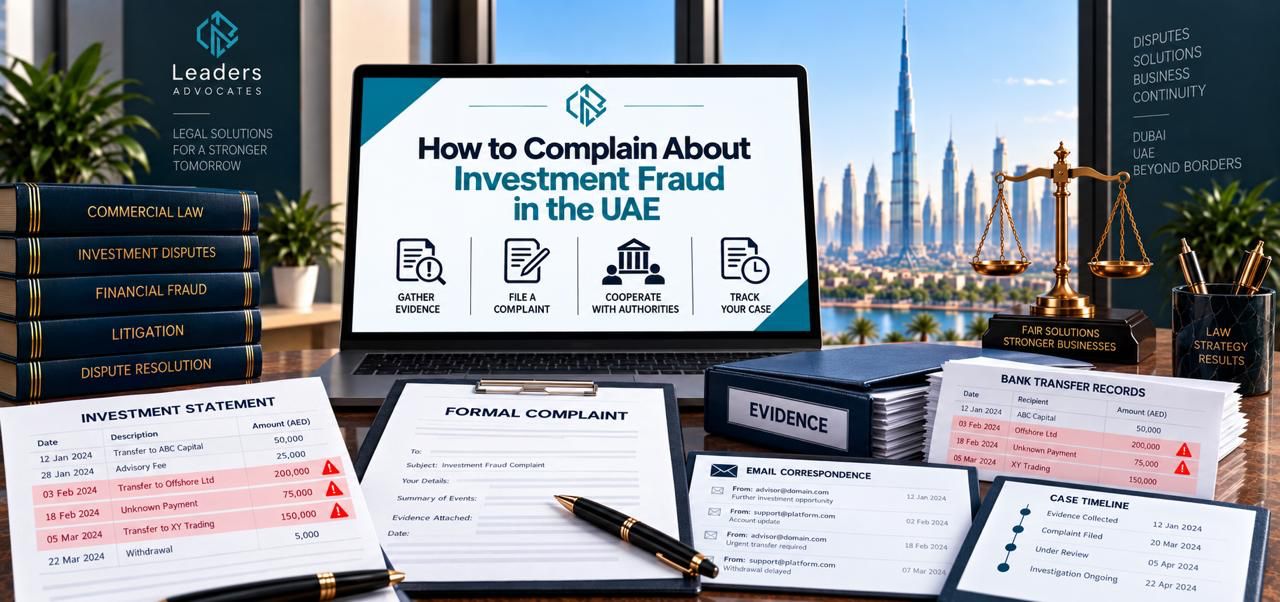
- Payment receipts, bank statements and crypto transaction records.
- Contracts, “certificates” or account dashboards you were shown.
- Names, phone numbers and account details used by the fraudsters.
Show how the investment was presented
Start with the advertisement, introduction, or message that brought you to the scheme. Preserve the statements about returns, access to funds, the manager’s identity, and any claimed authorization. Then connect those representations to the payments you made. The aim is to explain what you were told, when you were told it, and what happened afterward, without adding conclusions the records cannot support.
Retain the complete conversation around a promise or request. A screenshot of a profit figure may make more sense alongside the message saying what that figure represented. Keep website addresses, profile names, dates, and attachments where available. Preserve original files and unedited copies alongside any highlighted working version so that the underlying material remains available for review.
Reconcile deposits and amounts returned
Prepare a clear account of the money you actually transferred and any money received back. Keep the platform’s displayed balance separate from that calculation. A dashboard may show an amount you never withdrew, so explain what each figure represents instead of combining deposits, claimed profits, and losses into one unexplained total. Match every payment entry with its receipt or transaction record.
For crypto transactions, keep the transaction records available to you with the messages that provided the payment instructions. For bank payments, retain the recipient information shown in your records even if it differs from the scheme’s advertised name. Flag those differences for review. An unfamiliar recipient may be an important factual lead, but describe the record accurately before drawing a conclusion about it.
Not Sure What Evidence to Save?
Send us what you have on WhatsApp — screenshots, messages, receipts — and we’ll tell you what actually matters.
Avoiding a Second Loss to a Recovery Scam
After reporting a loss, many victims are contacted by people claiming they can recover the money for a fee, sometimes posing as lawyers, regulators or police. Legitimate authorities do not charge victims recovery fees. Before engaging anyone, verify their identity through official channels, and deal only with licensed law firms under written terms.
A second approach can appear persuasive because the caller already knows that you lost money. Ask how the person identifies themselves, then verify that identity independently. Keep any message asking for an advance fee or another transfer to unlock recovered funds. Pressure to act immediately should not replace checking the firm, its role, and the written terms of any proposed professional engagement.
Do not confuse an unsolicited recovery promise with an agreed legal service. A written engagement should explain the work being instructed and its cost, without presenting payment as a guarantee that the lost investment will be returned. If someone claims to be an official, verify the claim through that organization’s established channels before relying on the message.
Being Chased by a “Recovery Agent” for an Upfront Fee?
Stop before you pay anything else. Verify who you’re really dealing with — message a licensed firm on WhatsApp right now.
Pursuing Recovery After an Investment Fraud Complaint
Criminal proceedings may lead to orders affecting the fraudsters, but victims seeking their money back may also need civil action. Where assets or accounts can be identified in the UAE, courts can order precautionary measures if the legal conditions are met. Where funds moved abroad, recovery may involve proceedings in other countries.
Ask what is known about the recipient and assets
Provide your adviser with the names, account information, and locations that appear in the evidence. Separate verified details from claims made by the scheme. Ask which proposed step addresses reporting, which seeks information, and which is directed toward repayment. This makes the plan easier to assess and avoids assuming that a complaint reference alone explains the recovery position.
Leaders Advocates’ litigation lawyers in Dubai can assess whether civil proceedings or a request for precautionary measures is relevant to the known facts. Where money moved abroad, explain the available payment trail so the need for work in another country can be considered. Ask about the purpose and likely cost of each proposed stage before committing to further action.
Keep later developments in the same file. Add a bank response, a message from the operator, or a payment received after the complaint, together with its date. Changes in the available information can affect the assessment. A current file gives your adviser a more reliable basis for explaining the next step than a summary prepared before those developments occurred.
Investment Fraud or Bad Investment?
Not every loss is fraud. A regulated investment can lose value without anyone acting unlawfully. The distinction matters because fraud requires deceit, such as false statements or fake platforms, while a disappointing investment may raise only contractual or regulatory questions. A lawyer can help you frame the complaint correctly.
Describe the suspected deceit precisely. For example, identify the statement you believe was false and the evidence behind that concern. If the disagreement instead concerns a fee, performance, or the terms of withdrawal, explain that too. Leaders Advocates’ civil dispute lawyers in Dubai can review the contractual questions while the facts are assessed, helping ensure that the complaint describes the actual problem.
Common Mistakes
- Delaying the call to the bank.
- Paying “taxes” or “release fees” to access funds.
- Deleting chats out of embarrassment.
- Paying a recovery agent who approached you after the loss.
- Reporting only to the regulator when police action is also needed.
Faris Raian and the team at Leaders Advocates can assess your specific situation.
FAQs
Lost Money to an Investment Scam?
Don’t wait or pay another fee. Message Leaders Advocates on WhatsApp now for a fast, confidential first read on your situation.