

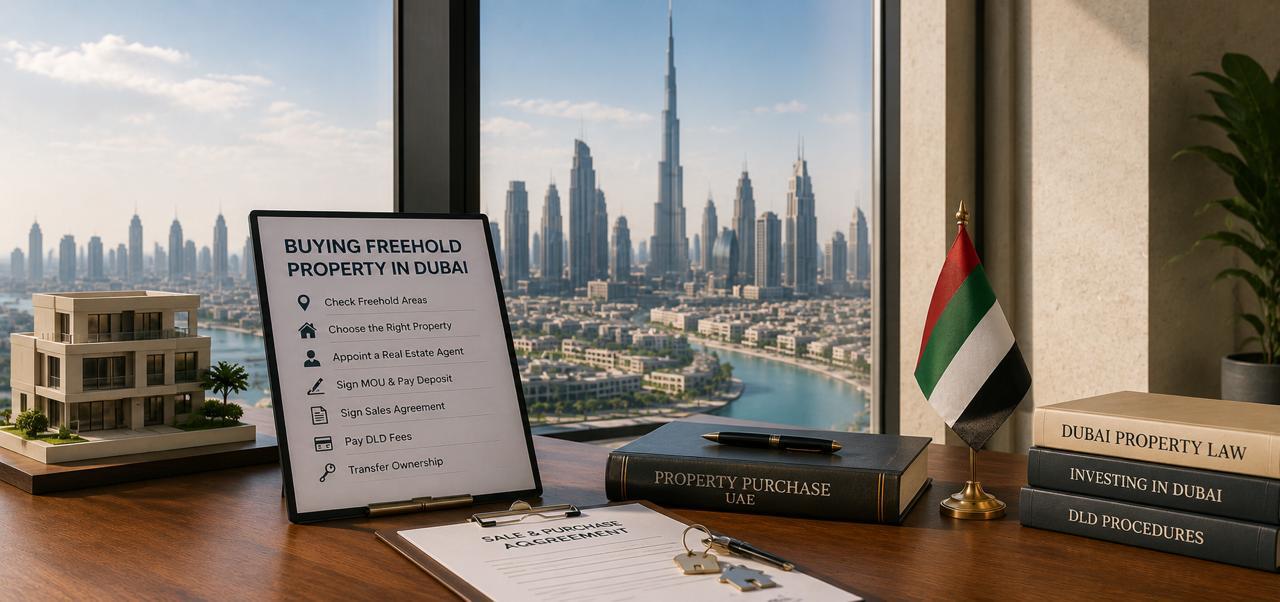

Buying property in Dubai is easier than many foreign buyers expect, but knowing what happens after you decide to buy is where most people get stuck.
So, how do you buy freehold property in Dubai?
The process depends on whether you’re buying a ready property or an off-plan property. Each follows different legal steps, documents, payment schedules, and registration procedures.
Quick Answer
Foreign nationals can buy freehold property in Dubai with 100% ownership in designated freehold areas under Law No. 7 of 2006. Ready-property purchases typically involve signing Form F, obtaining a developer’s No Objection Certificate (NOC), and completing the transfer at a Dubai Land Department trustee office. Off-plan purchases follow a different process, including signing a Sales and Purchase Agreement (SPA), Oqood registration, and milestone payments into a RERA-approved escrow account. Buyers should also budget around 7% to 8% of the purchase price for taxes, registration, and related fees.
Whether you’re purchasing your first Dubai property or investing from overseas, understanding the legal process before paying a deposit can save time, money, and unnecessary stress.
In this guide, you’ll learn how to buy freehold property in Dubai step by step, the difference between ready and off-plan purchases, the documents you’ll need, the costs involved, visa eligibility, and when it makes sense to speak with experienced real estate lawyers in Dubai before signing any agreement.
Can Foreigners Buy Freehold Property in Dubai?
If your situation involves this, it helps to speak with real estate lawyer in dubai.
Yes, in designated zones, and the ownership itself is complete.
Under Law No. 7 of 2006, foreign nationals can own 100% of a property, including the land beneath it, in around 40 freehold areas across Dubai. These include well-known communities like Dubai Marina, Downtown Dubai, Palm Jumeirah, Business Bay, and Jumeirah Village Circle. Outside these designated zones, non-citizens are generally limited to leasehold rights of up to 99 years rather than full ownership.
No UAE residency, local sponsor, or existing bank account is required to buy. A valid passport is enough to start the process, and up to four people can jointly own a single property. As of June 2026, the minimum age to buy dropped from 21 to 18 under the UAE’s updated Civil Transactions Law.
Ready Property vs. Off-Plan: Two Different Paths
If you are trying to decide who to hire, our guide on who is the best real estate lawyer in dubai explains what to look for.
Before anything else, decide which type of purchase you are making, because the process is genuinely different.
Off-plan now makes up the majority of Dubai transactions, largely because entry prices are lower and payments spread out over the build period rather than landing all at once.
Not Sure Whether to Buy Ready or Off-Plan?
Both options have different risks, costs, and legal requirements. Speak with our experienced real estate lawyers before paying a reservation fee or signing any agreement.
Buying Ready Property: Step by Step
Our related guide on do you get residency if you buy property in dubai goes into this further.
This is the more familiar process, closer to buying a completed home anywhere else, with a few Dubai-specific steps built in.
Search & Verify the Property
Confirm the property is located within one of Dubai’s designated freehold areas. Before committing, use the Dubai REST app to verify ownership, check for registered mortgages, and identify any caveats or restrictions affecting the property.
Arrange Mortgage Pre-Approval
If you’re financing the purchase, obtain mortgage pre-approval before signing any documents. Non-residents can typically borrow around 50% to 60% of the property’s value, while residents may qualify for higher loan-to-value ratios.
Sign Form F
Sign Form F (the Memorandum of Understanding), usually prepared by a RERA-registered real estate broker. This document confirms the agreed purchase price, payment schedule, and transfer terms. A deposit, commonly around 10%, is normally paid at this stage.
Obtain the Developer’s NOC.
The seller requests a No Objection Certificate (NOC) from the developer confirming there are no outstanding service charges or obligations on the property. The Dubai Land Department will not process the transfer without this certificate.
Clear Any Existing Mortgage
If the property has an existing mortgage, it must be fully settled before ownership can legally transfer to the buyer. The transfer process cannot continue until the mortgage is discharged.
Attend the Trustee Office.
The buyer, seller, and any bank representatives attend the trustee office appointment. Documents and identities are verified, the NOC is confirmed, transfer fees are paid, and the ownership transfer is processed.
Receive Your Title Deed
Once the Dubai Land Department completes the transfer, a new title deed is issued in the buyer’s name. For straightforward transactions, this often happens on the same day as the trustee office appointment.
Cash purchases with clean paperwork can be completed in as little as 10 to 14 working days. Mortgage-financed purchases typically take 4 to 6 weeks, since bank valuation and final loan approval add time.
Buying Off-Plan Property: Step by Step
We cover this in more detail in our guide on do you pay council tax on an empty property.
Off-plan follows a longer, more structured path, built specifically to protect buyers through years of construction.
Verify the Project
Verify the project’s RERA registration and escrow account. Every legitimate off-plan project must be registered with the Dubai Land Department, and every buyer payment should go into a project-specific escrow account rather than directly to the developer.
Pay the Reservation Fee
Pay the reservation fee, usually between 5% and 10% of the purchase price. This secures your selected unit, and the developer issues a booking form or expression of interest.
Review the Sales and Purchase Agreement.
Review the Sales and Purchase Agreement (SPA) carefully. It sets out the purchase price, payment schedule, construction timeline, and the parties’ rights if delays, defaults, or cancellations occur. Independent legal review is strongly recommended.
Sign the SPA.
Sign the Sales and Purchase Agreement and make the first major payment, which is commonly between 10% and 20% of the property’s purchase price.
Complete Oqood Registration
The developer registers the signed SPA with the Dubai Land Department’s Oqood system, usually within 90 days. This creates your interim ownership record and triggers the 4% DLD registration fee.
Make Milestone Payments
Continue making payments according to the construction milestones set out in your SPA. All payments should be deposited into the project’s escrow account.
Take Handover & Receive the Title Deed
After construction is complete and all outstanding payments have been made, your Oqood registration is converted into a full Dubai title deed in your name.
Escrow protection is genuinely substantial. Developers must demonstrate a construction guarantee before they can even begin selling units and can only draw down escrow funds against verified progress, not on demand.
Buying Off-Plan? Review Your SPA Before You Sign
The Sales and Purchase Agreement controls your payment schedule, delay rights, cancellation terms, and developer obligations. A legal review today can prevent expensive disputes later.
What It Actually Costs
Beyond the purchase price, budget for several fees that apply regardless of which path you take.
All told, most buyers should budget roughly 7% to 8% of the purchase price for total transaction costs on top of the price itself. Off-plan purchases sometimes carry lower upfront costs, since some developers offer to absorb the DLD fee as a promotional incentive.
Due Diligence Before You Pay Anything
A few checks take minutes and prevent most of the problems buyers run into.
Freehold Property and Residency Visas
Buying property does not automatically grant residency, but it opens specific visa routes tied to the investment’s value.
For off-plan property, the unit generally needs to be Oqood-registered, with a substantial portion of the price already paid, before it counts toward these thresholds. Values are verified against the DLD’s own valuation, not the buyer’s declared purchase price.
Common Mistakes to Avoid
A few recurring errors show up across buyer disputes and regretted purchases.

Leaders Advocates has been recognized as Real Estate Law Firm of the Year for its excellence in property law. Whether you’re buying a ready property, investing in an off-plan project, or purchasing from overseas, our experienced real estate lawyers can review your documents, explain the legal risks, and help protect your investment from day one.
Frequently Asked Questions
The paperwork is designed to protect you at every stage, including escrow accounts, RERA registration, and DLD verification, but only if you use it. Checking the registration before you pay, and reading the agreement before you sign, is what actually determines how smoothly the purchase goes.
Whether you are reviewing a Form F, an off-plan SPA, or structuring a purchase around a specific visa threshold, our real estate lawyers in Dubai can check the paperwork before you commit to anything.
Protect Your Property Investment Before You Sign
Whether you’re reviewing Form F, an off-plan SPA, or buying property remotely, our experienced real estate lawyers can review every document, explain the legal risks, and help you complete the transaction with confidence.