

Quick Answer
To find a commercial debt recovery lawyer in Dubai, first confirm that the firm and practitioners are properly licensed. Federal Decree-Law No. 34 of 2022 regulates the legal profession, while the Dubai Legal Affairs Department licenses advocates and legal consultants practicing in Dubai.
Check who will actually appear in court. Registered advocates have rights of audience before onshore courts, while legal consultants advise, draft, negotiate, and support strategy but do not plead there.
Then compare experience with payment orders, commercial claims, cheque execution, settlement, and asset enforcement. Ask how the lawyer would handle your specific debt, agree fees in writing, and avoid firms that promise guaranteed recovery.
About the Legal Contributor
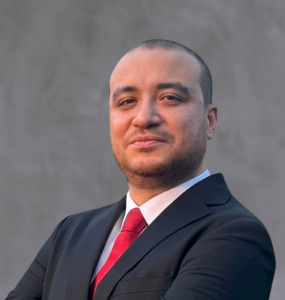
Faris Raian is Founder and Managing Partner at Leaders Advocates.
His work includes commercial debt recovery, payment claims, settlement strategy, and enforcement in the UAE.
He starts with the debtor’s legal identity, the documents, the correct procedure, and the assets that may support recovery.
That approach connects the legal claim with the creditor’s commercial objective.
Overview
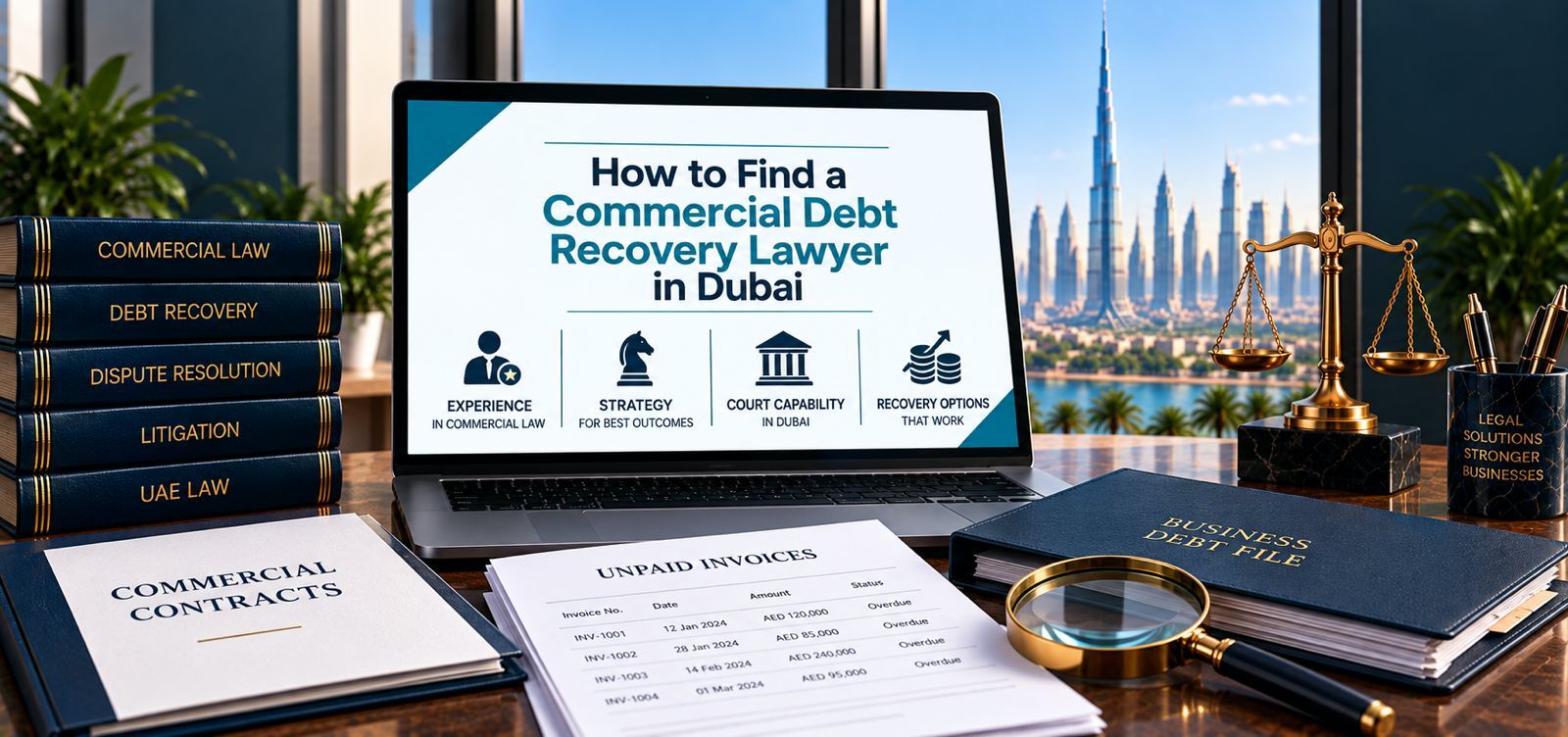
Businesses often seek a debt recovery lawyer only after an account has gone badly wrong. By then, pressure can lead them to hire the first available firm. Knowing how to find a commercial debt recovery lawyer in Dubai means knowing what to check before signing an engagement letter.
So how do you find a commercial debt recovery lawyer in Dubai?
Shortlist firms that regularly handle commercial recovery, confirm their licensing and court representation arrangements, test their approach to your specific debt, and agree clear fee terms before instructing them.
Step 1: Check Licensing
A licensed Dubai firm should provide its license and the practitioners’ registration. Federal Decree-Law No. 34 of 2022 regulates advocacy and legal consultancy. It took effect on January 2, 2023. In Dubai, the Legal Affairs Department oversees licensing. Firms practicing in the DIFC Courts or ADGM Courts also register with those courts.
Step 2: Understand Who Will Appear in Court
UAE law distinguishes advocates from legal consultants. Advocate rights of audience before the onshore courts belong to registered advocates. Legal consultants can advise, draft, negotiate and handle arbitration, but they do not plead before onshore courts. Many firms combine both. Ask who will attend hearings and who will run the strategy.
• Advocate: Appears before onshore courts, files and pleads
• Legal consultant: Advises, drafts, negotiates, handles arbitration and strategy
• DIFC or ADGM registered practitioner: Appears in those courts where registered
Step 3: Test Their Commercial Recovery Experience
Commercial recovery has its own toolkit, so experience in general litigation is not quite enough. Ask about:
• Payment orders under Articles 143 to 150 of the Civil Procedure Law.
• Cheque execution under Article 667 of the Commercial Transactions Law.
• Dubai conciliation requirements under Dubai Law No. 18 of 2021, as amended.
• Precautionary measures such as provisional attachment and travel bans.
• Execution against bank accounts, property and shares.
• Creditor claims in insolvency proceedings.
Faris Raian, Managing Partner at Leaders Advocates, recommends asking how the lawyer would collect after winning. The first meeting should address enforcement as well as the claim. He explained that commercial recovery depends on enforcement. Early discussion of assets, the correct legal entity, and protective measures shows attention to the business outcome.
Trying to Recover a Commercial Debt in Dubai?
Before instructing a lawyer, make sure the firm understands your contract, debtor, evidence, recovery route, and enforcement options. Get your debt file reviewed before spending more on the wrong procedure.
Step 4: Discuss Fees Openly
Debt recovery legal fees in the UAE vary with the claim’s size and complexity. Before instructing anyone, ask for written terms covering:
• The professional fee structure, whether fixed, staged or hourly.
• Court fees, expert fees and translation costs, which are separate.
• Any success-based element and how it is calculated. Contingency arrangements for advocates are subject to legal limits.
• What happens to fees if the matter settles early.
Step 5: Ask the Right Questions
• Which route would you use for this debt, and why?
• What are the weaknesses in my documents?
• Is mandatory conciliation likely to apply?
• How will you find out what the debtor owns?
• How often will you update me, and in what language?
Red Flags When Choosing a Lawyer
• Guarantees of recovery or fixed timeframes.
• Suggestions to file criminal complaints over ordinary non-payment.
• No written engagement terms.
• Unwillingness to explain who will appear in court.
• Advice that ignores the contract’s arbitration or jurisdiction clause.
Common Mistakes
• Hiring on price alone without checking recovery experience.
• Not confirming licensing and representation arrangements.
• Handing over original cheques or documents without a receipt.
• Leaving the fee structure vague.
• Waiting too long, letting limitation periods run.
Define the Recovery Problem First
Write a short summary before contacting firms. State the debtor, amount, currency, due date, contract, dispute, and any security.
Explain whether goods or services were delivered and whether the debtor has acknowledged the balance. Add any arbitration or jurisdiction clause.
This summary lets each lawyer assess the same facts. It also makes fee and strategy comparisons more reliable.
Test the Proposed Legal Route
Ask the lawyer to explain why the debt fits a payment order, ordinary claim, cheque execution, arbitration, or negotiated recovery route.
The answer should address the documents and any defense already raised. A faster procedure does not help when its legal conditions are absent.
Request the likely next stage after judgment. Commercial recovery succeeds only when entitlement and enforcement are both considered.
Review Enforcement Experience
Ask how the firm approaches bank accounts, receivables, vehicles, property, shares, and other assets through lawful court procedures.
Discuss provisional measures only where the facts support them. Protective relief requires evidence and should match the risk.
The lawyer should distinguish known assets from assumptions. No firm can guarantee that a debtor has reachable property.
Check Sector and Contract Experience
A construction invoice, shareholder advance, distribution debt, and professional fee may create different evidence problems. Relevant experience helps the lawyer ask better questions.
Provide the entire contract, including amendments and schedules. A dispute clause or notice term can change the route.
Ask how the lawyer would prove delivery or performance. The strongest debt file connects the amount claimed to the underlying obligation.
Compare Written Fee Proposals
Ask each shortlisted firm to separate professional fees, court fees, translation, experts, and execution costs. Confirm when each stage begins.
Define the treatment of settlement and early closure. Record any success element and the legal limits that apply.
The lowest opening quote may exclude necessary work. Compare scope as well as price.
Assess Communication and File Control
Agree who will manage the file and who will appear in court. Ask how often the client receives written updates.
Use one document index, chronology, and balance calculation. The lawyer and client should work from the same current file.
For an international business, confirm language, time-zone, power-of-attorney, and document authentication requirements early.
Check Cross Border Recovery Capability
If the debtor or assets may be abroad, ask whether the firm coordinates with counsel in that country. UAE judgment recognition depends on foreign law.
Identify where the contract was performed and where the debtor conducts business. These facts may affect service, jurisdiction, and recovery planning.
Do not assume that a Dubai judgment automatically reaches foreign assets. Build the international plan before major costs are incurred.
Ask for a Written Risk Assessment
Request a short written note after the initial document review. It should identify the proposed route, evidence gaps, defenses, deadlines, and likely enforcement issues.
The note should distinguish facts already proved from points that still need evidence. It should also explain assumptions about assets or debtor solvency.
Use the assessment to approve the next stage and budget. A staged decision gives the business more control than an open-ended instruction.
Review Conflicts and Confidentiality
Confirm that the firm has completed a conflict check before sending a full commercial file. Identify related companies and key individuals who may create a conflict.
Winning the Case Is Only Half the Job
A debt recovery strategy should consider enforcement from the beginning. Ask how bank accounts, receivables, vehicles, property, shares, or other reachable assets may be pursued through lawful court procedures.
Ask how original cheques, contracts, and sensitive financial records will be stored. Keep a receipt for every original delivered to the firm.
Use a secure method for transfers and updates. Debt files often contain bank details, signatures, identity records, and confidential pricing.
Prepare for the First Consultation
• Bring the contract, purchase orders, invoices, and delivery records.
• Bring account statements, transfer records, cheques, and guarantees.
• Bring acknowledgments, demands, settlement offers, and debtor responses.
• Identify the debtor’s exact legal name, license, and UAE address.
• State the balance and explain every credit or partial payment.
• List known assets and every urgent limitation or filing concern.
The meeting should end with a provisional route, missing-document list, fee scope, and next deadline.
Related Success Story
Leaders Advocates publishes a debt recovery matter involving successful loan recovery in Dubai. Review the Leaders Advocates Success Stories page for the available summary.
That matter involved different documents, parties, and enforcement facts. It does not guarantee recovery in another commercial claim.
Final Takeaway
Choose a commercial debt recovery lawyer by testing licensing, procedure, evidence, enforcement, fees, and communication. General reputation is not enough.
Use the same case summary and questions for every firm. The comparison should reveal who understands both the claim and the recovery objective.
Relevant Legal Services
• Debt Recovery Lawyers in Dubai – for demands, payment claims, settlement, and commercial recovery planning.
• Litigation Lawyer in Dubai – for payment orders, civil claims, protective measures, appeals, and execution.
• Corporate Lawyers in Dubai – for company identity, guarantees, commercial contracts, and business obligations.
Frequently Asked Questions
Not Sure Which Dubai Debt Lawyer to Hire?
Compare licensing, court representation, recovery experience, fees, communication, enforcement strategy, and cross-border capability before signing an engagement letter.