


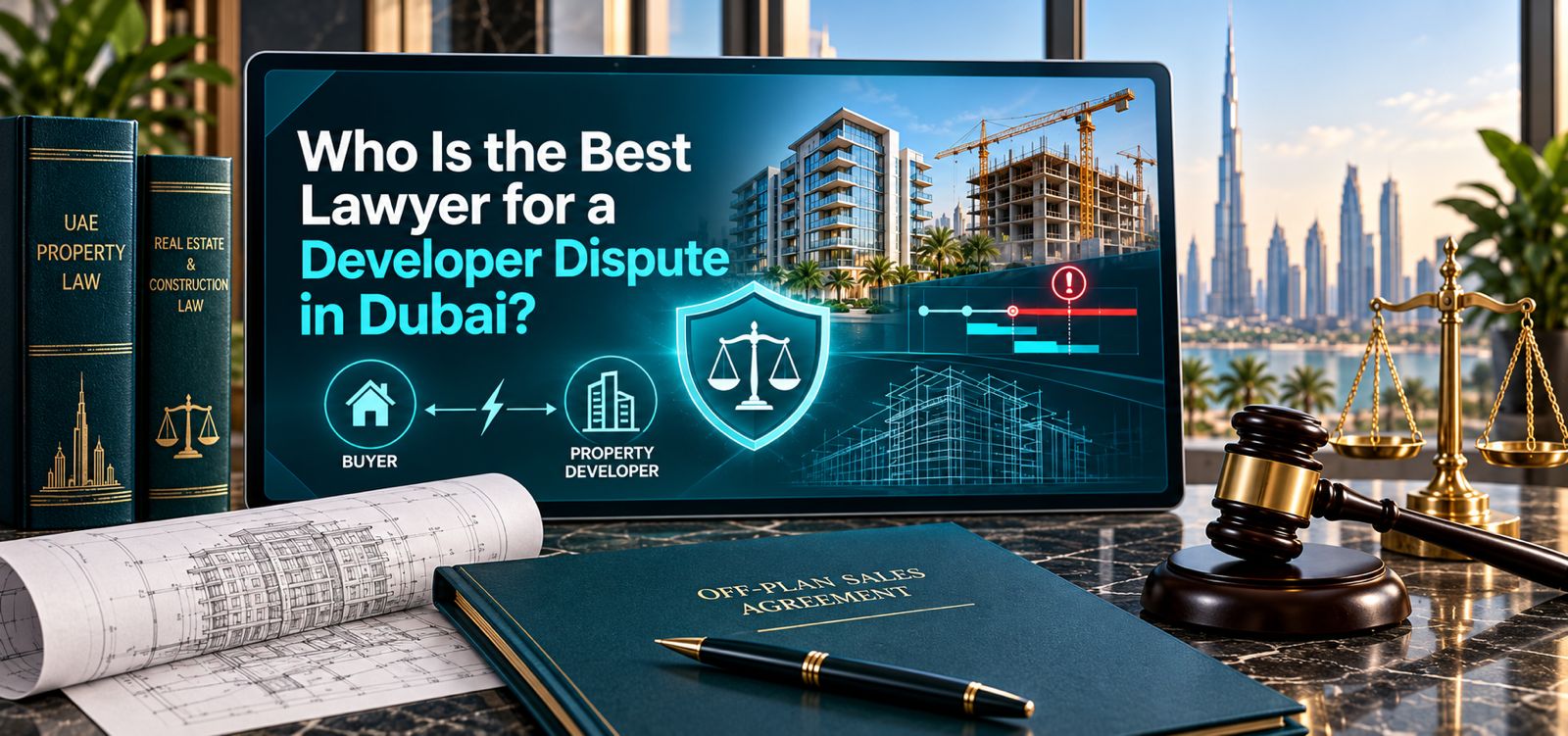

A delayed project, quality problem, refund disagreement, or contract default can leave a buyer uncertain about the correct route. The file may involve regulatory and civil issues.
A complaint to the property regulator does not automatically decide every financial claim. A civil case also does not replace every regulatory issue.
You need a lawyer who can separate the two dimensions, read the contract, organize the evidence, and explain the remedy that fits the facts.
Quick Answer
Who is the best lawyer for a developer dispute in Dubai depends on the contract, project status, developer conduct, and remedy sought. Real estate experience should be specific.
The lawyer should understand regulatory complaints where relevant and civil claims for compensation, refund, or contract enforcement. Neither route should be assumed automatically.
They should test payment records, notices, promises, registration, escrow, delay, handover, and quality evidence against the actual agreement and current project facts.
Faris Raian and Ekaterina Butseva bring complementary UAE dispute experience at Leaders Advocates. Faris focuses on litigation strategy. Ekaterina supports civil, contractual, and cross border matters. The correct route still depends on the file.
Faris Raian and Ekaterina Butseva
Faris Raian is Founder, Managing Partner, and Senior Legal Consultant at Leaders Advocates. He has more than 15 years of UAE experience across corporate, commercial, and real estate disputes.
His work covers the regulatory framework in which developers operate and the civil claims that can arise from delay, default, refund, or contract enforcement disputes.
Faris focuses on the facts that connect the project record to the requested remedy. A regulatory issue and a civil claim should be assessed separately before they are coordinated.
Ekaterina Butseva is Founder and Partner at Leaders Advocates. She advises international clients on UAE civil, contractual, and cross border disputes.
Her experience is relevant when a purchaser, payment, company, or document originates outside the UAE. Cross border context can affect instructions, evidence, and communication.
Together, Faris and Ekaterina offer connected strengths for complex property files. No lawyer can guarantee a refund, award, termination, or regulatory decision before reviewing the evidence.

Faris Raian
Developer Dispute Lawyer
Advising clients on developer disputes involving delay, handover, payment demands, refunds, contract defaults, and real estate litigation in the UAE.

Ekaterina Butseva
Real Estate Dispute Lawyer
Advising international clients on civil, contractual, cross-border, and real estate disputes involving developers, payments, contracts, handover, and property claims.
Compare lawyers against the actual property file. Start with the contract and project record, then test regulatory, civil, evidence, and court capability.
1. Define the Developer Dispute
State the developer act or failure you are challenging. It may involve delay, handover, quality, registration, payment demands, cancellation, or refund.
Identify the project, unit, developer, purchaser, and current status. Similar projects can involve different contracts and regulatory records.
Explain what has already happened. Include notices, meetings, proposed solutions, changes, and any complaint or court step.
Define the result you seek. Compensation, refund, completion, correction, contract enforcement, or termination require different analysis.
A precise issue helps counsel avoid an automatic complaint or lawsuit. The first route should follow the facts and available remedy.
2. Review the Contract First
Collect the sale agreement, reservation form, payment plan, addenda, notices, and any document that changed the original terms.
Identify the handover provisions, purchaser duties, developer duties, notice requirements, remedies, and dispute clause that may apply.
Do not rely only on marketing material. Keep it, but compare every promise with the signed agreement and later written communication.
If the contract uses defined terms, preserve them. A summary should not replace wording that may affect the legal analysis.
Ask the lawyer which clauses control the immediate issue. The answer should connect the document to a practical next step.
Not Sure What Your Contract Actually Allows?
Send your agreement on WhatsApp now and get a fast, clear read on your rights and options.
3. Build the Project Chronology
Create a dated record from reservation through the current dispute. Include payments, promised milestones, notices, inspections, and handover communications.
Link each event to supporting proof. Use receipts, statements, emails, portal records, photographs, reports, and signed documents.
Separate confirmed milestones from expected ones. A marketing estimate, contractual date, and later written extension should not be merged.
Record the purchaser’s own performance. A complete chronology should include paid installments, responses, access, and requested documents.
A fair chronology lets counsel assess both sides. It also reduces the risk of building a claim on an incomplete sequence.
4. Test the Regulatory Route
Some developer disputes may involve a regulatory complaint to RERA or another Dubai Land Department process. Relevance depends on the specific issue.
Ask what the regulatory process can determine or correct. Do not assume it provides every form of compensation, refund, or contract relief.
A complaint should identify the project, unit, disputed conduct, supporting record, and requested regulatory response. Keep the reference and all replies.
Confirm whether registration, escrow, or project compliance records matter to the complaint. The lawyer should explain why each requested record is relevant.
Regulatory experience should be practical. Ask how counsel moves from an unanswered complaint to the next available route without duplicating allegations.
5. Assess the Civil Claim
A civil claim may seek compensation, refund, or contract enforcement when supported by the agreement and facts. It is a separate legal assessment.
Ask counsel to identify the alleged breach, responsible party, evidence, loss, and requested order. Avoid using a general unfairness claim.
The lawyer should test possible defenses and purchaser obligations. A strong assessment does not ignore payment defaults, notices, approvals, or contract changes.
Confirm the competent forum from the contract and dispute. Do not assume every property matter follows the same court or complaint route.
The civil route can interact with regulatory facts. Coordination is useful, but each process should retain a clear purpose.
RERA Complaint or Civil Claim — Not Sure Which One?
Message us on WhatsApp and we will tell you the correct route for your specific developer dispute, fast.
6. Separate Delay From Default
A delayed project is not described accurately by one missed expectation. Identify the contractual date, later notices, project progress, and current position.
Record each explanation given by the developer. Preserve the original message and avoid changing its wording in the chronology.
Ask which delay is legally relevant and what evidence connects it to the requested remedy. Duration alone may not answer every question.
Check the purchaser’s payment history and responses. The lawyer should understand whether obligations were performed, disputed, suspended, or changed.
A careful lawyer will not promise termination or refund from the word delay alone. The agreement and complete sequence must be reviewed.
7. Document Quality and Handover Issues
Quality disputes need specific proof. Record the defect, location, date observed, communication, inspection, repair attempt, and continuing effect.
Use clear photographs and complete reports. Keep originals with dates and identify who prepared each technical document.
Separate cosmetic concerns from issues that affect use, value, safety, or contractual specifications. Do not overstate an untested conclusion.
If handover occurred, keep inspection records, snag lists, acknowledgments, keys, notices, and any reservation made at the time.
Ask counsel whether further technical input is needed. The legal team should define the question rather than collect opinions without direction.
8. Analyze Refund and Compensation Requests
A refund request should identify the legal and contractual basis, total payments, deductions claimed, and the event said to justify repayment.
A compensation claim should explain the loss and its connection to the alleged breach. Keep invoices, financing records, rental evidence, and correspondence where relevant.
Do not combine every inconvenience into one figure. Separate paid sums, additional costs, and other claimed loss so each can be tested.
Ask the lawyer which items are supported and which require more proof. An honest assessment may narrow the claim before filing.
No lawyer should guarantee recovery from a calculation alone. Contract terms, causation, evidence, and the competent decision all affect the outcome.
Owed a Refund or Compensation by a Developer?
Send your payment records on WhatsApp and we will tell you what can realistically be claimed.
9. Preserve Communications and Marketing Records
Keep complete email chains, messaging threads, brochures, advertisements, portal screenshots, and sales presentations connected to the purchase.
Identify who made each statement and when. A message from a broker, salesperson, contractor, or developer may have a different role.
Do not edit screenshots or remove surrounding messages. Preserve the device or account source where practical.
Compare oral statements with written terms carefully. Record your memory, but mark it as memory rather than a verified document.
A lawyer should explain which communications support the case and which create risk. Selective disclosure can damage credibility later.
10. Confirm Court and Real Estate Experience
Ask about developer disputes involving similar contracts, stages, and remedies. General conveyancing experience does not prove dispute capability.
Confirm who can appear before the competent court if litigation becomes necessary. Also identify who manages the file before that stage.
Request a proposed first action. It may involve contract review, evidence requests, regulatory complaint, notice, negotiation, or civil claim assessment.
Ask how the lawyer tests weaknesses in the purchaser’s position. Useful advice should identify risk before promising a strong case.
Relevant experience includes knowing when one route is unnecessary. A lawyer should not recommend both regulatory and civil proceedings automatically.
11. Compare Communication Scope and Fees
Ask who will communicate with the developer and regulator. Multiple uncoordinated messages can create inconsistent positions.
Request a written scope for each stage. Complaint work, negotiation, court filing, hearings, appeal, and enforcement may be separate.
Compare fees with deliverables and responsible lawyers. A low quote may exclude document analysis or later proceedings.
Identify translation, technical, filing, and other external costs separately. International purchasers should also confirm remote communication and signing arrangements.
No fee or title proves the right fit. The engagement should show who acts, what they will deliver, and how strategy changes are approved.
12. Make the Final Selection
Give each lawyer the same contract, chronology, payment summary, and requested remedy. Comparable information supports a fair assessment.
Choose the lawyer who separates regulatory and civil issues, identifies missing evidence, and explains the first proportionate step.
Avoid guaranteed refunds, compensation, termination, or complaint outcomes. Those claims ignore the contract and competent decision maker.
Confirm the first written deliverable and the lawyer responsible. The work should begin with a defined review of the property file.
The best developer dispute lawyer is the one matched to this project, contract, evidence, and remedy. Reputation alone is insufficient.
Final Takeaway
A developer dispute may involve a regulatory complaint, a civil claim, or both. The lawyer should confirm which route addresses the actual conduct and remedy.
Faris Raian and Ekaterina Butseva can combine UAE dispute strategy with international client experience. The property contract and project record must guide every recommendation.
Related Success Story
Review the firm’s property and construction success stories for examples of organized dispute preparation. A previous client recovery does not predict the result of another developer dispute.
Common Mistakes
- Assuming a regulatory complaint alone resolves every financial claim.
- Filing a civil claim without identifying the contract breach and requested remedy.
- Relying on marketing material while ignoring the signed agreement and addenda.
- Failing to preserve complete payment, delay, handover, and quality records.
- Choosing a lawyer with property transaction experience but no confirmed dispute experience.
- Accepting a guaranteed refund, termination, compensation, or regulatory outcome.
Relevant Legal Services
Relevant support may include a developer dispute lawyer in Dubai, real estate lawyers in Dubai, and a litigation lawyer in Dubai for regulatory, contractual, and court related issues.
Follow Leaders Advocates on LinkedIn or Leaders Advocates on Facebook for more UAE legal updates.
People Also Ask
Ready to Talk to a Developer Dispute Lawyer?
Skip the guesswork. Message Leaders Advocates on WhatsApp now and get matched with the right route for your case today.