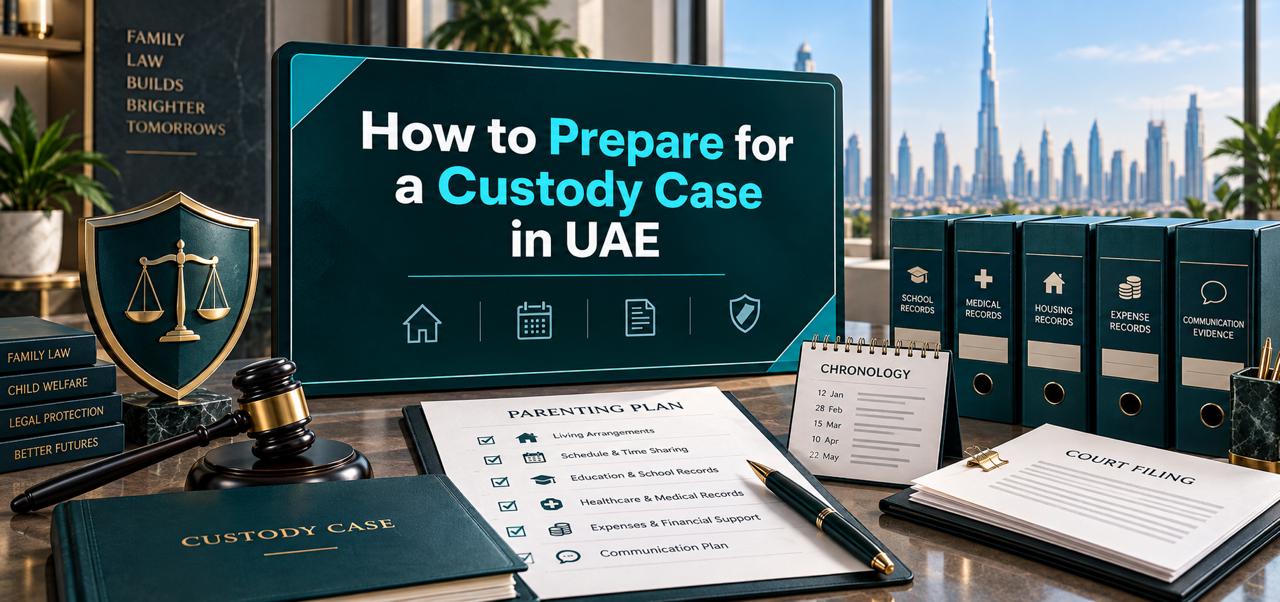

A custody case can feel personal, urgent, and difficult to organize. Parents often collect accusations before they collect useful evidence.
Courts need a clear picture of the child’s daily life. They also need a realistic plan for care, school, health, housing, and contact.
Preparation should start before filing. The first task is identifying the governing framework and the exact order you want.
Quick Answer
Start by confirming which UAE personal status framework applies. The answer can affect custody, guardianship, procedure, and the requests available in your case.
Build a dated file showing your role in the child’s daily care. Include school, medical, housing, communication, and expense records. Prepare a specific parenting proposal explaining where the child will live, study, receive care, and maintain a safe relationship with both parents.
Keep every statement factual and child-focused. Do not exaggerate concerns, hide weak facts, or create evidence unlawfully. Ask a family lawyer to review the plan before filing, especially where records, translations, urgent deadlines, or travel risks may need attention.
Build the case around the child, not the conflict. Use the steps below to turn scattered information into a clear and supportable file.
1. Start With the Child’s Real Situation
Write a one-page summary of the child’s current life. Keep it practical and neutral.
Identify the home, school, health needs, daily routine, and main caregivers. Note any special educational or medical needs.
Then explain what has changed. A separation, move, new job, missed contact, or safety concern may affect the proposed arrangement.
Avoid beginning with criticism of the other parent. Start with the child’s needs and the evidence supporting them.
This approach gives the lawyer a usable starting point. It also keeps later filings focused on welfare rather than anger.
2. Confirm Which Legal Framework Applies
UAE family cases do not all follow one identical framework. Nationality, religion, residence, jurisdiction, and statutory scope may matter.
Federal Decree-Law No. 41 of 2024 governs personal status matters within its scope. Federal Decree-Law No. 41 of 2022 provides a civil framework for non-Muslims within its scope.
Do not select a framework from an online summary. Ask counsel to confirm the position using your marriage, residence, and family details.
Custody and guardianship are also different concepts. Daily care does not automatically answer every question about legal decision-making or travel.
Clarifying the framework early prevents wasted evidence. It also helps define the correct court, procedure, and requested orders.
Worried About Your Child Custody Case?
The right strategy starts with the applicable UAE family-law framework, strong evidence, and a realistic parenting plan. Get your case reviewed before filing.
3. Define the Exact Outcome You Want
The word custody is too broad for a working case plan. Break the requested outcome into specific decisions.
State the proposed residence, weekly schedule, holidays, calls, travel, school decisions, and medical decisions. Include handover arrangements where needed.
Explain why each request is workable for this child. Connect it to routine, distance, age, health, and existing relationships.
Prepare a reasonable fallback option. A practical alternative may support negotiation without abandoning the child’s key needs.
- Primary residence and ordinary weekly schedule.
- Visitation, calls, holidays, and special occasions.
- School, health care, activities, and transport.
- Passport, travel, relocation, and consent questions.
- Handover location, timing, and communication method.
4. Create a Master Chronology
A chronology helps the court and lawyer understand events quickly. It also exposes gaps before the case begins.
Use one line for each material event. Add the date, people involved, document, and effect on the child.
Separate daily history from serious incidents. Routine care should not disappear beneath a long list of arguments.
Link every important event to supporting material. If no document exists, identify the possible witness or official record.
Include facts that do not help your position. A lawyer needs the full record to assess risk and prepare an honest response.
5. Prove Daily Care With Ordinary Records
Custody preparation often depends on ordinary records. Dramatic evidence is not the only useful evidence.
School emails can show attendance at meetings. Medical records can show appointment involvement. Receipts can show routine support.
Calendar entries may explain pickups, activities, and overnight care. Messages may show planning and cooperation between parents.
Keep complete threads and original files. Cropped screenshots can remove dates, names, and important context.
Organize the material by topic. Use separate folders for school, health, expenses, contact, housing, and incidents.
6. Organize School and Medical Evidence
Collect recent school reports, attendance records, and teacher communications. Include any support plan or learning assessment.
Record who attends meetings and receives school notices. Note how each parent supports homework, transport, and activities.
For health matters, collect appointment records, prescriptions, treatment plans, and insurance information. Do not disclose unrelated medical details without a purpose.
If the child has a continuing condition, explain the routine clearly. Identify medication, specialists, appointments, and emergency steps.
The goal is continuity and safety. Avoid using school or health records as tools in the parental conflict.
7. Prepare a Stable Housing and Routine Plan
Describe the proposed home without exaggeration. Include location, space, transport, school distance, and available support.
A larger home is not automatically a stronger plan. Stability, supervision, access, and the child’s routine may carry more practical weight.
Explain working hours and childcare arrangements. Identify who helps when the child is sick or school is closed.
If a move is proposed, address travel time and continuity. Show how the other parent’s relationship can be maintained.
Do not make a major relocation decision casually. Travel and relocation issues may require separate legal analysis or consent.
8. Prepare Financial Information Carefully
Custody and financial support are related but distinct questions. Prepare both without using money as leverage over contact.
List the child’s regular expenses. Include housing, school, health, transport, activities, clothing, and special needs.
Support each material amount with a document. Use bank statements, invoices, receipts, school fees, and insurance records.
Separate current costs from requested future costs. Explain any unusual item and avoid inflated estimates.
A clear budget helps counsel identify support questions. It also prevents financial issues from overwhelming the custody plan.
9. Show Safe and Practical Communication
Court proceedings do not end the need for parental communication. Your proposed system should reduce repeated conflict.
Choose one reliable channel for routine updates. Keep messages short, factual, and limited to the child’s needs.
Answer reasonable school and health questions. Preserve urgent information and avoid using the child as a messenger.
Do not send threats, insults, or repeated late-night messages. Assume every written exchange may later be reviewed.
Where direct communication is unsafe, discuss structured alternatives with counsel. Safety planning should be specific to the circumstances.
10. Document Welfare Concerns Responsibly
A genuine welfare concern needs detail. Record dates, conduct, witnesses, official reports, and the effect on the child.
Distinguish firsthand facts from suspicion. Mark information learned from another person and identify the source.
Do not coach the child or conduct repeated informal interviews. Seek appropriate professional help when a serious concern arises.
If immediate safety is at risk, use the relevant emergency or protective route. Do not wait to build a perfect civil file.
False or exaggerated claims can damage credibility. Strong preparation uses accurate language and proportionate requests.
11. Review Travel and International Issues
International families may face passport, travel, residence, or foreign-order questions. Flag these issues at the first meeting.
Collect passport copies, visas, travel history, written consents, and any existing orders. Note current document holders.
Do not assume a foreign custody order operates automatically in the UAE. Recognition and enforcement may require additional steps.
Foreign documents may need legalization, attestation, or certified Arabic translation. Confirm the requirement before paying for a large bundle.
A relocation request needs a detailed child-focused plan. Address education, health care, costs, contact, and enforcement concerns.
12. Prepare for Conciliation, Negotiation, or Court
The correct path depends on the case and applicable procedure. Some matters may involve family guidance or conciliation before court litigation.
Prepare a settlement position before the first session. Identify the points that can move and the points that protect essential needs.
Any parenting agreement should be specific. Vague promises about reasonable contact can create new conflict later.
If settlement fails, the same organized file supports pleadings and hearings. The chronology and evidence index become especially valuable.
Ask counsel what happens after an order. Compliance, modification, appeal, and enforcement may require separate action.
13. Protect Evidence and Privacy
Preserve original files and back them up securely. Keep a clean working copy for counsel.
Do not delete difficult messages. Deletion can remove useful context and create avoidable questions.
Do not obtain recordings, accounts, or location data unlawfully. Evidence collection must respect UAE law and privacy rules.
Avoid discussing the case on social media. Public posts can increase conflict and may become part of the record.
Share sensitive child information only with people who need it. Use protected folders and controlled access.
14. Use a Final Custody Preparation Checklist
Review the file from the child’s perspective. Every important request should have a practical reason and supporting material.
Ask a child custody lawyer to identify missing proof. Fix those gaps before filing where time and safety allow.
Prepare a one-page case map. It should show the framework, requested orders, strongest evidence, main risk, and next deadline.
- Applicable framework and court confirmed.
- Marriage and child identity documents collected.
- Chronology completed and linked to evidence.
- Parenting plan covers routine, contact, and decisions.
- School, medical, housing, and expense records organized.
- Welfare concerns stated factually and proportionately.
- Foreign documents and travel issues flagged.
- Settlement position and fallback plan prepared.
Is Your Custody Evidence Strong Enough?
School records, medical care, housing, expenses, communication, and your parenting history can all matter. Have your evidence and proposed parenting arrangement reviewed before going to court.
Final Takeaway
How to prepare for a custody case in UAE starts with clarity. Confirm the framework, define the request, and organize reliable evidence.
Keep the plan centered on the child’s welfare. A specific and honest file is more useful than a large collection of accusations.
Related Success Story
The firm’s Successful Child Custody and Divorce Case in Dubai shows how focused preparation can support a family-law strategy. Every case remains dependent on its own facts and evidence.
Common Mistakes
- Building the case around anger instead of the child’s needs.
- Using cropped messages without dates or surrounding context.
- Requesting custody without a detailed parenting plan.
- Ignoring guardianship, travel, or foreign-order questions.
- Collecting evidence through unlawful access or recording.
- Hiding weak facts from the lawyer before filing.
Relevant Legal Services
A Child Custody Lawyer in Dubai can build the evidence and parenting strategy. A Family Lawyer in Dubai can assess the wider personal status framework. A Family Mediation Lawyer in Dubai can support structured settlement discussions where appropriate.
People Also Ask
Ready to Protect Your Parenting Rights?
Do not wait until missing documents, travel concerns, or weak evidence complicate your case. Leaders Advocates can review your custody position, parenting plan, records, and next legal steps.