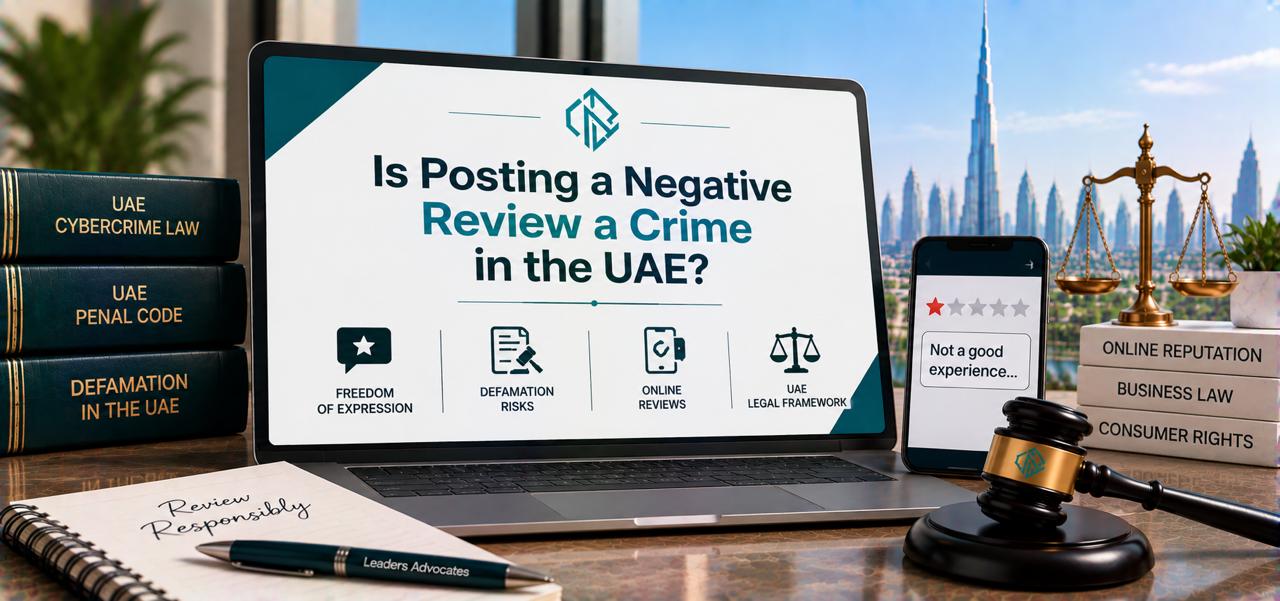

A customer may have a real complaint and still create legal risk through the wording of an online review. A business may also overreact and assume every critical comment is criminal.
The legal question is not whether the review is positive or negative. The content, language, attribution, platform, evidence, and manner of publication all matter.
Deleting the post may not erase screenshots. Arguing publicly can create more material. The safest response begins with preserving the full record and reviewing the exact words.
Quick Answer
A negative review is not automatically a crime in the UAE. Risk rises when online wording insults a person or attributes conduct or qualities that may expose someone to punishment or public contempt. Article 43 of Federal Decree-Law No. 34 of 2021 addresses online insult and damaging attribution. It provides detention, a fine from AED 250,000 to AED 500,000, or both. Truth alone should not be treated as a universal shield for insulting language. A factual complaint is safer when it is specific, supportable, measured, and free from personal abuse. Preserve the complete post, account details, dates, replies, receipts, and complaint history. Obtain advice before editing, reposting, threatening, or responding publicly.
Review the exact publication before reacting. Separate a supportable consumer account from insults, accusations, threats, private-data disclosure, or claims that the evidence cannot prove.
Start With the Exact Words
Copy the full review exactly as published. Include the title, rating, images, edits, date, account name, replies, and the platform URL.
Do not summarize it as simply negative or defamatory. Legal analysis depends on the wording and context. One phrase can carry a different risk from the rest of the post.
Separate opinion from factual attribution. A description of personal dissatisfaction is different from asserting fraud, theft, criminality, professional misconduct, or another serious fact.
Also identify the target. The review may name an individual, employee, professional, company, product, or public official. That distinction can affect the analysis.
What Article 43 Covers
Article 43 of the Cybercrime Law addresses using an information network, electronic information system, or information technology means to insult another person. It also addresses certain damaging attributions.
The second branch concerns attributing an incident or quality that could expose the person to punishment or public contempt. The exact statement must be reviewed against that language.
The stated penalty is detention, a fine from AED 250,000 to AED 500,000, or both. The law also includes an aggravated position when the conduct targets a public official in connection with duties.
Do not apply the article through a headline alone. The platform, target, wording, meaning, evidence, and surrounding communications all require review.
Why Truth Alone Does Not End the Analysis
A reviewer may believe every statement is accurate. That belief does not automatically make insulting or demeaning language safe.
A court can examine the publication itself. It may separate a supportable factual account from personal abuse, exaggeration, or an accusation that goes beyond the available proof.
A receipt can prove a purchase. It may not prove every conclusion about motive, honesty, competence, or criminal conduct.
Use careful language. State what happened, when it happened, what was paid, what response was received, and what remains unresolved. Avoid labeling a person.
A Reported Negative-Review Case
The original article refers to a reported UAE case involving an Instagram review about a hospital. The poster believed the criticism reflected the experience, yet the wording led to a conviction.
The practical point is narrow. A genuine complaint does not give unlimited freedom to use derogatory language online.
Do not treat one report as a rule that every criticism is criminal. The exact language and proof in each publication still matter.
If relying on a reported case, obtain the judgment or a reliable case record where possible. Media summaries may omit procedural details or the complete wording.
Facing a Legal Complaint Over an Online Review?
Leaders Advocates can review the exact wording, platform records, supporting evidence, and surrounding communications to assess potential exposure under UAE cybercrime law and identify the appropriate response.
Write a Lower-Risk Factual Review
Begin with the transaction. State the service date, item, amount, promised result, and documented follow-up.
Describe what you personally observed. Avoid repeating rumors or another customer’s accusation. Do not guess about intent.
Use neutral verbs. Write that a request was unanswered, an item was not delivered, or a charge appeared on the invoice. Avoid calling someone a thief or fraudster without a legal basis.
End with the current status. If the business solved the issue, update the review. A fair update improves accuracy and context.
- Use dates, amounts, orders, and communications you can support.
- Separate personal experience from conclusions about other people.
- Avoid insults, threats, mockery, and demeaning descriptions.
- Do not publish identity, health, contact, or financial data.
- Keep the complete source documents before posting.
Images, Screenshots, and Personal Data
A review may include more than text. Photos, voice notes, invoices, names, telephone numbers, faces, and private messages can raise separate issues.
Redact personal data that is not needed to explain the complaint. Do not publish identification documents, bank details, medical information, private contact data, or a child’s image.
A private exchange should not be posted merely because it supports the review. Obtain advice about consent, privacy, and lawful use before publishing it.
Preserve the unedited original for counsel or authorities. A public copy can be redacted while the evidentiary original remains intact.
What a Reviewer Should Do After a Complaint
Do not continue the argument online. Preserve the complaint, review, edit history, replies, direct messages, and any notice received.
Avoid deleting evidence or replacing the post repeatedly. A platform may retain earlier versions, and another user may already have screenshots.
Prepare a private chronology. State why the review was posted, what evidence supported each sentence, and what happened after publication.
A lawyer can assess whether correction, removal, clarification, response, settlement, or formal defense is appropriate. The correct step depends on the file.
What a Business Should Do
Preserve the review before requesting removal. Capture the complete page, URL, date, account, rating, replies, and any related messages.
Compare each factual statement with the business record. Gather the contract, invoice, service notes, recordings lawfully held, refund record, and complaint history.
Do not threaten the reviewer publicly. A measured response can state that the matter is being reviewed and invite private contact.
Distinguish criticism from unlawful content. A poor rating or harsh opinion may require customer-service action rather than criminal escalation.
Preserve Digital Evidence Properly
Save the original digital material without cropping. Keep the URL, username, timestamp, platform, device copy, and surrounding thread.
Screenshots are useful, but they may not prove who controlled the account. Preserve account notices, login alerts, platform exports, and correspondence where relevant.
Do not access another person’s account or device without authority. Evidence may be relevant while the collection method creates a separate problem.
Create an evidence index. Give every item a date, source, description, and the statement it supports or contradicts.
Respond Through the Right Channel
The correct channel may be a platform report, direct correction request, formal notice, police complaint, prosecution response, civil claim, or settlement discussion. Not every case needs every route.
Choose the route based on the objective. A business may want removal and correction. A reviewer may need to protect against a complaint or clarify the factual record.
Keep settlement discussions private and specific. Address removal, correction, response wording, evidence preservation, costs, and any release terms.
Do not admit criminal intent or make new accusations while trying to resolve the dispute. Ask counsel to review any formal response.
Use a Publication Checklist
Pause before posting. Read every sentence as if it will appear in a police file or court bundle.
Remove personal insults and unsupported labels. Replace them with dates, actions, documents, and the unresolved outcome.
Check whether a private person, employee, child, patient, or official is identifiable. Redact unnecessary information.
Save the supporting file. If the post cannot be supported without speculation, rewrite it or use a private complaint channel.
- Can I prove every factual statement with a record?
- Did I describe conduct without insulting the person?
- Did I remove private or unnecessary personal information?
- Did I avoid claims about intent, crime, or dishonesty?
- Would a direct complaint resolve the issue more safely?
Review the Draft Before Publication
Leave the draft for a short cooling-off period. Emotional language is easier to identify after the immediate dispute has passed.
Read the review beside the supporting documents. Remove any statement that relies on memory when a receipt, message, or service record gives a more precise account.
Ask whether naming an employee or individual is necessary. A complaint about the transaction may be explained without exposing a person who cannot control the wider business response.
Keep a private copy of the final draft and its supporting file. If the facts later change, correct the publication promptly and preserve the earlier version for the legal record.
Final Takeaway
The answer to is posting negative review a crime in UAE depends on the exact publication. Negative feedback is not automatically criminal, but online insults and damaging attributions can create serious exposure.
Worried Your Review Could Create Article 43 Exposure?
A genuine customer complaint does not automatically make every phrase legally safe. Leaders Advocates can assess factual statements, accusations, insulting language, screenshots, and supporting records before you edit, remove, repost, or formally respond.
Use factual, supportable, measured wording. Preserve the full record and obtain advice before escalating, deleting, reposting, or responding publicly.
Related Success Story
The firm’s published Cybercrime Case in Dubai Criminal Defense Success Story illustrates how digital records and careful procedure can shape a cybercrime defense. It does not predict the result of a review dispute.
Common Mistakes
- Assuming a true complaint makes insulting language automatically safe.
- Calling a person a criminal when the records prove only a dispute.
- Posting private messages or personal data without legal review.
- Deleting the review or device material after a complaint begins.
- A business threatening every critical reviewer with prosecution.
- Arguing publicly and creating more screenshots and statements.
Relevant Legal Services
A Cybercrime Lawyer in Dubai can assess online wording, platform evidence, and Article 43 issues.
A Criminal Defense Lawyer in Dubai can advise on complaints, investigation, statements, and defense.
A Civil Lawyer in Dubai can review connected reputation, compensation, and publication disputes.
People Also Ask
Has an Online Review Damaged Your Business or Reputation?
Leaders Advocates can help preserve the complete digital record, distinguish legitimate criticism from potentially unlawful content, and assess removal, correction, complaint, settlement, or other available legal options.