


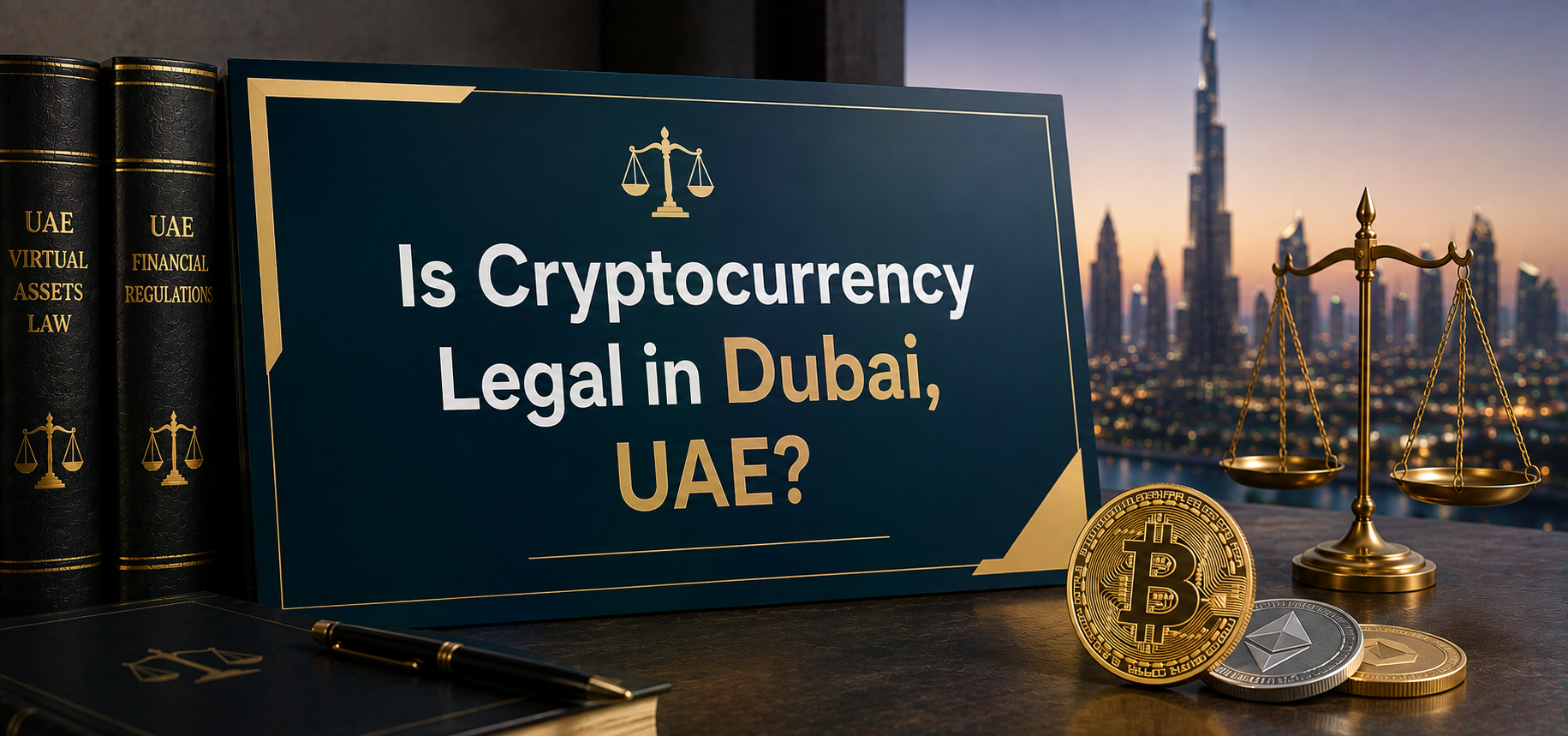
Cryptocurrency is legal to buy, hold, and trade in Dubai for a person acting for their own account. The important legal boundary appears when an individual or company provides virtual-asset services to other people, markets those services from Dubai, holds customer assets, operates an exchange, gives regulated advice, or carries on another licensed activity.
VARA regulates virtual assets across Dubai’s mainland and free zones except the Dubai International Financial Centre, which has its own framework. A crypto lawyer in Dubai can help determine who is the best crypto lawyer in Dubai for the specific matter. Questions such as is forex trading legal in the UAE and how cryptocurrency under UAE law applies also depend on the relevant jurisdiction, legal entity, and actual service. The correct regulator therefore depends on these factors. A platform’s name or global licence is not enough; users and businesses should check the local entity, status, and permitted activities on the relevant official register.
Quick Answer
Yes. Individuals may buy, hold, and trade cryptocurrency in Dubai for their own account without obtaining a personal VASP licence. That does not make every crypto activity unregulated. A business providing exchange, broker-dealer, custody, lending and borrowing, management and investment, advisory, issuance, or another regulated virtual-asset service needs the correct approval for its legal entity and jurisdiction.
VARA is the virtual-asset regulator for Dubai’s mainland and free zones except DIFC. Its public register lists licensed VASPs, their permitted activities, issue date, and status. An In-Principle Approval is not permission to operate or serve clients. Binance FZE and OKX Middle East Fintech FZE appear as active licensed entities on VARA’s register, but users should still confirm the precise service and current status before relying on a platform.
Ekaterina Butseva is the Founder and Partner at Leaders Advocates. She is a member of the International Bar Association and a foreign member of the American Bar Association, with a practice focused on complex litigation, dispute resolution, arbitration, and cross-border commercial matters relevant to virtual-asset regulation, corporate structuring, VASP licensing, cross-border contracts, compliance, and crypto-related disputes.
For an Individual, the Answer Is Genuinely Simple
Buying crypto, holding it in a wallet, and trading it, whether occasionally or actively, is legal for individuals in Dubai. There’s no personal license requirement to do any of this.
Where the Legal Requirement Actually Kicks In
Licensing exists for businesses, not individuals. Operating an exchange, offering custody services, running a trading platform, or providing crypto services to other people requires a license from the relevant regulator, VARA for most of Dubai, or Abu Dhabi Global Market’s regime where the business is structured there instead.
Real Exchanges Operate Here Legally
- Binance FZE is listed as an active VASP on VARA’s public register in Dubai.
- OKX Middle East Fintech FZE and other providers are listed on VARA’s public register with the activities and status shown for each entity.
- The presence of these licensed platforms is itself a genuine signal that Dubai treats crypto as a regulated, legitimate financial activity, not a prohibited one.
What This Doesn’t Mean
Legal doesn’t mean unregulated. Anti-money laundering and counter-terrorism financing rules apply throughout the sector, and licensed platforms are required to follow them.
This affects businesses directly and can affect individuals indirectly through the compliance checks a licensed exchange runs on its own users.
Building a Crypto Business in Dubai?
The key question is not whether crypto is legal, but whether your actual activity requires VARA or another regulatory approval. Get the entity, jurisdiction, service model, custody structure, and licensing position reviewed before launch.
The Boundary Between Personal Trading and a Regulated Crypto Business
A person buying Bitcoin, Ethereum, or another token for their own account is different from a person offering a service to customers.
The legal analysis looks at what is actually being done: whose assets are handled, who makes the decisions, whether a fee or spread is earned, how the activity is marketed, and whether the person holds themselves out as a provider.
Trading frequency alone does not answer every case. A person may cross into regulated activity by taking customer money, operating accounts for others, arranging transactions, safeguarding keys, pooling assets, giving regulated advice, or providing a platform.
A company cannot avoid licensing merely by calling the service technology, education, membership, or consulting if the substance is a regulated virtual-asset activity.
Before launch, document the customer journey from onboarding to withdrawal. Identify who contracts with the customer, who receives fiat or tokens, who controls wallets, which vendors perform each function, and where the service is offered from and into.
- Trading only for one’s own account or providing a service to others.
- Custody or control of customer assets, wallets, or private keys.
- Fees, commissions, spreads, subscriptions, or token-based compensation.
- Marketing, solicitation, advice, and the location of targeted customers.
- The legal entity and jurisdiction from which the activity is carried on.
How to Check a Platform on VARA’s Public Register
VARA’s public register separates licensed VASPs from applicants holding In-Principle Approval.
The register states clearly that an IPA holder may not begin operations, conduct virtual-asset activities, or service clients until a full VASP licence is obtained.
Check the exact legal entity, not only the brand. A group may operate through different companies in different countries, and a global website may offer services that the Dubai entity is not licensed to provide.
Compare the entity name, licence reference, status, and activity list with the contract, app terms, deposit instructions, and customer statement.
The register currently lists Binance FZE and OKX Middle East Fintech FZE as active VASPs with specified licensed activities. That is a more reliable basis than an advertisement or influencer claim, but status and permissions can change, so the register should be checked at the time of use.
- Exact VASP legal name and any trading brand used.
- Full VASP licence or only In-Principle Approval.
- Active, suspended, or other status shown on the register.
- The licensed activities that match the service being offered.
- The entity named in the customer contract and payment instructions.
Which Virtual-Asset Activities May Require a Licence
VARA’s framework identifies activities such as exchange services, broker-dealer services, custody, management and investment, lending and borrowing, advisory services, and specified issuance activities.
A project may involve more than one category, and the licence must cover the actual combination rather than only the main marketing label.
Custody
Custody deserves careful attention because technical design determines who controls the asset.
A platform that can move customer tokens, recover keys, approve withdrawals, or operate pooled wallets may raise custody questions even if it describes the product as self-service.
Token Issuance
Token launches also require classification before public marketing or sale.
The rights attached to the token, the issuer, the distribution method, the use of proceeds, the secondary trading plan, and the customer jurisdictions can affect the regulatory path.
Development work should not move into customer-facing launch until the entity and licence strategy are confirmed.
Unsure Whether a Crypto Platform Is Properly Licensed in Dubai?
A brand name, global license, or in-principle approval does not necessarily mean the Dubai entity can provide the service you are using. Our team can review the exact legal entity, VARA status, permitted activities, and customer terms.
Dubai, DIFC, Abu Dhabi, and Cross-Border Jurisdiction
VARA is the sole authority regulating virtual assets across Dubai’s mainland and free zones except DIFC.
DIFC follows its own financial services framework. Abu Dhabi Global Market has a separate regulatory regime, so an ADGM authorization does not automatically replace a Dubai permission for activity conducted in or from Dubai.
A business should map its incorporation, management, technology, customer acquisition, contracting, custody, payment flow, and physical presence.
A free-zone license or commercial registration is not necessarily the same as a financial or VASP approval.
Cross-border services add another layer. The Dubai license answers the Dubai position, but the business may also need to check the law of the customer’s location and any restrictions on marketing, transfers, sanctions, or payment activity.
Contracts should allocate responsibility without pretending that private wording overrides regulation.
- Dubai mainland or free zone outside DIFC: check VARA.
- DIFC: check the DIFC and financial-services framework.
- ADGM: check the separate Abu Dhabi Global Market regime.
- Other emirates or overseas customers: confirm the relevant local regulator.
- Commercial licence and VASP or financial approval: check separately.
Compliance, Contracts, and Risk Controls for Crypto Activity
Legal operation requires more than the licence certificate.
The business model should address customer due diligence, anti-money laundering and counter-terrorism financing controls, sanctions screening, transaction monitoring, asset segregation, complaints, technology risk, outsourcing, recordkeeping, and incident response according to the applicable framework.
Customer terms should identify:
- The contracting entity.
- Regulated status.
- Services provided.
- Fees.
- Custody model.
- Execution method.
- Withdrawal process.
- Risk disclosures.
- Data use.
- Dispute route.
Marketing should match those terms and should not promise protection, liquidity, returns, or regulatory coverage that the entity does not have.
If funds are frozen, a withdrawal fails, a wallet is compromised, or a platform’s status is questioned, preserve the account statement, transaction hashes, wallet addresses, messages, terms accepted, identity checks, deposit evidence, and support tickets.
Record the regulator named by the platform and preserve the register entry checked on the transaction date, because licence status and activity permissions can change.
Do not send additional assets to a supposed recovery agent before verifying the person and proposed process.
Trading crypto or building a virtual-asset business in Dubai? Ekaterina Butseva and the team at Leaders Advocates can review the personal or commercial activity, entity and jurisdiction, VARA register status, licensed categories, contracts, compliance plan, and any dispute or recovery issue.
Common Mistakes
- Assuming crypto is banned or exists in a legal grey area in Dubai when it’s actually a regulated, legitimate activity.
- Confusing personal trading, which needs no licence, with operating a business, which does.
- Using an unlicensed platform when Dubai and Abu Dhabi both host properly regulated exchanges.
- Relying on a brand name or global licence without checking the exact Dubai legal entity and permitted activities.
- Treating in-principle approval as authority to operate or service customers before a full licence is issued.
- Assuming a commercial or free-zone license automatically includes every required virtual-asset permission.
Relevant Legal Services
A Crypto Lawyer in Dubai can assess VASP licensing, platform status, and crypto disputes. A Corporate Lawyer in Dubai can structure the entity, governance, and investor arrangements. A Contract Lawyer in Dubai can review customer, vendor, custody, and technology agreements.
People Also Ask
Conclusion
Cryptocurrency is legal in Dubai, but the regulated boundary depends on what the person or business actually does.
Personal ownership is different from serving customers. Check the legal entity, jurisdiction, VARA or other register, licensed activities, contracts, and compliance structure before relying on a platform or launching a service.
Crypto Funds Frozen, Withdrawal Blocked, or Platform Dispute?
Preserve transaction hashes, wallet addresses, account statements, platform terms, support tickets, and payment records before the dispute develops further. Ekaterina Butseva and the team at Leaders Advocates can review the regulatory and contractual position and assess the available recovery route.


2 Comments