
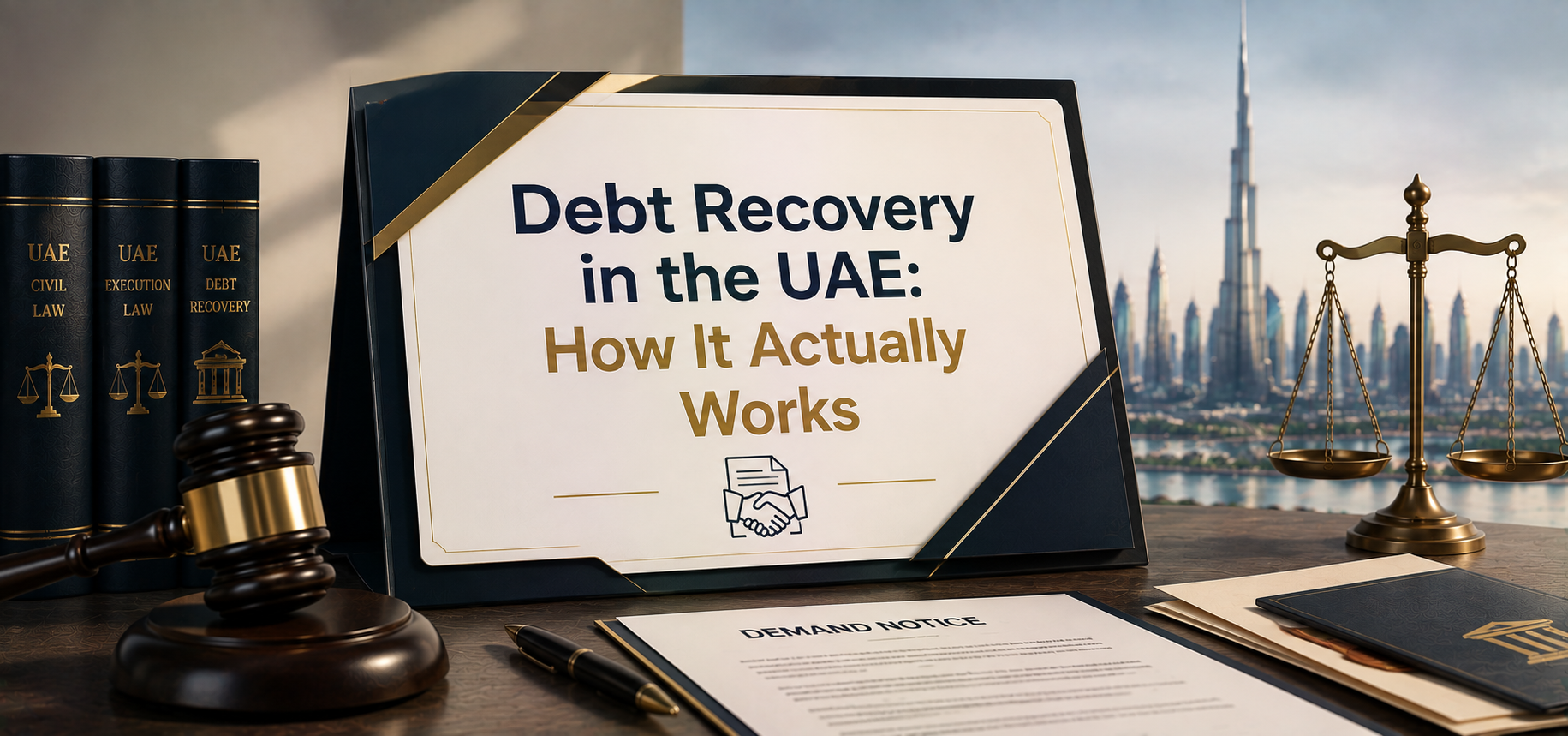

Debt Recovery in the UAE: Debt Recovery Lawyers in Dubai

Annulment or divorce in the UAE is not simply a choice between two labels. The correct route depends first on whether the marriage was validly formed and then, if it was valid, on who is seeking to end it and on what basis. A valid marriage is dissolved through divorce. A marriage with a missing required pillar or an unmet written condition may fall within annulment under Federal Decree-Law No. 41 of 2024, with different consequences for dowry, waiting period, and paternity. Quick Answer Begin with the marriage contract. If the required pillars and conditions were satisfied, the marriage was validly formed and the route is divorce. The relevant type may be talaq, tatleeq, khula, or mubarat depending on who initiates and why. If a required pillar was missing from the beginning, the marriage may be void. If the pillar existed but a specific condition was not met, the marriage may be irregular. An unmet written stipulation can also support annulment under Federal Decree-Law No. 41 of 2024. The distinction affects dowry, the waiting period, and treatment of children's paternity, especially where consummation occurred before the problem was identified. An irrevocable divorce can remove a stipulation-based annulment right, so the contract and timeline should be reviewed before filing. About Faris Raian Faris Raian is the Founder, Managing Partner, and Senior Legal Consultant at Leaders Advocates. He brings more than 15 years of experience across commercial, corporate, real estate, family, and criminal law in UAE courts, with experience relevant to UAE family law, divorce procedure, marriage contracts, and related court matters. If Your Marriage Was Properly Formed, You're Looking at Divorce This covers most people. If the marriage contract itself was valid, both parties met the requirements, the right conditions were satisfied, then ending it means dissolving something that genuinely existed, not undoing a mistake. Within divorce, the specific route depends on your situation. • Talaq. The husband's default right, and the wife's in more limited, conditional circumstances. • Tatleeq. Judicial divorce, where a court orders it based on grounds like harm or a fault the law recognizes. • Khula. The wife initiates it, generally returning her dowry as part of the arrangement. • Mubarat. Both spouses agree together to end it. If Something Was Wrong With the Marriage Itself, Annulment May Be the Only Real Option This is genuinely different territory. If a required pillar of the marriage contract was missing entirely, the marriage is void. If a pillar existed but a specific condition attached to it wasn't met, it's irregular. In either case, you're not asking a court to end something that was valid, you're asking it to recognize that the marriage was never properly formed to begin with. That distinction shapes everything that follows, including whether things like dowry entitlement or a waiting period even apply. Ask Yourself These Questions • The marriage was properly formed, but the relationship has broken down: Divorce, specific type depending on who's initiating • You believe a required element of the marriage contract was missing from the start: Annulment, likely a void marriage • A specific written condition in the contract was never fulfilled: Annulment on the basis of the unmet stipulation • You've already gone through an irrevocable divorce: The stipulation-based annulment right no longer applies Why This Actually Matters for What Comes Next This isn't just a labelling exercise. Whether your case is genuinely annulment or divorce affects dowry entitlement, the waiting period, and how any children's paternity is treated, particularly depending on whether the marriage was consummated before the issue came to light. Getting this wrong at the outset, filing for divorce when annulment is what actually applies, or the reverse, can cost real time and complicate what you're ultimately entitled to. If You're Genuinely Not Sure Which One Applies This is common, and it's not something to guess at. The specific facts of how the marriage was formed, and what, if anything, was written into the contract as a condition, are what actually determine the answer, not a general sense of how the relationship has gone. Choosing Annulment or Divorce in the UAE Starts With Formation The contract is the starting point because annulment asks whether the marriage was properly formed, while divorce assumes that it was. Review the executed contract, the requirements satisfied at formation, and every written stipulation rather than relying only on what the spouses remember was discussed. A missing pillar and an unmet condition are not identical. The source distinguishes a void marriage, where a required pillar was missing entirely, from an irregular marriage, where the pillar existed but a condition attached to it was not satisfied. That distinction can affect the relief requested and the consequences after the order. Where a spouse relies on a written promise, the exact wording matters. The question is not whether the promise felt important but whether it appears as a condition in the marriage contract and whether the facts show that it remained unfulfilled. • Obtain the complete marriage contract and any official translation used in the UAE. • Identify every written stipulation and the evidence showing whether it was fulfilled. • Record whether the marriage was consummated before the alleged defect became known. • Check whether any prior divorce was revocable or irrevocable and when it occurred. • Separate relationship breakdown from a defect in the original formation of the marriage. Choosing the Correct Divorce Route for a Valid Marriage Where the marriage was validly formed, the focus shifts from validity to the available method of dissolution. Talaq, tatleeq, khula, and mubarat reflect different initiators and grounds. They should not be treated as interchangeable simply because each can end a marriage. Talaq is described as the husband's default right and the wife's right in more limited, conditional circumstances. Tatleeq is judicial divorce based on harm or another legally recognized fault. Khula is initiated by the wife and generally involves returning the dowry. Mubarat is based on both spouses agreeing to end the marriage. The practical file should therefore identify who wants the marriage ended, whether both spouses agree, whether recognized harm or fault is alleged, and whether return of the dowry forms part of the proposed route. Those facts narrow the appropriate application. Why Consummation, Dowry, Waiting Period, and Paternity Matter Annulment and divorce can lead to different consequences after the relationship ends. The original guidance identifies dowry entitlement, the waiting period, and the treatment of children's paternity as areas affected by the classification, particularly where the marriage was consummated before the defect was discovered. These issues should be addressed at the beginning rather than left until after a filing is selected. A route that does not match the formation facts can complicate the requested orders and delay a clear assessment of the parties' rights. The presence of children does not convert annulment into divorce or divorce into annulment. It does, however, make careful treatment of paternity and the effect of consummation especially important within the legal route that actually applies. A Practical Filing Preparation Checklist Before filing, prepare a short chronology that begins with the marriage contract rather than with the recent dispute. It should show how the marriage was formed, what conditions were written, what happened afterward, and whether any divorce has already occurred. A lawyer can then compare the facts with annulment and the four divorce routes without relying on assumptions. This preparation also highlights missing documents or disputed facts before they become procedural problems. • Marriage contract, written stipulations, and official supporting records. • Evidence relating to an allegedly missing pillar or unmet contractual condition. • A chronology of formation, consummation, separation, and any prior divorce declaration or order. • Information about dowry and any proposed return connected with khula. • Details of children where paternity treatment may be affected by the classification. Use a Decision Sequence Before Selecting the Application First confirm formation: were the required pillars present and were the relevant conditions satisfied? Second review written stipulations and evidence of performance. Third identify consummation and any prior revocable or irrevocable divorce. Only then should the available annulment or divorce route be selected. For a valid marriage, the next questions are who seeks dissolution, whether both spouses agree, whether recognized harm or fault is alleged, and whether the wife proposes khula with return of the dowry. These facts distinguish talaq, tatleeq, khula, and mubarat. For a possible annulment, the application should state whether the argument concerns a missing pillar, an irregular condition, or an unmet written stipulation. Combining those grounds without a clear factual explanation can make the requested legal outcome harder to understand. The sequence also protects timing. Because an irrevocable divorce can remove a stipulation-based annulment right, legal advice should be obtained before a step is taken that changes which route remains available. Unsure whether the case is annulment or divorce? Faris Raian and the team at Leaders Advocates can review the marriage contract, formation facts, written conditions, and the route available under UAE family law. Common Mistakes • Assuming divorce is always the default route without checking whether the marriage contract itself was actually valid. • Not realizing a written stipulation in the contract could support an annulment claim. • Waiting too long, an irrevocable divorce can close off a stipulation-based annulment right that would otherwise have applied. • Choosing a divorce type before confirming that the marriage was validly formed in the first place. • Failing to document consummation and timing where dowry, waiting period, or paternity may be affected. Relevant Legal Services A Family Lawyer in Dubai can assess annulment and divorce eligibility. A Family Mediation Lawyer in Dubai can assist where an agreed route may be possible. A Litigation Lawyer in Dubai can manage a contested court application. People Also Ask What is the first question in an annulment or divorce case? Ask whether the marriage was validly formed. A valid marriage points to divorce, while a formation defect may point to annulment. What makes a marriage void rather than irregular? A marriage may be void where a required pillar was missing entirely and irregular where the pillar existed but an attached condition was not met. What are the main divorce routes identified in the UAE? The source identifies talaq, tatleeq, khula, and mubarat, with the suitable route depending on who initiates and why. Can an unmet written condition support annulment? Yes. A specific written stipulation in the marriage contract that was not fulfilled may support an annulment claim. Can an irrevocable divorce affect an annulment right? Yes. The stipulation-based annulment right no longer applies after an irrevocable divorce. Why does the classification matter after the marriage ends? It can affect dowry entitlement, the waiting period, and treatment of children's paternity, especially where the marriage was consummated. Annulment or divorce in the UAE must be selected from the formation facts, written conditions, and the appropriate dissolution route. Reviewing the contract before filing protects both the legal strategy and the consequences that follow.
AUTHOR VERIFICATION
Written & reviewed by

Faris Raian

Founder Partner Leaders Advocates, Dubai
Banking Law Updated August 27, 2026

Debt recovery in the UAE is a staged process rather than one court filing. It may begin with a demand and asset-preservation request, continue through a civil claim or direct cheque enforcement, and end with a separate execution case.

The strongest strategy considers collectability from the beginning. A creditor needs evidence of the debt, a route to judgment or an executive instrument, and an active plan for locating and enforcing against assets after the legal entitlement is established.

Quick Answer

Debt recovery in the UAE normally begins with a formal demand. If evidence shows a real risk that the debtor will move or hide assets, a precautionary attachment under Federal Decree-Law No. 42 of 2022 can freeze bank accounts, real estate, or vehicles before or alongside the main claim.

Most debts require a civil claim supported by contracts, invoices, correspondence, and proof of performance. A dishonoured cheque follows a different route because it functions as an executive instrument, allowing direct access to the execution court without a full civil trial first.

A judgment does not collect itself. The creditor must open a separate execution file. The Execution Judge can freeze accounts, seize and auction assets, garnish salary, and impose a travel ban until the debt is settled, secured, or placed under an agreed payment plan.

About Faris Raian

Faris Raian is the founder, managing partner, and senior legal consultant at Leaders Advocates. He brings more than 15 years of experience across commercial, corporate, real estate, family, and criminal law in UAE courts, with experience relevant to commercial disputes, civil claims, judgment enforcement, and debt recovery strategy.

Start With a Formal Demand

Before anything else, a properly worded demand letter puts the debtor on notice and creates a paper trail. It matters both because it may lead to payment without proceedings and because it becomes useful evidence if the dispute goes further.

The demand should clearly identify the amount owed, the basis of the debt, the due date, supporting documents, and the payment requested.

Consider a Precautionary Attachment Before You File

Where there is real, evidenced risk that the debtor may move money or dispose of assets before a judgment can be secured, a creditor may seek precautionary attachment.

The application can potentially freeze:

  • Bank accounts
  • Real estate
  • Vehicles
  • Other identifiable assets

This is not automatic. The creditor needs to show that the debt is genuine and that the risk of dissipation is real rather than theoretical.

Attachment preserves assets; it does not determine the underlying claim. The creditor must still pursue the appropriate legal proceedings.

Cheques Can Skip the Trial Stage

If the debt is backed by a dishonoured cheque, the process is different. A cheque functions as an executive instrument under UAE law, allowing the creditor to proceed directly to the execution court rather than first proving the underlying debt through a complete civil trial.

Direct cheque enforcement does not mean automatic recovery. Collection still depends on available assets and active execution measures.

Trying to Recover an Unpaid Debt in the UAE?

Successful debt recovery requires more than proving what you are owed. Our team can review the supporting documents, assess available assets, prepare the formal demand, and identify the most effective route toward recovery and enforcement.

Review My Debt Recovery Case

For Everything Else, the Civil Claim

Where no executive instrument exists, recovery generally proceeds through a civil claim.

The creditor presents evidence of the debt, which may include contracts, invoices, purchase orders, delivery records, correspondence, acknowledgments, and proof of performance.

The quality and organisation of this evidence can significantly affect how straightforward or contested the claim becomes.

Winning the Case Isn’t the End

A judgment does not pay itself. The creditor must open a separate execution case if the debtor does not comply voluntarily.

The Execution Judge can use available enforcement measures to pursue satisfaction of the judgment, including freezing accounts, seizing and auctioning assets, salary garnishment, and a travel ban where applicable.

The Three Stages at a Glance

Before filing: Formal demand and, where justified, precautionary attachment to preserve assets.

The claim: Civil proceedings or direct Execution Court access where a dishonoured cheque provides an executive instrument.

After judgment: Separate execution proceedings to pursue actual collection through available enforcement measures.

Planning Debt Recovery Before Filing

A creditor should consider both the legal claim and practical collectability from the beginning.

Useful documents and information include:

  • Signed agreements, purchase orders, accepted quotations, and amendments.
  • Invoices, statements of account, delivery notes, and proof of completed work.
  • Messages or letters acknowledging the debt or proposing repayment.
  • Dishonoured cheque records where applicable.
  • Available information about bank accounts, vehicles, property, salary, and business assets.

Arrange these documents into a clear chronology so that the amount, due date, performance, and communications can be followed easily.

When Precautionary Attachment Can Protect Collectability

Precautionary attachment addresses the risk of winning a case after the debtor’s assets have already disappeared.

The supporting file should connect the alleged risk to identifiable conduct or circumstances. Where possible, it should also identify the specific assets the creditor seeks to preserve.

A precautionary attachment should not be treated as a routine step in every debt dispute. Its availability depends on the evidence and circumstances.

Civil Claims and Direct Cheque Enforcement

For an ordinary debt, the creditor generally needs to establish the claim through civil proceedings before moving to execution.

A dishonoured cheque follows the different route described above because of its status as an executive instrument.

The distinction can remove an entire litigation stage, but neither route guarantees collection if the debtor has no traceable assets.

How to Keep the Execution File Moving

Once execution begins, the enforcement strategy should focus on assets capable of satisfying the judgment.

Possible steps include:

  • Requesting account freezing and seizure where banking information is available.
  • Identifying property or vehicles that may be seized and auctioned.
  • Considering salary garnishment where an identifiable salary exists.
  • Assessing whether a travel ban is available within the execution proceedings.
  • Recording every payment and maintaining an accurate outstanding balance.

The execution file also requires continued follow-up. Extended inactivity can result in closure of the file.

Evaluate Settlement and Payment Plans Against Enforcement

Settlement can sometimes produce faster recovery than continued proceedings, but any proposal should be assessed against collectability, timing, security, and the consequences of default.

An instalment agreement should clearly record the amount, payment dates, payment method, and what happens if a payment is missed.

Where execution measures are already in place, the agreement should also address what happens to those measures while the debtor complies with the payment plan and what happens if the debtor defaults.

Worried the Debtor May Move or Hide Assets?

Where there is genuine evidence of asset-dissipation risk, acting early can be critical to eventual recovery. Leaders Advocates can assess whether precautionary attachment may be available and coordinate it with the appropriate debt claim or enforcement strategy.

Assess My Recovery Options

Why Commercial Credit Procedures Matter

Businesses can improve future debt recovery by creating a complete payment record from the beginning.

Signed contracts, authorised purchase orders, delivery confirmations, invoice acceptance, and written payment communications can reduce later factual disputes.

Where cheques are used, preserve the original cheque and dishonour record because those documents support the direct enforcement route described above.

Trying to recover an unpaid UAE debt? Faris Raian and the team at Leaders Advocates can manage the demand, attachment assessment, claim, cheque execution, and post-judgment collection strategy.

Common Mistakes

  • Filing the main case without considering whether precautionary attachment is needed.
  • Assuming a judgment automatically results in payment.
  • Allowing an execution file to remain inactive for an extended period.
  • Starting litigation without checking whether an executive instrument such as a dishonoured cheque exists.
  • Focusing entirely on proving the debt without investigating assets that could satisfy the judgment.

Relevant Legal Services

A Civil Lawyer in Dubai can prepare and pursue the debt claim. A Litigation Lawyer in Dubai can manage contested proceedings and execution. A Contract Lawyer in Dubai can assess the agreement and payment evidence.

People Also Ask

▼ What are the main stages of debt recovery in the UAE?
The process generally involves a demand and possible precautionary attachment, the claim or direct cheque execution, and a separate enforcement file after judgment.
▼ Can assets be frozen before the main case?
Yes. A precautionary attachment may freeze accounts, property, or vehicles where the debt is genuine and dissipation risk is supported by evidence.
▼ Does a dishonoured cheque require a full civil trial?
No. A cheque functions as an executive instrument and may be taken directly to the Execution Court.
▼ Does a judgment automatically result in payment?
No. The creditor must open a separate execution file and actively pursue available enforcement measures.
▼ What can the Execution Judge do?
The judge can freeze accounts, seize and auction property or vehicles, garnish salary, and impose a travel ban within the execution process.
▼ Can an execution file be closed for inactivity?
Yes. The source warns that extended inactivity can result in closure, so ongoing follow-up matters.

Conclusion

Debt recovery in the UAE succeeds when proof, asset preservation, the correct claim route, and active execution are treated as one connected strategy.

Winning the legal argument is only one part of being paid.

Have a Judgment or Dishonoured Cheque but Still Haven’t Been Paid?

A legal entitlement does not automatically result in payment. Faris Raian and the team at Leaders Advocates can review your judgment, cheque, execution file, and available debtor assets to determine the next lawful enforcement steps.

Start Enforcement Action

    Leave a comment