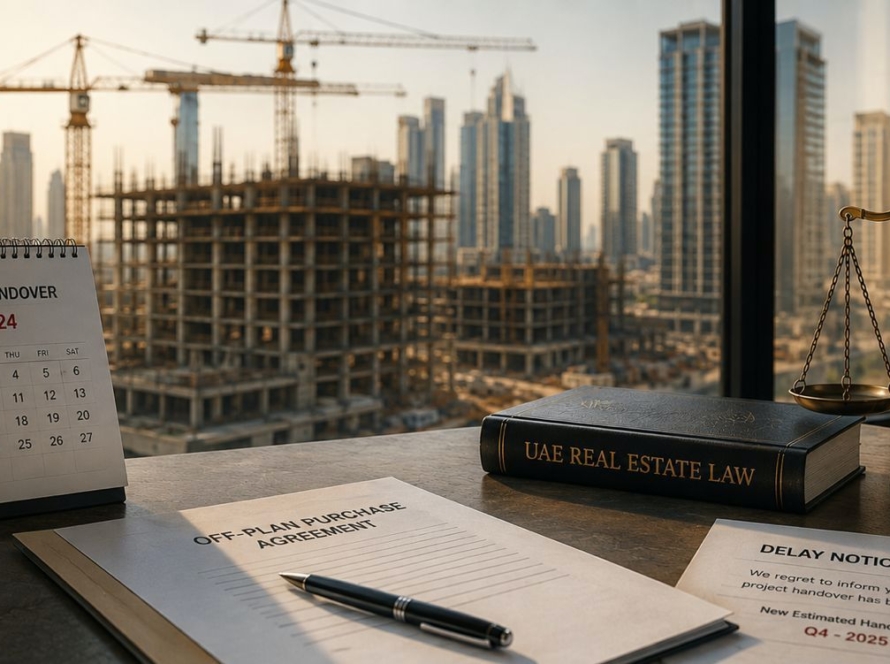



A buyer can sign for a property believing that the same ownership rules apply across the UAE. The risk appears later, when the registered right, transfer process, or foreign ownership restriction is different from what the marketing material suggested.
The UAE does not use one property code for every emirate and free zone.
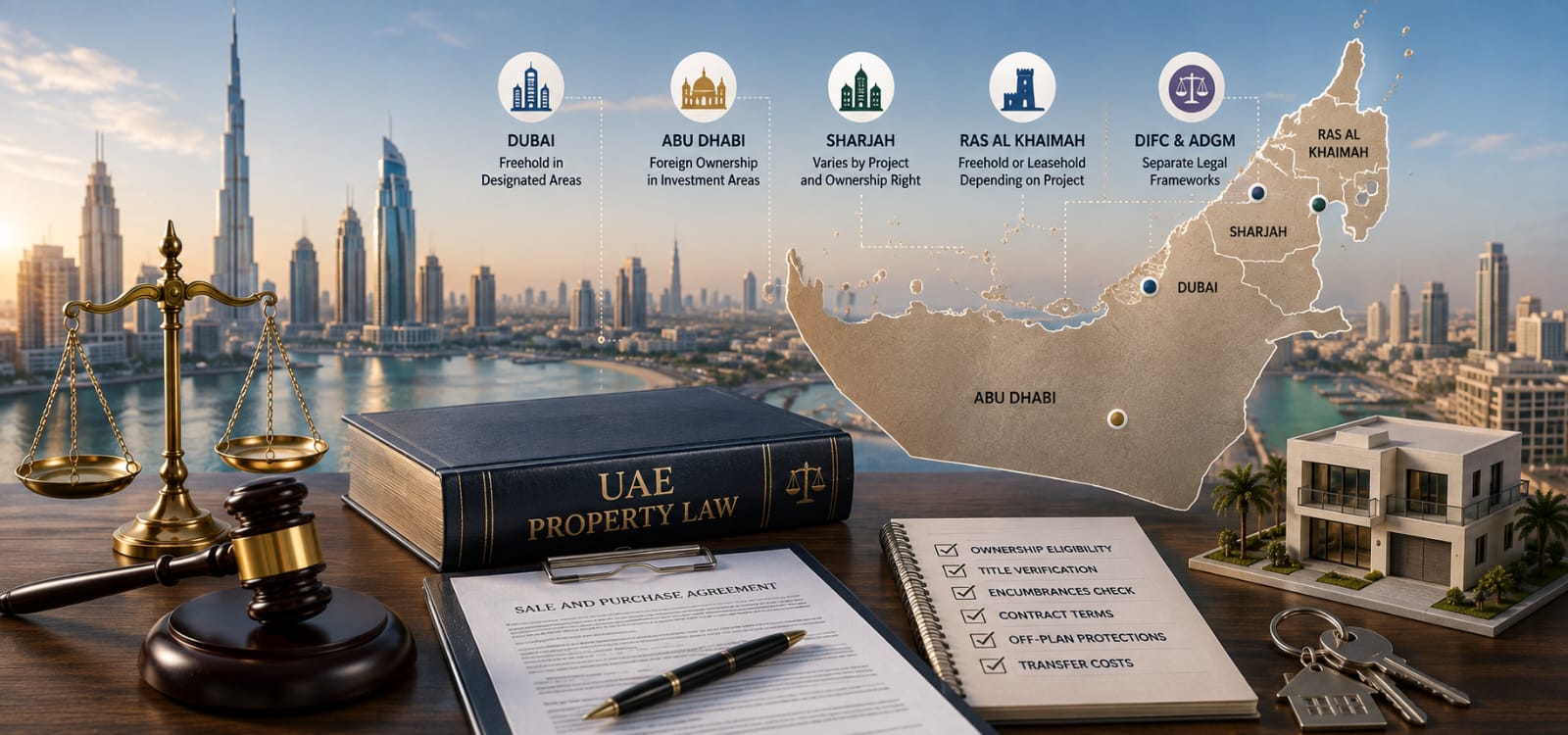
UAE property law combines a federal civil-law foundation with separate property systems in each emirate. Dubai, Abu Dhabi, Sharjah, Ras Al Khaimah, DIFC, and ADGM do not use one register or one foreign ownership rule. The property location and the exact registered right determine which law and authority apply.
Solution
A real estate lawyer in dubai can guide you through situations like this.
Before paying, confirm four points in writing: the emirate or free zone, the buyer’s ownership eligibility, the legal right being sold, and the official registration authority. Then verify the owner, title, restrictions, contract, fees, and off-plan protections through that authority rather than relying only on the broker or developer.
Why There Is No Single UAE Property Code
Our guide on how to choose the best real estate lawyer in dubai explains this further.
The UAE has a federal legal system, but land registration and ownership are mainly regulated by each emirate. Federal law provides the general rules for contracts, obligations, civil liability, and related matters. Local law decides how property is registered and who may own it in a specific area.
Federal Decree-Law No. 25 of 2025 introduced the current Civil Transactions Law. It forms part of the federal foundation, but it does not replace the separate property registration systems in Dubai, Abu Dhabi, Sharjah, Ras Al Khaimah, or the other emirates.
This is why the same sale structure cannot be copied from one emirate to another without checking the local rules.
Dubai Property Rules
You can read more about this in our guide on what is the process of buying a property in dubai.
Dubai permits foreign ownership in designated areas under Dubai Law No. 7 of 2006. Ownership and transfers are recorded by the Dubai Land Department, and a buyer should rely on the official register rather than a brochure or broker statement.
RERA regulates real estate activities under Dubai Law No. 4 of 2019. Off-plan projects also rely on escrow and interim registration rules under Dubai Law No. 8 of 2007 and Dubai Law No. 13 of 2008, as amended.
For ready property, the key documents usually include the title deed, Form F, finance conditions, developer no-objection requirements, and the transfer record. For off-plan property, the project, developer, escrow account, and Oqood registration require separate checks.
Verify the Registered Right
Is the Property Really Freehold?
Marketing terms do not always match the official registration. Our real estate lawyers can check the title, ownership eligibility, encumbrances, transfer restrictions, and the exact legal right being sold.
Abu Dhabi Property Rules
This connects closely with our guide on what kind of lawyer do you need for property damage in UAE.
Abu Dhabi uses its own ownership and registration framework. Law No. 19 of 2005, as amended, governs property rights and foreign ownership within designated investment areas.
The Abu Dhabi Real Estate Centre, ADREC, is the main regulatory and registration authority for the sector. Buyers should verify ownership, mortgages, restrictions, and project information through the official Abu Dhabi system before signing.
A Dubai title check or RERA registration does not confirm an Abu Dhabi property. Each emirate maintains its own records and procedures.
DIFC and ADGM Follow Separate Systems
The Dubai International Financial Centre and Abu Dhabi Global Market are not simply extensions of the surrounding onshore property regimes. Each has its own legal framework, registrar, and court system.
A property or contract connected to DIFC or ADGM may be governed by common-law rules and specialist court procedures. The exact location and registered interest must be confirmed before deciding which law or court applies.
The word “Dubai” or “Abu Dhabi” in an address is not enough. A free-zone boundary can change the legal route completely.
Sharjah, Ras Al Khaimah, and the Other Emirates
Foreign ownership outside Dubai and Abu Dhabi depends on the emirate, the project, and the legal right being offered. Some developments may offer freehold rights, while others use long leases, usufruct, or another registered interest.
Do not assume that a project marketed as “freehold” creates the same right available in a designated Dubai area. Confirm the registered right, its duration, transfer rules, inheritance position, and any nationality restriction in writing.
The same caution applies in Ras Al Khaimah and the smaller emirates. Project-level approval matters as much as the emirate-level rule.
Freehold, Leasehold, Usufruct, and Musataha
The legal label affects what the buyer actually receives.
- Freehold: Ownership of the registered property interest without a fixed ownership term, subject to local law and the designated area.
- Leasehold: A right to occupy or use property for an agreed period under a lease.
- Usufruct: A registered right to use and benefit from property for a defined term without owning the underlying land.
- Musataha: A right that may allow construction or development on land for a defined period, subject to the registered agreement.
A marketing name cannot replace the official registration. The title or registered instrument is what determines the right.
Before You Buy
Not Sure Which UAE Property Rules Apply?
The emirate, free zone, ownership area, and registered right can all change the legal position. Our UAE property lawyers can confirm the correct jurisdiction and review the transaction before you pay or sign.
The Checks Every Buyer Should Complete
- Location and jurisdiction: Confirm the emirate and whether the property sits inside a financial or specialist free zone.
- Ownership eligibility: Confirm that the buyer is legally permitted to hold the offered interest in that area or project.
- Registered owner: Match the seller’s identity to the official title or registration record.
- Encumbrances: Check mortgages, court restrictions, developer claims, and unpaid service charges.
- Contract terms: Review price, payment plan, completion, default, refund, and dispute clauses.
- Off-plan protection: Verify the project, developer, escrow account, and interim registration.
- Transfer costs: Confirm registration fees, trustee or administrative costs, commission, finance charges, and service-charge adjustments.
Real estate law services in Dubai are useful for a Dubai transaction, but a UAE-wide purchase may require advice on the law of the actual emirate or free zone. A Dubai-focused answer is not automatically a UAE answer.
Common Mistakes to Avoid
- Assuming UAE property law is identical in every emirate.
- Treating the word “freehold” as proof of a specific registered right.
- Using a broker’s assurance instead of checking the official register.
- Ignoring whether the property is inside DIFC or ADGM.
- Paying for an off-plan unit without verifying the approved escrow account and registration.
- Signing before checking mortgages, service charges, transfer conditions, and default clauses.
- Assuming a foreign ownership rule for one project applies to every project in the same emirate.
Frequently Asked Questions
UAE property law becomes manageable once the location, jurisdiction, ownership right, and register are confirmed. The biggest risk is assuming that a familiar Dubai term has the same legal effect everywhere else.
Real estate law services in Dubai can support a Dubai transaction, while a purchase elsewhere should be reviewed under the law and registration system of the actual emirate or free zone.
UAE Property Legal Review
Buying Property in Dubai or Another Emirate?
Before completing the transaction, confirm the correct jurisdiction, registration authority, ownership right, contract terms, and off-plan protections. Our UAE real estate lawyers can review the documents and identify legal risks before they become costly.