Quick Answer
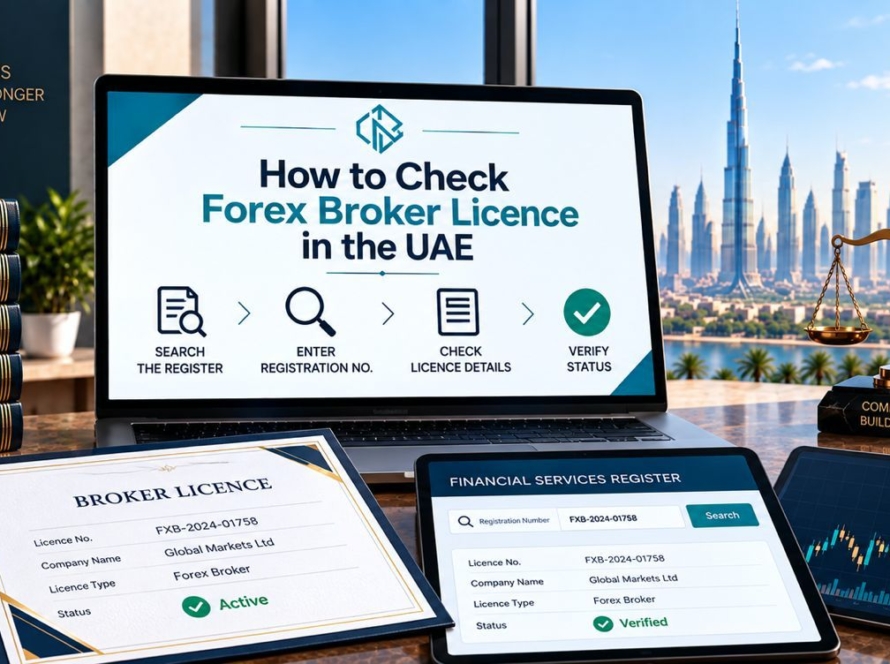
To check if a forex broker is legitimate in the UAE, search the official register of the correct regulator. Check the Capital Market Authority for relevant mainland activity. Check the DFSA for the DIFC and the FSRA for ADGM.
Confirm that the license covers the offered activity, not only advice or introductions. Match the website, contacts, and bank account to the licensed entity. Clone firms often copy real names.
Guaranteed returns, deposit pressure, personal accounts, crypto-wallet payments, and withdrawal obstacles are serious warnings. Read the client agreement and withdrawal terms. Regulation shows authorization within a scope, not a guarantee against trading loss.
Overview
The UAE’s federal securities regulator now operates as the Capital Market Authority. Its official website and registers use the CMA name. An old SCA reference is not conclusive by itself, but it requires careful verification against the current register.
Online trading ads may promise easy returns through polished websites and persuasive account managers. Some firms are legitimate. Others are unlicensed or impersonate regulated companies. To learn how to check if forex broker is legitimate UAE, verify the regulator, license scope, entity, and payment route.
So how do you check if a forex broker is legitimate in the UAE?
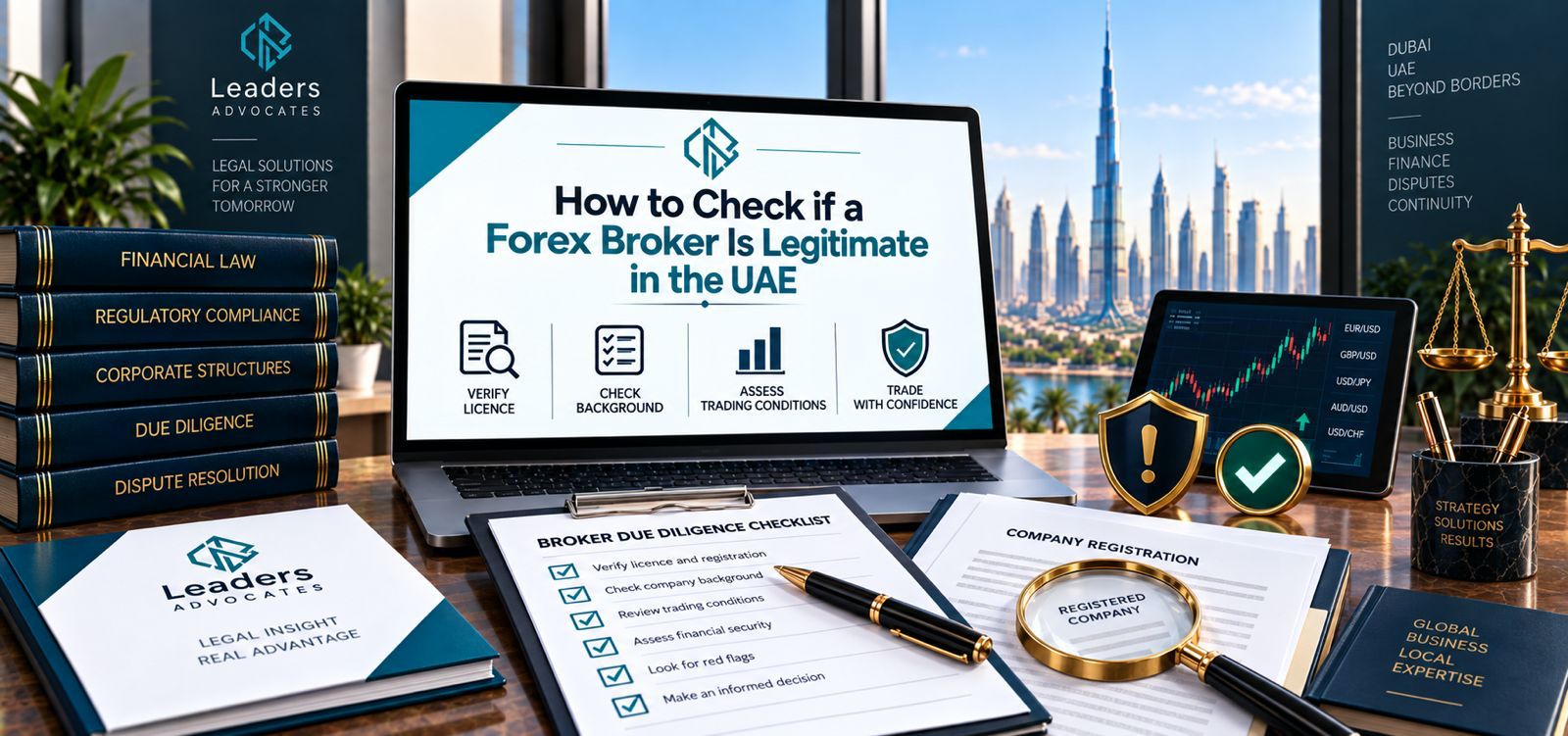
Confirm the firm on the relevant regulator’s official register. Check that the license covers the offered forex or derivatives activity and client type. Match the licensed entity, website, contacts, and payment account. Treat pressure and payment mismatches as red flags.
The Three-Part Legitimacy Test
- Is the firm regulated in the UAE?: The official register of the CMA, DFSA or FSRA
- Does the license fit the activity?: License scope covers forex or derivatives dealing, not only promotion or advice
- Am I dealing with that firm?: Website domain, address, phone and bank details match the regulator’s record
A firm that passes the first test but fails the second or third is not a safe choice.
Clone Broker Warning Signs in the UAE
A clone broker uses the name, license number or branding of a real regulated firm. The register shows a legitimate company, but you are dealing with someone else. Protect yourself by:
- Contacting the firm through details listed on the regulator’s register, not the website that approached you.
- Checking that the website domain matches the one the regulator lists.
- Confirming that payments go to an account in the licensed firm’s name.
- Checking regulators’ warning lists for unauthorized or cloned firms.
Forex Scam Red Flags
- Guaranteed or unusually high returns.
- Pressure to deposit quickly or increase your deposit.
- Payment requests to personal accounts, third-party companies or crypto wallets.
- Unsolicited contact through social media or messaging apps.
- “Account managers” who trade on your behalf without clear authority.
- Withdrawal requests met with new fees, taxes or verification demands.
- Claims of regulation by bodies you cannot verify.
Spotted One of These Red Flags?
Don’t wait until it’s too late. Message us on WhatsApp right now and get a fast, honest read on your situation.
Offshore Brokers Marketing to UAE Residents
Some brokers hold only a foreign license. That license may provide protection under the foreign regulator’s rules. It does not automatically authorize UAE activity or create local regulatory protection. Check the UAE position before relying on a foreign authorization.
Documents to Keep From the Start
- Screenshots of the website and adverts that led you to the firm.
- Account opening documents and client agreements.
- Records of every deposit and withdrawal.
- All messages with staff or account managers.
If something goes wrong, these records support complaints to the regulator, police reports and any civil claim.
If You Have Already Deposited
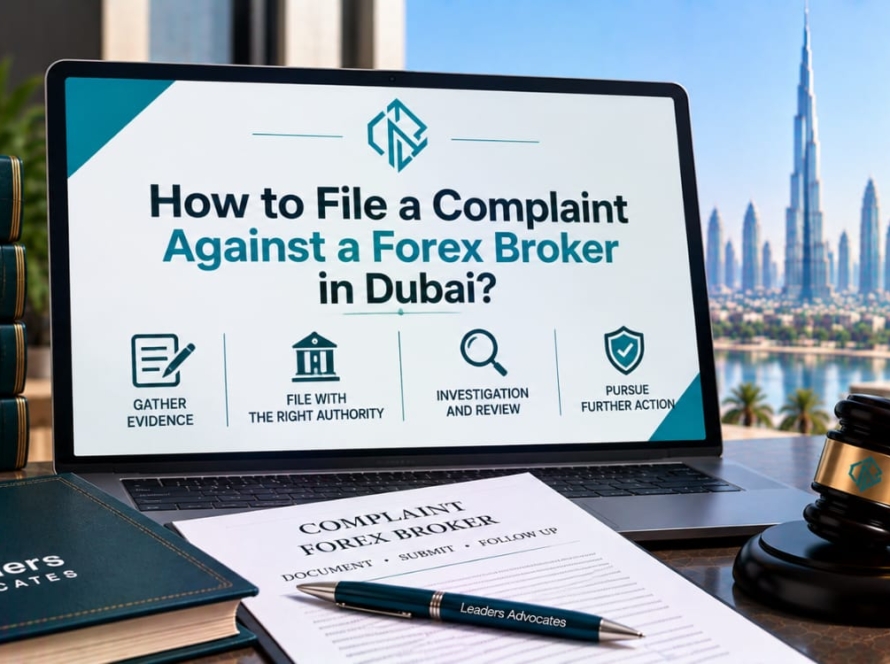
If a broker fails these checks after payment, act quickly. Contact the bank, report suspected fraud through official police channels, and notify the relevant regulator. These routes may run together. A regulatory complaint does not itself recover money, so review civil recovery options promptly.
Common Mistakes
- Treating a register listing as enough without checking license scope.
- Using contact details from the website instead of the regulator’s record.
- Sending money to accounts not in the licensed firm’s name.
- Trusting screenshots of “profits” shown by an account manager.
- Paying release fees to unlock a withdrawal.
Start With the Exact Legal Entity
Ask for the broker’s full legal name, license number, regulator, registered address, and contracting entity. A brand name may cover several different companies.
Compare that information with the client agreement and the account-opening documents. The regulated company should be the entity providing the service.
Check any suffix, free-zone reference, branch description, or group name. A small difference can point to an unlicensed affiliate or impersonator.
Open the Regulator’s Website Yourself
Type the regulator’s official address into the browser or use a trusted government source. Do not use a link sent by the broker or account manager.
Search the CMA register for relevant mainland activity. Use the DFSA public register for DIFC firms and the FSRA register for ADGM firms.
Save the register result with the date of the search. A later suspension, warning, or status change may become important.
Not Sure Which Register to Search?
Send us the broker’s name on WhatsApp and we’ll help you confirm the correct regulator and license status.
Read the Permitted Activities
A real license does not authorize every financial service. Confirm that the approved activity covers the product, service, and type of client offered to you.
Look for limits involving retail or professional clients. Also check whether the firm may execute trades, hold client money, advise, promote, or only introduce business.
Ask the broker to explain the authorization in writing. Compare the answer with the regulator’s wording rather than the marketing page.
Check the Website and Payment Route
Match the domain, telephone number, email suffix, and office address to the regulator’s record. Contact the licensed firm through those official details.
The destination bank account should match the contracting entity or an explained regulated arrangement. Personal accounts and unrelated companies require immediate scrutiny.
Do not assume a crypto-wallet payment is routine. Record the wallet address and stop if the requested route conflicts with the agreement or official firm details.
Review the Commercial Conduct
Legitimate regulation does not remove trading risk. Review the risk warnings, fees, leverage, withdrawal conditions, complaints process, and client-money terms.
Pressure to deposit immediately is a warning. So are guaranteed returns, remote-access requests, secret strategies, and demands to borrow more money.
Test the withdrawal process with a modest amount before increasing exposure. Keep each instruction, confirmation, statement, and response.
Confirm the Salesperson’s Authority
Ask whether the salesperson, account manager, or introducing agent works for the licensed entity. Verify that relationship through the firm’s official contact details.
Do not give passwords, one-time codes, or remote device access to a caller. A regulated firm should not need control of the client’s personal banking device.
Record every change in contact person or telephone number. Sudden migration to a private messaging account can indicate impersonation or an unauthorized intermediary.
Being Pressured for Another Deposit?
Stop before you send more money. WhatsApp us now for a quick, confidential second opinion.
Understand How Client Money Is Held
Read the agreement’s client-money and custody terms. Identify the bank, custodian, or regulated entity that receives deposits and processes withdrawals.
Check whether the money is held for trading, margin, fees, or another purpose. The payment narrative should match the account and agreement.
Ask how insolvency of the broker or custodian would affect the account. Do not assume every foreign compensation scheme applies to a UAE resident.
Avoid Secondary Recovery Scams
Victims may later receive calls from people claiming to be regulators, lawyers, investigators, or asset-recovery agents. Verify every identity independently.
Do not pay an advance tax, bond, insurance charge, or wallet activation fee to recover lost funds. Preserve the approach as possible additional evidence.
Share sensitive documents only through verified channels. A recovery scam may use the first broker’s records to sound credible.
Prepare a Verification Record
- Save the regulator’s register entry and any warning notice.
- Save the client agreement and account-opening documents.
- Save the website, advertisement, and social-media contact details.
- Record every bank account or wallet used for payment.
- Keep trade statements and withdrawal requests.
- Keep all messages with the salesperson or account manager.
This file supports a bank inquiry, regulator report, police complaint, or civil claim if a problem develops.
Act After a Failed Check
Stop further payments and preserve the full account record. Do not pay a new tax, insurance charge, or release fee only to unlock a withdrawal.
Notify the bank or payment provider promptly. Report suspected fraud and unauthorized activity through the official channels that apply to the case.
Obtain legal advice on the contracting entity, jurisdiction, assets, and recovery route. Speed matters when funds may move through several accounts.
Related Success Story
Leaders Advocates publishes a corporate fraud and embezzlement matter resolved in Dubai. Review the Leaders Advocates Success Stories page for the available summary.
That matter involved different people, transfers, and evidence. It does not guarantee recovery in another forex dispute.
Final Takeaway
Knowing how to check if forex broker is legitimate UAE requires more than finding a company name online. Verify the regulator, entity, license scope, website, and payment destination.
Keep the evidence before depositing. If any part fails, stop further transfers and use the appropriate bank, police, regulatory, and civil routes.
Relevant Legal Services
- Forex Lawyer in Dubai – for broker checks, withdrawal disputes, trading claims, and forex recovery strategy.
- Cybercrime Lawyer in Dubai – for online impersonation, digital evidence, unauthorized platforms, and suspected fraud.
- Litigation Lawyer in Dubai – for civil claims, jurisdiction review, protective measures, and enforcement.
Follow Leaders Advocates on LinkedIn or Leaders Advocates on Facebook for more UAE legal updates.
Frequently Asked Questions
Think You’ve Been Scammed by a Forex Broker?
Every hour matters when money is moving through accounts. WhatsApp Leaders Advocates now for immediate guidance on your next step.