


A rental dispute can become urgent quickly. A payment notice, eviction notice, renewal deadline, maintenance failure, or security-deposit dispute may require a prompt and accurate response.
General property knowledge is not always enough. Dubai tenancy cases use the specialist Rental Disputes Center process and detailed notice rules.
The right lawyer should understand the client’s side, the lease, the evidence, the remedy, and the next deadline. Online visibility alone does not answer those questions.
Quick Answer
There is no official ranking that names one best tenancy lawyer for every Dubai dispute. The right choice depends on the lease issue, urgency, available evidence, value of the claim, and likely forum.
Look for direct experience before the Rental Disputes Center. The lawyer should understand eviction, rent increases, nonpayment, maintenance, renewal, Ejari, and security-deposit claims. Ask for a notice and evidence review before filing, because one defective notice can weaken an otherwise strong position.
Choose counsel who clearly explains scope, fees, team responsibility, timing, risk, and enforcement. The requested remedy should fit the correct legal route, and you should avoid anyone promising a result before reviewing the complete file.
Faris Raian is Founder, Managing Partner, and Senior Legal Consultant at Leaders Advocates. He brings more than 15 years of UAE litigation experience, including real estate, commercial, corporate, criminal, and family disputes.
Ekaterina Butseva is Founder and Partner, with legal experience since 2010. She works on complex litigation, dispute resolution, and cross-border matters for international clients.
Their combined perspective can help where a Dubai lease dispute involves local procedure, an overseas landlord or tenant, corporate occupancy, or connected commercial issues. The team must still tailor the plan to the exact lease and notice history.
Use a tenancy-specific selection process. Test RDC experience, notice analysis, evidence planning, remedy design, communication, and cost before signing an engagement.
Match the Lawyer to the Exact Tenancy Dispute
Start by naming the problem. State whether you are a landlord or tenant, the lease status, the disputed amount, the notice history, and the result you want.
An eviction case differs from a rent increase challenge. A maintenance claim differs from a security-deposit claim. Renewal and early termination create other questions.
Ask the lawyer to classify the dispute during the first meeting. The classification should identify the controlling documents, likely forum, and immediate deadline.
Do not accept a generic property-law answer. The advice should address the actual lease, dates, communications, and requested remedy.
Confirm Direct Rental Disputes Center Experience
Dubai created the Rental Disputes Center as a specialist forum for landlord and tenant disputes. Its procedure differs from ordinary civil litigation.
Ask whether the lawyer has prepared RDC claims and defenses. Confirm experience with hearings, experts, appeals, settlement, execution, and urgent requests where relevant.
The answer should cover both procedure and substance. A tenancy lawyer must know how evidence is filed and how the legal issue is framed.
Ask who will appear and who will draft the case. The person leading the first meeting may not always run the file day to day.
Test Notice Knowledge Before Discussing the Merits
Dubai Law No. 26 of 2007, amended by Law No. 33 of 2008, contains important notice rules. The facts and contract still require review.
Article 14 generally requires 90 days’ notice to amend renewal terms, unless the parties agreed otherwise. That rule can affect rent or other renewal changes.
Article 25 addresses eviction grounds. Some breaches use a 30-day notice process. Certain post-expiry eviction grounds require 12 months’ notice through a notary public or registered mail.
Ask the lawyer to test the reason, date, delivery method, addressee, and supporting evidence. Do not assume a notice is valid because it looks formal.
Facing a Tenancy Dispute in Dubai?
Before filing, have your lease, Ejari, notices, payment records, correspondence, and evidence reviewed. The right legal route can depend on one important detail in your file.
Check Knowledge of Rent Increase and Renewal Disputes
Rent disputes require current official information. The lawyer should check the lease, renewal date, notice, and applicable DLD rental index or calculator.
The Dubai Land Department states that the rental index guides disputed renewal increases. The result should be checked using the property’s current official data.
Ask whether the proposed increase was timely and within the applicable limit. Also review any agreement that changes the usual notice position.
If the parties cannot agree, counsel should explain the RDC option, likely evidence, cost, and practical settlement range without promising a decision.
Check Experience With Eviction and Nonpayment
Eviction is not one single claim. The lawyer should identify the exact statutory ground and the steps required for that ground.
Nonpayment, unauthorized subletting, unlawful use, serious damage, and uncured breach may raise different evidence. Sale, personal use, demolition, or major renovation involve other requirements.
A landlord needs a clean payment and notice record. A tenant needs proof of payment, attempted payment, defenses, and the full communication history.
The DLD explains that a tenant may use the RDC deposit process if a landlord refuses rent. The lawyer should assess whether that procedure fits the facts.
Check Experience With Maintenance and Security Deposits
Maintenance disputes require the lease, inspection records, repair requests, photographs, invoices, and evidence of how the problem affects use of the property.
Article 16 generally places maintenance affecting intended use on the landlord, unless the parties agreed otherwise. The contract and nature of the repair remain important.
Security-deposit cases often turn on condition evidence. Article 20 addresses return of the deposit or its remaining balance at the end of the lease.
Ask how the lawyer will distinguish ordinary wear from tenant-caused damage. Move-in and move-out records can become decisive.
Prepare a Complete Tenancy Evidence File
Organize the file by date and issue. Start with the signed lease, Ejari record, addenda, renewals, and any property-management authority.
Add rent checks, bank records, receipts, notices, delivery proof, emails, messages, repair requests, inspection evidence, and photographs.
Keep complete conversations. A cropped message may hide the sender, date, attachment, response, or earlier agreement.
Create a one-page chronology. Flag the next lease date, notice deadline, hearing date, payment date, or risk of disconnection or lockout.
- Lease, Ejari, addenda, renewals, and property details.
- Payment record, bounced checks, receipts, and deposit proof.
- Notices with delivery method and proof of service.
- Maintenance requests, reports, invoices, and dated photographs.
- Requested remedy and calculation of any claimed amount.
Ask for a Written Case Map
A useful consultation should produce more than a prediction. Ask for a short map of the claim, defense, evidence gaps, remedy, and next step.
The lawyer should identify the strongest point and the most serious weakness. A balanced assessment is more useful than a confident slogan.
Ask what the RDC can order and what happens after judgment. A favorable decision may still require execution or compliance steps.
The map should state what could change the recommendation. Examples include a missing notice, payment receipt, signed addendum, or official property record.
Compare Communication, Team, and Fees
Confirm who will manage the file and who will attend hearings. Ask how updates are delivered and how quickly urgent messages are reviewed.
Compare fees by stage. Separate advice, notice work, filing, hearings, experts, appeal, execution, translation, and government fees.
Read the engagement scope carefully. A low quote may cover only the initial filing and exclude later hearings or enforcement.
Ask how settlement affects billing. The agreement should explain what remains payable if the dispute resolves early.
Assess Urgency and Interim Risk
Ask whether the dispute needs an urgent application or immediate protective step. Possible concerns include service disconnection, access, property damage, a payment deadline, or an approaching lease date.
Urgency should be explained with evidence. The lawyer should identify the event, date, likely harm, requested protection, and documents supporting the request.
Do not use urgency as a reason to skip notice analysis. A fast filing in the wrong form can weaken the position and increase cost.
Ask what can be done today, what requires formal filing, and what should wait for the complete record. The response should separate immediate safety from the final tenancy remedy.
Plan for Settlement and Enforcement
A strong tenancy lawyer should discuss settlement without assuming it is always better. Compare the proposed terms with likely cost, timing, evidence risk, and enforceability.
Any settlement should define payment, possession, keys, Ejari steps, repairs, deposit treatment, utilities, releases, and the result of default. Vague promises can create a second dispute.
If the matter proceeds, ask what happens after judgment. Payment, eviction, possession, or another obligation may require execution through the proper process.
Include appeal and execution in the budget discussion. The client should understand the likely work after the first decision, even if those stages never become necessary.
Use a Final Selection Checklist
Choose counsel who understands the exact dispute and can explain it in plain language. The plan should be specific, documented, and realistic.
Strong tenancy advice connects the lease, law, notice, evidence, remedy, and procedure. It also explains uncertainty and cost.
Before signing, confirm conflicts, confidentiality, scope, billing, communication, document return, appeal, and execution responsibilities.
- Recent and relevant RDC experience.
- Accurate notice and lease analysis.
- Organized evidence and a clear requested remedy.
- Defined team, response process, scope, and costs.
- No guaranteed outcome before full review.
Worried Your Eviction or Rent Notice May Be Defective?
A notice problem can weaken an otherwise strong tenancy claim. Get your lease, notice, deadlines, evidence, and requested remedy checked before taking the dispute to the Rental Disputes Center.
Final Takeaway
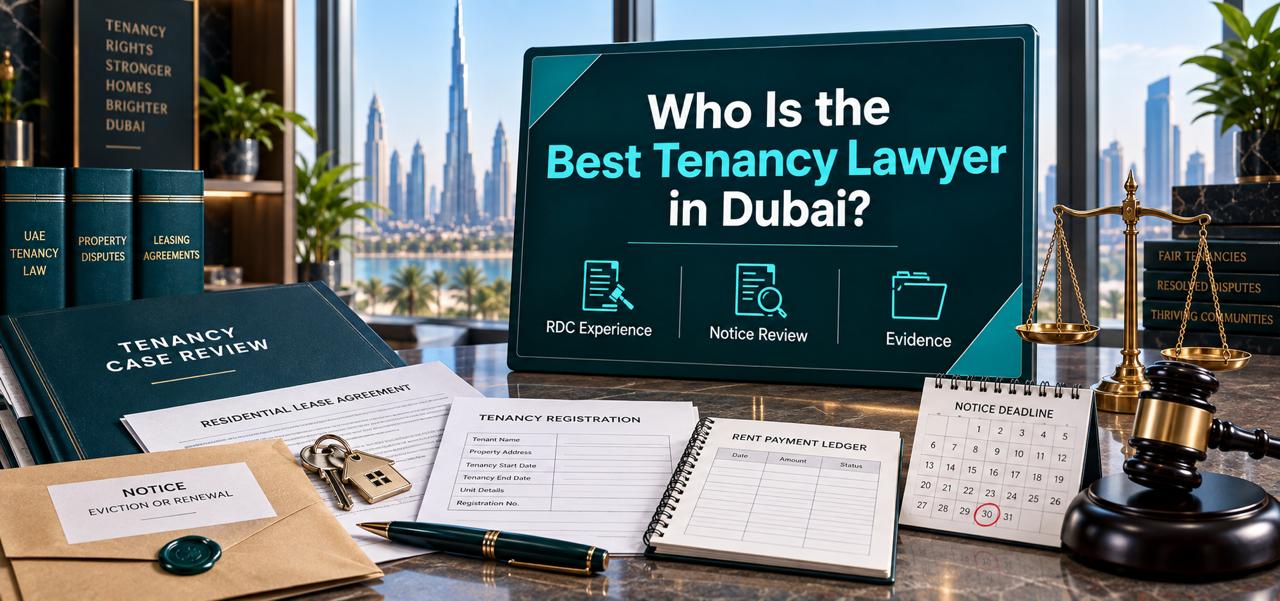
Who is the best tenancy lawyer Dubai depends on the actual lease dispute. The right fit is not determined by one general ranking.
Choose counsel with focused RDC experience, careful notice analysis, a practical evidence plan, transparent fees, and a realistic path through judgment and enforcement.
Related Success Story
The firm’s Real Estate Lawyers in Dubai Win Tenant Eviction Case illustrates how tenancy strategy and organized evidence can work together. The published result is case-specific and does not predict another outcome.
Common Mistakes
- Choosing general property experience without checking RDC work.
- Treating every eviction notice as legally sufficient.
- Filing without a complete lease, payment, and service record.
- Using cropped messages instead of full dated conversations.
- Comparing fees without comparing included stages and costs.
- Ignoring appeal, execution, or settlement planning.
Relevant Legal Services
A Tenancy Lawyer in Dubai can handle landlord and tenant claims before the RDC. A RERA Lawyer in Dubai can assess connected regulatory issues. A Litigation Lawyer in Dubai can coordinate related court and enforcement questions where needed.
People Also Ask
Need the Right Strategy for Your Dubai Rental Dispute?
Whether the dispute involves eviction, unpaid rent, maintenance, renewal, a rent increase, Ejari, or a security deposit, Leaders Advocates can assess the evidence and appropriate legal route.