


Rental disputes often begin with a deadline. A notice may demand payment, announce eviction, change renewal terms, or reject a deposit return.
Choosing a lawyer only by general property experience can miss the specialist Rental Disputes Center process. It can also miss a technical problem in the notice or evidence.
A better choice starts with the file. The lawyer should review the lease, Ejari, notices, payments, communications, and requested result before recommending action.
Quick Answer
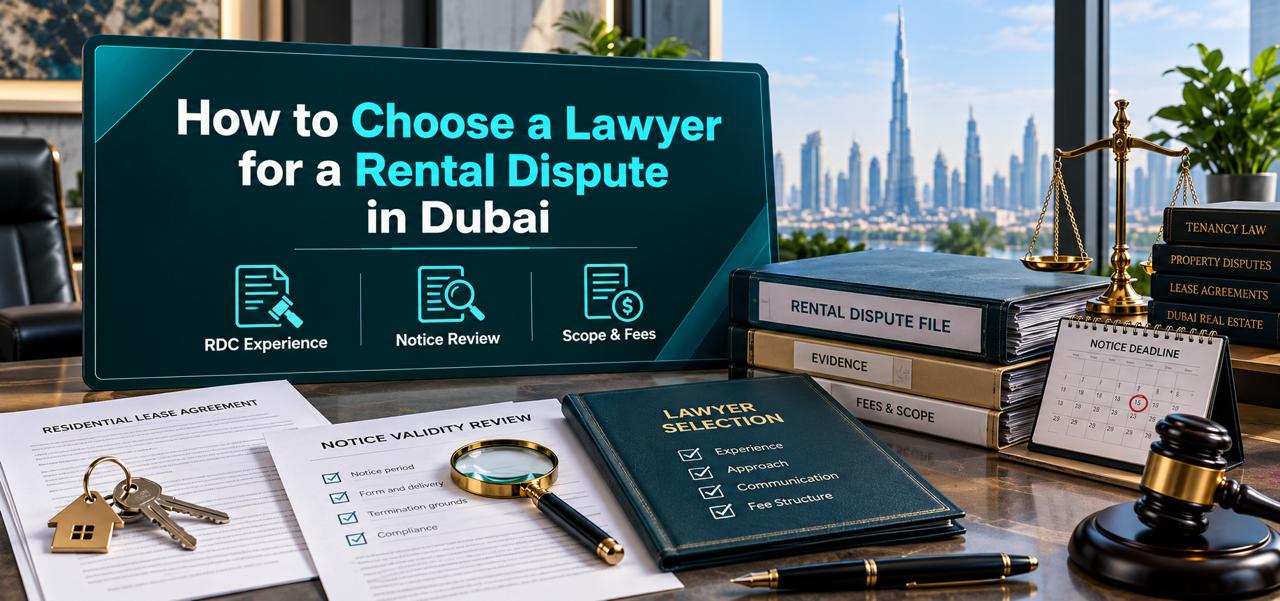
Start with direct Rental Disputes Center (RDC) experience. Ask whether the lawyer has handled your specific issue, such as eviction, nonpayment, rent increase, maintenance, renewal, or a security deposit.
Request a notice review before filing. The legal ground, date, delivery method, wording, and proof of service can materially affect your position. Bring the lease, Ejari, payment record, notices, messages, photographs, and a one-page chronology so the lawyer can identify missing evidence and the remedy available through the RDC.
Compare who will handle the case, communication, scope, fees, appeal, and execution in writing. Avoid any lawyer who guarantees an outcome before carefully reviewing the complete record.
Faris Raian recommends starting with notice validity, not with the parties’ frustration. A strong factual complaint can still face difficulty when the legal ground, timing, or delivery record is weak.
He also emphasizes remedy planning. The client should know whether the goal is payment, possession, renewal, repair, deposit return, termination, or a negotiated exit before the file is drafted.
Use a structured comparison. Test focused experience, legal analysis, evidence discipline, strategy, communication, scope, and cost before selecting counsel.
Define the Rental Dispute in One Page
Prepare a short chronology before calling lawyers. Include the lease start, renewal date, rent, payments, notices, repair requests, and the latest communication.
State the requested result clearly. A landlord may want payment or possession. A tenant may want renewal, repair, deposit return, or protection from an invalid demand.
List the next deadline. It may involve a payment period, lease expiry, hearing, appeal, renewal notice, or an urgent property issue.
This one-page summary makes consultations comparable. Each lawyer receives the same facts and can respond to the same problem.
Ask About the Rental Disputes Center Directly
Dubai tenancy disputes generally move through the Rental Disputes Center. It is a specialist forum with its own filing, hearing, appeal, and execution process.
Ask how many similar RDC matters the lawyer has handled recently. Focus on the dispute type, not only the total number of property cases.
Request an explanation of the likely stages. The answer should cover preparation, filing, service, hearing, evidence, judgment, appeal, and execution where relevant.
Confirm who will draft the case and who will attend. Direct access to the responsible lawyer can matter when a deadline changes quickly.
Test Notice Analysis With Your Actual Documents
Do not ask only whether notice is required. Give the lawyer the actual notice and proof of delivery. Ask for a document-based answer.
Dubai Law No. 26 of 2007 was amended by Law No. 33 of 2008. Article 14 generally uses a 90-day notice period for renewal changes, unless agreed otherwise.
Article 25 contains several eviction grounds. Some breaches use a 30-day notice process. Certain post-expiry grounds require 12 months’ notice through specified service methods.
Facing a Rental Dispute in Dubai?
Eviction, unpaid rent, rent increases, maintenance disputes, renewal issues, and security deposits can depend on the lease, notices, evidence, and filing strategy. Get your case reviewed before taking the next step.
The lawyer should identify the correct ground, date, recipient, method, and cure history. A notice should not be assessed by appearance alone.
Check Experience With Your Specific Claim
Ask for experience with the exact issue. Eviction, nonpayment, rent increase, maintenance, renewal, early termination, and security deposits require different evidence.
For rent increases, the lawyer should check the current DLD rental index or calculator, the lease, and the timing of the proposed change.
For maintenance, the file should show the problem, notice, response, impact on use, repair evidence, and relevant lease allocation.
For deposits, condition records matter. The lawyer should compare move-in evidence, move-out evidence, claimed damage, ordinary wear, invoices, and the handover record.
Check Whether the Lawyer Represents Both Sides
Experience for landlords and tenants can improve issue spotting. It helps counsel anticipate the documents, defenses, and settlement positions the other side may use.
This does not replace a conflicts check. The lawyer must confirm that the firm can act for you in the specific dispute.
Ask which argument the other side is most likely to raise. The response should be tied to the lease, law, notice, and evidence.
A balanced answer should identify your strongest point and your main exposure. That is more useful than one-sided reassurance.
Evaluate the Evidence Plan
A strong lawyer should organize the file by issue and date. Hundreds of messages are not useful until they are indexed and connected to a legal point.
Keep complete message threads and original attachments. Record the sender, date, delivery status, and surrounding conversation.
Photographs should have dates and context. Inspection reports, repair invoices, bank records, receipts, and official property documents may provide stronger support.
Ask about Arabic translation, notarization, experts, and original production. These steps can affect timing and cost.
- Lease, Ejari, addenda, renewals, and management authority.
- Rent schedule, checks, transfers, receipts, and deposit proof.
- Notices and complete evidence of service or attempted service.
- Messages, emails, photographs, reports, and repair records.
- Chronology, requested remedy, and calculation of loss.
Ask for Options, Not One Automatic Filing
The first recommendation should compare realistic options. These may include a formal response, payment deposit, negotiation, settlement, RDC filing, defense, urgent request, or execution step.
Ask what each option can achieve and what it cannot. A fast letter may preserve a position but may not produce an enforceable result.
Request a primary plan and fallback plan. The lawyer should identify the fact or document that would trigger a change.
Do not confuse urgency with immediate filing. A short evidence and forum check can prevent a costly procedural mistake.
Assess Communication and Team Responsibility
Ask who will manage the file, review evidence, draft pleadings, attend hearings, and approve settlement. Record the names in the engagement scope.
Agree on the update method. Email may suit formal instructions, while urgent deadlines may require a defined call or messaging process.
Ask how quickly the team reviews new notices or hearing updates. Do not expect instant answers, but require a clear response standard.
Confirm language needs. Official filings and supporting documents may require Arabic handling while the client receives clear English explanations.
Compare Fees Using the Same Scope
Request a stage-based quote. Separate initial advice, notice work, filing, hearings, experts, appeal, execution, translation, and government fees.
Ask what happens if the matter settles early. The engagement should explain which fees are earned, refundable, or still payable.
A low figure may exclude essential work. A higher figure may include several stages. Compare deliverables rather than one headline number.
Confirm payment dates and approval rules for extra work. Unexpected tasks should not proceed without a clear scope change.
Check Settlement Drafting and Exit Planning
Many rental disputes end through agreement. Ask whether the lawyer can turn a proposed compromise into clear, enforceable terms rather than a vague exchange of messages.
A settlement may address payment, rent, possession, keys, repairs, deposit return, utilities, Ejari steps, release language, and the consequence of default.
Each date should be precise. Each obligation should identify the responsible party, evidence of completion, and next step if performance does not occur.
The lawyer should also protect the client’s position during negotiation. A settlement discussion should not accidentally waive a claim, admit a disputed fact, or miss a filing deadline.
Review Appeals and Execution Before Filing
Ask what happens after the first RDC decision. The answer may involve compliance, payment, possession, appeal, or execution through the Center’s procedures.
The lawyer should explain which documents will be needed later. A clean payment schedule, property description, notice record, and requested order can make enforcement easier to understand.
Discuss appeal risk early. The client should know the likely grounds, cost, and timing before deciding how much to spend on the first stage.
Execution should also affect settlement strategy. An agreement that can be performed and documented may be more valuable than an unclear promise made only to delay the case.
Watch for Professional Red Flags
Be cautious if the lawyer promises victory before reading the lease. The same concern applies when notice, service, and payment evidence are treated as minor details.
A lawyer should not pressure the client to hide unfavorable documents. Complete disclosure allows a safer strategy and reduces surprises at the hearing.
Avoid unclear responsibility. You should know who manages the file, who can give advice, and who will appear when a hearing or urgent step occurs.
Use a Final Interview Checklist
Interview at least two suitable lawyers when time allows. Give each the same chronology, documents, objective, and questions.
Choose the person who explains the case most clearly. The advice should connect facts, law, procedure, evidence, remedy, and cost.
Before signing, review conflicts, confidentiality, billing, communication, termination, document return, appeal, settlement authority, and execution.
- Direct experience with the same RDC dispute type.
- Specific review of the lease and notice history.
- Clear evidence gaps, remedy, deadline, and next step.
- Defined lawyer, team, communication, and fee scope.
- Balanced risk analysis without guaranteed outcomes.
Received an Eviction or Rental Notice?
Do not assume the notice is valid or invalid without reviewing it. The legal ground, wording, date, delivery method, and proof of service can affect your position before the Rental Disputes Center.
Final Takeaway
Learning how to choose a lawyer for rental dispute in Dubai starts with focused RDC experience. It continues with careful notice, lease, evidence, remedy, and cost analysis.
Select counsel who can turn the documents into a clear case map. The map should identify the next deadline, realistic options, and the work included in each stage.
Related Success Story
The firm’s Commercial Lease Dispute in Dubai Success Story shows why a defined objective and organized lease record matter. The published result is case-specific and does not predict another outcome.
Common Mistakes
- Choosing general property experience without confirming RDC work.
- Discussing the merits before reviewing the actual notice.
- Sending scattered screenshots instead of an indexed file.
- Filing without defining the requested remedy.
- Comparing prices without comparing scope and external costs.
- Ignoring appeal, execution, and settlement terms.
Relevant Legal Services
A Tenancy Lawyer in Dubai can assess the RDC claim or defense. A RERA Lawyer in Dubai can review connected regulatory questions. A Real Estate Lawyer in Dubai can coordinate related property and contract issues.
People Also Ask
Preparing to File at the Rental Disputes Center?
Before filing, have your lease, Ejari, payment records, notices, messages, photographs, and timeline assessed. Our rental dispute lawyers in Dubai can help identify the evidence, remedy, and next procedural step for your dispute.