


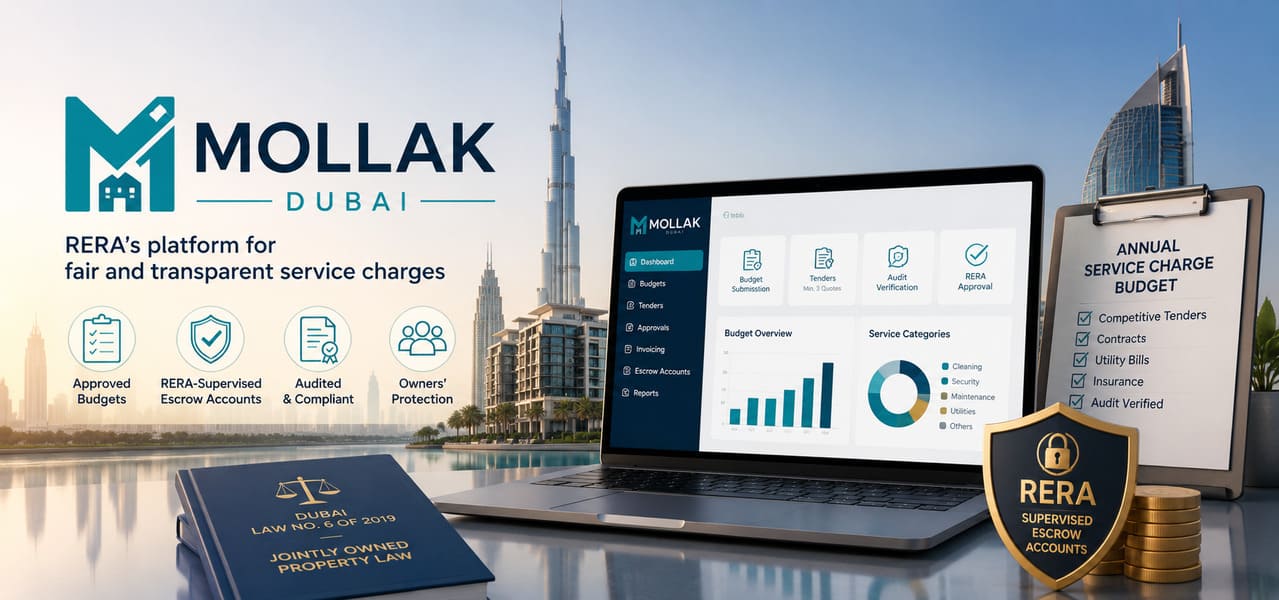

The Mollak system Dubai, named from the Arabic word for owners, is RERA’s mandatory digital platform for regulating service charges in jointly owned properties. It replaced a fragmented approach with a standardized process for budgets, audits, approvals, invoicing, and supervised fund management.
Mollak applies to apartment towers, townhouse communities, and mixed-use developments with shared common areas. A property title lawyer in Dubai can advise on who is the best real estate lawyer in Dubai, whether do you pay council tax on an empty property, and how do I file a RERA complaint in Dubai. It operates within the jointly owned property framework governed by Law No. 6 of 2019.
Mollak is RERA’s mandatory digital platform, managed through the Dubai Land Department, for regulating service charges across jointly owned properties. Under Article 27 of Law No. 6 of 2019, a management entity cannot impose or collect service charges until the annual budget has received RERA approval through Mollak.
The budget is supported by at least three competitive tenders for each major service category, together with existing contracts, utility bills, and insurance records. A licensed audit firm verifies the submission, and RERA can approve, adjust, or reject the proposed charges before invoices are issued.
Collected funds sit in RERA-supervised escrow accounts and cannot be used outside an approved budget. Once approved by owner vote at a general assembly, or directly by RERA where quorum is not reached, the charge is mandatory. Tayseer, launched in March 2025, offers a structured route for accumulated arrears before escalation to the Rental Disputes Settlement Centre.
About Faris Raian
Faris Raian is the Founder and Managing Partner of Leaders Advocates and a Senior Legal Consultant with over 15 years of legal experience in the UAE. Registered with the Dubai Legal Affairs Department, he advises property owners, investors, developers, and businesses on real estate, corporate and commercial matters, litigation, arbitration, and regulatory issues. His experience with property and commercial disputes is particularly relevant to Mollak service-charge matters, where approved budgets, reserve funds, management obligations, and enforcement issues must be assessed together.
What Does the Mollak System Dubai Apply To?
Every jointly owned property in Dubai with shared common areas must be registered on Mollak. This includes apartment towers, townhouse communities, and mixed-use developments.
Standalone freehold villas without shared community facilities are generally exempt because there is no owners’ association structure requiring this level of oversight.
How the Budget Approval Process Works
The management entity may be a developer-appointed facility management company or an owners’ association manager. The same Mollak approval process applies before it can impose or collect service charges.
- The management entity prepares an annual budget for anticipated costs relating to the property’s common parts.
- At least three competitive tenders support each major service category, including cleaning, security, and maintenance.
- Existing contracts, utility bills, and insurance records are submitted with the budget.
- A licensed audit firm verifies the submission through Mollak.
- RERA approves, adjusts, or rejects the proposed figures before invoices can be issued to owners.
Why Owners Cannot Simply Refuse to Pay
Once a budget is approved, either by owner vote at the general assembly or directly by RERA where quorum is not met, the service charge becomes a binding legal obligation.
Disagreeing with the figure does not create a right to withhold payment. The proper route is to engage with the budget and audit process rather than simply declining to pay.
What an Owner Can Check
- Approved budgets, expenditures, and reserve fund balances through DLD, RERA, or the Dubai REST app.
- The full annual budget document and the competitive tenders supporting it, requested from the management entity or Owners Committee.Owners using the Mollak system in Dubai can compare the approved budget, reserve fund position, tenders, and payment records before deciding whether to challenge a charge.
Check the Approved Charges Before You Dispute or Pay
A UAE real estate lawyer can review the Mollak-approved budget, reserve fund position, tenders, payment history, and management records before you decide on the next step.
How Mollak Funds Are Protected
The Mollak system in Dubai protects service charge funds by requiring collected amounts to be held in RERA-supervised escrow accounts.
Service charge funds collected through Mollak sit in RERA-supervised escrow accounts. A developer or management company cannot access or spend those funds outside the approved budget.
The Tayseer Route for Arrears
RERA’s Tayseer program, launched in March 2025, gives owners with accumulated service charge arrears a structured repayment path. It is intended to be explored with the management entity before the debt escalates to the Rental Disputes Settlement Centre.
Facing a service charge dispute or reviewing a building before purchase? Faris Raian and the team at Leaders Advocates can assess the Mollak-approved budget, reserve fund position, payment history, and available dispute route. This provides an additional route for owners dealing with arrears under the Mollak system in Dubai.
Address the Arrears Before Formal Escalation
If service charges have accumulated, the available repayment and dispute routes should be reviewed early. Our legal team can assess the Mollak record and the options available before the matter reaches formal proceedings.
Common Mistakes
- Assuming disagreement with an approved service charge creates a right to withhold payment.
- Buying without checking the building’s Mollak-approved budget and reserve fund.
- Allowing arrears to accumulate without exploring Tayseer before formal escalation.
Relevant Legal Services
A Real Estate Lawyer in Dubai can review the Mollak record and service charge position. A Civil Lawyer in Dubai can advise on the underlying payment dispute, while a Litigation Lawyer in Dubai can assist if the matter moves into formal proceedings.
Review the Mollak Position Before You Complete the Purchase
Service charge history, the approved budget, reserve fund position, and outstanding arrears can all affect a property purchase. Our UAE property lawyers can review the available records before completion.
People Also Ask
The Mollak system in Dubai requires service charges to be supported, audited, approved, and protected before owners are invoiced. Owners can review the underlying records, but an approved charge remains payable and arrears should be addressed before formal escalation.


2 Comments