How much is inheritance tax in the UAE? The short answer is zero, but that answer is often misunderstood as meaning that every part of the succession process is free.
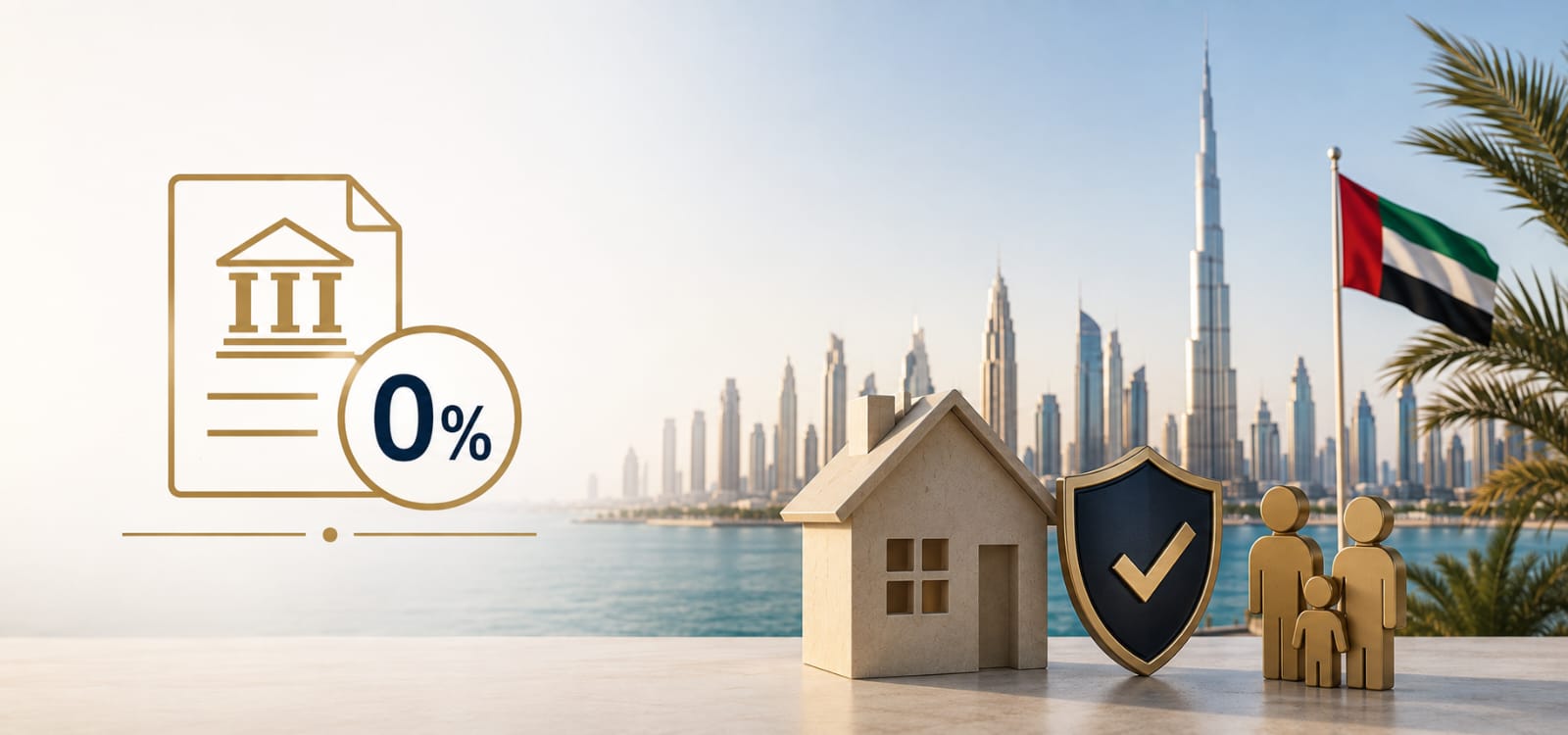
The UAE inheritance tax rate is 0%. The current UAE framework does not impose a percentage-based inheritance, estate, or death tax merely because assets pass to heirs. The distribution rules can differ for Muslim and non-Muslim estates, but those rules decide who receives the estate; they do not create a UAE inheritance-tax percentage.
Solution
We cover this in more detail in our guide on who can make a will in the UAE.
Separate tax from process costs. Identify the applicable succession law, obtain the required inheritance or succession documents, list each asset authority, and check court, title-transfer, registration, map, service-partner, legal, and possible foreign-tax costs before estimating what the heirs will receive.
Myth: “Zero Inheritance Tax Means the Process Costs Nothing”
If you need professional guidance, inheritance lawyer in dubai can help you understand your options.
A 0% tax rate does not make succession administration free.
The estate may still incur court fees for the inheritance process, property-registration fees, title-deed and map charges, service-partner fees, translation or attestation costs, valuation expenses, and professional fees. These amounts pay for procedures and services; they are not a tax calculated as a percentage of the inheritance.
Zero tax and zero cost are two different statements. Only the first is generally correct under UAE rules.
UAE Inheritance Planning
Inheriting UAE Assets and Unsure What Costs Apply?
A 0% inheritance-tax rate does not mean the succession process is cost-free. Our UAE inheritance lawyers can review the applicable succession route, asset-transfer requirements, and likely administrative costs.
Myth: “Dubai Charges the Normal 4% Property Fee on an Inheritance”
Our related guide on how to choose an inheritance lawyer in dubai goes into this further.
An inheritance title transfer is not treated on the Dubai Land Department service page as an ordinary property sale.
The current DLD inheritance-transfer service lists AED 1,000 from the heirs for each property, plus separate title-deed, map, knowledge, innovation, and service-partner charges where applicable. Those are fixed administrative and registration fees, not a 4% inheritance tax on the property’s value.
Use the inheritance-transfer service and its current fee schedule, not the sale-registration percentage, when estimating a Dubai inheritance transfer.
Myth: “Muslim and Non-Muslim Estates Pay Different Tax Rates”
For a closer look at this, see our guide on will AI replace lawyers.
The succession rules can differ, but the UAE inheritance-tax rate does not change with religion.
Muslim succession is addressed by the current Personal Status Law, including the prescribed heir shares. A civil personal-status framework can apply to qualifying non-Muslim estates, subject to the law, any valid will, and the relevant choice-of-law rules. These systems govern distribution rather than imposing different inheritance-tax percentages.
Religion and a valid will can change who inherits and in what share; they do not turn the UAE’s 0% inheritance-tax position into a percentage charge.
Myth: “A 0% UAE Rate Means No Tax Can Apply Anywhere”
The UAE position is only one part of a cross-border estate.
Another country may tax the estate, the deceased, an heir, or particular assets based on domicile, residence, citizenship, asset location, or other connecting factors. The correct test depends on that country’s law. A UAE asset can therefore pass without UAE inheritance tax while still creating a foreign filing or tax issue.
For cross-border families, check the rules of every relevant country instead of assuming the UAE rate controls the whole estate.
Myth: “There Is No Need for a Will Because There Is No Tax”
A will is mainly about distribution, guardianship choices, administration, and coordination of assets, not only tax.
Without a valid will, the default succession rules can determine who receives the estate. The correct will route depends on religion, nationality, asset location, emirate, and the legal framework selected. Registration and drafting can also carry separate fees.
The absence of inheritance tax does not remove the need to plan how UAE assets will be administered and transferred.
Why a 0% Tax Rate Can Still Produce Real Estate Costs
The practical bill comes from procedures and asset registries, not a percentage tax on the estate.
- Court process: The competent authority must verify the inheritance position and issue the documents needed to deal with estate assets.
- Dubai property transfer: DLD currently lists AED 1,000 for each inherited property, plus separate document, map, and service charges where applicable.
- Other emirates and assets: Each land department, bank, company registrar, or asset authority can have its own requirements and fees.
- Professional and document costs: Legal work, valuation, translation, notarisation, attestation, and overseas use of documents may add costs.
- Foreign tax review: A connected country may impose a tax or filing obligation even though the UAE rate is 0%.
Dubai Property Inheritance
Need to Transfer an Inherited Dubai Property?
Inherited property follows a different transfer process from an ordinary sale. Our lawyers can help identify the required inheritance documents, registration steps, and property-transfer fees before the title is moved to the heirs.
Proof: Distribution Law and Transfer Fees Are Separate
Federal Decree-Law No. 41 of 2024 contains the current personal-status rules for Muslim inheritance, including prescribed shares. Federal Decree-Law No. 41 of 2022 provides a civil personal-status framework for qualifying non-Muslims. Neither framework sets a UAE inheritance-tax percentage; their focus is succession and distribution.
Dubai Land Department separately operates an Inheritance Title Transfer service. Its published requirements include the legal inheritance document, heir identification, and an official court or Awqaf letter. Its published fee schedule lists AED 1,000 per property plus separate title-deed, map, knowledge, innovation, and service-partner charges where applicable.
The UAE tax rate on inheritance is 0%, while the authorities can still charge for the legal and registration work needed to move assets into the heirs’ names.
Common Mistakes to Avoid
Most mistakes come from treating tax, succession law, and administrative fees as though they were the same thing.
- Assuming 0% inheritance tax means the entire succession process is free.
- Using the ordinary Dubai property-sale fee when estimating an inheritance title transfer.
- Ignoring court, title-deed, map, service-partner, translation, or professional costs.
- Assuming Muslim and non-Muslim distribution rules create different tax rates.
- Failing to check whether another country taxes the estate, heir, or particular assets.
- Skipping a will or succession plan because there is no UAE inheritance tax.
- Quoting one emirate’s property fees as though they apply to every asset in the UAE.
Frequently Asked Questions
What percentage is inheritance tax in the UAE?
0%.
The current UAE framework does not impose a percentage-based inheritance, estate, or death tax on the transfer merely because it occurs on death.
Do expatriates pay UAE inheritance tax?
No UAE percentage tax generally applies.
The distribution and choice-of-law analysis can differ, and another country may impose its own tax or filing rules.
Is inherited property taxed in Dubai?
There is no inheritance-tax percentage.
The title transfer still has DLD registration and document fees.
Do heirs pay the normal 4% Dubai sale-registration fee?
Not under the DLD inheritance-transfer service fee schedule.
The current service page lists AED 1,000 per inherited property plus separate document, map, and service charges where applicable.
Do Muslim and non-Muslim heirs have the same distribution rules?
Not necessarily.
The applicable succession framework, a valid will, and choice-of-law rules can change who inherits and in what share.
Can another country tax an inheritance from the UAE?
Possibly.
The result depends on that country’s rules for domicile, residence, citizenship, asset location, and the type of tax involved.
Are there costs even when the tax rate is zero?
Yes.
Court, registration, title-deed, map, valuation, translation, attestation, and professional fees can apply.
So, how much is inheritance tax in the UAE? The rate is 0%. The real expense usually sits in the succession process and the transfer of particular assets, not a government percentage taken from the estate.
For Dubai property, use the current DLD inheritance-transfer fees rather than a sale-registration percentage. For cross-border estates, check every connected country’s tax and filing rules.
A UAE inheritance lawyer from our team can confirm the applicable succession route, documents, property-transfer fees, and cross-border issues before the estate is distributed.
Cross-Border Estate Support
Need Clarity Before a UAE Estate Is Distributed?
Our UAE inheritance lawyers can help confirm the applicable succession framework, identify the documents and transfer costs for each asset, and flag cross-border issues that may need separate tax or legal advice.