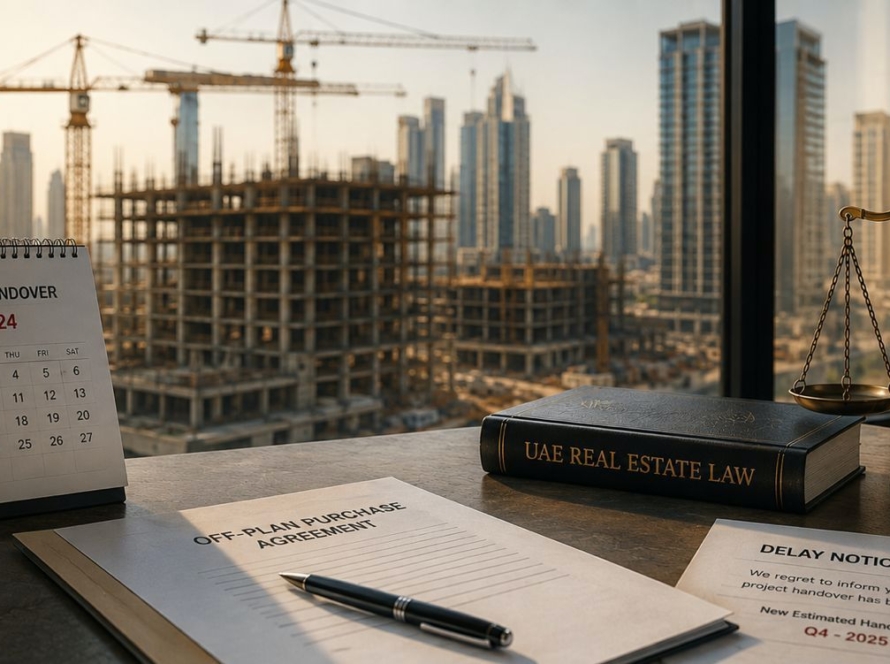




Every year the same headline runs somewhere: record transactions, record prices, record demand. It makes Dubai property sound like a sure thing.
So is buying property in Dubai actually a good investment or just a good sales pitch?
Quick Answer:
Yes, buying property in Dubai can be a good investment, but the right choice depends on the location, property type, and your investment goals. Dubai offers attractive rental yields of around 6% to 8%, no property or income tax, and full foreign ownership in designated areas. However, returns are not the same everywhere. Some areas may face slower price growth or oversupply, so careful property selection and legal due diligence are essential before investing.
Dubai’s average gross rental yield sits around 6.5% to 7%, roughly double what the same money earns in most major Western cities, and the tax position adds to that: no property tax, no capital gains tax, no income tax on rental profit. Ownership is straightforward too. Foreigners can own 100% of a property in around 40 designated freehold zones, with no local sponsor or residency required to buy.
The catch is timing and location. After price growth of 12% to 22% a year in 2024 and 2025, most forecasters expect a much slower 5% to 8% in 2026, with some mid-market apartment clusters (JVC, Arjan, parts of Dubailand) facing localised oversupply from new handovers.
Off-plan purchases are protected by mandatory RERA escrow accounts, but construction delays remain a real risk. Property bought above AED 750,000 can support a 2-year residency visa, and AED 2 million or more qualifies for the 10-year Golden Visa.
The Case For: Why Investors Buy in Dubai
Start with the number that draws most buyers in: yield. Average gross rental yields across Dubai residential property sit around 6.5% to 7% as of mid-2026, with apartments averaging close to 6.9%. Compare that with the 3% to 4% typical in London or New York, and the gap is the whole investment thesis in one line.
The tax position adds to it. Dubai charges no annual property tax, no capital gains tax on resale profit, and no income tax on rental earnings. The only recurring government charge is a 5% housing fee, calculated on the annual rental value and collected through your utility bill, not a separate wealth or income tax.
Demand has real drivers behind it, not just marketing. Population growth of over 400,000 new residents a year is forecast through 2026, and the city recorded 79,281 residential sales worth AED 221.4 billion in the first half of 2026 alone. That is a lot of genuine end-user and investor activity, even if it is lower than the record pace of the previous year.
The Case Against: What the Data Also Shows
Now the other side, because a fair answer needs one.
Price growth has slowed hard. After 12% to 22% annual appreciation in 2024 and 2025, most 2026 forecasts point to a much more modest 5% to 8%, and some analysts see flat or even softening prices in specific oversupplied pockets. That is not a crash, but it is a clear cooling from the boom years, and buyers who assume the old growth rate will be disappointed.
Supply is the thing to watch. Somewhere between 200,000 and 300,000 new units are planned by 2028, with a large share landing in 2026 and 2027. Analysts are consistent on one point: this is not a citywide oversupply problem, but it is a real one in specific mid-market apartment communities, particularly studios and one-bedrooms in areas like JVC, Arjan, and parts of Dubai land, where investor-heavy ownership and similar unit types increase the risk of price softening.
Off-plan carries its own risk layer. Roughly two-thirds of Dubai sales in recent years have been off-plan, and while escrow protections are strong (more on that below), construction delays still happen even with reputable developers. Buying a unit that is three years from handover is a different risk profile than buying something ready to rent out next month.
Rental Yields by Area
Yield varies more by micro-location than most marketing material admits. A comparison makes the pattern clear.
The pattern holds across most of the market: higher yield usually means higher supply risk, and lower yield usually means more price stability. Very few properties offer both at once.
The Tax and Cost Picture
The advertised “no tax” headline is accurate, but it is not the same as “no cost.” Several one-off and recurring charges apply to every purchase.
Two things matter here for the yield numbers above. First, gross yield figures do not usually subtract service charges, so your net return is meaningfully lower than the headline percentage, sometimes by a full point or more depending on the building. Second, the 4% transfer fee and agency commission mean a purchase needs to hold for a reasonable period before a resale becomes profitable after costs.
Can Foreigners Actually Own Property in Dubai?
Yes, and the ownership itself is genuinely straightforward.
Since Law No. 7 of 2006, foreign nationals can own 100% of a property, including the land it sits on, in designated freehold zones. There are roughly 40 such zones, covering well-known areas like Dubai Marina, Downtown, Palm Jumeirah, JVC, and Business Bay. Outside these zones, non-citizens are generally limited to leasehold rights of up to 99 years rather than full ownership.
No UAE residency, local sponsor, or local bank account is required to buy. A valid passport is enough to start the transaction, and up to four individuals can jointly own a single property. The only recent change worth noting is that the minimum buyer age dropped from 21 to 18 under the new Civil Transactions Law that took effect in June 2026.
Investing in Dubai Property From Abroad?
Foreign buyers need to understand ownership rules, freehold areas, purchase agreements, and residency-related requirements before completing a transaction.
Property and UAE Residency Visas
Buying property does not automatically grant residency, but it opens three specific visa routes tied directly to the value of the investment.
As of April 2026, the Dubai Land Department removed the minimum property value requirement specifically for sole owners applying for the 2-year investor visa, though the AED 2 million threshold for the 10-year Golden Visa remains unchanged. These thresholds are verified directly against DLD property valuations, not self-declared, so the property has to genuinely be worth the stated amount.
Off-Plan vs. Ready Property: Where the Risk Sits
This is the single biggest decision most buyers face, and the risk profile is genuinely different between the two.
Ready property means you know exactly what you are buying, can inspect it, and can start renting it out immediately. The trade-off is usually a higher entry price and less flexible payment terms, since the full purchase price is typically due at or shortly after transfer.
Off-plan property offers lower entry prices and payment plans spread over the construction period, sometimes years. The trade-off is construction risk.
Even reputable developers occasionally face delays, and the property you eventually receive is based on plans and specifications rather than something you can walk through today. Off-plan currently makes up a large share of Dubai transactions, supported heavily by these flexible payment structures.
Both categories are subject to RERA oversight, but the practical risk is not identical, and it should factor directly into which route suits your timeline and risk tolerance.
Buying Off-Plan in Dubai? Review the Agreement First
Off-plan purchases involve payment schedules, handover dates, developer obligations, and escrow requirements. A legal review can help identify issues before you commit.
Legal Protections That Reduce Your Risk
Dubai’s regulatory framework is genuinely one of its stronger selling points, and it is worth understanding rather than assuming.
- Mandatory escrow accounts. Since 2007, every off-plan project must be registered with RERA, and buyer payments go into a dedicated escrow account. Funds can only be released for construction costs on that specific project, and developers cannot access the money freely.
- Developer default protection. If a developer defaults or delays significantly, RERA has the authority to intervene, appoint a replacement developer, or facilitate refunds to buyers.
- Agent verification. The Trakheesi system lets any buyer instantly verify a broker’s license and RERA registration before signing anything.
- Standardized contracts. Resale transactions use RERA’s Form F, and agency agreements use standardized Form A or Form B, reducing the risk of unusual or one-sided clauses slipping into a private contract.
- Title deed registration. Ownership is only final once registered with the Dubai Land Department, and the title deed is the sole legally recognized proof of ownership.
These protections matter most for off-plan purchases and for buyers working with unfamiliar developers. They are not a substitute for having your own lawyer review the sale and purchase agreement before you sign, particularly for off-plan contracts with complex payment schedules and handover conditions.
Who Dubai Property Suits, and Who It Doesn’t
Being direct here saves time later.
It tends to suit:
- Buyers focused on rental income over a 5 to 10 year horizon, who can absorb short-term price softness without needing to sell.
- Buyers targeting established, liquid areas (Downtown, Marina, Business Bay, prime villa communities) rather than the newest, most heavily marketed off-plan launch.
- Investors who want the Golden Visa or investor visa as part of the return, since the residency benefit has real value beyond the property itself.
It tends not to suit:
- Buyers expecting the 15% to 20% annual appreciation seen in 2024 and 2025 to continue. Most forecasts put 2026 growth at a much more modest 5% to 8%.
- Short-term flippers in oversupplied mid-market apartment segments, where new handovers are increasing competition for tenants and buyers alike.
- Anyone buying off-plan from an unregistered developer, or without confirming the escrow account and RERA registration first.
Common Mistakes to Avoid
A few recurring errors show up across buyer disputes and regretted purchases.
- Buying off-plan without checking the project’s RERA registration or escrow account first.
- Comparing headline gross yield figures without subtracting service charges, which can run into the thousands of dirhams a year.
- Assuming residency and property purchase are automatic. Visa eligibility depends on meeting the specific investment threshold and applying separately.
- Buying in an oversupplied mid-market cluster expecting the same appreciation as established prime areas.
- Signing a sale and purchase agreement or reservation form without a lawyer reviewing the payment schedule, handover conditions, and default clauses.
Award Recognition: Real Estate Law Firm of the Year
Leaders Advocates was named Real Estate Law Firm of the Year at the M&A Today – Global Awards 2026. This award-winning recognition highlights the firm’s real estate law services in Dubai.

Recognized Excellence in Real Estate Law
Looking for experienced legal guidance for your property matter? Speak with our real estate legal team to understand your options and next steps.
Frequently Asked Questions
So, Is Buying Property in Dubai a Good Investment?
The honest answer is that the fundamentals are real, yield, tax treatment, and ownership rights all genuinely favour buyers, but the growth story has entered a slower, more selective phase. The areas and property types that outperform in 2026 are unlikely to be the same ones that outperformed in 2024.
Whether it is a good investment for you depends on your own timeline, your appetite for off-plan risk, and whether you are buying for yield, appreciation, or residency. Those are three different strategies with three different answers.
If you are considering a purchase, a property lawyer in Dubai from our team can review the contract, verify the developer and escrow standing, and confirm the purchase structure supports any visa outcome you are relying on.
Make Your Dubai Property Decision With Confidence
Whether you are buying for rental income, capital growth, or residency, our real estate lawyers can help you review the legal side of your investment before you proceed.